

What the preliminary agreement provides, which American and Iranian negotiators reached - Not yet approved by Trump and Mojtaba Khamenei
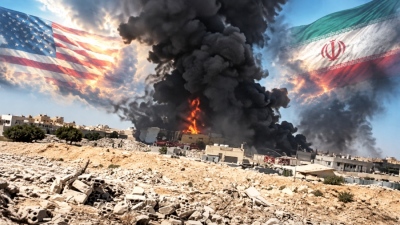
At a time when US and Pakistani sources point out that we are very close to an agreement between the US and Iran and that what remains is the final approval from US President Donald Trump, Tehran conveys that it will not back down from its "red lines" regarding nuclear issues and control of the Strait of Hormuz. These "red lines" clash with those of the US, with Trump stating that he will not sign an agreement that is not good for the US. From these statements, it is clear that the distance between the US and Iran remains, at least based on the current data, as both sides do not appear willing to retreat from their positions on the critical issues of Hormuz and enriched uranium. However, there is progress in the talks; the White House spoke of a preliminary agreement, while today's meeting in Washington between the US and Pakistani Foreign Ministers is expected to be extremely critical. While Trump speaks of a military victory and explains why American forces did not completely destroy the Iranian army, the Iranians announced that the aircraft carriers USS Abraham Lincoln and USS Gerald Ford departed hastily from the Persian Gulf, where 14 American bases and over 200 aircraft and flight assets were turned to dust.
US aircraft carriers have departed
Two American aircraft carriers, the "Abraham Lincoln" and the "Gerald Ford," departed from the Middle East following the military conflict with Iran, claims the head of the national security and foreign policy committee of the Iranian parliament, Ebrahim Azizi. "According to our estimates, about nine thousand Americans left the Persian Gulf, while 14 American bases and more than 200 aircraft and flight assets were destroyed. The aircraft carrier Abraham Lincoln left the area, as did the Gerald Ford, which, it is claimed, departed under the pretext of a fire on the ship," said Azizi, responding to Trump's statements about a US military victory. As Azizi said, Iran has now shown that US claims about a superpower regime were just "big talk."
Enriched uranium in Iran
Furthermore, the top Iranian official maintained that Iran does not plan to transfer enriched uranium out of the country. "We have no plan to transfer enriched uranium out of the country. Honestly, I do not even understand from what perceptions such questions arise. We do not intend to hand over our enriched uranium to third states, to mediators, or anywhere else," stated Azizi, thereby confirming the "line" given by Iran's Supreme Leader, Mojtaba Khamenei. It is recalled that the American side insistently requests that approximately 400 kilograms of enriched uranium be transferred out of Iran.
We dominate and control the Strait
On the other critical issue, the Strait of Hormuz, Azizi claimed that Iran has placed navigation in the Strait of Hormuz under its control on a permanent, rather than temporary, basis. "Today, Iran manages the Strait according to its own rules and mechanisms. Undoubtedly, the imposition of control and the implementation of mechanisms for managing them by Iran have a permanent and not a temporary character," said Azizi, who underlined that the US must "abandon the illusions" that Iran's measures regarding the Strait of Hormuz are of a local or short-term nature. "The countries of the region must also accept this reality and act according to Iran's rules," added Azizi.
The US must not violate its commitments
Referring to what must be done for the negotiations to be successful, he said that the Americans must stop violating their commitments. "The US has repeatedly violated its promises. Iran’s long-standing experience in relations with the US shows that Washington pays no attention to either commitments or agreements. Precisely for this reason, today the main factor hindering the achievement of a sustainable agreement remains the behavior of the American side," stated Azizi, noting that the US must change its behavior. "The US must rethink its behavior. Otherwise, this process will not lead to the desired result," underlined the Iranian official.
"Key" is Hormuz – What the preliminary agreement provides
As sources point out, the opening of the Strait of Hormuz constitutes a key point in this Memorandum of Understanding, various drafts of which are circulating in Washington. It is proposed that, once the Iranians declare that the Strait of Hormuz is open for normal activity, the United States will withdraw Operation Economic Fury—that is, the blockade of Iranian ports. Certain sanctions exemptions will also be granted so that Iran can begin exporting oil. In the meantime, there will be a 60-day period during which the two sides can discuss the major issues, such as Iran’s nuclear program—Donald Trump has made it clear that there will be no nuclear weapon, not now, not ever—and what will happen with the enriched uranium. And, of course, the question of whether or not Iran will be allowed to gain access to its assets, which have been frozen in the United States. There are still many discussions to be had and, of course, any final agreement will depend on Donald Trump as well as Mojtaba Khamenei. Regarding the exchange of fire recorded increasingly frequently over the last 72 hours, it seems that they were not serious enough to derail the talks between the two sides.
What the Iranians are saying
Sources reported that the most difficult issues related to Iran’s nuclear program have yet to be resolved within the framework of these talks. However, the semi-official Iranian agency Tasnim, citing anonymous sources close to the negotiating team, reported that the text of the agreement "has not yet been finalized nor has it become final." The sources added that Iran has not yet informed the Pakistani mediator that the text has been finalized. Trump has previously appeared optimistic about a deal with Iran, only to change his stance later. All American sources warned that any progress in the talks could be quickly overturned if Trump decides not to give his approval. Trump is seeking advice to ensure the agreement is strong enough, said a person familiar with the matter. He has focused on ensuring that the agreement can be presented as stronger than the 2015 Obama-era nuclear deal, from which he withdrew during his first term.
Trump: Why we did not completely dismantle the Iranian army
The US deliberately did not destroy the Iranian armed forces so as not to repeat the mistakes made in Iraq, argues American President Donald Trump, obviously implying the emergence of ISIS. "In reality, we left the Iranian armed forces alone. People would be surprised to hear that, because in wars mistakes have been made, when they destroyed everyone indiscriminately, and then you had a country that, you know, cannot recover for 40 years," Trump said in an interview with Fox News. As an example, the American President mentioned Iraq, stating that the US acted "badly" and "stupidly" then. "By the way, what we did in Iraq should not even have been done there," added Trump, mentioning that the US defeated Iran militarily and that the Iranian navy has disappeared completely and the Iranian air force has been destroyed entirely. "If we hadn't bombed Iran with B-2 bombers nine months ago, now they would have nuclear weapons," Trump argued.
All the cards in our hands
Additionally, he argued that the US has all the "winning cards" in the negotiations with Iran. "They are very good negotiators, but all the winning cards are in our hands because we have defeated them militarily," said Trump, noting that an agreement with Iran will be signed only if it is a good agreement for the US, as he said this is a red line for the US. American officials claimed that a preliminary agreement was reached in the talks between the United States and Iran, although President Donald Trump has not approved it. Trump’s approval will be decisive for any agreement, officials warned, while the president stated one day earlier that he was not satisfied with the current state of the talks. It was also not clear if Iran’s Supreme Leader had given his own approval, which is still considered a necessary step toward ending the conflict.
Pakistan sources: Very close to a US-Iran agreement – No comment from Tehran, Washington
The Pakistani news agency Right Now reported that the two sides agreed to sign the agreement document in Pakistan's capital, Islamabad, although neither Iranian nor American officials have so far publicly commented on any potential agreement. CBS reported separately that the agreement has been finalized, according to the Pakistani report, while the White House has confirmed the agreement. However, the Pakistani medium noted that the agreement has not yet been approved by US President Donald Trump. The alleged agreement would extend the ceasefire between the US and Iran by 60 days and provide for the start of formal negotiations on Iran's nuclear program, which, according to the report, is expected to restore stability in the region. There was no immediately available official confirmation from Tehran or Washington, reports the Iranian Mehr agency.
J.D. Vance (US Vice President): I don't know if and when Trump will sign
US Vice President JD Vance stated that it remains "to be determined" whether President Donald Trump will sign a preliminary memorandum of understanding (MOU) with Iran, and that the two countries are still negotiating "some points of wording." "I think it is difficult to say exactly when or if the President will sign the MOU. We are going back and forth on some points of wording," Vance told reporters in the hallway of Joint Base Andrews on Thursday. While highlighting the progress made, Vance said there are some key points regarding Iran's nuclear program and enriched uranium that remain fluid. "There are some issues regarding nuclear matters, the stockpile of highly enriched uranium, as well as the issue of enrichment. So, we are going back and forth with them. We believe they are negotiating, at least so far, in good faith," said Vance. "We hope that we will continue to make progress, that the President will be in a position to approve the deal, but obviously that remains to be determined." And he said he could not yet guarantee that such an agreement would be reached. "We will reach a point where we could potentially sit down and settle these issues, but that requires us to make a little more progress. I cannot guarantee that we will get there, but right now I feel pretty good about it," he said. Despite the recent exchange of attacks, Vance stated that the ceasefire remains in effect, but that the US reserves the right to launch defensive strikes. "These ceasefires are always a little chaotic," he said in response to a question, adding that "sometimes these things have small flare-ups."
Diplomatic fever – Rubio (US Secretary of State) meets his Pakistani counterpart in Washington
Diplomatic efforts to reach an agreement on the Iranian issue are escalating as US Secretary of State Marco Rubio will meet with his Pakistani counterpart in Washington, DC. The top American diplomat will meet with the Deputy Prime Minister and Foreign Minister of Pakistan Mohammad Ishaq Dar at the State Department in Washington DC, later today, according to the daily schedule published by the ministry. Pakistan has mediated in the peace talks between Washington and Tehran, with senior Pakistani officials also having visited Iran in recent days. Their meeting is expected to begin at 10 a.m. local time.
Over 95 billion the cost of the US war in Iran
US spending on the military operation in Iran exceeded $95.2 billion, reported the portal Iran War Cost Tracker. The portal's counter, which operates in real-time, is based on an update from the Pentagon to the US Congress on March 10, where it was allegedly reported that in the first six days of hostilities in the Middle East, Washington spent $11.3 billion and plans to spend another $1 billion for each subsequent day of the conflict.
www.bankingnews.gr







Readers’ Comments