

An incredible global diplomatic thriller is unfolding in recent hours in a desperate effort to find a diplomatic solution to the Iranian issue and avoid a new round of military chaos, as both sides have exchanged initial fire that threatens to blow up the fragile ceasefire. Although US Secretary of State Marco Rubio argued that the agreement is being delayed due to disagreements over "wording," there is intense movement, with interest focusing primarily on the two main "obstacles" to the deal: the Strait of Hormuz and enriched uranium.
High-ranking Iranian officials are traveling to Moscow to discuss the details of the agreement, while Pakistan's Foreign Minister, Mohammad Ishaq Dar, is in New York. And while intensive negotiations are taking place behind the scenes, the US Navy's attacks on vessels and a missile launch base of the Revolutionary Guards have caused outrage in Tehran. The Revolutionary Guards accused the US of violating Iran's airspace, announcing that they downed an MQ-9 drone and forced an F-35 to retreat in a disorderly flight, while in a message, Iran's supreme leader, Mojtaba Khamenei, argued that the Americans no longer have anywhere to hide, no safe haven in the Persian Gulf region. It is clear that the game between negotiation and the resumption of war is peaking, only this time the time of reckoning is approaching regarding the path that the US and Iran will ultimately choose to follow.
Optimism from Qatar regarding the $24 billion in frozen Iranian assets
Iranian officials are speaking of progress in peace negotiations in Qatar. According to the Iranian agency Tasnim, a source from Iran described the discussions of the Iranian negotiators in Qatar as "overall good," saying that the talks "led to progress in the overall negotiations." "At the same time, we must not forget that the US is known as an unreliable party, and for this reason, Iran is approaching the issues with great caution," the anonymous source said.
It is recalled that Iran is demanding the release of $24 billion from frozen funds as part of a potential deal with the US. According to Tasnim, a source close to the Iranian negotiating team stated that $24 billion of frozen Iranian assets must be released in any potential deal with the US. The source stated that Tehran's position is that half the amount—$12 billion—must be released when a memorandum of understanding is announced, with the remainder released within 60 days. Tasnim reported that Iran's top negotiator, Mohammad Baqr Qalibaf, traveled with Iranian Foreign Minister Abbas Araghchi to Qatar to reach an agreement on the implementation mechanism for this request.
Iranians in Russia
Iranian media report that high-ranking Iranian officials are rushing to Russia to hold talks with their Russian counterparts regarding the ongoing negotiations with the US. It is estimated that the focus of the talks will be both on the Strait of Hormuz and the toll collection system, as well as the issue of enriched uranium. It is noted that Russia had expressed its readiness to accept Iran's enriched uranium if there were an agreement to transfer it to a foreign country—something, however, that Iran's supreme leader, Mojtaba Khamenei, has rejected as a scenario.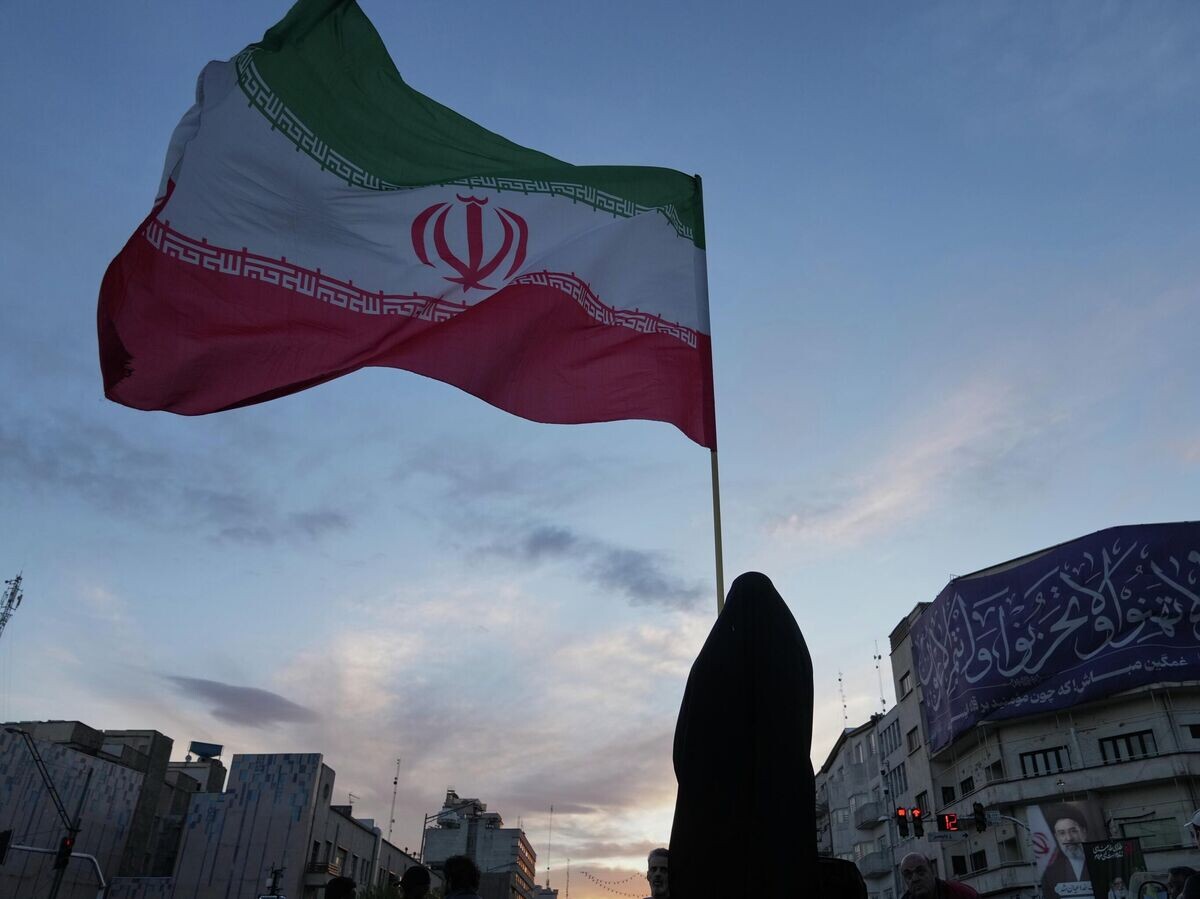
Rubio: Neither Russia nor China agrees with transit tolls in Hormuz
This visit is of particular interest given that US Secretary of State Marco Rubio argued that neither Russia nor China agrees with the imposition of a toll system in the Strait of Hormuz. "The Russians don't agree with the toll system, and the Chinese don't agree with the toll system. I mean, no country in the world supports the toll system, except Iran. So this is unacceptable. This means it cannot happen. The Strait must be open, unobstructed, and without complications, and obviously, this must be done immediately, as soon as there is an agreement on anything," Rubio emphasized.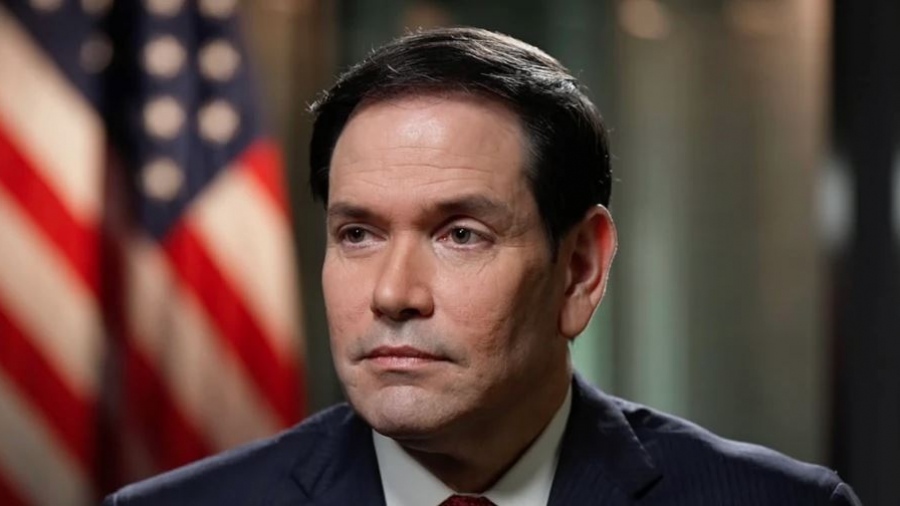
Pakistan's Foreign Minister in New York
At the same time, Pakistan's Foreign Minister Mohammad Ishaq Dar is in New York on an official visit. The negotiations between the US and Iran to end the war are expected to be at the center of his meetings. It is noted that Pakistan's Prime Minister, Shehbaz Sharif, was in Beijing in previous days, where he had talks with President Xi Jinping. As Sharif said, China expressed its appreciation for Pakistan's efforts to facilitate the achievement of a ceasefire agreement between the US and Iran, as well as for holding talks in Islamabad.
IRIB: Al-Arabiya's claim regarding a memorandum of understanding between Iran and the US is false and baseless
Earlier, Al-Arabiya claimed that the text of the final draft of the memorandum of understanding between Iran and the US had been completed, in which issues such as the reopening of the Strait of Hormuz, the start of negotiations on the nuclear program, the release of Iran's frozen funds, and certain other matters had been discussed. However, the Iranian agency IRIB argued that all of these are denied by the Iranian side.
What we know about the talks
After weeks of mainly indirect talks, both sides say they have made progress on a memorandum of understanding (MoU), which would stop the war and give negotiators 60 days to reach a final agreement. The framework focuses on ending the war and the US naval blockade, in exchange for Tehran taking steps to ensure safe passage from the Strait of Hormuz, according to the spokesperson for the Iranian Ministry of Foreign Affairs, Esmaeil Baghaei.
Senior Iranian diplomat Hossein Nooshabadi told the ISNA agency that the potential framework agreement includes ending the war on all fronts, including Lebanon, the release of frozen Iranian assets, the lifting of the US naval blockade and opening the Strait of Hormuz, the withdrawal of US forces from the area around Iran, and the freedom to sell Iranian oil. Nooshabadi said that Iran's plan for an initial agreement contained no commitments regarding its nuclear program. A senior official of the Trump administration, speaking on condition of anonymity, said that Iran has agreed "in principle" to open the Strait of Hormuz in exchange for the lifting of the naval blockade by the US and to dispose of Tehran's highly enriched uranium.
Qatar denies
The spokesperson for the Qatari Ministry of Foreign Affairs, Majid al-Ansari, wrote on X that reports that Qatar "proposed" to Iran that it release $12 billion from its frozen assets in order to have a deal with the US are completely baseless and are published by parties seeking to torpedo the deal and undermine diplomatic efforts aimed at reducing tensions and strengthening stability in the region.
He added that Qatar's mediation role, along with regional partners, is "well-established and publicly documented" and that these reports are an attempt to damage Doha's credibility as an "internationally trusted mediator for peace." It is noted that Al Jazeera, citing an informed source, reported that Qatar's mediation led to an agreement between the US and Iran regarding the frozen Iranian assets.
Nightmare scenario for Israel
A ceasefire between the US and Iran would amount to a "strategic disaster" for Israeli Prime Minister Benjamin Netanyahu, said Mairav Zonszein, a senior analyst at the International Crisis Group, as the war achieved neither "regime change" nor the dismantling of Iran's nuclear capabilities. "Netanyahu cannot speak of a victory in Iran," Zonszein told Al Jazeera. "He can speak of eroding some capabilities, but these have a limited time horizon." According to Zonszein, Trump expected a different outcome from the war and must now manage the consequences amid global economic pressures. In reality, an agreement between the US and Iran to end the war would be an "almost nightmare scenario for Netanyahu," she said.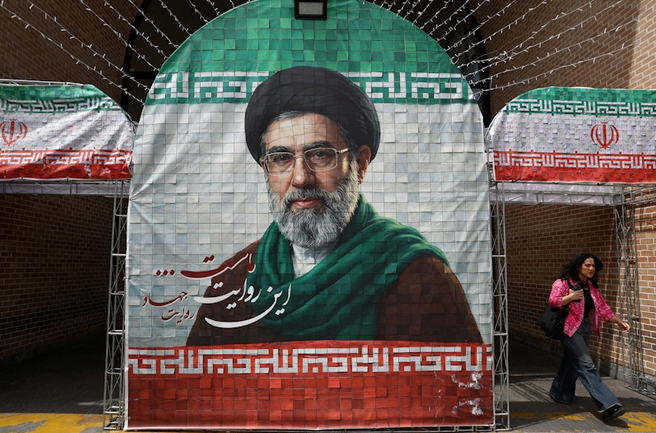
Shocking message from Mojtaba Khamenei: The US will not have a safe haven in the Persian Gulf
Iran's Supreme Leader, Ayatollah Mojtaba Khamenei, argued that Gulf forces will no longer serve as a "shield" for US military bases and that the US will no longer have a "safe haven" in the region. Khamenei made these comments on his Telegram channel. The statement comes as Tehran and Washington discuss a framework to end their three-month war. "The hands of time do not turn back, and the nations and lands of the region will no longer serve as a shield for US bases.
America will no longer have a safe haven for evil or for the installation of military bases in the region," said Mojtaba Khamenei. This has been one of Iran's central arguments throughout the war: that countries in the region must put an end to the US presence. This means that every time Iran perceives a threat, it will retaliate and attack. The US will no longer be safe. Subsequently, the Supreme Leader speaks of the victory of the "axis of resistance," including Lebanon, saying that Iranian proxy forces have taught a lesson to the Americans and the "Zionist entity."
Khamenei called on Islamic nations and other countries to share common interests that will shape the new order and the future of the region and the world. He stated: "With sincerity and clarity, I invite all Islamic countries and governments to friendship and cooperation for the common good." His message focuses clearly on a new regional order—a new order after the US.
Khamenei: We will uproot Israel
Khamenei argued that Israel "must definitely be uprooted and will be uprooted," describing it as a "dangerous and deadly cancerous growth of this region," as reported by the Iranian agency Tasnim. In the message, Khamenei claimed that Iran "rendered the Zionist regime helpless under its devastating blows" during what he described as the second imposed war, characterizing it as a "harsh slap" to the United States.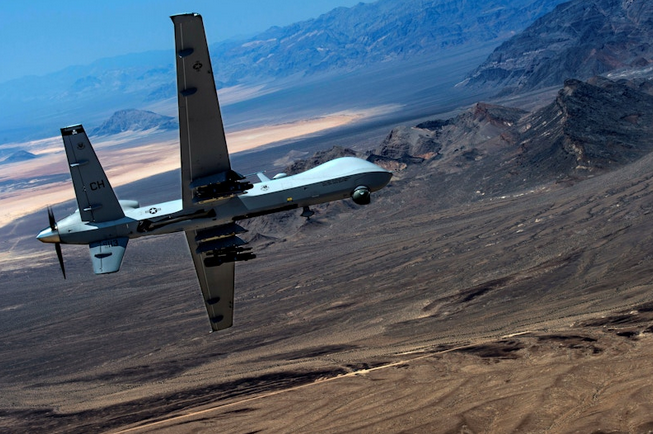
Revolutionary Guards: We downed a US MQ-9
Iran's Islamic Revolutionary Guard Corps (IRGC) accused the US of violating the country's airspace, stating that Tehran reserves the right to respond. "The US military, continuing its adventurous actions in the region, invaded Iran's airspace in the Persian Gulf region," stated the IRGC announcement, which was broadcast by the Fars agency.
The Revolutionary Guards noted that they activated air defense assets and downed an MQ-9 UAV, while they also forced an F-35 aircraft and an RQ-4 drone to flee Iranian airspace. "The IRGC warns and considers it its legitimate right to take countermeasures for any violation of the ceasefire by the US military," the Iranian armed forces stated.
"Much harsher response" – Warning from Iran's military: The war will spread everywhere
The senior spokesperson for Iran's Armed Forces, Abolfazl Shekarchi, stated that any new attack on Iran will be met with a "much harsher" response, which will extend beyond the region. In statements broadcast by the Iranian Fars agency, Shekarchi said that in the event of a new round of war, Iran's strikes will reach beyond the borders of the region and will be heavier and more violent than previous rounds.
The US Pentagon confirmed strikes on missile launchers in southern Iran...
US forces attacked missile launchers and two vessels in southern Iran, the Pentagon stated. "The US forces conducted self-defense strikes in southern Iran to protect our forces from threats posed by Iranian forces. The targets included missile launch sites and Iranian vessels that were attempting to lay mines," stated Captain Tim Hawkins, a spokesperson for US Central Command (CENTCOM). At the same time, the military official assured that there was no discussion of ending the ceasefire.
Rezaei (Iran): We are the winner of the war, we must negotiate from a position of strength
Iranian parliamentarian Ebrahim Rezaei, a spokesperson for the parliament's National Security and Foreign Policy Committee, stated that diplomats representing Tehran in talks with the US "must negotiate from a position of victorious strength." "The definitive winner of the war was and remains the brave Iranian nation," Rezaei wrote in a post on X. "Retreating before the enemy only makes them more ferocious and worsens our problems. Please, do not sugarcoat the red lines," said Rezaei.
Khatam al-Anbiya (Iran Central Command): The US understands only the language of violence, prepare for oil at $200
A spokesperson for the Khatam al-Anbiya Central Operational Headquarters of the Iranian Armed Forces commented on the US strikes in southern Iran on the social media platform X. According to him, as long as Washington continues its "military adventures" in the Middle East and near Iran, there can be no talk of any agreement. "The US government has repeatedly proven that it understands only the language of violence. Prepare for oil at $200 per barrel..."
Dirty provocation against Iran – They hit Bandar Abbas with missiles as well as Shirik and Jask, not Kharg island
US missiles hit the runway of the Bandar Abbas airport, a critical port for Iran, according to Iranian media reports. However, reports of an attack or explosions on Kharg island are being denied. Certain sources and news channels stated that the published reports of an air raid or fire on Kharg island were false. Iranian media had reported an attack on Kharg island that occurred 24 hours ago. If this news were true, the post Trump made on social media could be linked to this event. In that post, Trump had published an image created with artificial intelligence of the US attack on Iranian speedboats.
www.bankingnews.gr













Readers’ Comments