

In mid-May, the US issued an indictment in absentia against former Cuban leader Raúl Castro for the deaths of four people in 1996. The US Department of Justice reportedly threatened the Cuban politician with the death penalty, while thousands of citizens in Cuba took to the streets to express their strong support for the country's historic leader. At the same time, Washington is increasing the geopolitical pressure on Havana, with international media estimating that a Venezuela-style scenario could be applied against Cuba. Why is the US targeting the island again and what is truly threatening its political elite?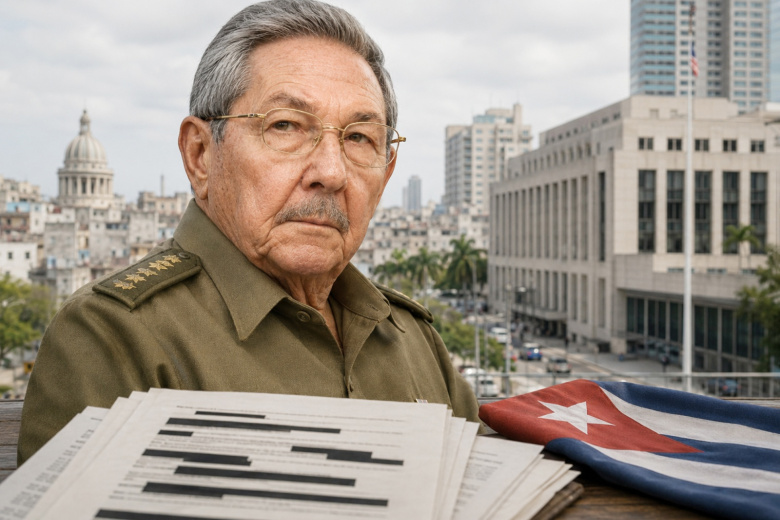
What the US charges Raúl Castro with
Raúl Castro was indicted in absentia on May 20. The 94-year-old former leader of Cuba is accused of conspiracy to murder American citizens. The charges relate to the events of 1996, when Cuban fighter jets shot down two civilian aircraft belonging to the humanitarian organization Brothers to the Rescue. Four people were killed in the incident, three of whom were American.
The US Department of Justice emphasized that if Castro is found guilty, he could face the maximum penalty, namely the death penalty or life imprisonment. According to Reuters, which cited a source in US President Donald Trump's administration, the charges are part of Washington's broader campaign of pressure against the Cuban authorities. The same source noted that Trump had previously advocated for regime change on the island. "America will not tolerate a rogue state hosting hostile military, intelligence, and terrorist operations just 90 miles from American soil," the relevant written statement said.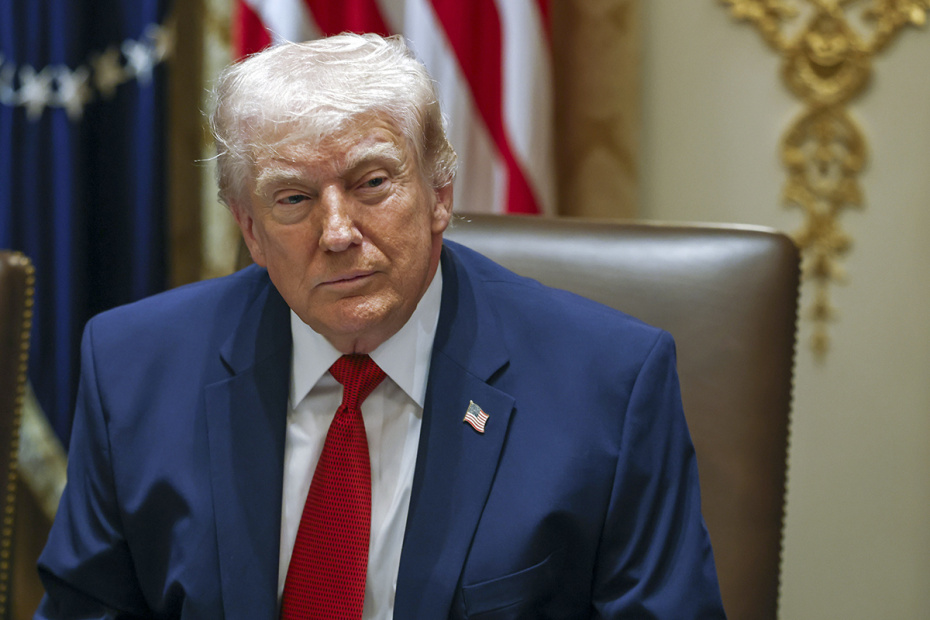
Russian reaction and questioning of the charges
Stanislav Tkachenko, a professor at the Department of European Studies at the School of International Relations of Saint Petersburg State University, told NEWS.ru that the charges against Castro for events that occurred about 30 years ago are baseless. According to him, the Cuban leader was not the only person who could be linked to the incident, while Cuban military personnel were defending their country's airspace from external violations.
"Since the aircraft were shot down over Cuban territorial waters, there can be no doubts. It was an interstate incident that could have led to war, but it did not, because the weight of the charges was different. The Americans ignored it and, 30 years later, are dusting it off to gain political benefits. In reality, they are looking for a pretext to justify their attack on Cuba," the analyst argued. However, international relations expert and Americanist Gevorg Mirzayan focused on a different aspect. As he noted, from the perspective of US domestic law, the US believes it can bring charges against any person if it deems it necessary. "From the perspective of US domestic law, the US has every right to bring charges against anyone. For them, domestic law overrides international law. Therefore, when we say that from an international perspective there are no grounds for prosecution, the Americans respond that they do not care, because they rely on their own laws," he told NEWS.ru.
Is there a real threat to Castro?
Shortly after the US Department of Justice announcement, thousands of Cubans gathered outside the US embassy in Havana, protesting the indictment against Raúl Castro. Current Cuban President Miguel Díaz-Canel and Prime Minister Manuel Marrero Cruz participated in the gathering. Castro himself was not present, but members of his family participated in the demonstration. "As long as I live, I will remain on the front line of the revolution," deputy Gerardo Hernández reportedly said, quoting the former leader. According to reports cited in the article, the US could consider a pressure scenario analogous to that attributed to the case of Venezuela and Nicolás Maduro.
Tkachenko estimates that, after the latest developments, nothing can be ruled out. However, he stresses that the situation in Cuba is different from that in Venezuela. "We all thought that Venezuela was a big and powerful country, capable of protecting its leader. Instead, we saw betrayal and disloyalty. Today's international relations are full of all kinds of innovations, which could allow the Americans to attempt a special operation. Clearly, they have agents within Cuba. However, unlike Venezuela, where corruption has eroded everything — the government, businesses, and the energy sector — in Cuba we have not yet seen something similar," he argued.
Why does Trump need Cuba?
Russia reacted to the developments surrounding Cuba. Russian Foreign Ministry spokeswoman Maria Zakharova stated that Moscow condemns any interference in the country's internal affairs and underscored that Russia will actively support the Cuban people. At the same time, the United States continues to intensify the pressure on the island nation. In early May, Washington imposed new sanctions on Cuban officials, while on May 20 it was reported that a US carrier strike group, led by the USS Nimitz, entered the Caribbean Sea. On May 23, the Financial Times, citing current and former American officials, reported that the United States is seeking the removal of Miguel Díaz-Canel from power in Havana. Tkachenko noted that aircraft carriers could only prove useful to the US in the event they decided to carry out airstrikes on the island. However, for a land operation in Cuba, entirely different resources and much greater military mobilization would be required. "An amphibious operation requires destroyers and corvettes to secure air superiority, neutralize coastal defenses, and land a corps of Marines.
We are talking about at least 100,000 troops, who would have to establish control of Cuba. And, of course, as soon as all this started, Cuba would hit the Guantánamo military base. There are still several thousand American soldiers there, but they are essentially unprotected. Therefore, I cannot yet imagine a land operation scenario," he emphasized. Mirzayan estimates that Trump is attempting, at this stage, to pressure the Cuban government to make concessions through threats of the use of force. If Havana refuses to back down, then Washington will be faced with difficult choices: either proceed with a military operation or acknowledge that the strategy of pressure failed. "The operation against Cuba itself, whether it takes a military or military-diplomatic form, is considered by the White House as an attempt to justify or even completely cover up its failure in the Middle East. Furthermore, this must be done before the congressional midterm elections. From a sociological, economic, and, paradoxically, domestic political point of view, a victory in Cuba, if achieved, will be much more important in the eyes of public opinion than a defeat in Iran," the Americanist concluded.
www.bankingnews.gr













Readers’ Comments