

The Supreme Leader of Iran has issued an directive stipulating that the country's enriched uranium, which is approaching weapons-grade levels, will not be shipped abroad.
Negotiations for peace in the Middle East are heading toward a complete deadlock following an abrupt and highly forceful intervention by Iran’s Supreme Leader, Ayatollah Mojtaba Khamenei. With a historic, fiery directive, Tehran has made it explicitly clear across all channels that the nation's enriched uranium remains a non-negotiable red line and will under no circumstances leave the country. This move shatters the coercive demands that Donald Trump and Benjamin Netanyahu have been attempting to impose during peace talks. At the same time, this development deals a resounding political blow to Trump, who had previously reassured Israel that the removal of Iran's nuclear stockpile was a guaranteed prerequisite for establishing any regional peace agreement. This shift, widely interpreted as a stark geopolitical humiliation for the White House, has immediately derailed the fragile ceasefire atmosphere while sending international oil markets surging, rebounding from Wednesday's losses with gains exceeding 2%. Specifically, US crude (WTI) surged toward $100 per barrel, marking a sharp 2.43% price increase, while Brent crude climbed to $107.11 per barrel to secure a 1.99% gain.
Khamenei's directive on enriched uranium
The Supreme Leader of Iran has issued an official directive stating that the country’s enriched uranium stockpile, which is currently nearing weapons-grade capability, must not be transferred abroad. Two senior Iranian sources confirmed the development, noting that this significantly hardens Tehran’s stance on one of Washington's core demands at the negotiating table. The executive order from Ayatollah Mojtaba Khamenei is highly likely to trigger further political pressure and panic for Trump, significantly complicating ongoing diplomatic efforts aimed at ending the military campaign against Iran. Israeli officials told Reuters that Trump had previously offered firm assurances to Israel that Iran's highly enriched uranium inventory—the critical component needed to engineer an atomic weapon—would be completely extracted from Iranian soil as a mandatory clause in any final peace treaty. Concurrently, Israeli Prime Minister Benjamin Netanyahu has stated publicly that he will not consider the war concluded unless enriched uranium is fully removed from Iran, Tehran terminates its funding for regional proxy groups, and its ballistic missile capabilities are eliminated. "The directive of the Supreme Leader, backed by a unified consensus within the ruling establishment, is that the enriched uranium inventory shall not leave the state," confirmed one of the Iranian officials, speaking on condition of anonymity due to the extreme sensitivity of the diplomatic situation. According to these inside sources, top Iranian officials firmly believe that exporting the material would leave the Islamic Republic far more vulnerable to subsequent preemptive strikes by the US and Israel. Under the country's constitution, Khamenei retains the absolute final say on all core matters of state security.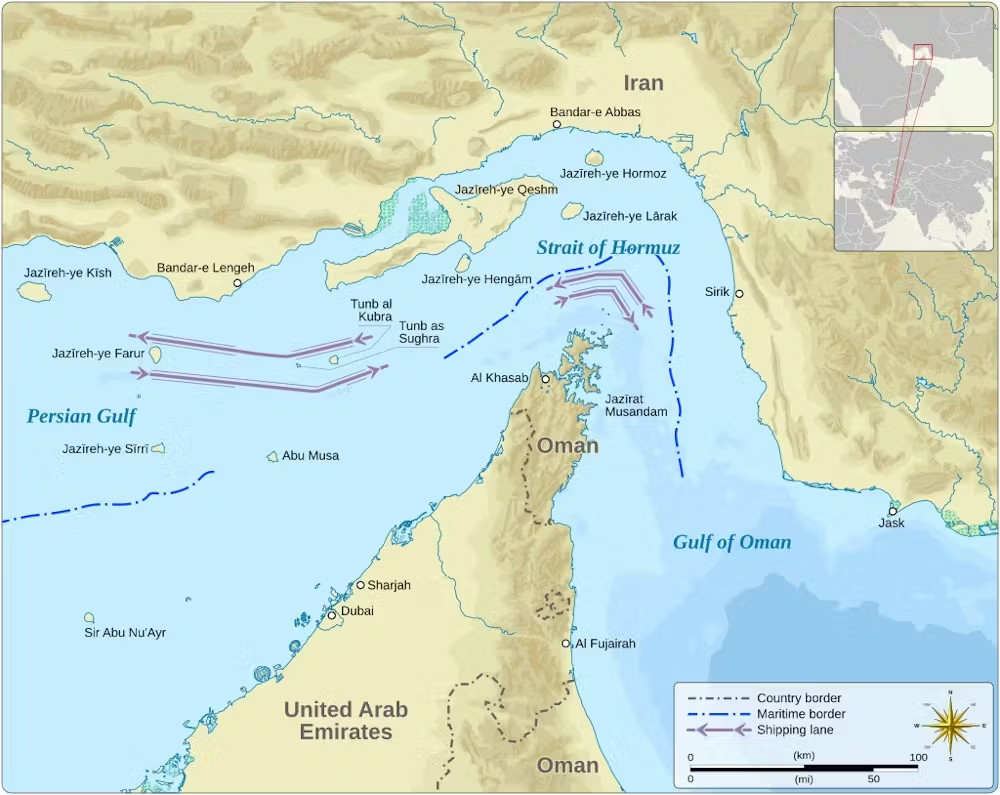
Iranian suspicion regarding US motives
A highly precarious ceasefire currently remains in place across the theater of war, which initially erupted following joint US-Israeli airstrikes against Iran on February 28. In the wake of those initial attacks, Iran opened fire on Gulf states hosting American military installations, while intense combat operations broke out between Israel and the Iranian-backed Hezbollah group in Lebanon. However, no substantial breakthrough has been achieved in peace negotiations, as a stringent US naval blockade of Iranian ports and Tehran’s tight operational grip on the Strait of Hormuz—a vital global energy chokepoint—continue to stymie the Pakistan-mediated diplomatic talks. The two senior Iranian officials noted that deep suspicion remains embedded within Tehran's high command, where planners view the temporary cessation of hostilities as a tactical deception by Washington designed to manufacture a false sense of security before launching a secondary wave of devastating airstrikes.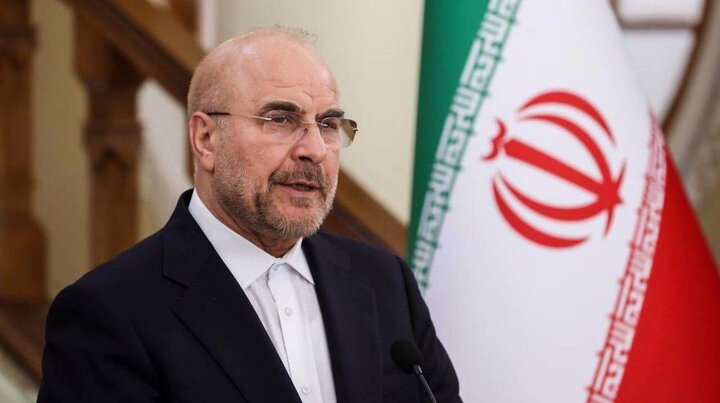
Mohammad Baqer Ghalibaf
The role of Mohammad Baqer Ghalibaf
Iran’s chief peace negotiator, Mohammad Baqer Ghalibaf, stated on Wednesday, May 20, 2026, that both "overt and covert maneuvers by the enemy" indicate that the Americans are actively positioning assets for a renewed military offensive. While it is universally understood that Israel possesses a highly sophisticated nuclear weapons stockpile, Tel Aviv has maintained a strict policy of deliberate ambiguity surrounding the issue for decades, refusing to officially confirm or deny its existence. Prior to the outbreak of conventional warfare, Iran had demonstrated a conditional willingness to down-blend half of its 60% enriched uranium stockpile—a purity level far exceeding civilian power requirements. However, intelligence sources indicate that this diplomatic flexibility evaporated entirely following Trump’s repeated threats to authorize sweeping military strikes against Iran. Simultaneously, Israeli officials told Reuters that it remains highly uncertain whether Trump will ultimately order a full-scale offensive or grant Israel the definitive green light to resume independent combat operations. Tehran has vowed to deliver a crushing retaliatory response in the event of an attack. Nonetheless, an diplomatic source noted that workable frameworks still exist to resolve the impasse. "There are viable technical solutions, such as down-blending the existing inventory under the direct supervision of the International Atomic Energy Agency (IAEA)," one Iranian source remarked.
Assessing Iran's enriched uranium stockpiles
The IAEA estimated that Iran possessed 440.9 kilograms of 60% enriched uranium when Israel and the US launched targeted strikes against Iranian nuclear sites in June 2025, though the exact volume that survived those bombardments remains unverified. IAEA Director General Rafael Grossi stated in March that what remained of this specific stockpile was primarily secured within a fortified bunker complex at the Isfahan nuclear facilities, with the agency estimating the remaining volume at just over 200 kilograms. The IAEA also believes that a portion of the inventory is located within the sprawling Natanz nuclear complex, where Iran previously operated two distinct enrichment plants. Iran continues to maintain that its inventory of highly enriched uranium is strictly designated for civilian medical research and to fuel a specialized research reactor in Tehran, which operates on smaller quantities of uranium enriched to approximately 20% purity.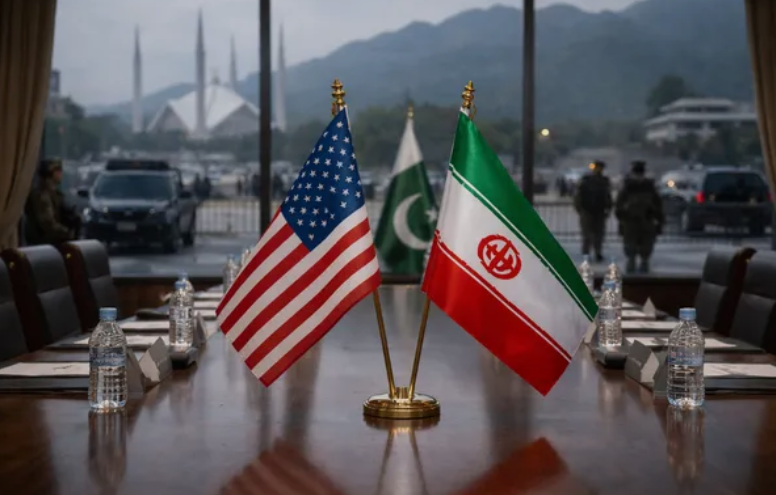
Final diplomatic push before escalation
In the meantime, Pakistani intermediaries have reportedly delivered a direct message from Washington to the Iranian leadership, prompting the Pakistani Chief of Army Staff, Asim Munir, to undertake an emergency diplomatic mission to Tehran today, May 21, 2026. General Asim Munir's sudden arrival in Tehran is being viewed by regional analysts as a monumental development, as a high-level military deployment of this nature would not occur unless critical, non-negotiable messages required immediate personal delivery. Many diplomatic observers view this as the absolute final window of opportunity to prevent a return to full-scale warfare, though profound structural disagreements continue to stall progress. Iran is demanding ironclad guarantees against future military aggression, yet Washington remains unable to guarantee that Israel will halt its targeted assassinations of high-ranking Iranian officials inside the country. Tehran is further demanding the recognition of its operational control over the Strait of Hormuz, the immediate repatriation of its frozen sovereign financial assets, and the right to retain at least a partial fraction of its enriched uranium within domestic borders. Conversely, the US is demanding that Iran completely dismantle its entire nuclear infrastructure, maintaining that only the single facility in Tehran may remain open, albeit stripped entirely of any future uranium enrichment capabilities. Severe friction also persists regarding the sequencing and timeline of the proposed treaty. The US insists that the agreement must be implemented comprehensively and immediately, whereas Iran argues that if hostilites are permanently terminated within the first 30 days, the remaining operational phases can then proceed sequentially.
US message delivered via Pakistan to finalize treaty terms
According to reporting by Al Arabiya, a formal peace agreement between the United States and Iran could potentially be announced within the coming hours as diplomats rush to bridge the remaining divides. The network reports that intense, back-channel efforts are currently underway to finalize the precise text of the peace treaty. As part of this push, Pakistan’s Army Chief Asim Munir is expected to arrive in Iran today, Thursday, May 21, to present the finalized blueprint of the agreement, following a preparatory visit to Iran on Wednesday, May 20, by Pakistani Interior Minister Mohsin Naqvi. The report adds that a decisive secondary round of diplomatic negotiations is scheduled to take place in Islamabad, Pakistan, toward the end of May. The state-run Iranian news agency IRNA reports that the high-profile visit by Pakistani Army Commander Asim Munir to Tehran is explicitly aimed at narrowing the operational gaps between the two sides, thereby laying the groundwork for the formal acceptance of a bilateral US-Iran memorandum. According to commentary from ISNA, overcoming the remaining geopolitical hurdles will ultimately require the US to completely abandon its unilateral military objectives.
www.bankingnews.gr













Readers’ Comments