

Unlike most countries, Finland has integrated civil defense directly into everyday urban planning.
Finland has developed one of the most extensive civil defense systems in the world, with thousands of underground bunkers built beneath cities like Helsinki, demonstrating the war hysteria prevailing in Europe in the shadow of the Russia-Ukraine conflict. The largest of these, the Merihaka civil defense shelter, can accommodate approximately 6,000 people and is located 25 meters underground, carved into solid rock. What makes the Finnish system unique is its dual role. These spaces are not abandoned bunkers but functional public facilities used daily as sports centers, gyms, and playgrounds, which can be converted into emergency shelters within 72 hours, according to Reuters. This infrastructure was not created by accident; it is the result of a long-standing national policy mandating the construction of shelters beneath large residential and commercial buildings, reflecting Finland's historical security concerns and its geographical proximity to Russia.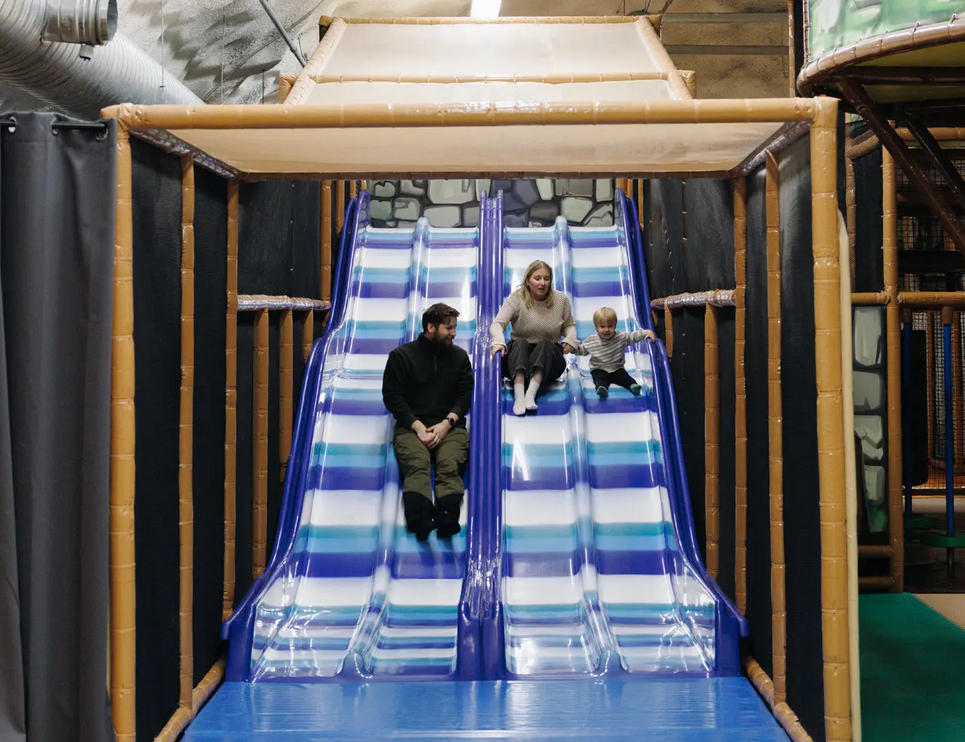
Civil defense as a part of daily life
Unlike most countries, Finland has integrated civil defense into everyday urban planning. Every building over a specific size is required to have a shelter, with the cost integrated into the construction itself, creating a national network of more than 50,000 shelters. The result is a system where emergency preparedness is not treated as emergency infrastructure, but as a core element of urban development. This "normalization" is now attracting global interest from governments and municipalities seeking scalable models of resilience. The system also reflects a broader strategic logic: preparation is not merely military, but architectural and socially integrated.
Global interest in Finnish expertise
Interest in Finnish shelter technology has risen rapidly as international security concerns intensify. Delegations from Ukraine, Poland, and Gulf countries have visited Helsinki to study the model, alongside international organizations and infrastructure designers. Countries directly affected by military conflicts, such as Ukraine, view Finnish shelters as a practical blueprint for combining daily life with wartime protection. Even wealthier states, including actors linked to energy-based Gulf economies, are now considering large-scale underground infrastructure for civilian protection. Finnish companies specializing in blast-proof doors, ventilation systems, and emergency infrastructure are seeing international demand skyrocket. The sector, once considered niche, is gradually transforming into a strategic export industry.
Ukraine and Poland change strategy
The war in Ukraine has radically altered how Europe approaches civil protection. Ukrainian cities under constant aerial threat are now experimenting with dual-use shelters that function as schools and sports facilities, reflecting both necessity and adaptation. Poland is also investing heavily in reconstructing its civil defense after decades of neglect. However, this rapid shift has highlighted a fundamental contradiction: stricter shelter regulations increase safety, but simultaneously drive up construction costs, triggering backlash from private developers. This creates a political dilemma that many countries will likely face if they attempt to replicate Finland's model on a large scale.
The new era of the "militarized" city
The growing international interest in Finnish-style shelters signals a deeper shift in how states now perceive security. Civil defense is no longer viewed as a Cold War relic, but as a cornerstone of national resilience in an era characterized by missile strikes, drone attacks, and vulnerable critical infrastructure. The primary consequence is that modern urban planning is gradually acquiring military characteristics, even in times of peace. Cities are increasingly designed under the assumption that daily life must be able to continue under active threat, rather than simply being evacuated.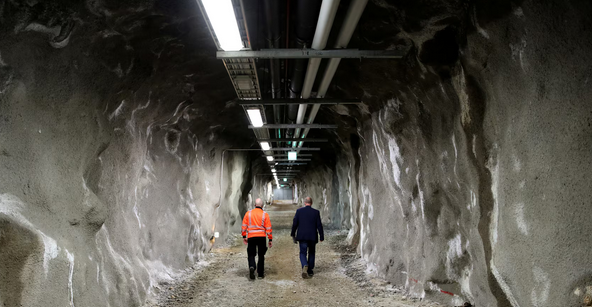
What may follow
If this trend continues, three key developments are likely. First, underground infrastructure will evolve into a major global construction sector, particularly in Europe, the Middle East, and parts of Asia exposed to geopolitical risks. Second, civil defense standards may gradually transition from optional readiness measures into mandatory construction requirements in more countries, especially near conflict or high-risk zones. Third, a new divide may emerge between countries possessing integrated resilience infrastructure and those that do not. The former will be more likely to maintain social and economic continuity during crises, while the latter may face much higher disruption costs in cases of conflict or instability.
The new concept of national security
In the long term, the Finnish model suggests a broader redefinition of national security, where resilience is measured not only by military might, but also by how effectively civilian life can continue underground in the face of modern forms of warfare.
www.bankingnews.gr










Readers’ Comments