

A dramatic warning regarding the trajectory of global crude oil stockpiles has been issued by the Executive Director of the International Energy Agency (IEA), Fatih Birol, sounding the alarm for international markets. Speaking from the sidelines of the G7 finance ministers' summit in Paris, the head of the IEA underscored that reserves are "running dry" at an exceptionally rapid pace and are sufficient for only a few weeks, as a direct consequence of the ongoing war in Iran and the blockade at the Strait of Hormuz.
"It will be a matter of several weeks, but we must be cognizant of the fact that they are declining rapidly," he told reporters on the sidelines of the G7 finance ministers' summit in Paris. "This could have significant repercussions on food prices and, combined with higher energy costs, may provide a major boost to inflation figures," he noted characteristically.
Birol went on to emphasize that the release of strategic oil reserves has added 2.5 million barrels of oil per day to the market, but he stressed that these stockpiles are not limitless. Meanwhile, speaking earlier today, Monday (May 18, 2026), French Finance Minister Roland Lescure, who is hosting the G7 meetings, stated that an announcement regarding strategic reserves was made a few months ago and "if necessary, we will do it again in the future."
Unprecedented rate of reserve depletion
Prior to the US and Israel strikes on Iran in February, there was a surplus in the oil markets. However, the escalation of the conflict completely reversed the situation. Last week, the IEA spoke of an unprecedented rate of reserve depletion due to the conflict in Iran, recording a historic plunge of 246 million barrels during March and April. The IEA coordinated the largest release of strategic reserves in history in March, but forecasts now indicate that global oil supply will log a drop of 3.9 million barrels per day overall for 2026, coming into sharp contrast with the agency's previous estimates.
'Armageddon' scenario from airlines
Meanwhile, statements by Ryanair's Chief Financial Officer, Neil Sorahan, have sent shockwaves through the industry, revealing that the company has prepared for an "Armageddon scenario" amid the jet fuel crisis.
"Do we have plans for some kind of Armageddon scenario? Of course we do, but I don't see it materializing. Based on current data, we are running a full flight schedule this summer and plan to operate a full schedule during the winter season as well," he stated distinctively when speaking to CNBC. "I believe that in the winter we will see some of the weaker carriers, who were already facing issues prior to the war, potentially being driven to collapse," Sorahan noted.
The company has hedged 80% of its fuel for the summer at $668 per metric ton, citing the "economic uncertainty" caused by the conflict in the Middle East and the ongoing blockade of the Strait of Hormuz. The remaining 20% of fuel that has not been covered by hedging is experiencing a "surge" due to price volatility. Sorahan clarified that the airline "is not planning flight cancellations." He also told CNBC that he would not be surprised if this winter he saw certain European airlines "facing severe problems," in a scenario similar to what occurred with Spirit Airlines in the US. That specific carrier collapsed as the jet fuel crisis piled onto its chronic problems, including heavy debts and soaring costs.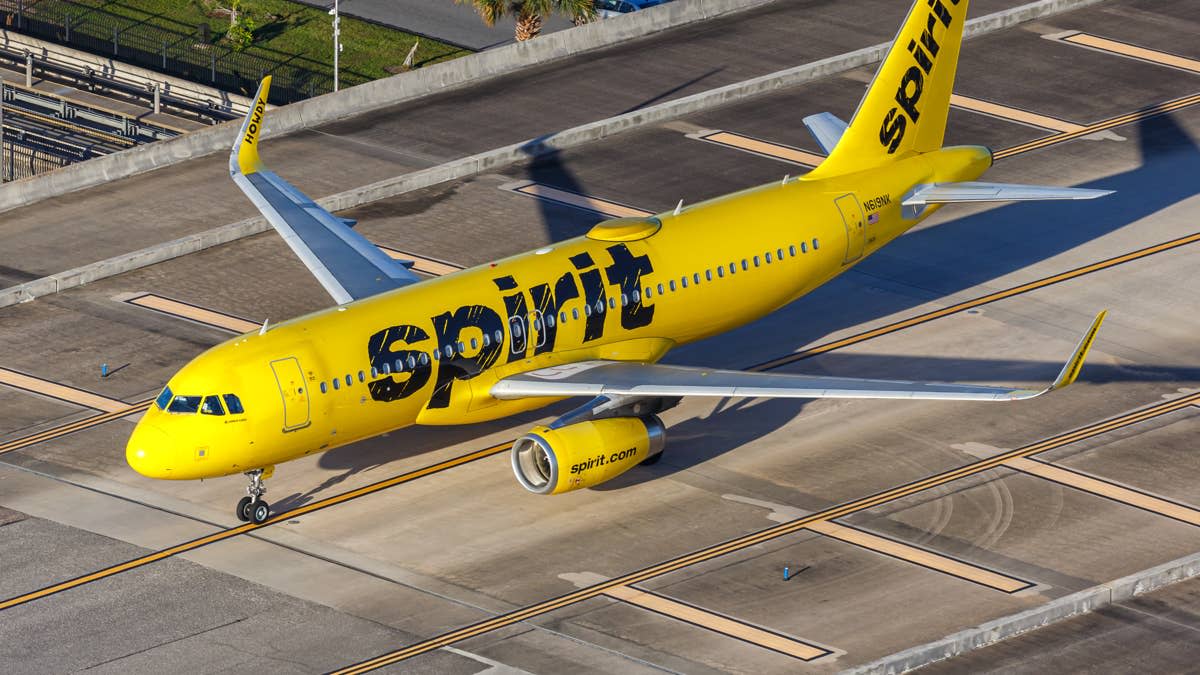
"We are obviously in a highly volatile oil market right now. If we go back a few months, we probably had some concerns regarding oil supply, but we are increasingly confident that there will be no issues with oil this summer," Sorahan stated. He explained that Ryanair is not "overly worried" about its jet fuel supply, as Europe's dependence on Hormuz is decreasing, with suppliers now securing oil from countries such as the US, Venezuela, and Brazil, among others.
"Nevertheless, I believe that prices will remain at higher levels for a longer period of time, a fact that puts Ryanair in a particularly strong position, given the robust fuel hedging we have secured," Sorahan added. Ryanair's Chief Executive Officer (CEO), Michael O'Leary, had predicted in April, during a conversation with CNBC, "genuine collapses" for other airlines if the price of jet fuel remained consistently high. "I believe there will be bankruptcies," O'Leary had stated. "If the price continues at $150 a barrel in July, August, and September, then you will see European airlines collapse, and that, in the medium term, would likely be good for Ryanair’s operations."
www.bankingnews.gr









Readers’ Comments