

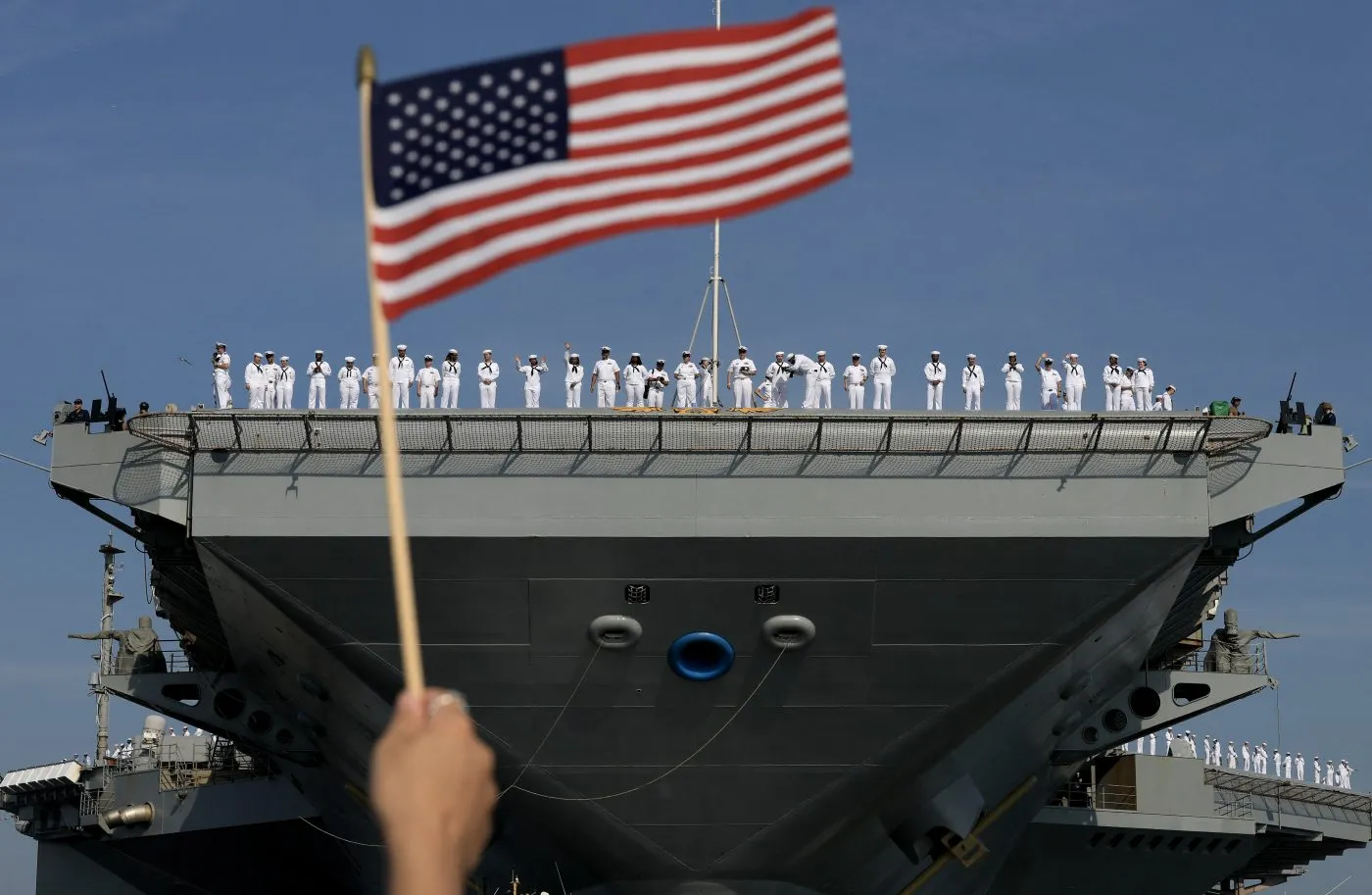
The return of the USS Gerald R. Ford to the US after 326 consecutive days of deployment is no longer presented merely as a military event, but as a symbol of exhaustion, overextension, and the deep crisis facing the American navy. The largest aircraft carrier in the world finally returned to the Norfolk naval base in Virginia, yet behind the celebratory statements of the Pentagon and patriotic speeches hides a completely different reality: hundreds of sailors were pushed to their limits, trapped for nearly a year at sea, under conditions that in some cases resembled a floating crisis rather than the pride of the American fleet. The deployment of the USS Gerald R. Ford constituted the longest mission of an American aircraft carrier in the last 50 years. This, however, which is presented by Washington as a historic achievement, transforms for many analysts and crew members into proof that the US has exhausted the limits of its military mechanism in the effort to maintain global military dominance.
From the Mediterranean to the Caribbean and then to the war with Iran
The mission of the USS Gerald R. Ford began on June 24, 2025 as a supposedly routine deployment to the Mediterranean and Europe, in the framework of NATO operations. Initially, the aircraft carrier participated in exercises such as Neptune Strike in the Adriatic and the central Mediterranean, before continuing missions in the North Sea and even in the Arctic. But very quickly, the mission turned into an endless wander of war. As tension with Venezuela was increasing, the Pentagon decided to send the USS Gerald R. Ford to the Caribbean, in the framework of a military operation near Venezuela under the pretext of combating drug cartels. The deployment that was supposed to finish by Christmas of 2025 was extended again and again, as the aircraft carrier participated even in the operation to kidnap Nicolas Maduro in early 2026. When the operation was completed, many in the crew believed that they would finally return to their families. However, the relief lasted very little. The Pentagon decided on a new massive military concentration in the Middle East due to the war with Iran, and the USS Gerald R. Ford was ordered to head again to a new theater of operations, this time in the area of responsibility of CENTCOM. For the crew, this meant that their mission was transforming into an endless nightmare.
The superweapon that was collapsing from within
While the US was attempting to project an image of military strength against Iran, chaos prevailed inside the USS Gerald R. Ford. According to disclosures by the Wall Street Journal, the serious maintenance problems caused by the excessively prolonged deployment had led even to a collapse of the ship's sewage system. More than 650 toilets of the aircraft carrier had been put out of order. Sailors waited up to 45 minutes daily to use a functional toilet. This image constitutes a shock for a ship considered the most advanced and expensive aircraft carrier in history. The USS Gerald R. Ford cost tens of billions of dollars to American taxpayers and was presented as a symbol of the new generation of American naval power. However, reality proved that even the most expensive warship in the world cannot withstand endless operations without adequate maintenance and rest for the personnel.
Fire for 30 hours inside the aircraft carrier
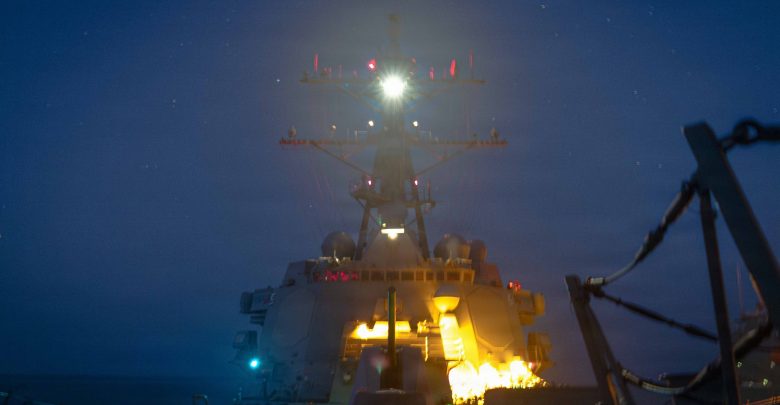
The problems, however, did not stop at the toilets and the maintenance deficiencies. On March 12, 2026, a serious fire broke out in the laundry areas and the living quarters of the crew, while the aircraft carrier was operating in the Red Sea in the framework of operations against Iran. The fire burned for more than 30 hours, injuring two sailors and destroying nearly all the sleeping areas of the crew. The incident revealed once more the real cost of the American strategy of overextension. The crew was forced to continue operations under conditions of extreme pressure, exhaustion, and psychological collapse, while Washington continued to demand an uninterrupted presence on multiple fronts.
The sacrifices that the Pentagon presents as glory
Upon the return of the aircraft carrier, the US Secretary of Defense Pete Hegseth welcomed the crew in Norfolk, attempting to present the mission as a historic success. "You did not just complete a mission. You wrote history", he characteristically stated. Pete Hegseth even referred to the fact that during the deployment, 76 babies were born to the families of the sailors, attempting to highlight the personal sacrifices of the crew. However, many critics consider that such statements reveal precisely the problem: the US has turned the exhaustion of thousands of soldiers and their families into a tool of policy and propaganda. For nearly a year, thousands of people remained trapped on a floating war front, without a clear timetable for return, as Washington continuously moved the aircraft carrier from crisis to crisis.
The war with Iran revealed the limits of the US
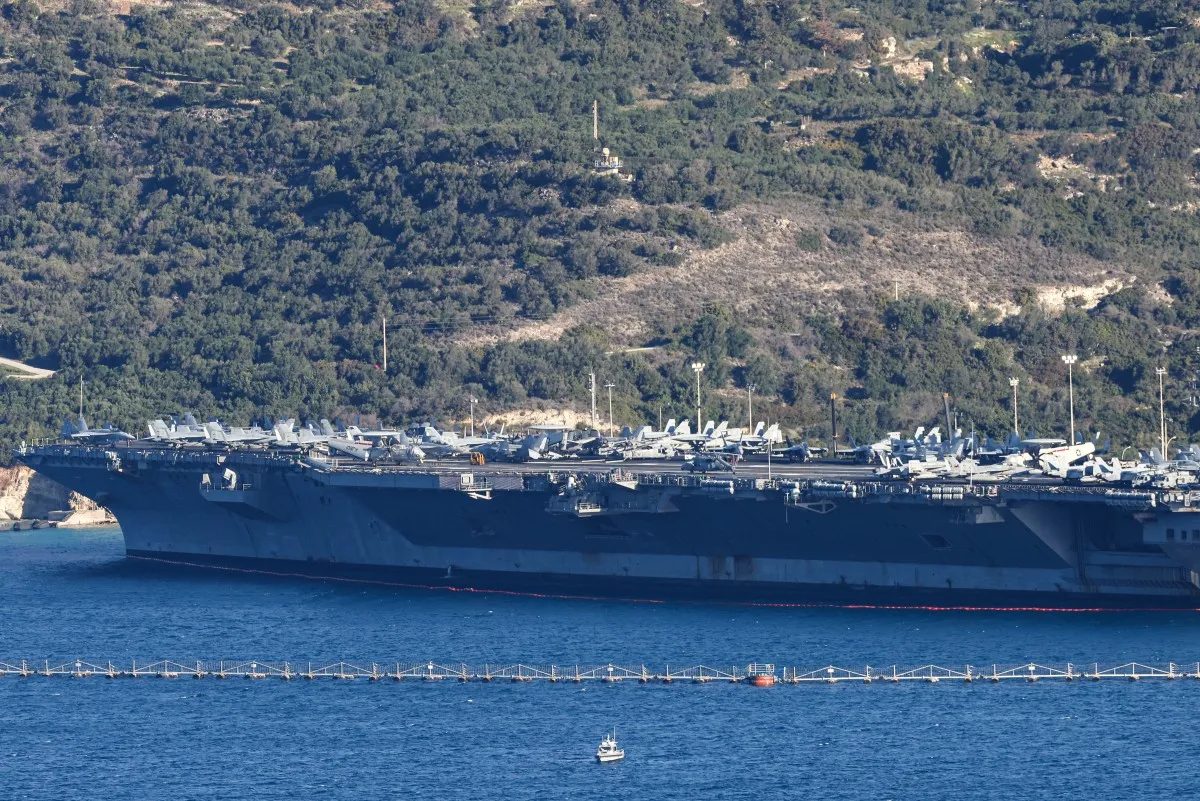
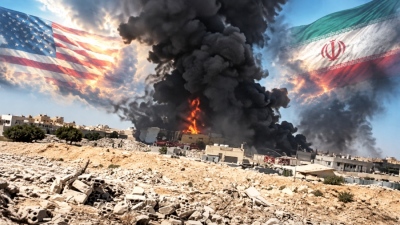
The deployment of the USS Gerald R. Ford was ultimately linked directly to the war of the US against Iran. Washington attempted to use American naval superiority to pressure Tehran and impose military dominance in the Middle East. However, reality developed very differently. Despite the concentration of two American aircraft carriers — the USS Gerald R. Ford and the USS Abraham Lincoln — Iran not only did not collapse, but managed to maintain its military capabilities and continue attacks in the region. The result was that the US was forced to keep its ships at sea for unprecedented time intervals, exhausting both the crews and the fleet itself. Even within the American military establishment, a serious discussion has now begun about whether the American navy can continue this pace of operations without collapsing operationally.
Human exhaustion behind the military superpower
The USS Gerald R. Ford covered more than 57,700 nautical miles, conducted thousands of aircraft launches and recoveries, and cooperated with more than 15 allies. Behind these numbers, however, hides a harsh reality: human exhaustion, psychological pressure, and a crew that was essentially used to its limits. The sailors did not only experience military operations. They lived through months of uncertainty, continuous extensions, hygiene problems, fires, and relentless pressure on multiple fronts. This image stands in stark contrast to the rhetoric of absolute military superiority promoted by the US.
The American navy enters a period of crisis
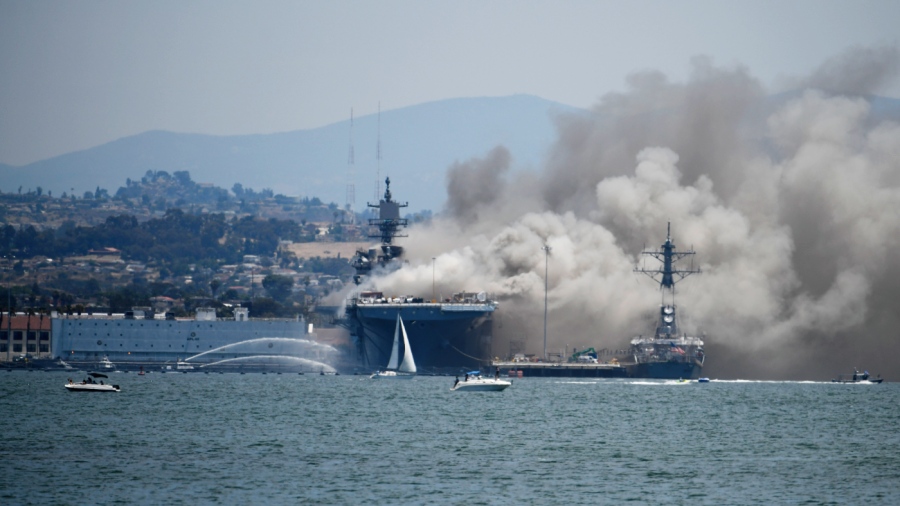
After its return, the USS Gerald R. Ford and the accompanying warships USS Bainbridge and USS Mahan will enter a long period of maintenance. This fact reveals that even the strongest naval power in the world is now struggling to maintain the pace of continuous global operations. The war with Iran and the successive crises in Venezuela, the Middle East, and the Red Sea showed that the American strategy of permanent military presence in every corner of the planet is beginning to reach its physical and operational limits. And the USS Gerald R. Ford is now turning into a symbol of this exhaustion: a gigantic ship-symbol of American power that returned to the US carrying upon it all the signs of an empire pushing its own mechanism excessively.
www.bankingnews.gr












Readers’ Comments