

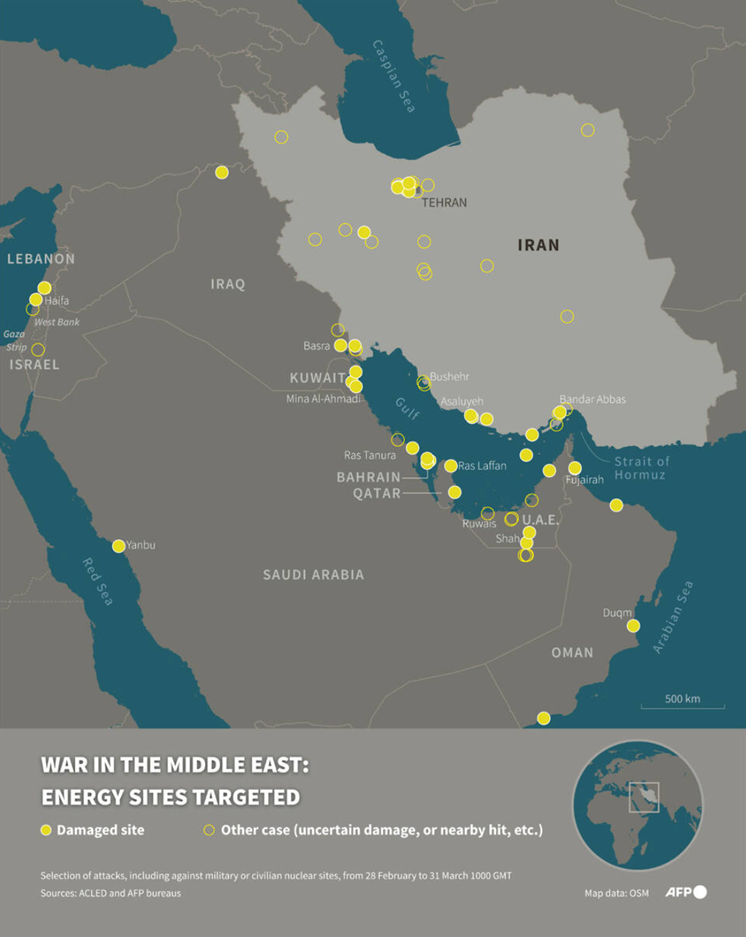
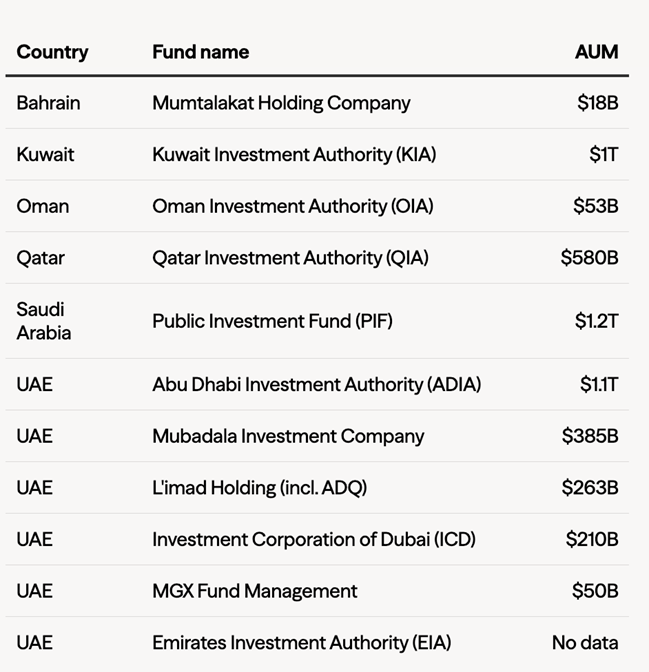
Washington's narrative is simple: The war with Iran shattered the economy of the Persian Gulf and the US is offering their allies a lifeline. The Wall Street Journal characterized the proposed dollar swap line with the UAE as a financial safety net. The Financial Times characterized it as a rescue, while CNBC spoke of a bailout. The real question however is who gains access to the balance sheet of the Fed — and under what political terms. Although the narrative is tidy, the numbers do not add up. The United Arab Emirates possess 270 billion dollars in foreign exchange reserves and approximately two trillion in sovereign wealth funds. The country that is supposedly being rescued holds ten times more dollars than the fund being used to rescue it. Bailouts rescue the weak – supposedly. In this case it protects a system that cannot withstand the disobedience of the Gulf. In mid-April 2026, the governor of the Central Bank of the UAE, Khaled Mohamed Balama, raised the idea of a dollar swap line during his meetings with the US Secretary of the Treasury Scott Bessent in Washington. The news was made public through the Wall Street Journal. A few days later, Bessent defended the idea before the Senate Appropriations Committee, characterizing the swap line, in his own words, as "proof of the primacy of the American dollar and the strength of the financial shield of the US". When asked on CNBC and the show Squawk Box if he supports the move, the US President Donald Trump replied: "If they had a problem. I would be there for them". A swap line is a backup agreement between two central banks. Think of it like an emergency pipe between two houses for water supply needs. Nothing flows until the valve is opened, but the mere existence of the pipe reassures the neighborhood. Three things are worth noting regarding the announcement. Nothing has been signed. No money has been moved. Even the embassy of the UAE reacted publicly. Any insinuation that Abu Dhabi needs external financial support, as the embassy stated, "misinterprets the facts". If then the country being rescued denies that it needs a rescue, what exactly is Washington announcing?
A yacht that... needs a lifeboat
Why would a country with trillions in state wealth need an emergency line from Washington? Mainstream media coverage points vaguely toward the instability of the war with Iran. The balance sheets however point elsewhere. You do not throw a life jacket to a person who is already on his own yacht. The UAE possess ten times more dollar reserves than the entire fund that Bessent can use without resorting to Congress. This fund —the Treasury Exchange Stabilization Fund (ESF)— is limited to approximately 219 billion dollars. Only the reserves of the Central Bank of Abu Dhabi exceed it. If the sovereign wealth funds of the Emirates are also added, then the rescuer appears with a thimble against a flood that. does not exist. Bessent stated to the Senate that "many other countries, including some of our Asian allies", have requested their own swap lines. He described the goal as the creation of "new dollar financing centers in the Gulf and Asia". The request of the Emirates may constitute the entry point, yet Washington is planning something broader: a regional liquidity map based on the dollar, precisely at the moment when the confidence of the Persian Gulf in American protection is beginning to fade. The swap line constitutes a prefabricated infrastructure of pressure — designed not for a liquidity shortage in the UAE, but for the day when the capitals of the Gulf will decide that the dollar is no longer worth the obedience it demands.
The dollar recycling machine is beginning to be destroyed
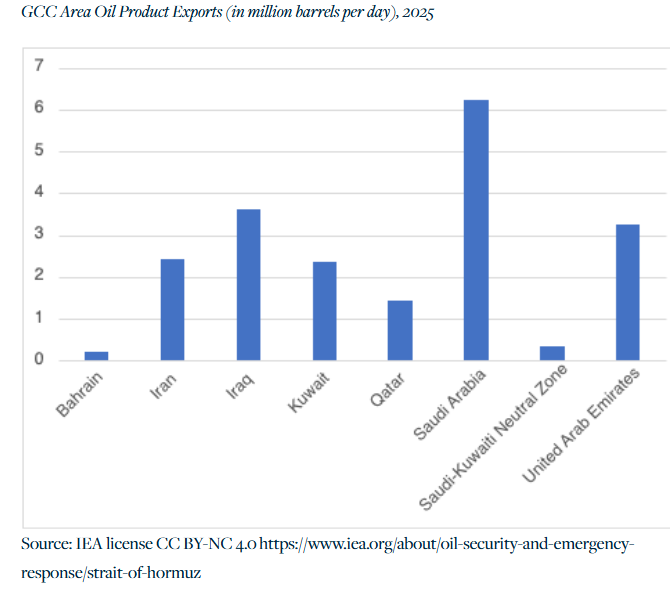
For more than 50 years, the dollar operates through a silent machine. The Persian Gulf sells oil priced in dollars. These dollars return to the US through government bonds, real estate, stocks and weapons purchases. John Perkins, author of the book Confessions of an Economic Hit Man, described it as the way the empire pays itself. This return of capital is what makes an 8% federal deficit sustainable. The American economy does not balance its books — it delegates this balance to those who recycle the dollar surpluses. The Gulf has been the sole financier whose contribution is directly linked to oil. The war with Iran and the blockade of the Strait of Hormuz did not destroy the Gulf. The Gulf remains solvent. What was called into question was the recycling process itself.
The commitment for investments
In May 2025, Trump's tour in Riyadh and Abu Dhabi led to two of the largest packages of commitments in modern American diplomacy. Saudi Arabia committed to investments amounting to one trillion dollars in weapons, energy and infrastructure, including a 142 billion dollar weapons deal — the largest in American history. The UAE committed to 1.4 trillion dollars over a 10-year horizon, targeting artificial intelligence, semiconductors and biotechnology. Both packages relied more on memorandums of understanding than on binding contracts.

Security guarantees from the US offer nothing
A year later, with the war with Iran in progress, the Strait of Hormuz contested and the capitals of the Gulf seeing that American security guarantees do not offer the expected protection, a question hovers over these memorandums: will they finally be implemented? And if Riyadh and Abu Dhabi are no longer certain that recycling dollars toward Washington secures them safety, why should they continue to do it at the same pace? The swap line appears precisely at the moment when this question is raised. A warning shot to those betting against the dollar. It is worth seeing who is at the center of this initiative. Scott Bessent made his fortune in 1992 betting against the British pound along with George Soros, contributing to the collapse of the Bank of England within a single afternoon. He spent his career as an aggressive investor looking for weak currency systems to exploit. Now he is the man called upon to protect them. The fund from which he draws resources, the ESF, is limited to approximately 219 billion dollars. It is the total of funds he can use without approval from Congress. In relation to the scale of the problems, this is pocket change. What then does this announcement really do? It is a warning shot to the trading floors of London, Singapore and Hong Kong — the places where the next big bet against the dollar could be placed. Bessent knows these rooms, because he once sat in one of them himself. And he also knows that a credible threat can function like a real fire. The goal is for the trade to look already overcrowded before it even begins. The message is in his own words. Bessent did not describe the swap line with the UAE as an emergency measure. He characterized it as "an important first step" toward permanent dollar financing centers in the Gulf and Asia. The pipes are already leading toward the East. The mainstream presents the swap line as a bilateral affair.

The factor that is silenced is China
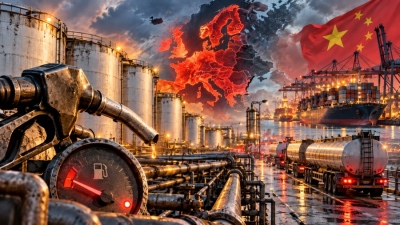
The UAE maintain a swap line in yuan with the People's Bank of China already since 2012. Saudi Arabia signed its own in November 2023. Both participate in Project mBridge, the Chinese-inspired platform that allows central banks to conduct settlements in their own digital currencies, bypassing the dollar. The Chinese yuan swap network now covers more than 40 countries. The permanent network of the Fed reaches just five. When officials of the UAE warned in April that oil sales could be transferred to the yuan, mainstream media perceived it as a negotiating maneuver. It was not a bluff. The infrastructure already existed. The pattern is not limited to central banks. Ten days after the warning of the UAE, Saudi Arabia gave 12 million of its citizens direct access to Alipay+, the Chinese digital consumer payments network. Riyadh creates alternatives at every level: central bank settlements via mBridge, consumer payments via Alipay+ and the national network mada underneath it all. You do not need to announce a turn when the infrastructure already exists. First you build the alternative. Then you let the dependence on the dollar erode on its own. The permanent financing centers of Bessent in the Gulf and Asia come after China has spent 15 years building the infrastructure for trade beyond the dollar system. Washington is now asking the Gulf to recommit to channels controlled by the US, at the moment when the alternative solution is no longer theoretical. And after the war with Iran, which revealed the limits of American security guarantees, this demand carries less weight than in the past.
The gate of the Fed opens inward
The real change begins with the entry of Kevin Warsh into the game when he takes the reins of the Fed. Jerome Powell, the outgoing chairman of the Federal Reserve, does not depart with a clean record. In January 2026, the Department of Justice issued grand jury subpoenas to the Fed, threatening criminal charges related to Powell. He himself characterized the investigation a pretext to exert pressure on the Fed regarding interest rates. Trump had repeatedly shown that he desired the removal of Powell, but the pressure campaign weakened later, when a federal judge dismissed the subpoenas of the Department of Justice. Warsh is not a neutral technocrat. He is a former Morgan Stanley banker, with a personal fortune exceeding 100 million dollars, who received last year 10.2 million dollars in advisory fees from the family office of Stanley Druckenmiller. He is also married to a member of the Lauder family — one of the largest donor networks of Trump, with deep connections in the political architecture of the Abraham Accords. The man being positioned to open the gates of the Fed toward the Gulf does not come from outside the very system for which these gates are being built. In his official responses to Senator Elizabeth Warren and other Democrats of the Senate Banking Committee, Warsh formulated the doctrine that makes all this possible. "The independence of the Fed is at its peak regarding the operational exercise of monetary policy", he wrote. "This degree of independence does not extend to the full spectrum of functions assigned to it by Congress". In issues "affecting international finance", Warsh added, "the Fed will cooperate with the Administration and Congress". The gates of the Fed toward the global economy are handed over to the executive branch by the man who will guard them. Three men are now at the core of this architecture. Bessent at the Department of the Treasury — the aggressive investor who once dismantled a central bank — presents the proposal. Warsh at the Fed holds the keys to the liquidity supporting it. And the Lauder family, behind both, functions as a political machine to promote the Abraham Accords in the Gulf. Does liquidity follow normalization? Will the window of the Fed open for the states of the Persian Gulf that sign the Abraham Accords and remain closed for the rest? From now on, watch who gains access to the American liquidity channels. This will answer the real question. The rest are already building their own.
www.bankingnews.gr

Readers’ Comments