

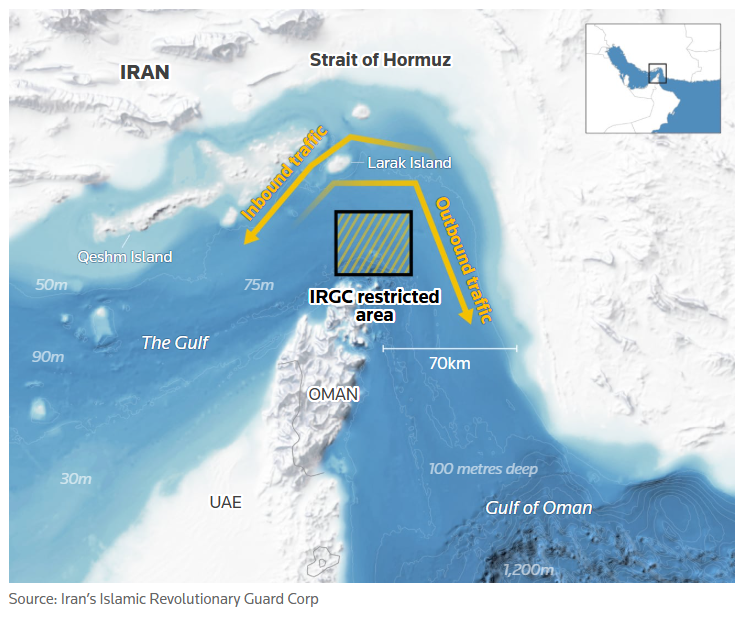
The US of Donald Trump failed to drag the whole of the West into the deadly trap of Hormuz. The Europeans, main victims of the energy crisis, seek direct negotiations with Baghdad. The state Iranian television network Islamic Republic of Iran Broadcasting (IRIB) broadcast on May 16 that several European governments have opened direct channels of communication with Tehran to negotiate safe passage through the Strait of Hormuz. The IRIB did not name the European countries participating in the talks, but mentioned that the contacts focus on securing direct transit approval from the commanders of the Islamic Revolutionary Guard Corps Navy (IRGC Navy), who oversee Iranian control over the strategic maritime passage. This development is noted while the Strait remains closed to ships linked to the US and Israel, at a time when commercial fleets from China, Japan, Pakistan and other countries considered non-hostile have already secured safe passage through direct contacts with Tehran. As the United States is unable to resolve the crisis caused by the war against Iran, European governments seem to be adapting to the expanding influence of Tehran in the Strait of Hormuz, gradually reducing their dependence on the pressure tactics of Washington.
European capitals open direct negotiations with Iranian navy to secure passage through Strait of Hormuz
— The Cradle (@TheCradleMedia) May 16, 2026
——
European maritime capitals have initiated direct contact with Tehran to secure passage through the blockaded Strait of Hormuz, according to a report broadcast by IRIB today.… pic.twitter.com/N6PwkbCGnP
The mechanism proposed by Iran
The Ministry of Economy of Iran is reportedly, at the same time, promoting a proposal for the management of the Strait of Hormuz through a cargo insurance framework, aiming to allow post-war control of the strategic maritime passage in accordance with international law, while creating a new source of revenue for the country. According to a text secured by Fars News Agency (16/5), the initiative seeks to establish a mechanism through which the management of the Strait of Hormuz becomes possible through a system of insurance premiums, in a way that will remain acceptable to foreign states in non-war conditions, while allowing Iran to maintain essential control of maritime activity in the region.
Political oversight mechanism
In the framework of the proposal, Iran will acquire broader oversight capabilities, including expanded access to shipping data and the ability to separate ships according to their country of origin during transit through the passage. Since the start of the US–Israel war, Iranian officials insist that the security of the Strait of Hormuz belongs to the armed forces of the Islamic Republic. Under this light, the proposal argues that the management of the passage must remain under Iranian jurisdiction, because of the damages that, according to Tehran, were caused by the transit of hostile ships through the area. The text further highlights that, from the perspective of international law, the imposition of direct tolls or transit fees after the war could have serious political consequences. In such a scenario, the role of Iran would likely be limited to the provision of shipping services, which — according to the report — would not yield more than 2 billion dollars annually even under ideal conditions. Concurrently, it is noted that infrastructure limitations would significantly restrict the profitability of such a model.

The management model can yield billions
Conversely, the insurance approach is presented as a purely political mechanism that could be more easily accepted internationally compared to the imposition of direct charges or transit fees. According to the proposal of the Ministry of Economy, Iran will have the capability to issue various maritime coverage insurance policies, as well as certificates of financial responsibility that will be linked to transit through the Strait of Hormuz. The plan initially predicts insurance coverage for risks related to inspections, confiscations, and detentions of ships. Although these specific insurance policies will not cover damages from military strikes, the supporters of the proposal estimate that the limited level of risk could nevertheless bring Iran revenues exceeding 10 billion dollars.
It is now crystal clear that the U.S. is seeking to exploit the number of the so-called co-sponsors of its politically motivated and one-sided draft resolution to manufacture a false image of “broad international support” for its ongoing unlawful actions and to pave the way for…
— I.R.IRAN Mission to UN, NY (@Iran_UN) May 15, 2026
Disagreements over the sustainability of the plan
Medi Mohammadi, a trade expert and associate of the think tank Resistance Economy, argued that the proposal remains incomplete due to the heavily monopolistic nature of the global marine insurance market, where Iran possesses limited influence. He also warned that ships insured exclusively through Iranian companies might face problems accessing international ports. However, Taha-Hossein Madani, head of the think tank Smart Governance, stated that the model could be implemented through reinsurance agreements with the participation of Russian and Chinese companies. According to Madani, ships could acquire the proposed coverage as a supplementary policy alongside their basic insurance contracts. On May 8, the head of the National Security and Foreign Policy Committee of the Iranian Parliament, Ibrahim Azizi, stated that a draft law aimed at defining the legal framework for the Strait of Hormuz has been completed. The relevant legislation is expected to be approved quickly once the parliament reopens, with Iranian officials characterizing it as a deterrent law. Azizi added that multiple meetings have already taken place with competent bodies, among which the Ministry of Foreign Affairs and the Ports and Maritime Organization of Iran, in the framework of the preparation of the bill./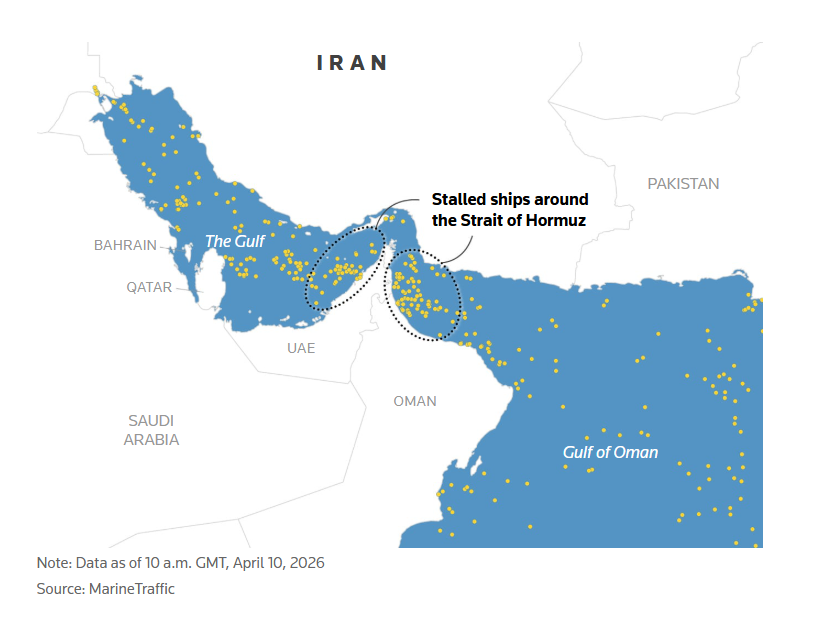
Araghchi: We are ready for conflict with the US, they are paying a heavy cost for Hormuz and are unreliable
On May 16, the Minister of Foreign Affairs of Iran Abbas Araghchi stated that the Strait of Hormuz remains open to ships, with the exception of those that are at war with Tehran, highlighting at the same time that Iran does not trust the United States regarding negotiations. Speaking to reporters in New Delhi, on the sidelines of the BRICS foreign ministers' summit, Araghchi mentioned that Tehran will negotiate with Washington only if it proves that it is serious. The Iranian minister characterized the situation in the Strait of Hormuz very complicated, as both the US and Iran impose competing restrictions on navigation, allowing or prohibiting the transit of ships depending on their relations with the opposing side. Iran is ready for direct military conflict with the United States, if negotiations do not lead to an acceptable result, he pointed out.
The cost of the war increases
Araghchi also warned that the US–Israel war against Iran does not only hit the Middle East but is starting to affect American households as well. "Americans are being informed that they have to absorb the explosively rising cost of a war of choice against Iran", Araghchi wrote on platform X, accompanying his post with an image showing the rise in US treasury bond yields. "Leave aside the increase in fuel prices and the bubble in the stock market. The real pressure begins when the American debt and mortgage rates increase. Auto loan delinquencies are already at the highest level of the last 30 plus years", the Iranian Minister of Foreign Affairs added. The talks being conducted through the mediation of Pakistan have come to a deadlock, after Tehran and Washington mutually rejected their latest proposals. Araghchi stated that the conflicting messages from the US have made the process even more difficult.
"We are giving a chance to diplomacy"
The Iranian Minister of Foreign Affairs noted that Tehran is trying to maintain the ceasefire so that a chance is given to diplomacy, clarifying however that Iran remains ready to return to military action if it receives an attack. As he mentioned, two of the key issues of the negotiation are the nuclear program of Iran and the authority of Tehran over the Strait of Hormuz. On May 14, the President of China Xi Jinping and the US President Donald Trump met in Beijing, where they discussed US–China relations, Taiwan, trade and developments in West Asia. The two sides agreed that the Strait of Hormuz must remain open to ensure energy flow, as the passage remains closed to the US and Israel after the war against Iran. Araghchi welcomed the diplomatic initiative of Beijing, emphasizing the importance of China as a strategic partner and adding that "we know that the Chinese have good intentions". He himself had emphasized in a previous post on platform X that "as far as Iran is concerned, the Strait of Hormuz is open to all commercial ships" and that "we did not create any obstacle. The Americans are the ones who imposed a blockade".
Almost complete paralysis of navigation
The US–Israel war against Iran has led navigation through the Strait of Hormuz to almost complete paralysis, although Tehran continues to allow transit to certain friendly countries, such as China, India, Russia, Iraq and Pakistan. The transit takes place under the condition of coordination with the Iranian naval forces, adherence to predetermined maritime corridors and the use of currencies outside the dollar, such as the Chinese yuan.
Warning of Iran to the UN
On Friday (15/5), the Permanent Mission of Iran to the UN warned that Washington is attempting to use a draft resolution in the UN Security Council, under the leadership of Bahrain, regarding the freedom of navigation in the Strait of Hormuz, in order to legitimize its aggressive policy toward Tehran and create the conditions for further military escalation. "It is now absolutely clear that the US is attempting to exploit the number of the so-called supporters of the politically motivated and unilateral draft resolution, in order to create a false image of 'broad international support' for their ongoing illegal actions and open the way for a new military adventure in the region", the Iranian mission stated via social networks. The US and Bahrain promoted the draft along with Saudi Arabia, the United Arab Emirates, Kuwait and Qatar, presenting it as an initiative to ensure navigation through the Strait of Hormuz. Iran warned that any state supporting the proposal will bear responsibility in the event of a new American escalation. "If the US provokes a new escalation, all states supporting the draft will share international responsibility along with Washington for the consequences", the Iranian mission to the UN stated, adding that "no political justification or diplomatic cover can exonerate those who facilitate, allow or legitimize American aggression".
Reactions from China and Russia
According to information, the draft resolution has already secured 112 signatures. However, the Ambassador of China to the UN stated that Beijing considers that "neither the content nor the timing is right", adding that such a resolution will not help the efforts for serious and good-faith negotiations between the two sides. At the same time, the Chinese Ministry of Foreign Affairs expressed its annoyance at the US–Israel war against Iran, stating that "this conflict should never have happened and there is no reason to continue". Reuters broadcast that the draft is expected to meet resistance from China and Russia if put to a vote, as the two countries had also exercised a veto on a similar American draft the previous month. At the same time, the New York Times reported on Saturday (16/5) that the US President Donald Trump is considering the possibility of new military strikes against Iran, while officials at the Pentagon are working on escalation plans, despite estimates by American intelligence services that Tehran has already regained access to the largest part of its missile facilities, launchers and underground infrastructure.

www.bankingnews.gr






Readers’ Comments