

Europe is dressing in khaki, destroying its economy due to the energy crisis, and preparing to give massive amounts of money for defense due to the fact that it has made - at least the political elite - Russia a top geopolitical rival. On the other hand, a European defense doctrine which does not include Russia and its geopolitical interests is certain to provoke conflict. In this context, the top military official of Germany, General Carsten Breuer, stated that Russia could militarily challenge NATO by 2029 or even earlier, citing the rearmament of Moscow, the increase in military personnel, as well as broader economic and political developments. Breuer, inspector general of the Bundeswehr, made the statements in a joint interview with his British counterpart, Air Chief Marshal Sir Richard Knighton, which was published in the Süddeutsche Zeitung. "The various indicators — rearmament, personnel increase, economic and political developments — converge on a point in time: 2029. Could it happen earlier? Yes," stated Breuer. Knighton stated that the Russian threat must be taken seriously because Moscow is fighting in Ukraine, drawing lessons from the war, and developing new technologies and military capabilities. He added that the President of Russia, Vladimir Putin, has shown his willingness to attack sovereign states.
NATO readiness and the role of the US
Breuer and Knighton stated that NATO remains united despite troop withdrawals and unclear messages from Washington. "Our problem lies in Moscow and nowhere else," Breuer said. He stressed that Germany needs fight-tonight capability, meaning the possibility of immediate force deployment, as well as increased capabilities by 2029 and technological superiority by 2035. Breuer also confirmed that the planned deployment of an American Long-Range Fires Battalion in Germany, which had been designed under the presidency of Joe Biden, seems that it will finally not take place. The American missiles were originally intended to cover the period until Germany developed its own long-range capabilities. Breuer stated that Germany is urgently examining transitional solutions, including the purchase of systems that are already available on the market. He further pointed out that he has already visited the Pentagon on the matter, while the German Minister of Defense, Boris Pistorius, is expected to travel to Washington at the end of the month to continue pushing for the purchase of Tomahawk cruise missiles. Breuer characterized the departure of 5,000 American soldiers from Germany as militarily manageable, saying that the movement of 5,000 out of nearly 40,000 soldiers does not mean a departure of the USA from NATO. On a strategic level, he stated that the move is not a game changer, although it will affect the local communities in Germany economically and socially. Knighton mentioned that the US President, Donald Trump, has characterized Article 5 of the NATO treaty as inviolable, calling it the foundation of the most successful military alliance in history. He added that Europe must assume greater responsibility.

Germany – United Kingdom military cooperation
The two military leaders also underlined the close cooperation between German and British forces. Knighton cited the joint air policing in the Baltic region with Eurofighter, the German naval patrol aircraft operating from British bases, as well as the presence of a British general with his staff aboard a German frigate in the framework of a NATO naval group. "This is the closest level of cooperation that can exist," Knighton said. Breuer stated that Germany and Britain can fight together without any doubt, adding that systems and structures should eventually become truly interchangeable and not just compatible. Referring to the European nuclear deterrence with the participation of Germany, Breuer said that the issue is political and not military and that deterrence is based on strategic ambiguity. Knighton stressed that the British nuclear capability remains fully integrated into NATO. Asked how young people can be encouraged to join the armed forces, Breuer said that freedom, peace, prosperity, and the values of Europe are threatened not sometime in the future, but today, every day. Knighton stated that strong armed forces in Europe reduce the probability of conflict through the deterrence of adversaries. "We do not want war. We avoid it through strength," he said.
The strategy of rapid rearmament by Berlin
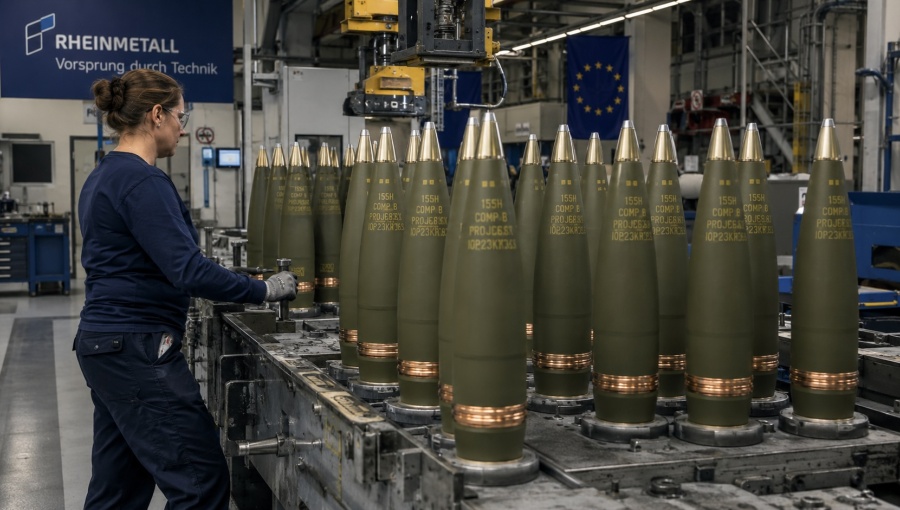
In parallel with Japan's plans for rearmament, its ally from World War II announced similar intentions. A new military strategy for the German armed forces has now been adopted, although the largest part of it remains classified. The Minister of Defense, Boris Pistorius, revealed, however, certain elements of it in a statement to the public and the parliament on April 22. In summary, he stated that, since Russia constitutes an acute military threat to Germany, the Bundeswehr must become the strongest conventional army in Europe. The text argues that Russia is preparing through military equipment for a military confrontation with NATO and considers the use of military power as a legitimate tool for the advancement of its interests. No public evidence was given to support this claim, but its absence did not prevent Brussels, Berlin, and other European capitals from repeating this narrative in recent years. The text also accuses Moscow of hybrid warfare, which includes espionage, acts of sabotage, cyberattacks, and disinformation campaigns. Here too, according to the minister of defense, no verifiable evidence can be presented because doing so would jeopardize national security interests. But does anyone believe that Western countries do not routinely use such methods, particularly against Russia?
Western hegemony under threat
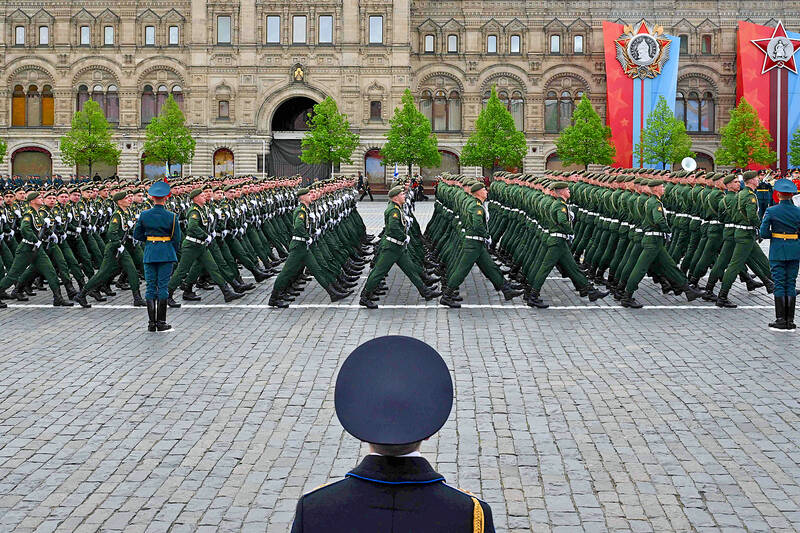
Another major danger for Germany, according to the new strategy, is the decline of the unipolar world and the rise of the Global Majority. Thus, the text states that the growing trend for a multipolar world and systemic competition exert pressure on the rules-based international order and reinforce instability, uncertainty, and insecurity. The so-called rules-based international liberal order, of course, is that in which the rules have been determined by Western elites. In any case, Pistorius stated that a three-phase strategy is being implemented for the reinforcement of the German armed forces: "In the short term, we are increasing our defensive and resilience capabilities; in the medium term, we aim for a significant and comprehensive increase in capabilities; and in the long term, we will establish technological superiority." (Under current conditions of rapid deindustrialization and energy shortages, technological superiority looks utopian.) On a personnel level, the new strategy provides for at least 260,000 active-duty soldiers and 200,000 members of the military reserve, which is upgraded to constitute an integral part of the armed forces. Today's levels are 182,000 and 34,000 respectively. Pistorius also stated: "In the future, the reserve will not simply provide temporary support to the active forces when needed. No, we explicitly consider the new reserve equal to the active forces." The new strategy also provides for improvements in military equipment and in various long-range precision weapons. Although presented publicly as a strategy of defense, the text in reality constitutes a strategy of offensive operations, as the German government refuses to engage in any diplomacy with Russia aiming at the prevention of conflict. In reality, all EU leaders have refused to even speak with the President of Russia, Vladimir Putin, since the start of the war in Ukraine.
www.bankingnews.gr









Readers’ Comments