

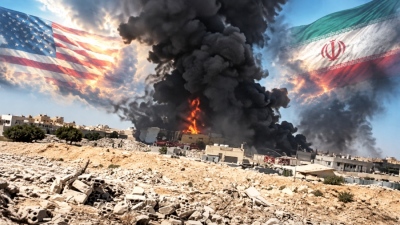
The crisis in the Middle East enters a trajectory of dangerous and uncontrolled escalation, following the categorical refusal of the US to accept the 14 point peace proposal submitted by Iran for the termination of the war.
According to information from the Tehran Times and Al Jazeera, the US chose to toughen its stance once again, bringing the burning nuclear issue back to the forefront in a pressing manner. In the aftermath, oil prices skyrocketed with American crude (WTI) recording gains of over 3.5% at 104.72 dollars and Brent strengthening by also 3% at 108.92 dollars.
The new "no" of the Americans to Iran
More analytically, according to information from the Iranian newspaper Tehran Times, the US rejected the 14 point peace proposal of Iran for the termination of the war and "repeated once again their coercive stance. Iran reportedly proposed a two-stage negotiation process. The first stage aims to terminate the war on all fronts and, if the conditions of Iran are met, the second stage of negotiations will begin, which concerns the nuclear issue.
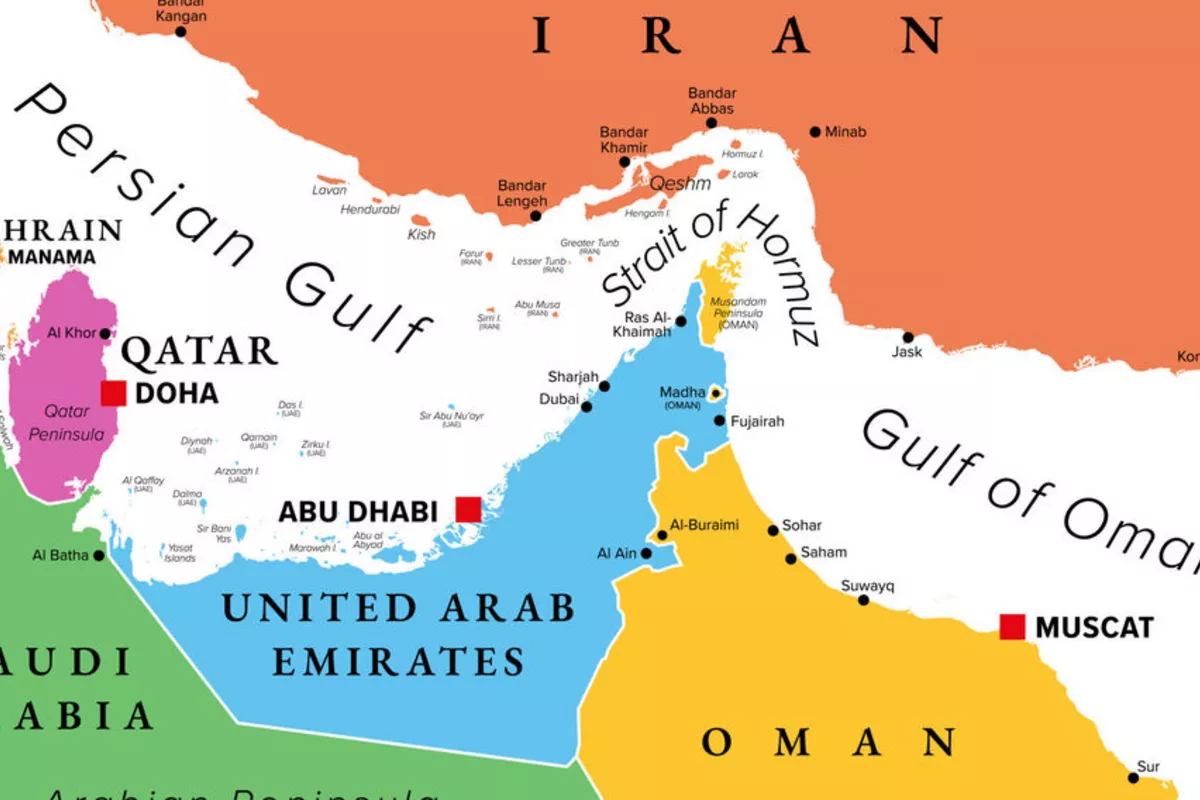
At the same time, Al Jazeera reports that Iran received an official response to its peace proposal from the United States. According to the same information, the Trump administration rejected the terms of Tehran "in their entirety". The report confirmed that the proposal of Iran included a total of 14 points, with the Supreme Leader, Mojtaba Khamenei, insisting on five conditions that had to be met before any negotiations on its nuclear program. The conditions included the termination of hostilities "on all fronts", the lifting of sanctions, the unfreezing of its frozen assets, compensation for damages caused during the US-Israel military campaign, and the recognition of its sovereignty over the Strait of Hormuz.
Iran: The US cannot achieve their goals through military actions
"There is no military solution and I believe that the United States must understand this reality.
They have tested us at least twice and by now they have concluded that there is no military solution.
They cannot achieve their goals through military actions.
If however they follow the path of diplomacy, then the matter will be different.
We have already initiated contacts, but as you know there are many problems in this process" pointed out the Iranian Minister of Foreign Affairs, Abbas Araghchi
According to Araghchi, the most significant problem is the contradictory messages received from the Americans through statements, interviews, and different positions.
"On this issue - the disruptions created in the Strait of Hormuz and which exerted great pressure on the global supply chain and particularly on the energy supply chain - we bear no responsibility.
We did not start this war. we are simply defending ourselves and I believe we have a full right to legitimate defense" pointed out Araghchi.
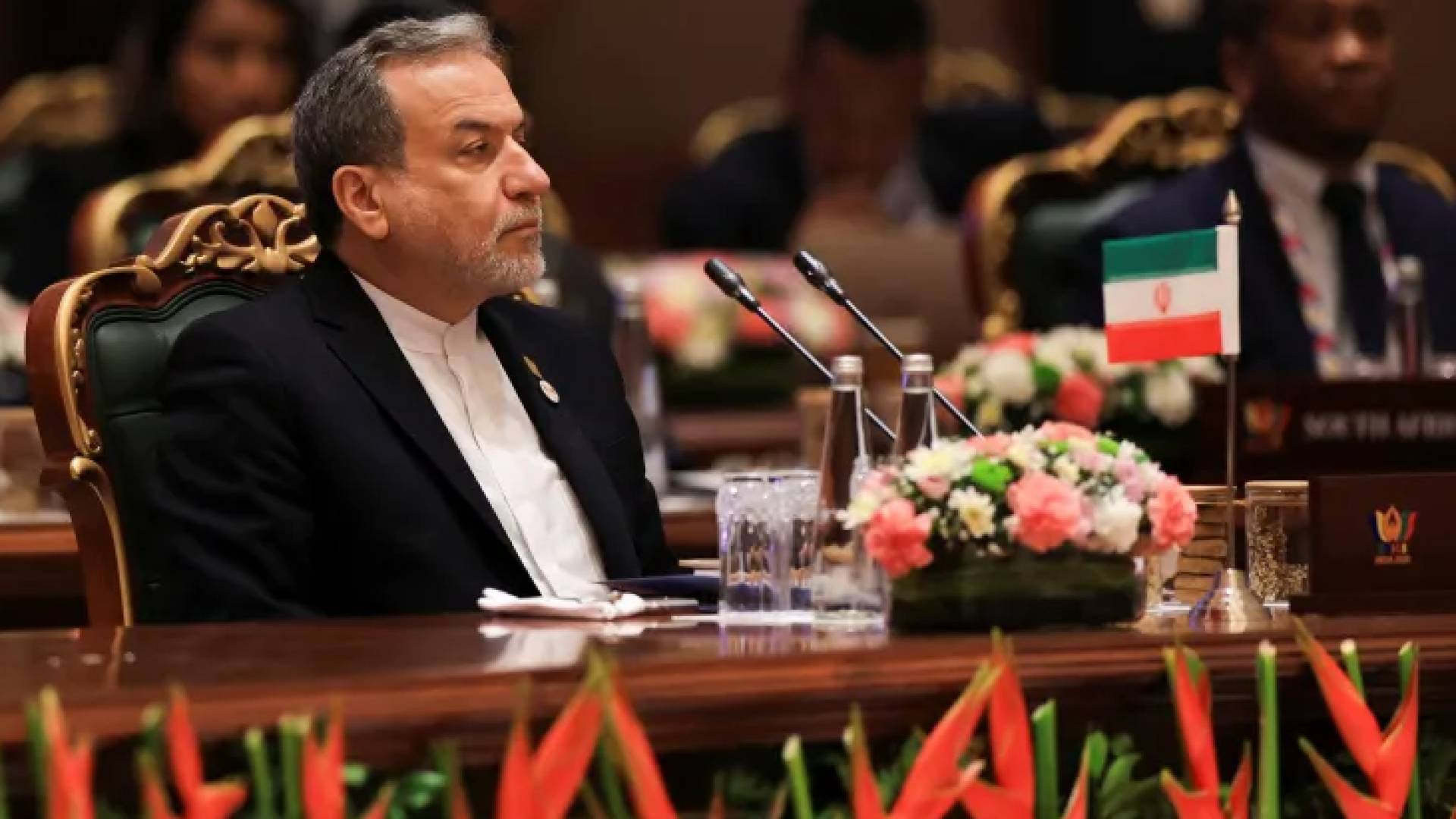
As the Minister of Foreign Affairs of Iran said, the Strait of Hormuz is not closed.
"As far as we are concerned, the Strait of Hormuz is not closed, particularly for friendly countries.
These restrictions apply only to our enemies.
Ships belonging to friendly countries and to other countries are only required to coordinate their passage with our military forces, so that potential problems are avoided and safe passage is ensured.
In recent days many ships have already passed through the Strait with the assistance of our naval forces and this process will continue.
The only solution is the complete termination of this aggressive war and then we will ensure that the safe passage of every ship will be guaranteed" said Araghchi.
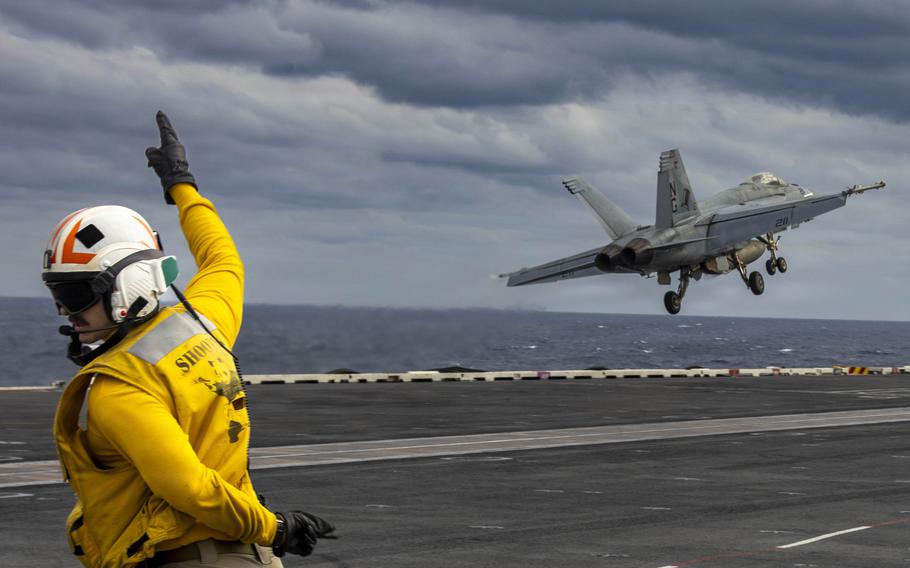
Shock admission by American admiral: The war in Iran has exhausted Navy resources
An American admiral warned that the war with Iran has exhausted the budget and the manpower of the American Navy.
Admiral Daryl Caudle, head of US Fleet Forces Command, warned that if emergency funding for the US war against Iran is not approved, the American Navy will be forced from July to reduce training, routine operations, and certain personnel programs.
During the meeting of the House Armed Services Committee of the US, he stated that the fiscal year 2026 budget has not taken into account the costs of the operation named "Epic Rage" against Iran.
As he said, the extended presence of the American Navy in the Middle East has brought enormous costs and the continuation of this situation creates significant operational pressure.
According to him, expenditures for fuel, operational hours, maintenance, and ammunition are increasing rapidly and, if a supplemental budget is not approved, the American Navy will be forced from July to make difficult decisions.
Caudle also warned that the lack of funding will affect manpower as well, since the process of transfer and assignment for between 12,000 and 15,000 new sailors will stop.
He further added that there will be problems in the payment of recruitment bonuses and service contract renewals.
According to an assessment by the Pentagon, the cost of the US and Israel war against Iran, which began on February 28, had reached by Tuesday 12/5 approximately 29 billion dollars — an amount that two weeks ago stood at 25 billion dollars.
At the same time, the White House intends to request from Congress a supplemental budget of between 80 and 100 billion dollars, a large part of which will be allocated for the replenishment of ammunition stockpiles consumed in the war.
However, Republican senators stated that the chances of approval for this request face serious problems, as dissatisfaction grows over the absence of a clear strategy of the Trump administration in the war.
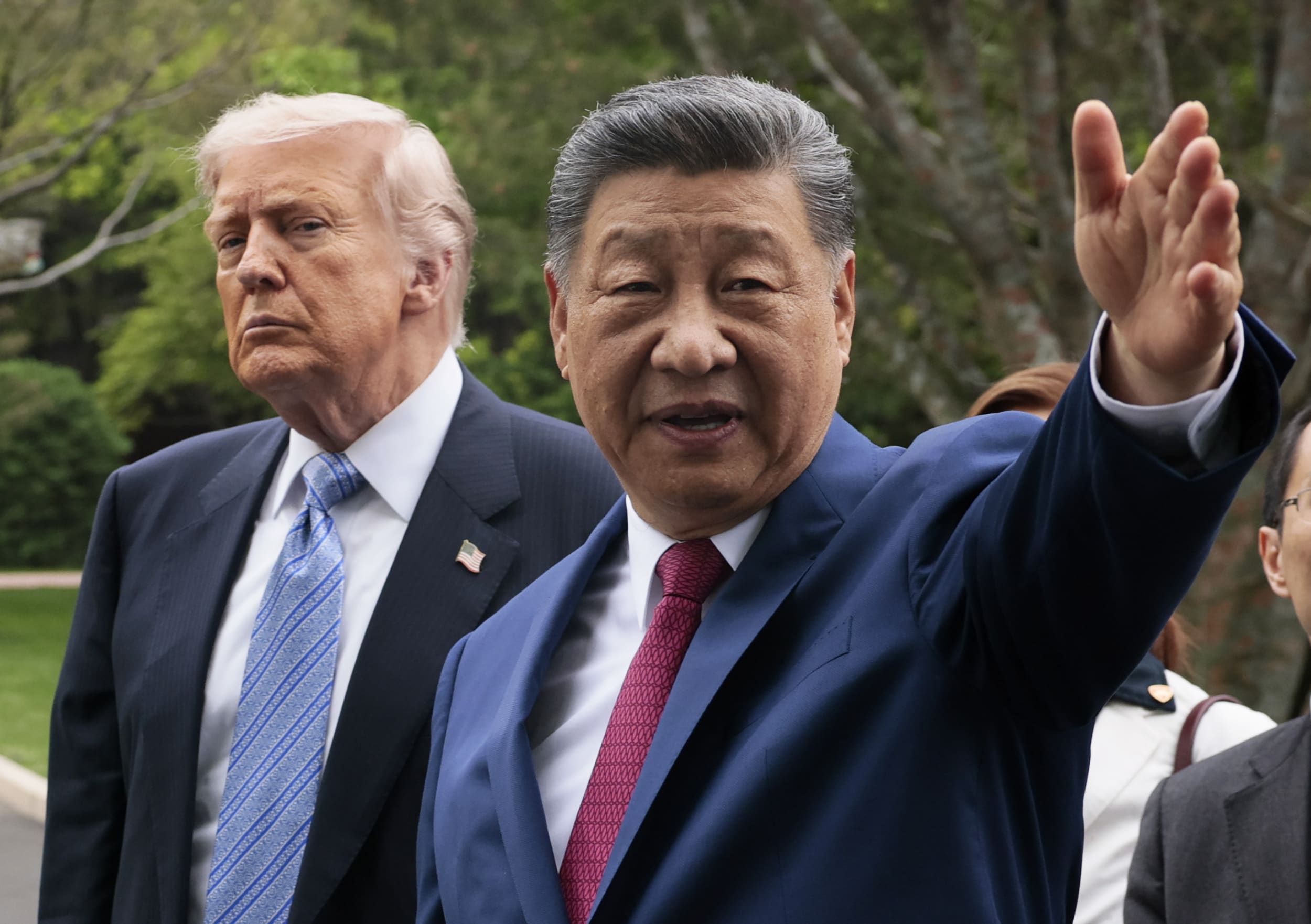
The shadow of the war in Iran... over the Trump - Xi meeting
Meanwhile, the US war in Iran overshadowed the meeting in Beijing of the American president, Donald Trump, with his Chinese counterpart, Xi Jinping.
China which had previously condemned the war, stood firmly by its opposition to the conflict, with a statement issued while Trump was in Beijing. "China's position on the situation in Iran is very clear. The conflict has caused severe losses to the people of Iran and other countries in the region," the Chinese Ministry of Foreign Affairs stated in a statement posted on its account on X.
More than 3,000 Iranians have been killed during the war, according to government data. "Finding an early way to resolve the situation is in the interest of not only the US and Iran, but also the countries of the region and the rest of the world," the Chinese announcement states.
The statement added that China welcomes the ongoing ceasefire efforts -in which Pakistan is mediating- and believes that dialogue is the way forward. "It is important to achieve a comprehensive and lasting ceasefire as soon as possible," the announcement added. It pointed to a four-point plan for peace and stability in the Middle East that Xi had proposed earlier, calling for peaceful coexistence, politically negotiated settlements, common security, and development-driven cooperation. It added that China will continue to act in accordance with this plan.
Iran's nuclear program
"Both countries agreed that Iran must never acquire a nuclear weapon," the White House stated in its announcement.
However, the Chinese announcement does not explicitly state that Iran must never acquire a nuclear weapon. Instead, it states: "It is important to stabilize the momentum of de-escalating the situation, maintain the direction of political settlement, commit to dialogue and consultations, and achieve a settlement for the Iranian nuclear issue and other issues that takes into account the concerns of all parties."
Iran has never officially declared an intention to seek the acquisition of nuclear weapons, and China had cooperated in the past with the US, European nations, and Russia to secure the nuclear deal of the Barack Obama era with Iran, which aimed at limiting the nuclear program of Tehran. It is believed that Iran possesses about 440 kilograms (970 pounds) of uranium enriched to a percentage of 60%. An enriched uranium threshold of 90% is required for the production of a nuclear weapon.
www.bankingnews.gr









Readers’ Comments