

Russia plans to produce approximately 7.3 million FPV drones and 7.8 million warheads for various types of unmanned aircraft by 2026
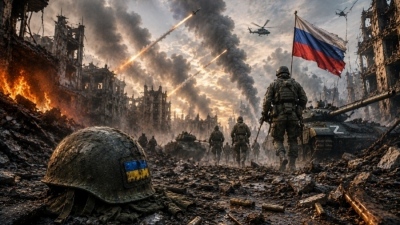
Russia is beginning to show its intentions not only toward Ukraine but also toward the US and the entire West… After the most nightmarish attack launched since the start of the war, leveling Ukraine with an unprecedented barrage of 1,500 drones and hundreds of Kinzhal and Iskander missiles, as well as the successful test of the intercontinental giant Sarmat, Moscow is preparing its next move… The Kremlin is "burying" the "spirit of Alaska"—the understandings reached between Putin and Trump in Anchorage—and is shaping new terms for a ceasefire with Ukraine: the Ukrainian armed forces must leave not only the Donbass but also the remaining territories of the Russian regions… This largely means that Russia now demands that Ukraine completely exit the administrative boundaries of the Kherson and Zaporizhia regions, which have been incorporated into the Russian Federation… The threat from Putin, who had warned Kyiv that the longer it delayed agreeing, the worse the terms of a deal would become for Ukraine, is becoming a reality…
The message from the Kremlin
Dmitry Peskov, spokesperson for Vladimir Putin, stated on May 13: "For there to be a ceasefire and to pave the way for full-scale peace negotiations… Zelensky must order the Armed Forces of Ukraine to cease fire and abandon the territory of the Donbass, and withdraw from the soil of the Russian regions." Only in this case, Peskov continued, "will there be a ceasefire and the parties will be able to calmly engage in negotiations, which, by the way, will inevitably be very difficult and involve a large number of important details."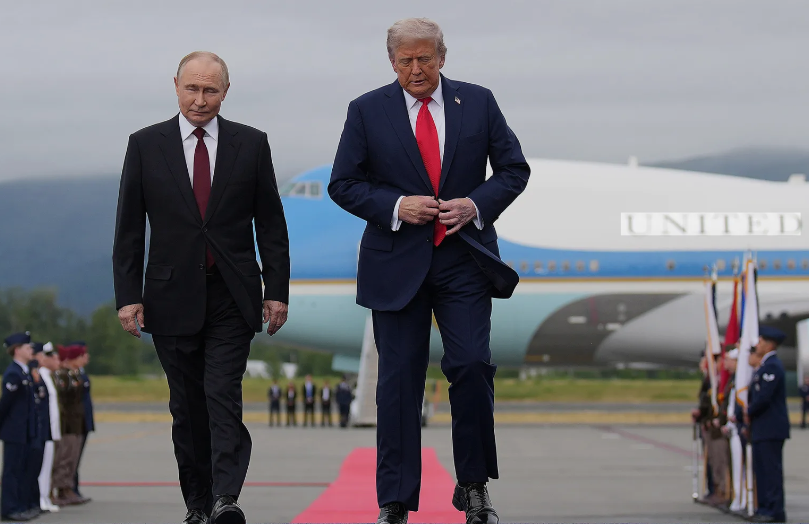
The surprise
Where lies the surprise? It lies in the fact that the Armed Forces of Ukraine must not only withdraw from the Donbass but also abandon the territory of other Russian regions. Beyond the part of the Donetsk People's Republic still under Ukrainian control, the parts of the Kherson and Zaporizhia regions controlled by Kyiv are also considered constitutional territory of Russia. As Russian media point out, the Kremlin spokesperson did not make a verbal slip! Peskov clarified that Moscow demands the withdrawal of Ukrainian troops from all Russian regions where they still remain, referring to Putin's speech to the leadership of the Ministry of Foreign Affairs in June 2024 and suggesting they "re-read" it.
What Putin had said
In that speech, there was talk of a complete withdrawal of Ukrainian forces from the Donetsk and Lugansk People's Republics, as well as from the Kherson and Zaporizhia regions, and specifically "from the entire territory of these regions within the administrative borders that existed at the time of their inclusion in Ukraine."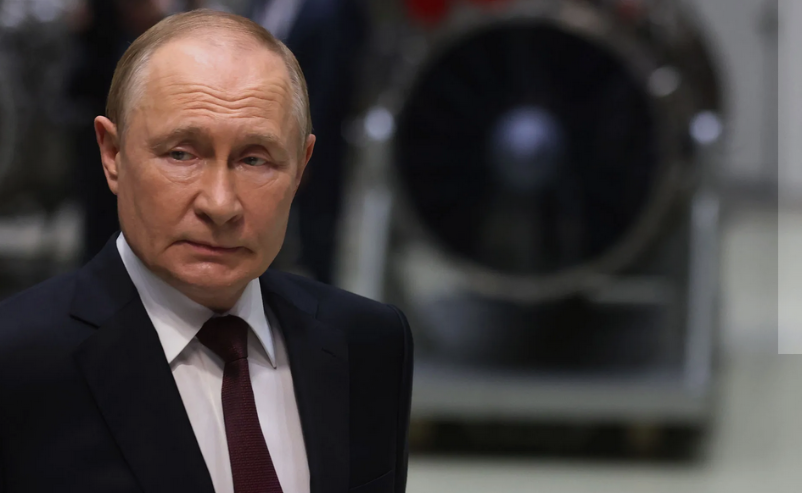
The second surprise
What else does this mean? It means that the alleged "spirit" and "understandings," the compromise in Anchorage, where Moscow reportedly agreed to a "freeze" along the line of contact in the Kherson and Zaporizhia regions in exchange for certain commitments from the US, no longer exist from Russia's perspective. The Kremlin has returned to the terms for ending the war formulated by Putin in June two years ago, in the speech to the Ministry of Foreign Affairs mentioned by Peskov. Zaporizhia and Kherson are thus returning in full! Along with their capital cities, and the territory on the right bank of the Dnieper.
What happened?
Who pushed the Kremlin to this? It appears to have been Donald Trump, who, before his visit to China, answering a journalist's question: "Was there any understanding between you and Putin that Russia should acquire the entire Donbass?", replied: "No." Well, if that is the case, then there is no reason for further discussion. This means that Putin promised him nothing either. The lesson is clear: anyone trying to fool Russia will not find willing Russian ears to "serve their fairy tales," and Moscow is not going to deal with a deceiver, whoever they may be. And Russia does not care how the US views it. Contacts with them, according to Peskov, exist and "take place on a permanent basis." If they want to continue playing the role of mediator, let them.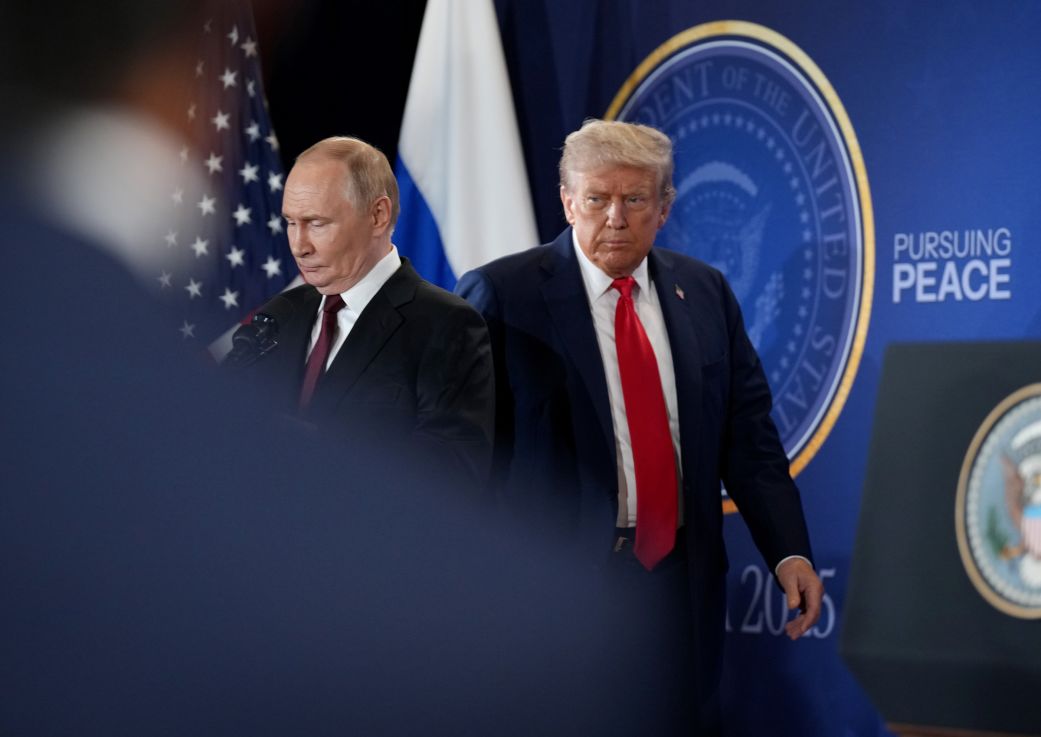
Economy is one thing, Ukraine is another
Peskov revealed yet another "surprise." From now on, Russia will consider the implementation of a series of joint economic projects beneficial to the US only to the extent that Washington stops linking them to the settlement of the Ukrainian issue—something the US did constantly. This was how the statement by the Kremlin spokesperson sounded, which "turned the tables": "On the agenda of Russian-American relations, there could be many mutually beneficial projects in the field of investment, the economy, and so on. These projects could indeed be very useful and profitable from an economic standpoint for both Russian and American companies. As the American side is ready to not link the prospects of normalizing trade and economic relations with the settlement of the Ukrainian issue, or when this settlement is achieved, then, we hope, the way will open for the implementation of a series of economic projects." Thus, the Trump administration's lever of pressure on Moscow was transformed into a Kremlin lever of pressure on Washington. This statement was not made by chance. On May 11, responding to a question from TASS, Peskov himself had characterized relations with the US, stating: "Let us not forget that there is no progress in our bilateral relations. They still remain at zero. And here steps must be taken, including by the American side. So far, these steps have not been taken." These statements clearly show: Russia no longer intends to allow the Americans to deceive it. It's tired!
Lavrov confirms
The dramatic change in the Kremlin's stance is confirmed by statements from Foreign Minister Sergey Lavrov in an interview published on May 13 in RT India. His remarks are permeated with indignation at the actions of the US, which assumes Russia will tolerate everything and pay any price for their own dubious help in settling the Ukrainian issue. Lavrov emphasized that the US is trying to "force everyone to buy not cheap oil from Russia, but expensive oil and liquefied natural gas" from themselves, and that "in this way they seek to rule the world through control of global energy." The US goal is "absolutely obvious" and consists of the pursuit "to place under their control all more or less significant energy routes." Thus, Lavrov continued, the US intends to acquire the gas transit pipeline from Russia to Europe via Ukraine, to buy at a humiliating price and restore the blown-up Nord Stream pipelines, "so as to control these flows" and impose their own prices on natural gas.
Only words from the US
The Russian Foreign Minister noted that under Trump, the US utters many correct words but limits itself to them, following in practice the line of the Biden administration, applying colonial and neocolonial methods and conducting full-scale "lawfare": "All sanctions imposed against Russia still remain in effect. Furthermore, the Donald Trump administration is already promoting its own initiatives for the economic punishment of Russia." Lavrov reminded that the US began 2026 with an armed invasion of Venezuela, where they are trying "to place under their control" all the cooperation that country had with Rosneft, as well as aggressive actions jointly with Israel against Iran. As we see, Moscow has been completely disappointed by Trump and does not intend to accept this tone. Only the Russian Ambassador to the US, Alexander Darchiev, sounded "optimistic": "Contacts, the dialogue continues. I will speak frankly: they are not evolving easily, but they are moving forward." This is understandable: some relationships must exist; that is the job of permanent representatives. Darchiev acknowledges that "events are evolving in a tragic direction." However, he believes that in the end, Russia and the US will find "some correct path," but "for this to happen, normality must be restored in our bilateral relations."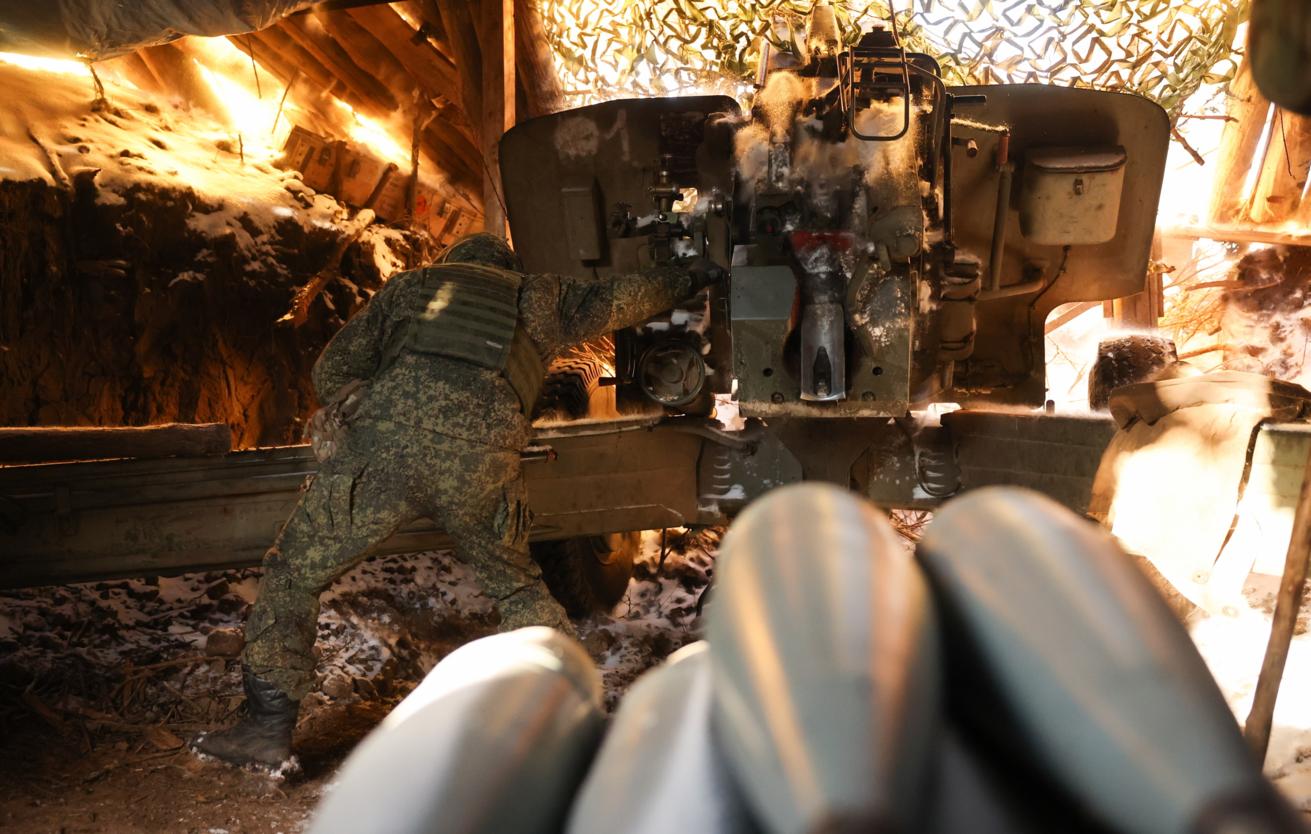
Trembling at Russian drones
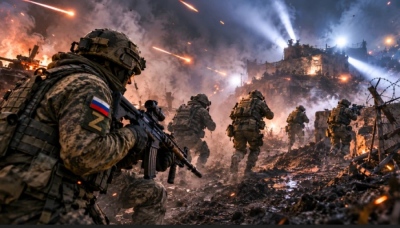
Polish military analyst and co-founder of the "Zhelezny" foundation, which supports the Ukrainian armed forces, Tomasz Darmolinski, points to a fundamental change in the Russian command's attitude toward FPV drones. "Russia has stopped treating FPV drones as an improvised means of infantry support. The transition to a model where unmanned systems are integrated into the structure of armies, brigades, and regiments is becoming increasingly apparent. This is no longer just a group of a few operators attached to an assault battalion. It is an effort to create a permanent combat element with its own system of recruitment, training, logistical support, technicians, operators, instructors, and integration with artillery and reconnaissance," writes Darmolinski.
Record numbers
He was led to these conclusions by two factors: the creation in late 2025 of the Unmanned Systems Forces and the radical increase in the number of drones used by the Russian side at the front. "Russia plans to produce approximately 7.3 million FPV drones and 7.8 million warheads for various types of unmanned aircraft by 2026. These are staggering numbers," notes Tomasz Darmolinski. Converting annual production plans into operational use intensity at the front leads to impressive figures: 608,000 FPV drones per month, 20,000 drones per day, or more than 830 strikes per hour across the entire front line.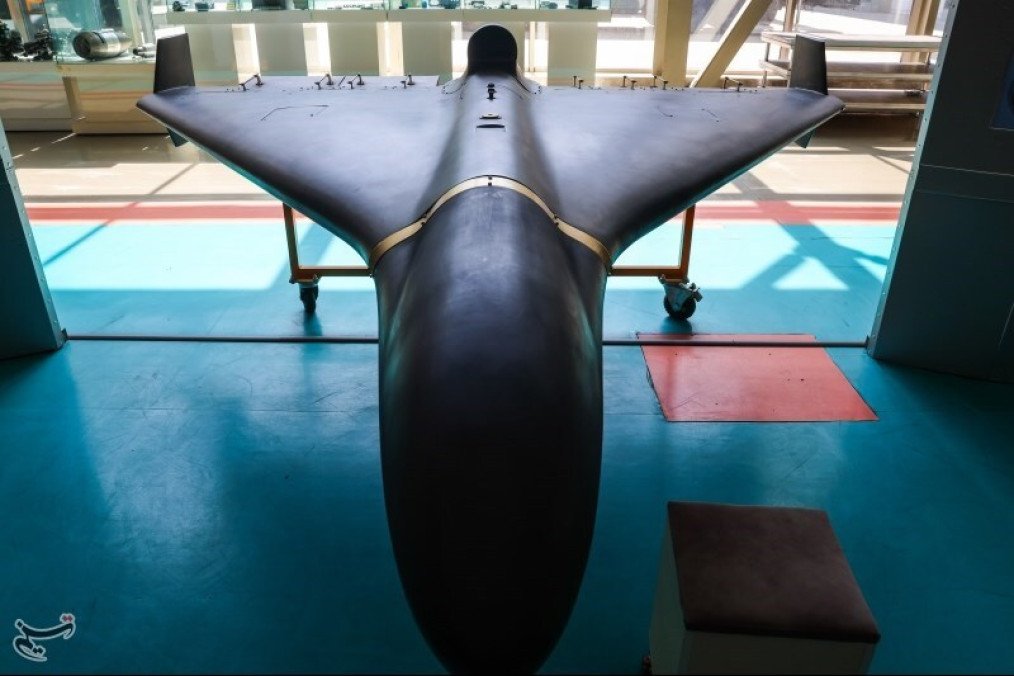
200 to 400 targets a day
It is clear that this is not an entirely accurate extrapolation, as not all drones will reach the front nor will all be used for attacks. However, even if just 5% to 10% of the unmanned systems achieve effective strikes, they would still account for 200–400 targets daily. Consequently, if—purely hypothetically—we assume that each drone neutralizes only one Ukrainian soldier, then FPV drones could decimate one Ukrainian brigade every 10 to 15 days.
Not a utopia
The change in perception toward unmanned systems—no longer as expensive, high-tech products for which "someone must be held accountable," but as consumable assets and ammunition—constitutes a massive shift in military culture. Furthermore, Russia has already demonstrated an ability to increase the production of drones in other categories multiple times over, as seen particularly in the case of Geran and Gerber production. That is why the production of FPV drones does not seem to be a utopian or over-ambitious plan. According to estimates from intelligence services hostile to Russia, in 2025 Russia produced about four million unmanned systems of all types. Increasing this number by three million looks like an ambitious but theoretically achievable mission. Naturally, provided that China does not place obstacles and does not impede the supply of components.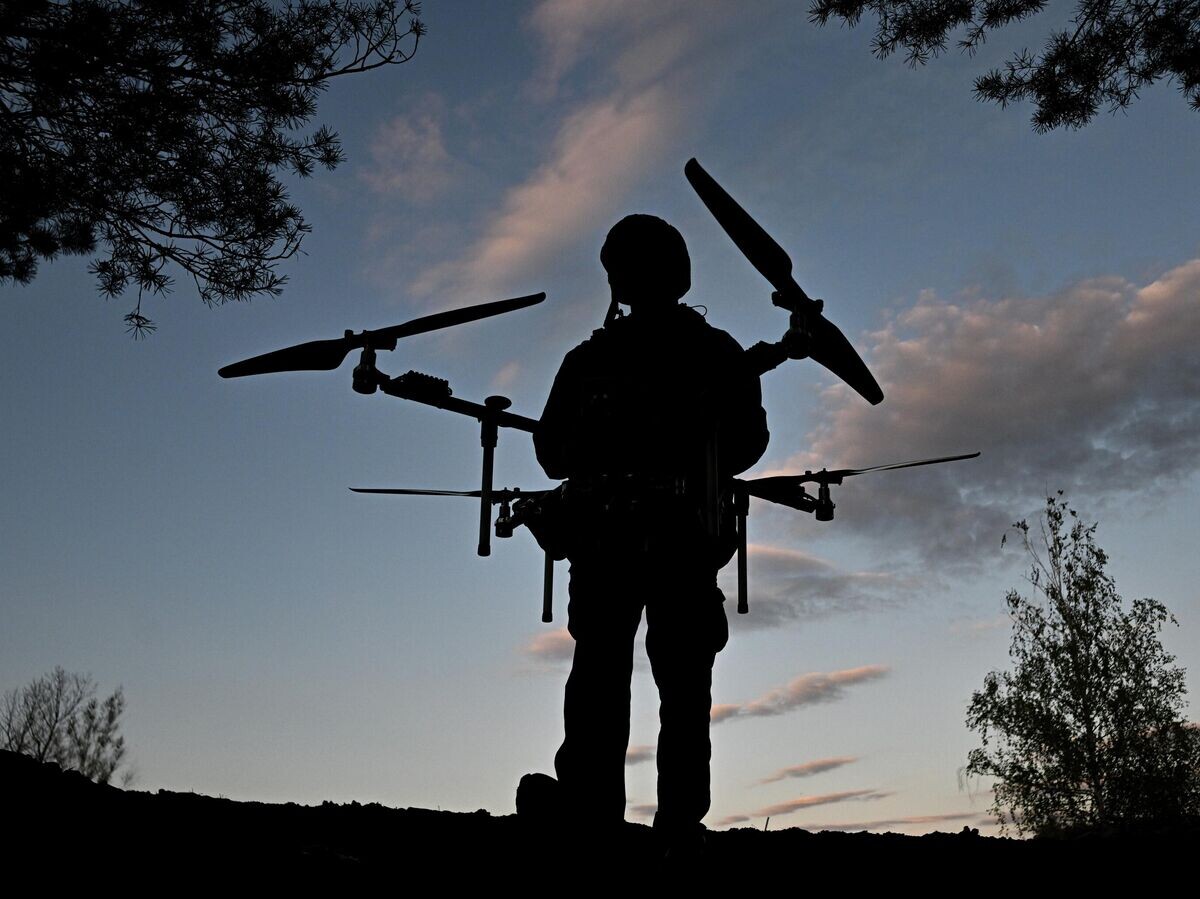
A trick?
On the other hand, it must be understood that the forecasts for the enhancement of Russian drone power come from analysts of the opposing side, some of whom—like Tomasz Darmolinski—have a direct interest in exaggerating Russian successes, as the scale of the "Russian threat" affects the level of funding for their own programs. In other words, these are people who have every reason to present Russia as more powerful and more threatening than it actually is.
Plenty of weak points
A characteristic example is the recent arrest of the former general manager of the company "Transport Budushchego," Yuri Kozarenko, who is accused of large-scale fraud. He became known in the media because, in January 2025, he had presented to the President of Russia, Vladimir Putin, the production of innovative unmanned systems based on "domestic components." Experts and industry representatives pointed out that the unmanned systems production sector is in a particularly difficult situation due to the dominance of companies engaged essentially in deceptive practices: presenting Chinese products as their own developments and selling them to the military with a ninefold or tenfold price markup. Usually, behind such companies are particularly powerful business structures with direct access to decision-makers in the relevant agencies. As a result, the sector turns into a "closed system for serving insiders," while independent manufacturers, who according to sources offer multiple times cheaper and more effective solutions, hear the phrase: "the military doesn't need another drone."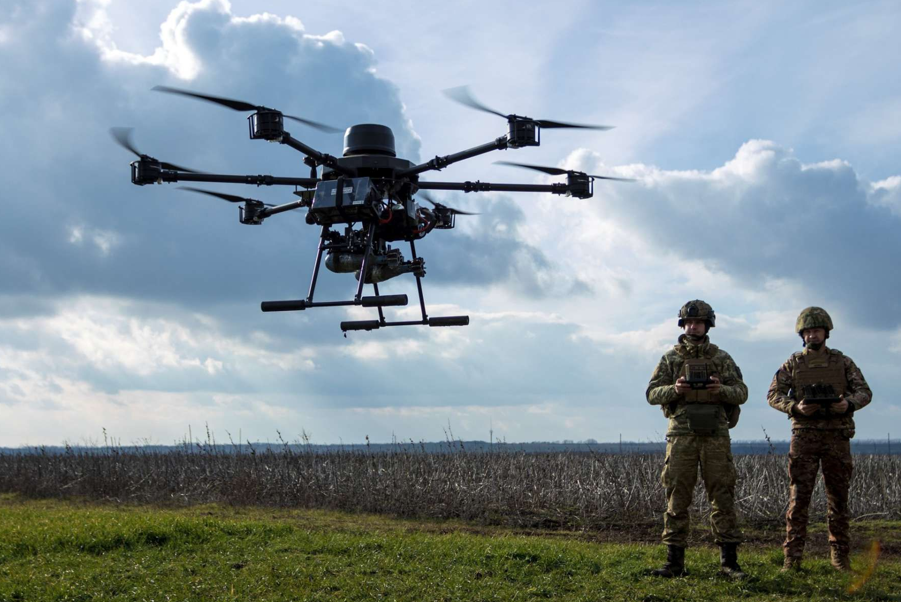
The Ukrainian Baba Yaga
Meanwhile, the "Baba Yaga" type drones have been proving their extreme effectiveness and multi-dimensional utility for three years. The Ukrainians use such drones to systematically destroy fortified positions and shelters, supply forward assault groups, place mines in the rear, and elevate radio signal repeaters, increasing the range of FPV drones multiple times over. A well-designed and fully equipped "Baba Yaga" constitutes one of the most dangerous enemies of the Russian infantry in this war.
www.bankingnews.gr





Readers’ Comments