

At a time when US President Donald Trump is expected to ask his Chinese counterpart, Xi Jinping, for assistance in ending the war in Iran and reopening the Straits of Hormuz, the Iranians are demonstrating that they remain the absolute masters of the region—a fact confirmed by US intelligence agencies. The Revolutionary Guard seized a ship near Fujairah, United Arab Emirates, and is escorting it to Iranian waters, while an Iranian admiral warns that should the American president order a new military operation, the US will be crushed by the Iranian people. Simultaneously, Iranian Foreign Minister Abbas Araghchi, speaking to BRICS, made it clear that Iran will not bend, delivering another resounding message of power by stating that the Straits of Hormuz are open… to those who cooperate with Iran. In the US, the scene is chaotic. Secret services and intelligence agencies are refuting Trump’s claims that Iran’s military forces have suffered a catastrophic blow from US and Israeli bombardments—an admission that forced the American president to speak of… treason.
Araghchi (Iranian Foreign Minister) to BRICS: The US is in decline
In a speech to members of the BRICS group meeting in India, Iranian Foreign Minister Abbas Araghchi argued that Iran will not bend before the US, which he described as being in decline. "This is a fragile reality. An imperialist power in decline is trying to turn back the clock and is reacting desperately on its path toward collapse," stated the Iranian FM. "History has shown that empires in decline stop at nothing to avoid their fate. A wounded animal fights desperately and roars on its way down," Araghchi remarked.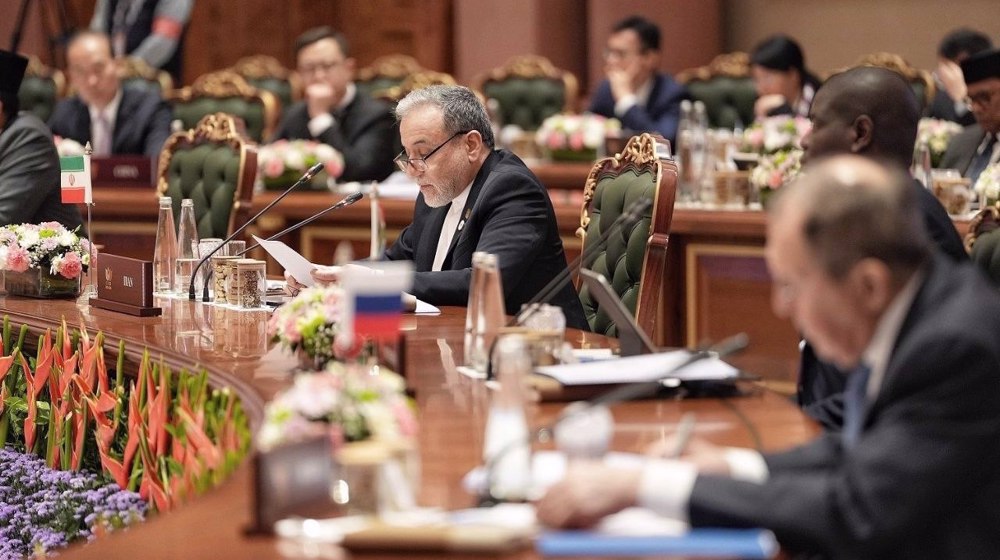
Iran does not bend
"It must be made clear that Iran cannot be bent and only becomes stronger and more united when under pressure. While we are ready to fight with everything we have in defense of our freedom and homeland, we are equally ready to promote and defend diplomacy," Araghchi added. He noted that the United States and Israel carried out two violent, illegal, and unjustified attacks against Iran in less than a year, using false claims that contradict the findings of the International Atomic Energy Agency and the assessments of the American intelligence community itself.
Illegal warmongering
He emphasized that, like many other independent countries, Iran is a victim of illegal expansionism and warmongering. "Those who seek dangerous adventures may believe they are serving their geopolitical interests. But, as citizens and governments worldwide now realize, regional instability is a situation where everyone loses—including the aggressors," said Araghchi. He reiterated that despite all pressure, Iran still believes in a free, stable, and fair world and ruled out any military solution for issues concerning Iran. "We Iranians never retreat in the face of pressure or threats, but we respond to the language of respect. As long as our powerful armed forces remain ready to impose crushing retaliation on foreign aggressors, my people love peace and do not seek war. We are not the aggressors in this sad situation, but the wronged," Araghchi underlined.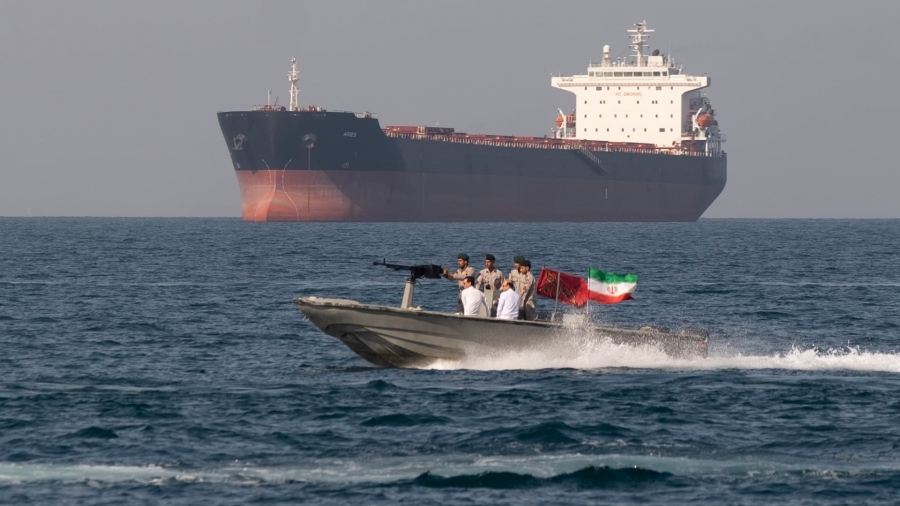
Hormuz open for ships cooperating with Iran
Iranian Foreign Minister Abbas Araghchi stressed that the Straits of Hormuz remain open to all commercial vessels; however, they must cooperate with Iran. In an interview with Press TV, Araghchi argued that "the Straits of Hormuz are currently hit more than anything else by American aggression and the blockade imposed on the region." "From our perspective, the Straits of Hormuz are open to all commercial vessels, but they must cooperate with our naval forces. We have created no obstacle. The United States is the one that has imposed a blockade. I hope this situation ends with the lifting of this illegal blockade imposed by the US," Araghchi pointed out.
Habibollah Sayyari (Iranian Admiral): In a new war, we will crush the Americans
With the ceasefire hanging by a thread, Iran is signaling that its military is ready for all scenarios. Indeed, Iranian Admiral Habibollah Sayyari sent a clear message: if President Trump orders a new military operation, we will… crush them. "The United States, in a war with Iran—due to the bravery and resistance of the armed forces and the support of the people who always stand by them—will be defeated despite its equipment and apparent defense capabilities. And this will be written in history," Sayyari emphasized, making special reference to the high social resilience of the Iranian people in war conditions. "This high resilience of the citizens under current conditions increases the responsibility of officials, who must, through unceasing effort, prove worthy of the national unity and cohesion of the people," the Iranian Admiral underlined.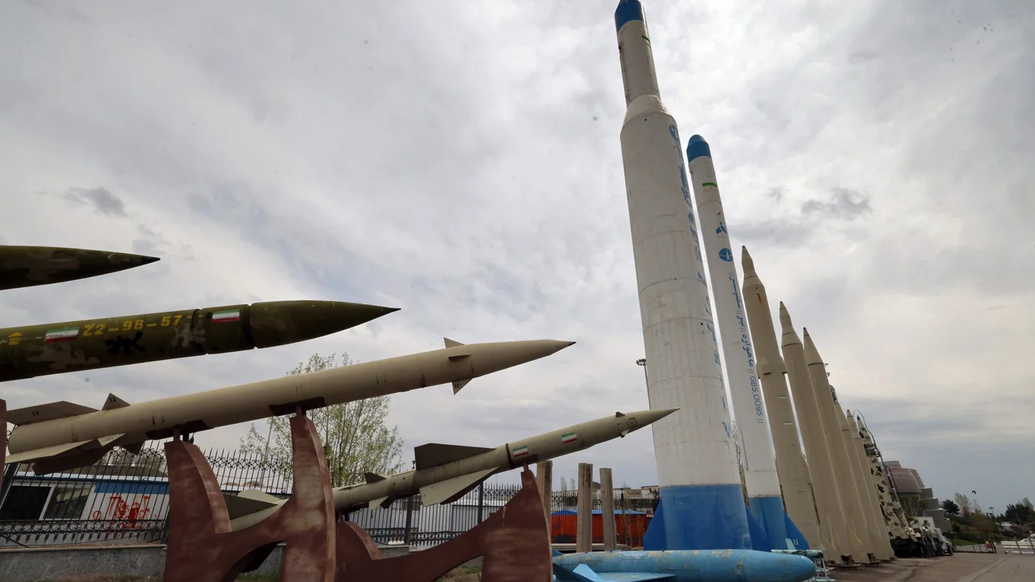
Questioning Trump
One of the key arguments of the Donald Trump administration regarding the war with Iran is that the Islamic Republic's military capabilities suffered a catastrophic blow from US-Israeli bombardments before the start of the April ceasefire. However, undisclosed US intelligence reports suggest that Iran's military capabilities—and particularly its missile arsenal—have not been destroyed to the extent presented by the American side. The publication of these assessments triggered a sharp reaction from Trump, who argued that the related coverage constitutes "virtual treason."
What intelligence reports say about Iran's missiles
In early April, CNN reported information from an intelligence assessment stating that Iran maintained a significant portion of its drone capabilities, as well as a large percentage of its coastal missile systems. This assessment contradicted what Trump had stated in a national address that same week: "Their ability to launch missiles and drones has been dramatically curtailed, and their weapons factories and missile launchers are being totally destroyed. Very little remains. Never in the history of warfare has an opponent suffered such clear and large-scale catastrophic losses in just a few weeks. Our enemies are losing."
Iran endures
In the six weeks that followed, Iran reportedly utilized the ceasefire to recover launchers that may have been buried by previous strikes, according to CNN. This explains, according to the same analysis, why Iran managed to effectively disrupt navigation in the Straits of Hormuz and exert strong pressure on the global energy market. Despite this, Trump continued to use terms like "decimated" for Iran's military capabilities and argued that the US could end the war "tomorrow" if it wished. The information cited by CNN also shows that Iran could endure up to four months under the current American blockade of its ports without leading to complete economic destabilization.
"Virtual treason"
Although Trump did not specifically refer to the New York Times report, he attacked the media via a social media post: "When the Fake News says the Iranian enemy is doing well militarily against us, it is virtual treason. They are aiding and abetting the enemy!" However, in his post, he did not dispute that Iran still has access to its missile facilities at the Strait.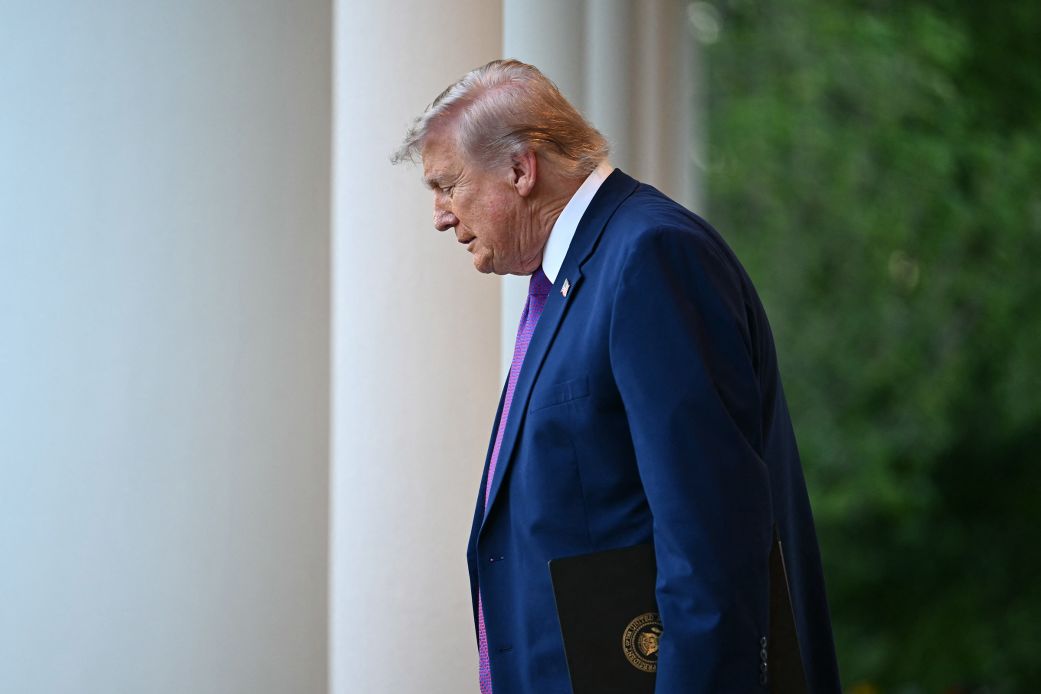
Data remains classified
The Chairman of the US Joint Chiefs of Staff, General Dan Caine, was asked in the Senate if the New York Times report contradicted Trump's claim that 80% of Iran's missile capabilities had been destroyed, but he avoided answering. "All our operational damage assessments are classified, and it would not be appropriate for me to comment publicly on such matters." A similar stance was taken by Defense Secretary Pete Hegseth: "Why should I confirm or deny things that may have been leaked? We don't talk about such matters," the American Secretary said. Democratic Senator Chris Murphy argued that the Trump administration might be presenting a different picture of Iran's capabilities in classified briefings compared to what it states publicly.
The confidential report
It is noted that last Tuesday, 5/12, the New York Times revealed a confidential report regarding Iran's military capacity, a report that nullifies all of Trump's claims. According to the report, US intelligence agencies are informing policymakers that Iran has regained access to most of its missile sites, launchers, and underground facilities, contrary to Washington's rhetoric of "overwhelming destruction" of Iranian capabilities. The report, published on Tuesday, cites classified assessments from earlier this month. According to these, Iran has restored operational access to 30 of the 33 missile facilities along the Straits of Hormuz, meaning it can still threaten international navigation and US warships in the strategic waterway. Sources with knowledge of the assessment stated that Tehran may be using mobile launchers within certain facilities, moving missiles to other locations or, in some cases, launching them directly from launch pads. The document states that Iran still possesses 70% of its mobile launchers nationwide and has maintained about 70% of its missile inventory compared to pre-war levels. Using satellite imagery and other surveillance means, military intelligence estimated that Iran has regained access to approximately 90% of its underground storage and launch facilities, which are described as "partially or fully operational."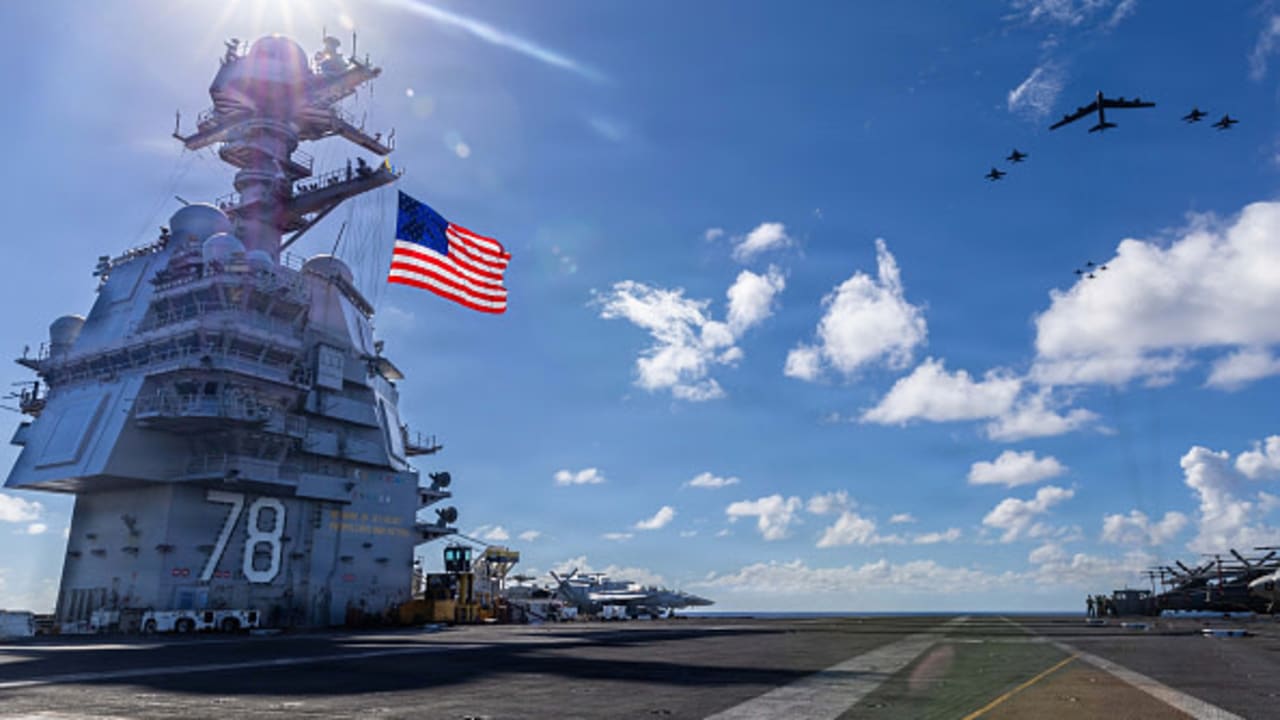
A different picture
All of this paints a starkly different picture from the statements of US President Donald Trump and other senior government officials, who claimed they had "decimated" Iran's military capabilities. A White House spokesperson responded to the NYT report, reiterating that Iran has been "crushed," adding that anyone who believes Iran has reconstituted its military capabilities "is either deluded or acting as a mouthpiece" for the Islamic Revolutionary Guard Corps. Joel Valdez, acting Pentagon press spokesperson, stated: "It is shameful that The New York Times and others act as PR managers for the Iranian regime, trying to present Operation Epic Fury as something less than a historic success." Last week, the Washington Post, citing US intelligence estimates, also reported that Iran retains approximately 75% of its mobile missile launchers and about 70% of its pre-war missile stockpile.
Depleting weapons
The NYT had also previously reported that the US military has already significantly reduced its stockpiles of critical munitions, including Tomahawk cruise missiles, Patriot interceptors, and Precision Strike and MGM-140 missiles. Donald Trump and other American officials have denied that ammunition stockpiles have reached critically low levels. Dan Caine, Chairman of the Joint Chiefs of Staff, stated before a House subcommittee: "We have sufficient ammunition for what we are called to do right now." According to the NYT report, when the US struck Iranian missile facilities, they chose to seal entrances rather than destroy entire facilities, partly due to limited stockpiles of bunker-buster bombs. While some such bombs were used against underground facilities, officials stated that military planners had to exercise caution and maintain stockpiles for potential conflicts with North Korea and China. The NYT also reported that the US has used 1,100 low-observability long-range cruise missiles during the war—a number corresponding to nearly all remaining stockpiles. At the same time, 1,300 Patriot interceptors have been used, a quantity equal to more than two years of production at 2025 rates.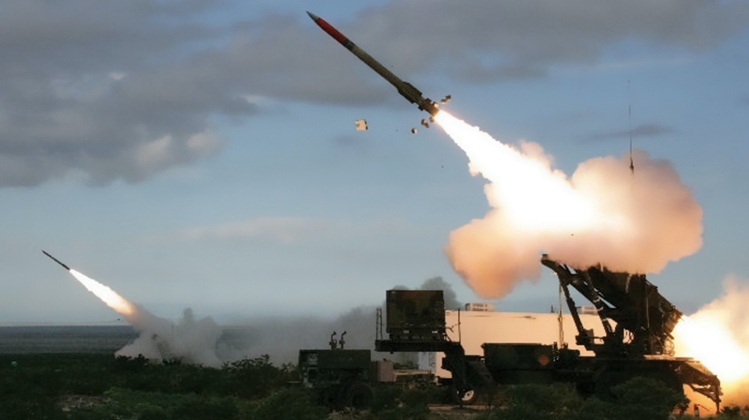
Why China appears hesitant to get involved in Trump's problem with Iran
Donald Trump believes the war is essentially over and wishes to move quickly to the negotiation phase. He mentioned this during the flight to China, adding that he was considering Iran's response to American proposals. JD Vance stated in recent hours that significant progress has been made following talks in Islamabad, where the key issue was Trump's "red line": preventing Iran from acquiring a nuclear weapon. The Chinese maintain contacts with Iran, and there is the possibility that China could act as some form of mediator. However, Beijing appears reluctant to get involved in foreign conflicts, while there is an additional concern: China does not wish to participate in an agreement from which the US may later withdraw. China, as Iran's largest customer for oil and gas, could theoretically exert significant pressure on Tehran to return to the negotiating table—and Trump believes it should. However, in Beijing, there is strong reluctance to take responsibility for solving what it considers a "problem created by Washington itself." Iran will remain an important topic in the talks, but significant progress on this issue is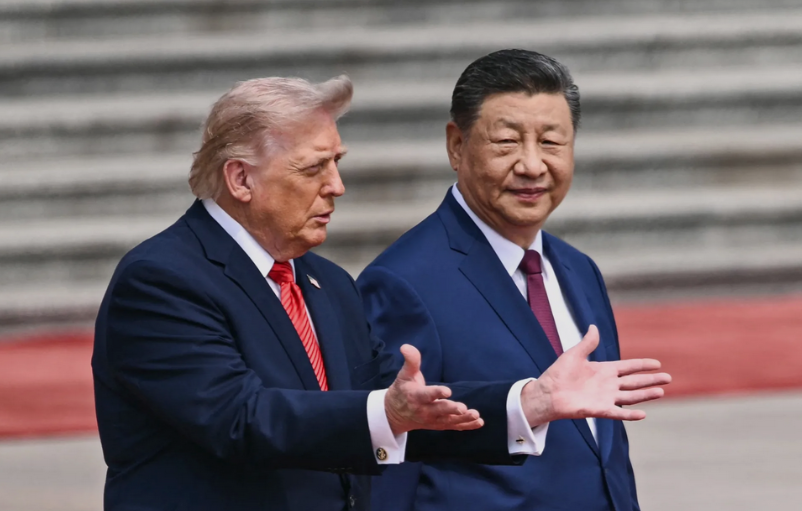 unlikely during the approximately 40 hours Trump will remain in Beijing.
Will Xi help Trump?
One of the biggest questions looming over the US-China summit underway in Beijing is whether US President Donald Trump can convince Chinese leader Xi Jinping to help Tehran accept American demands for ending the war with Iran. Theoretically, China—which seeks to present itself as a global mediator—possesses strong attributes for such a role. In 2023, Beijing helped restore relations between Iran and its historic rival, Saudi Arabia. China also maintains a direct communication channel with Iran, hosting Foreign Minister Abbas Araghchi in Beijing last week, while maintaining contact with Pakistan, which hosted previous US-Iran negotiations. Beijing even holds significant influence over Tehran, serving as a critical economic lifeline by purchasing over 90% of Iranian oil exports. At the same time, China has its own reasons to desire the end of the war. Its economy, which relies heavily on exports, could be hit by a global economic slowdown due to the ongoing conflict. Furthermore, it is under American pressure regarding Iranian oil imports. However, Xi is likely to handle the Trump administration's requests with caution. Beijing wishes to project itself as an alternative leading power to the US rather than a country serving American aims. Similarly, it does not want to be seen supporting a deal that would further strengthen American military dominance. Additionally, Iran is a diplomatic partner of China in international organizations such as BRICS, in which Xi has invested politically. Instead, the Chinese leader is expected to continue calling for the opening of the Straits of Hormuz, seeking to enhance the positive climate toward the US without jeopardizing Beijing's broader strategic vision and relations with its partners.
www.bankingnews.gr










Readers’ Comments