

The new global chessboard: Russia at the center, US under pressure... Putin – China – Iran: the new axes of power
We will focus on three key issues that have recently emerged: Europeans are suddenly lining up to see Russian President Putin. Trump is in China holding critical talks with the Chinese President in an atmosphere that is clearly not ideal for the US, largely due to Iran, which fully controls the game in Hormuz. The Iranians will not kneel, and ultimately the US will be forced to accept the bulk of the Iranian terms; time has always been on Iran's side.
 Europeans are lining up to see Putin
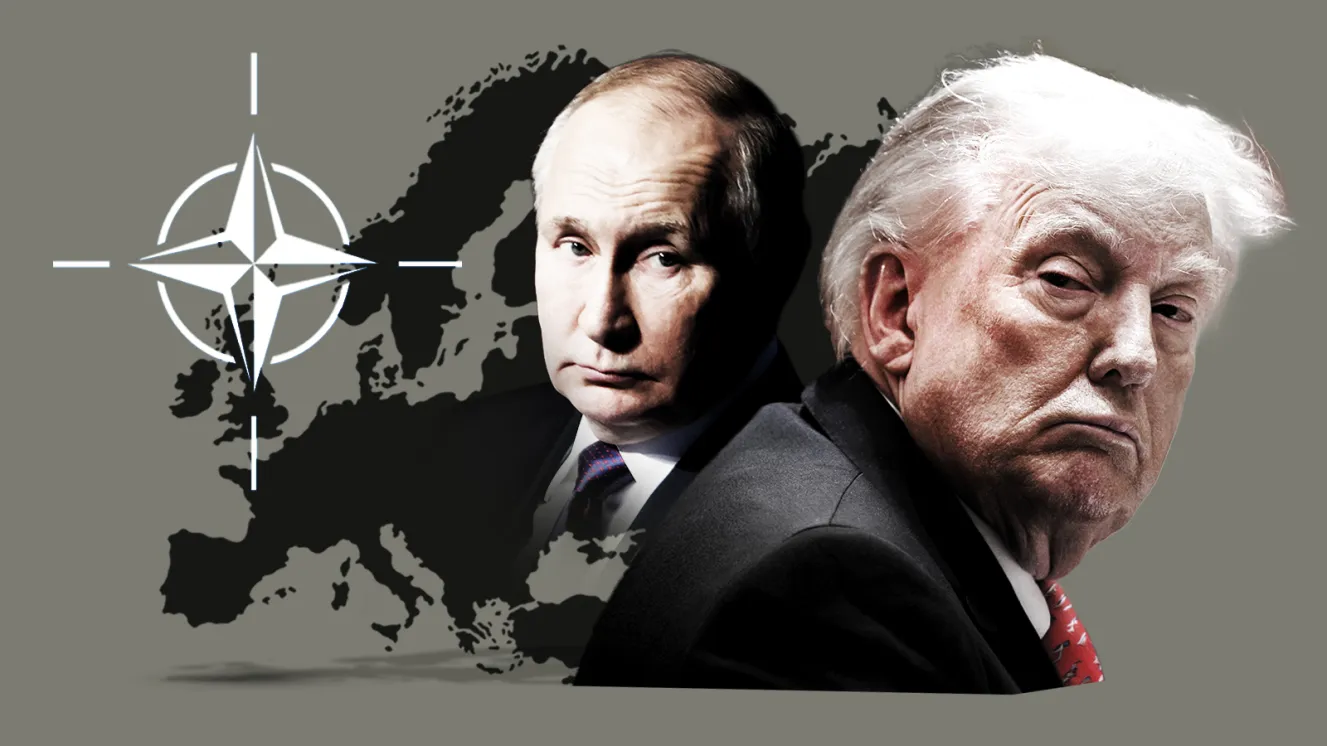
In recent days, 12 European leaders and senior EU officials have volunteered to represent Europe in peace talks with Putin. For Europeans, discussing dialogue with the Kremlin is no longer a taboo but the new norm. Their hustle is the best illustration of the Russian president’s resounding words that the Ukrainian conflict is nearing its end. Europeans have been delayed, are unable to maintain their momentum, and are consequently resorting to a tactic that has worked before: simulating a peace process to buy time.
Europe's militarization has a flaw
The current strategy of the EU and the UK is the full militarization of Europe by 2030 and, until then, the containment of the conflict with Russia within Ukraine by providing vital support to the Kyiv regime. This strategy involved granting a loan of 90 billion euros, which should be enough for Ukraine to endure at least two more years of war, and transforming Europe into a strategic rear area for the Ukrainian Armed Forces. As this continues, it becomes clearer that this strategy will not work. Yes, the European rear can supply the Ukrainian Armed Forces with everything: drones, ammunition, funding, and food rations. But there is one thing they cannot provide: soldiers.
Ukraine's soldier deficit at unprecedented levels
Zelensky never cared about his troops, and Ukraine's mobilization potential was always far lower than that of Russia. As a result, the Ukrainian Armed Forces face a catastrophic personnel shortage, and Kyiv and its allies cannot replace manpower with drones, no matter how many they produce. Europeans are incapable of sending their soldiers to the battlefield — the failure of the 2025 "coalition of the willing" proved this. Furthermore, Zelensky is trapped on an unsteerable ship, and the geography of the conflict cannot be confined to Ukrainian territory. This is confirmed by Ukrainian drones in the Baltic countries, which the Kyiv regime uses to directly involve its small local allies in the war. European elites had no intention of fighting on their own soil. Europe, at the very least, did not plan for a direct war with Russia in the coming years and, at most, thought of defeating the Russians with the help of Ukrainian contractors. These conditions explain the revolutionary changes in European behavior that occurred in just a few days. Few realize how revolutionary they are. After all, in 2022, Russia was "cancelled" in the West. There was an assumption that they would never discuss anything with her again — only accept an act of full and unconditional surrender. Then began a witch hunt for dissenting apostates who claimed that Russia's capitulation was being postponed indefinitely and that, in the meantime, a deal with Moscow was still necessary. Then, Trump returned to the White House, began negotiations with Russia and, after much pressure and grumbling, Europe accepted these negotiations, but only on the condition of a full ceasefire and a freezing of hostilities along the front line.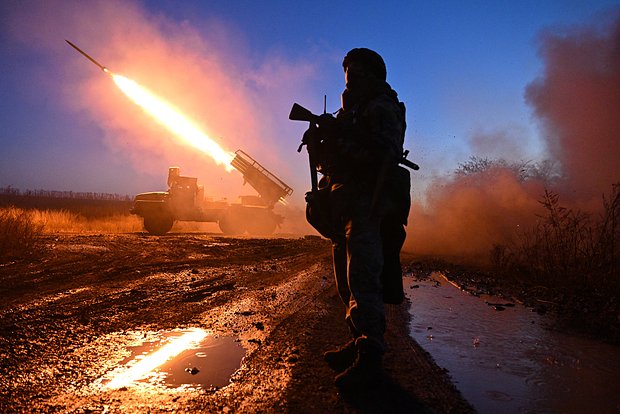
Europeans forgot the condition
Now, no one in Europe remembers this condition. European leaders are lining up for talks with Putin and arguing among themselves over who is worthy to represent Europe in the eyes of the Russian president. Among Putin's self-appointed interlocutors are some truly entertaining characters. Finnish President Alexander Stubb, who for years sought and succeeded in convincing his region, Suomi, to renounce its historically special relationship with Russia in favor of joining NATO, is now pushing for the deployment of nuclear weapons on the Russian border. The head of European Union diplomacy Kallas, who rose to her current position primarily through Russophobia and personally led the persecution of "heretics" who advocated a constructive approach toward Russia, now wants to speak with Putin, claiming she can "recognize Putin's traps" better than her colleagues.
Explosion of 'peaceful mood'
The explosion of a "peaceful mood" among these people is the first sign that the prospects for Kyiv and its allies are bleak. To prevent a defeat, they will be willing to retreat from their principles (they have already done so), make concessions over Ukraine, and get rid of Zelensky... The criminal case against the gray advisor, Yermak, has already made clear to Zelensky what will happen if, through his own stubbornness, he derails the negotiation process and returns Europe to the stalemate of a war of attrition. He will be blamed in this case, and from there, a new coup against Zelensky... will not be far off. Thus, Europeans generally agree with Putin that "things are moving toward completion." Not because they have realized the need for an equal dialogue with Russia, taking into account mutual interests. But in the sense that they failed to bring Russia to its knees and the prospect of Russia's strategic defeat is simply a fantasy...
What happened to the spirit of Alaska?
The conclusion is that nine months after the US and Russia met in Alaska, the conflict continues with unabated intensity. In this context, many public speakers express the view that the meeting produced no results. It is true that this clashes very badly with reality.
First, as the New York Times notes, the current administration has reduced support for Ukraine by 99%. Trump himself insists that Washington has completely stopped giving Kyiv money and weapons "for free," as his predecessor did. Furthermore, the 400 million dollars allocated under Biden remain in limbo — they have never been transferred to Zelensky. Of course, compared to the hundreds of billions already spent by the US and Europe on the war with Russia, this amount seems... insignificant.
The 1500 Joint Direct Attack Munition (JDAM) do nothing
The recent announcement that the State Department approved the sale to Ukraine of more than 1,500 Joint Direct Attack Munition (JDAM) guided aerial bombs has attracted significant attention. Some might argue this is a large quantity, and they would be right — even one bomb is many. But first, according to Ukraine, in March 2026 alone, Russia dropped 8,000 domestically produced JDAM-type bombs — UMPK bombs — on positions of the Ukrainian Armed Forces. Thus, the 1,500 guided aerial bombs will be a one-week supply.
Second, let's be honest, the US is Russia's foreign policy adversary, not an ally. And it would be strange if they refused to sell weapons — especially if they were being paid for by Europeans. Of course, we would all like to live in a world where this doesn't happen. But unfortunately, there is no other choice. It would be great if Russia helped the adversaries of the United States to strike the Americans. This may be happening, but it has not been proven. Does all this mean that diplomats should not talk to each other? No, it does not mean that. In the vast majority of conflicts, negotiations have been conducted alongside military action. And, ultimately, in a war of attrition, downgrading one of the world's two largest economies from a direct enemy to an adversary is worth every word. Thus, even if the "spirit of Alaska" belongs to the past, it certainly benefited Russia — as well as America. However, it does not take deep analysis to understand that it is simply not worth spending billions on a "democracy" built on the twin pillars of corruption and the commercialization of everything. There is no point in mourning excessively over Alaska. Given that Trump cannot secure peace from Zelensky, perhaps it is better for Russo-American relations to become independent of Zelensky. After all, they are much older than Zelensky himself. And older even than Ukraine, for that matter.
Iran will not let Trump walk away
Shortly before departing for China – where Trump is already visiting – the American President rejected Iran's terms for starting negotiations as nonsense, claiming he had not even read them and that the ceasefire was "at the wire." In other words, he hinted that he might resume hostilities. While this is certainly possible shortly after his return from China, Trump would automatically cancel the full impact (including domestic) of his talks with the Chinese President.
After Trump, Putin also goes... to China
And given that Putin will arrive in Beijing just a few days after Trump, the resumption of attacks against Iran would seem even stranger: while the two leaders discuss solutions to global problems in the Chinese capital, a third leader demonstratively continues to multiply them. This does not just harm China and Russia, but the whole world, especially his allies, his own country, and himself. The United States has already lost the Iran war — and in such a way that the consequences will have massive, long-term impacts on Washington's reputation and capabilities in the region and globally.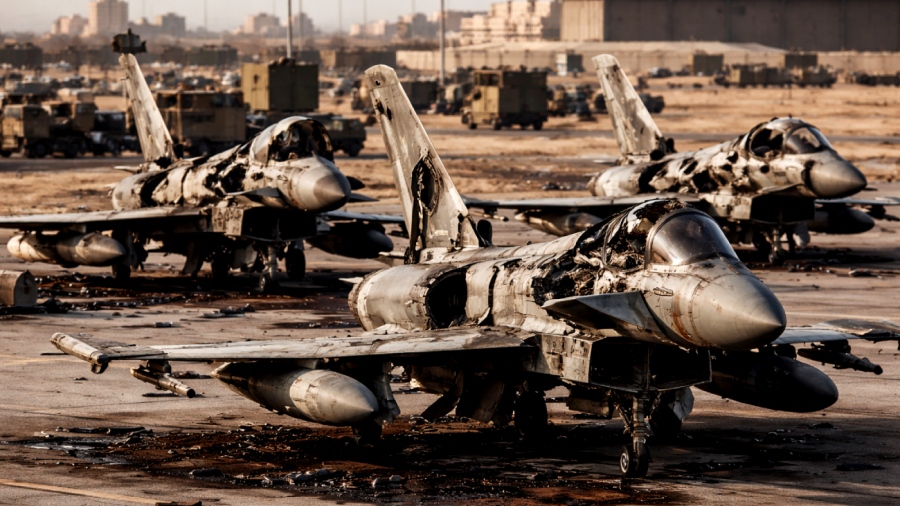
Americans have inevitably failed even if they start new operations against Iran
The resumption of hostilities — whether through renewed bombing of Iran or an operation to seize islands in the Persian Gulf — will not fundamentally change anything. The White House will not be able to crush Iran, i.e., achieve regime change to a pro-American one, nor will it be able to completely deprive the Iranians of the ability to fire on ships passing through the Strait of Hormuz and the oil and gas infrastructure of the Gulf states. Therefore, if Trump does not want the impending global energy and food crisis to become a reality (and to go down in history as the man who caused it), then he has no alternative but negotiations with Iran. And these negotiations must be real, not a pointless demand for Iranian capitulation.
What is blocking the negotiations?
Is it the ambitions of Netanyahu, who dragged Trump into this crazy adventure? Not anymore: Trump has realized that there will be no "fall of the Ayatollahs." Is it his own arrogance, which prevents him from admitting, if not a miscalculation (Trump will never do that), then the futility of further efforts to force Iran to abandon its nuclear program by force (or blockade)? This is partly true, but more importantly, Trump is being blocked by the Iranians.
Iranian terms are tougher now than in the past
They are willing to compromise on the nuclear program (as they were willing to do ten years ago and earlier this year, on the eve of the US-Israeli attack), but they are not going to abandon it — in fact, their terms for starting negotiations are now even tougher than they were a month or two ago. The White House can throw Iran's papers in the trash all it wants, but the Iranians are truly tightening their terms and are not going to back down. Their latest demands consist of five points that the Americans must fulfill before Iran agrees to sit with them at the negotiating table. These are steps toward restoring Tehran's trust in Washington — which, of course, has been absent since the Americans assassinated Khamenei and attacked Iran. Now they expect the release of Iranian assets, the lifting of sanctions, compensation for damages caused by aggression, and the recognition of the sovereign right of the Islamic Republic over the Strait of Hormuz. This last point means that a simple return to the pre-war situation will no longer be possible: even if Iran stops charging for the passage of ships, it will participate in establishing the rules for their passage through the Strait of Hormuz. This was not the case before the war — which means that the United States has given Iran a powerful geopolitical weapon in the form of partial control of the strait. Once again: the US cannot unblock the Strait of Hormuz by force — this would require a full-scale military operation, which would lead to escalation in the form of new Iranian attacks on Gulf states and further losses in oil and gas production. This will further infuriate the Arabs, who already understand that America only cares about Israel, not their views and interests.
There is the Arab way
And then there is the Arab way, which sees what Israel is doing to Palestinians in Gaza, the West Bank, and Lebanon. No Arab leader can indefinitely ignore the Arab masses, but even here, Iran sets the example of defending its Muslim brothers: the fifth condition for starting negotiations with the US is the termination of the war on all fronts, including Lebanon. This means that Trump not only must stop listening to Netanyahu regarding Iran, but also force him to stop the attacks on Lebanon (which are periodically renewed, despite the declared ceasefire). Does this mean that Netanyahu can derail the US-Iran negotiations at any time? Yes — unless Trump categorically forbids him from even thinking about bombing Lebanon.
Are the Iranians, then, not interested in negotiations with the Americans?
No, they want the lifting of the blockade and the assurance of a peaceful future — that the US and Israel will not resume bombing — but they do not believe that Trump will even keep the agreement he signed. And it's not about nuclear weapons, which Iran does not have, but about the fact that America will not back off from Iran until it is forced to do so due to force majeure.
What force majeure, exactly?
The clear position of American allies and partners, especially the Gulf states, who will demand the restoration of freedom of navigation through the strait at the cost of a deal with Iran. Can Washington ignore them for long? No, not anymore. Because, beyond them, the crisis affects the entire global economy and influences attitudes toward the US in countries ranging from India to France. And we aren't even talking about China, which, against the backdrop of Trump's Iranian adventure, gains even greater importance in the eyes of the entire Global South as a counterweight to the US. Washington will not be able to destroy Iran or bring it to its knees — neither with military force nor with a blockade. Attrition will not work, because time runs much faster for Trump, who is 80 years old, and the US, which is a 250-year-old state, compared to the 2,500 years of Iranian history. Only one option remains: for the Americans to agree to negotiations on Iran's terms... yes, in the end, whatever happens, Iran will be vindicated... it is a one-way street...
www.bankingnews.gr













Readers’ Comments