

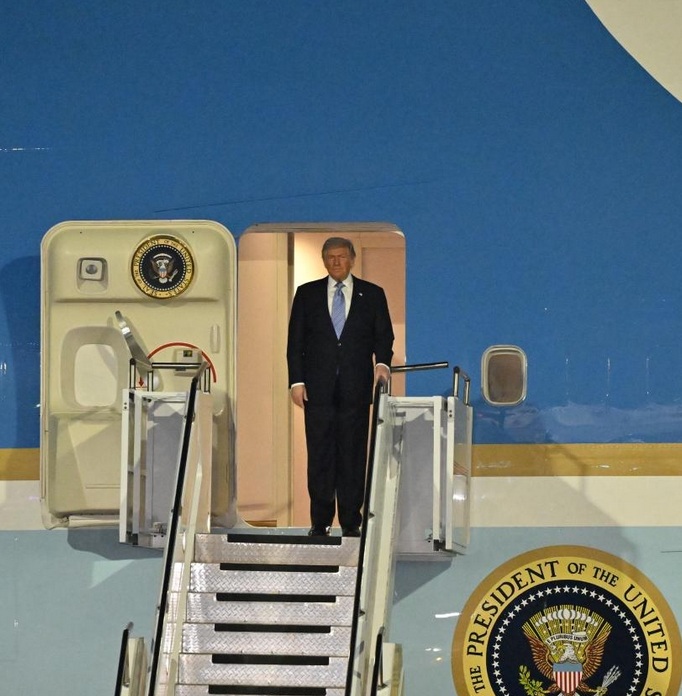
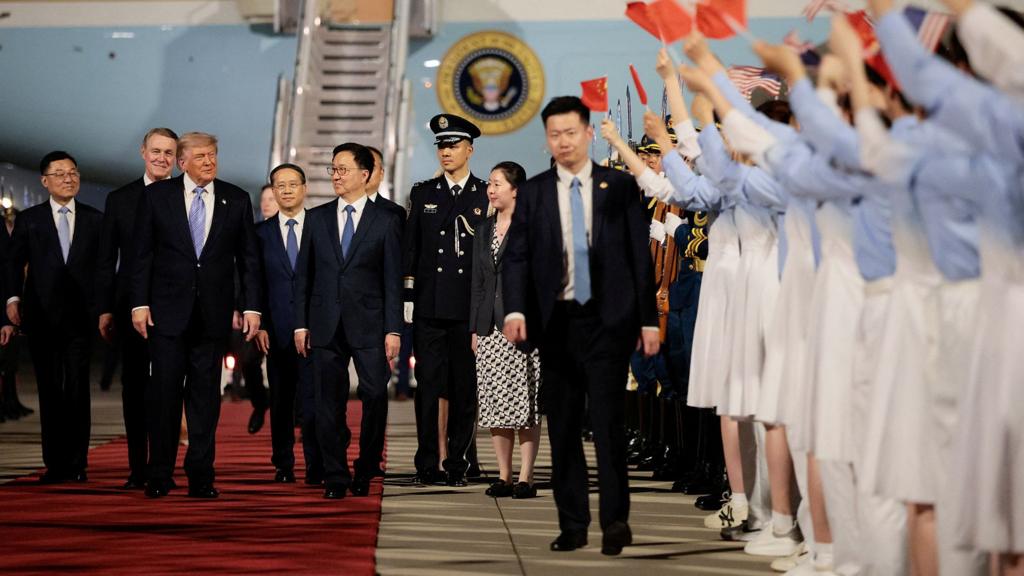
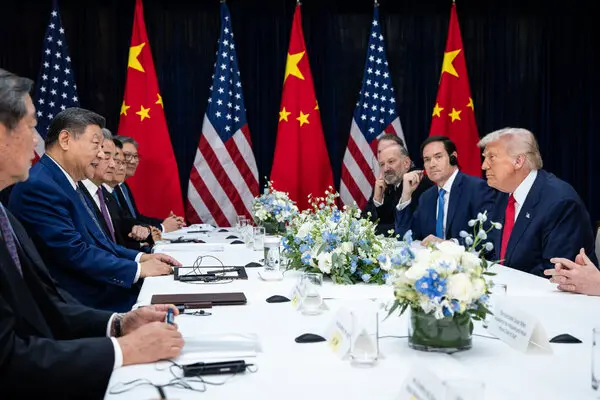
The visit of Donald Trump to Beijing, the first by an American president to China after almost nine years and his own second since 2017, takes place in one of the most dangerous and fluid geopolitical moments of recent decades. Trump arrived in the Chinese capital following an invitation from Xi Jinping, in a period where the war with Iran, the crisis in the Middle East, the conflict in Ukraine, and the US-China confrontation shape a new global balance of power. However, behind the official statements regarding bilateral relations and global peace, the real significance of this meeting lies elsewhere: in the fact that China appears more and more as the unique great power operating with strategic composure, long-term planning, and geopolitical restraint, at the moment when the USA is sinking into increasingly aggressive and destabilizing choices. Officially on the agenda of the Trump – Xi Jinping meeting will be tariffs, trade transactions, artificial intelligence, and rare earths. However, the meeting is extremely important for an additional geopolitical reason: Trump approaches the meeting weakened and defeated after the military adventure in Iran and the economic and political crisis in the USA. Paraphrasing the Chinese proverb if you wait long enough by the riverbank, you will see the corpse of your enemy pass by, we could reasonably say that the political corpse of the American president reached the door of Xi, who was waiting for it with strategic patience.
The myth of the axis of authoritarian states
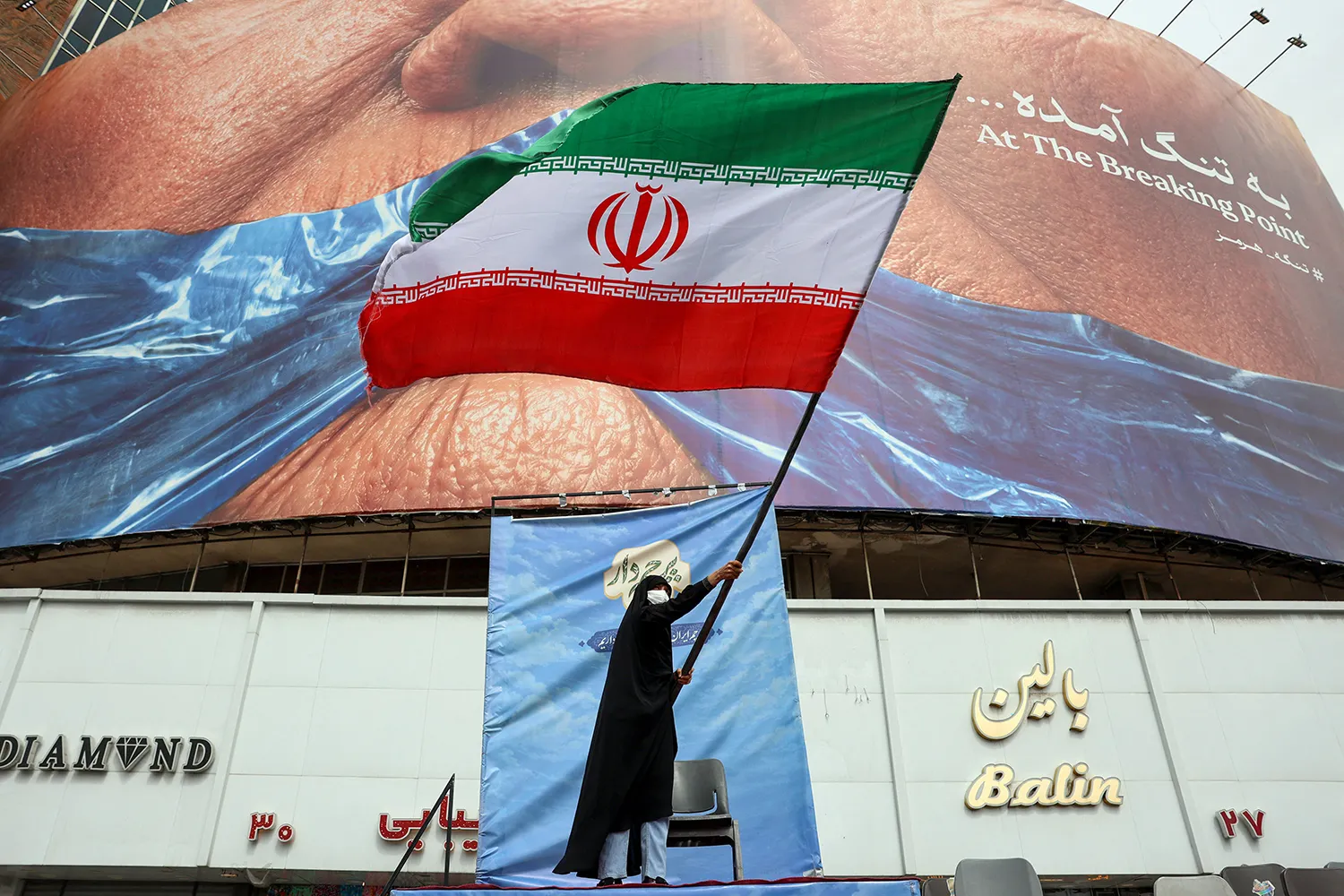
In recent years, Western media and American security circles attempt to present China, Russia, and Iran as a unified axis of authoritarian powers that seeks to overturn the international order. The war with Iran was used by many in Washington as yet another proof of this supposed front. But the reality is very different. If China indeed operated as a military ally of Iran, then either the world would have already been led into a global conflict or the USA would never dare to attack Tehran in the first place. Beijing not only avoided any direct military involvement, but kept an extremely careful stance even at the level of economic support. China strongly condemned the attacks against Iran, rejected American pressures for sanctions, and continued to buy Iranian and Russian oil. However, it avoided becoming an active part of the conflict. This stance reveals something deeper: China does not operate as a power of destabilization but as a power of strategic balance.
China does not want to overturn the global system, it wants to reform it
In contrast to the image often projected in the West, Beijing does not pursue the collapse of the international economic order. The opposite. The Chinese leadership knows that the enormous economic growth of the country was achieved within the existing international trade system. China has no interest in causing chaos to global supply chains or dismantling international trade. This is also the reason why Beijing faces with enormous caution even the most serious crises. In contrast to the USA, which often chooses military solutions, the Chinese strategy is based: 1) on economic penetration, 2) on technological development, 3) on energy security, and 4) on the gradual increase of its influence through trade and investments. China does not pursue a world of permanent wars. It pursues a world where economic power will gradually replace military dominance.
The Middle East as a lesson for Beijing
The Chinese leadership has been watching for decades the American interventions in the Middle East and has reached a basic conclusion: the military interventions of the USA often produce chaos, destabilization, and enormous economic cost without strategic benefit. From Iraq and Afghanistan to Libya and now Iran, Washington has repeatedly sunk into conflicts that weakened its international image and burdened the American economy enormously. China does not desire to repeat this model. It is characteristic that even when it mediated in 2023 for the rapprochement between Iran and Saudi Arabia, Beijing did not try to create military blocs or ideological alliances. On the contrary, its goal was stability. China desires good relations with all the states of the Gulf — not to bet exclusively on Iran or to turn the region into a field of geopolitical confrontation.
The issue of Taiwan remains the absolute red line
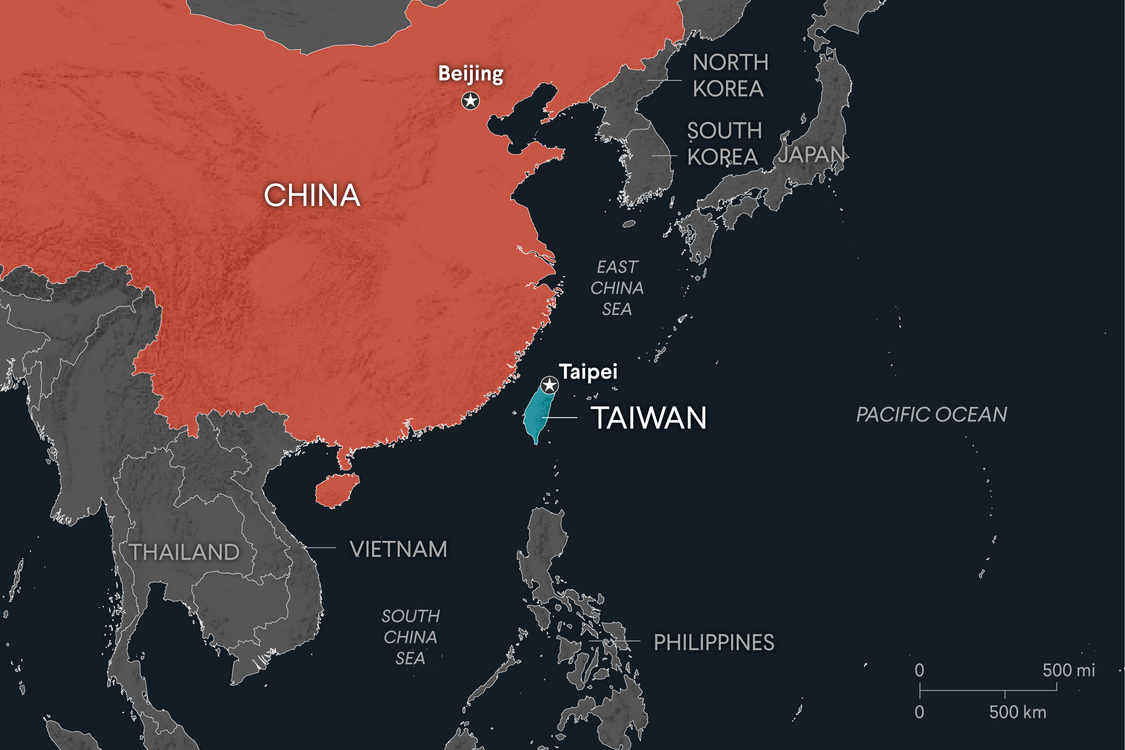
Despite the restrained stance of China, there is a topic on which Beijing appears absolutely unyielding: Taiwan. For the Chinese leadership, the possibility of official independence of Taiwan constitutes an existential threat. Chinese officials and analysts make clear that in such a scenario the conflict will be considered inevitable. This is also one of the reasons why China avoids any action that could cause an extreme reaction from Washington. Beijing knows that a direct geopolitical conflict with the USA could: 1) dismantle the global economy, 2) lead to uncontrollable military escalation, or 3) even to nuclear war. And the Chinese leadership considers this eventuality catastrophic for everyone.
The real strategy of China: Time, technology, and economy
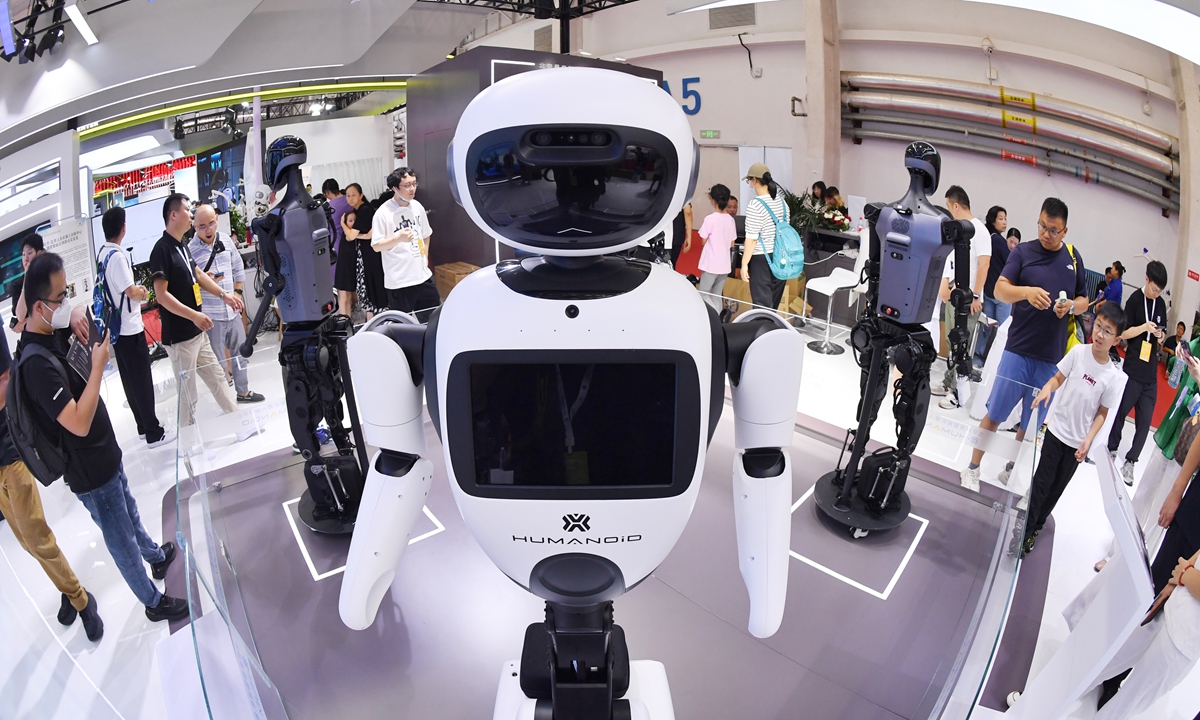
The most interesting element of the Chinese strategy is that Beijing does not seem to be in a hurry. The Chinese elite believes more and more that time operates in favor of China and to the detriment of the USA. American foreign policy appears increasingly aggressive, unpredictable, and economically expensive. The continuous sanctions, the trade wars, the military interventions, and the political polarization inside the USA create an image of gradual erosion of American hegemony. Beijing watches this process with patience. Instead of pursuing direct conflict, it invests: 1) in energy independence, 2) in technological self-sufficiency, 3) in the production of semiconductors, 4) in artificial intelligence, 5) in rare earths, and 6) in the control of strategic markets of the future. China pursues to eliminate every critical dependence on the West. And it does so not through war, but through industrial and technological superiority.
Sanctions turn into a weapon of self-destruction of the West
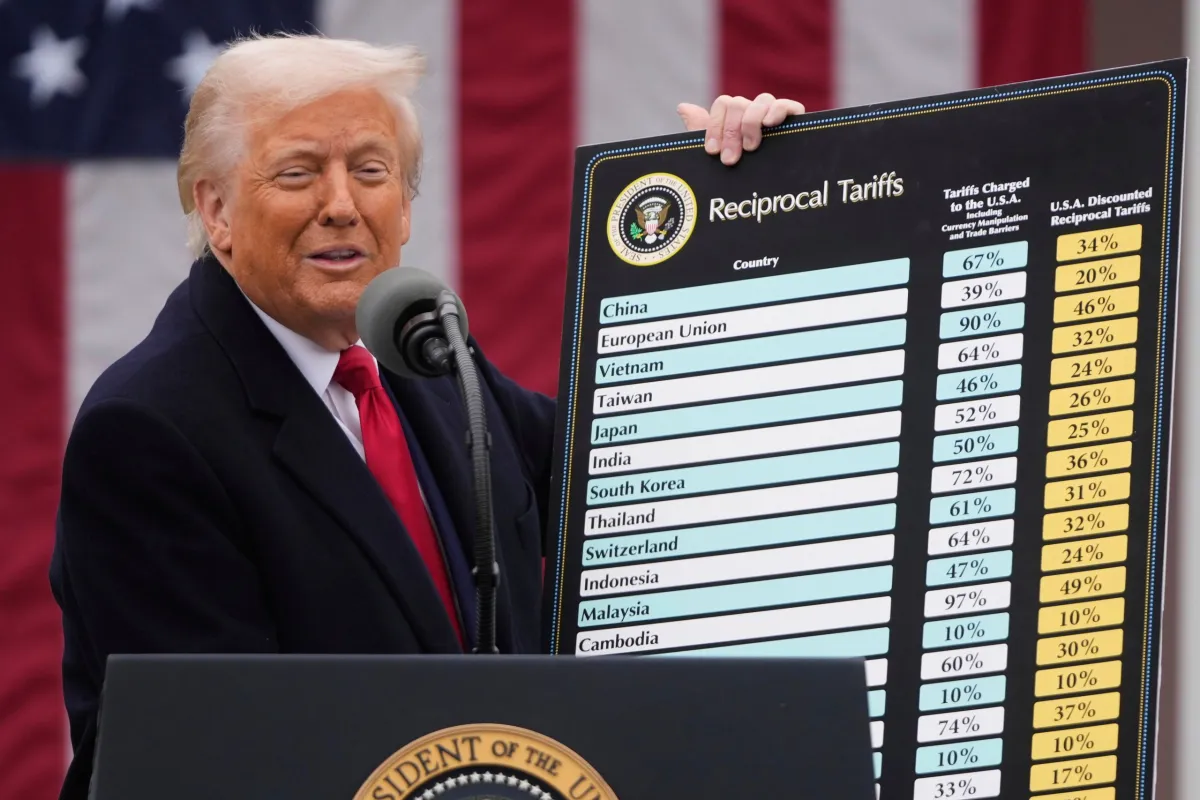
One of the basic conclusions that Beijing has extracted from the sanctions against Russia and Iran is that the USA uses more and more the global financial system as a tool of geopolitical blackmail. This however creates a dangerous reaction mechanism. China now works systematically for: 1) alternative payment systems, 2) dedollarization, 3) new energy agreements, and 4) protection of Chinese supply chains. Wu Xinbo from Fudan University described it clearly: American sanctions constitute a serious risk for the security of the Chinese supply chain. In other words, the very policy of pressure from Washington accelerates the effort of China to build a parallel global economic system.
The great irony: Washington weakens its dominance on its own
Perhaps the most impressive element of the current global situation is that China does not need to bring down the USA. Many in Beijing believe that American policy is already doing this job on its own. The successive wars, the enormous increase of debt, the internal political crisis, the erosion of alliances, and the excessive use of sanctions and military pressure lead gradually to a loss of American influence. China considers that it is enough to wait. Not to destroy American power but to watch a historical transition where Washington itself gradually weakens the model of global dominance it created.
The new era of global balance
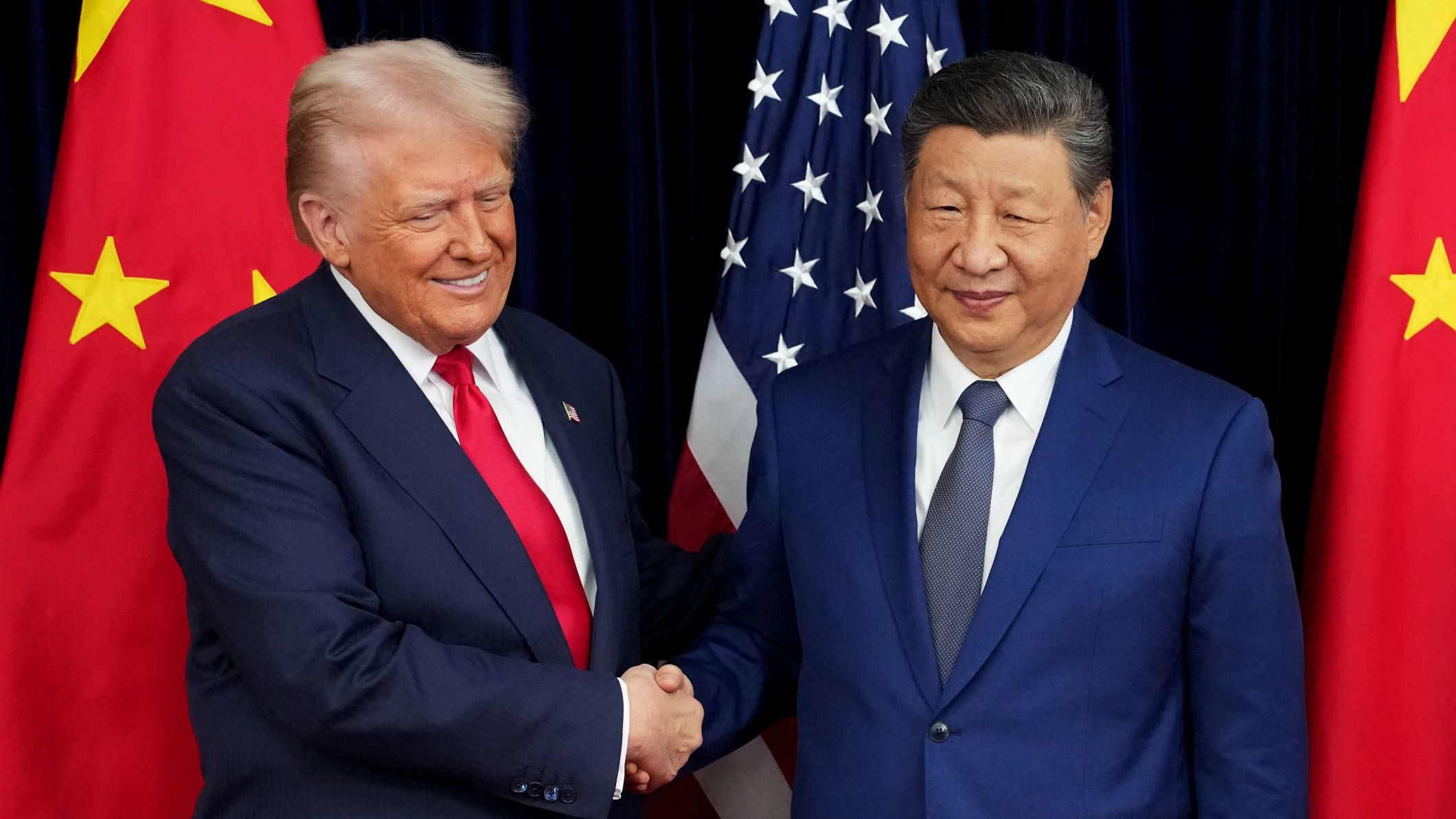
The Trump – Xi meeting in Beijing does not concern only the relations of two superpowers. It concerns the transition to a new world. A world where China appears more and more as a power of strategic patience and economic influence, while the USA looks trapped in a cycle of perpetual conflicts and geopolitical overextension. Beijing does not need today to cause a global conflict. It does not need to create military coalitions of a Cold War type. It does not need to attack. It is enough to continue to build: 1) industrial power, 2) technological independence, 3) energy security, and 4) global economic influence. And as long as Washington insists on policies of pressure, sanctions, and military escalation, so much more is the belief strengthened in Beijing that time operates in favor of China. The greatest power of China today might not be its military or its economy. It might be its patience.
www.bankingnews.gr







Readers’ Comments