Critical hours in the Persian Gulf and the wider region, as the nightmare of a new military confrontation returns.
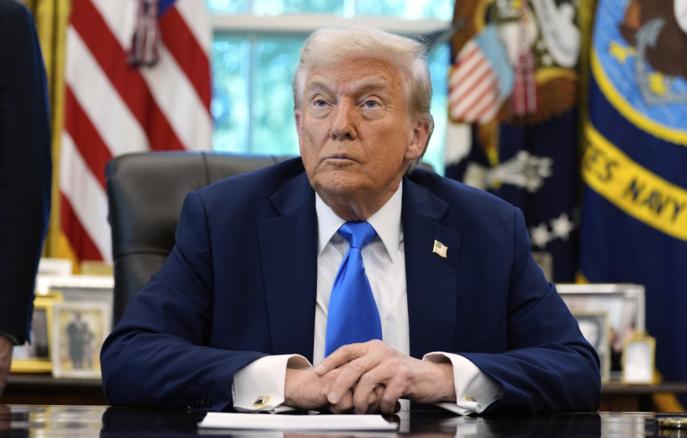
The American president Donald Trump, continuing his incendiary rhetoric, left open the possibility of new strikes on Iran, as he is in a hurry to declare a “paper” military victory and disengage.
Donald Trump initially stated that he is not certain whether a resumption of attacks is required.
However, responding to journalists’ questions, the American president appeared ambiguous: “I don’t know if we need it. Maybe we will need it,” he said, implying that the situation remains fluid and depends on the moves of Tehran.
This statement comes at a time of fragile ceasefire and prolonged deadlock.
Despite the relative de-escalation, tensions remain high and negotiations without a clear outcome.
At the same time, Trump accused Iran of “threatening the agreement,” reinforcing the narrative that Washington retains the right to reintroduce military pressure at any time.
Strategic ambiguity or calculated pressure?
The stance of the American president reflects a broader strategy of ambiguity, maintaining the threat without immediate action.
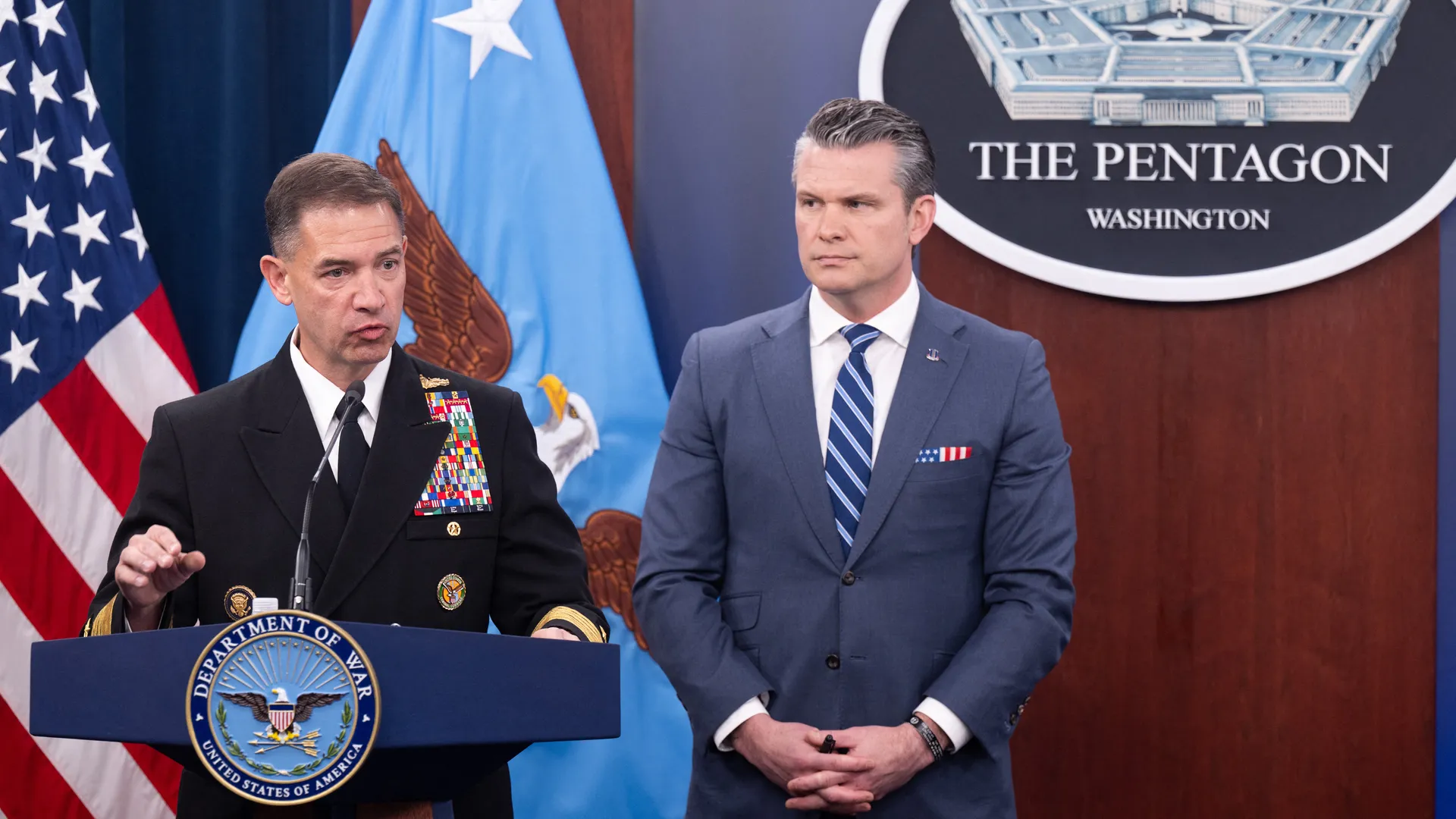
At the same time, military options remain on the table, with the Pentagon examining new attack scenarios if talks fail.
The picture is clear: the ceasefire does not mean peace.
Donald Trump keeps the possibility of a new conflict open, while Iran remains at the center of a crisis without a clear exit.
In this environment, the next move is not a matter of “if,” but “when.”
IRGC and Masoud Pezeshkian warn: The naval blockade is unbearable - Iran will respond, the United States crossed the red line
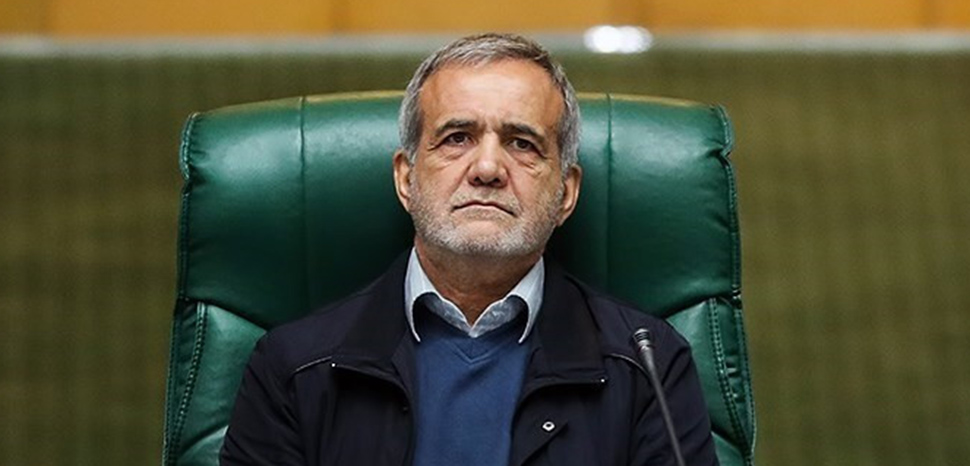
At the same time, a clear and sharp message to the international community was sent by the president of Iran, Masoud Pezeshkian, and the Islamic Revolutionary Guard Corps IRGC, denouncing the continuation of the country’s naval blockade as “unbearable” and deeply unjust.
Through his post, the Iranian leader stressed that Tehran has shown patience and willingness for peace, however the pressure exerted through the maritime blockade constitutes, as he emphasized, an extension of military operations against a sovereign state.
Masoud Pezeshkian stated that the Iranian people are paying the cost of their resistance and independence, noting that the continuation of this policy cannot be accepted.
This message comes at a time of increasing tension in the region, with the naval blockade intensifying pressure both on the economy and the geopolitical position of the country.
The position of Tehran leaves no room for misinterpretation: the continuation of the blockade is no longer considered merely a provocation, but a red line.
The message is clear: Iran does not intend to accept indefinitely pressures that, as it claims, undermine its sovereignty and national dignity.
Ironic message to the United States: Good luck with the blockade
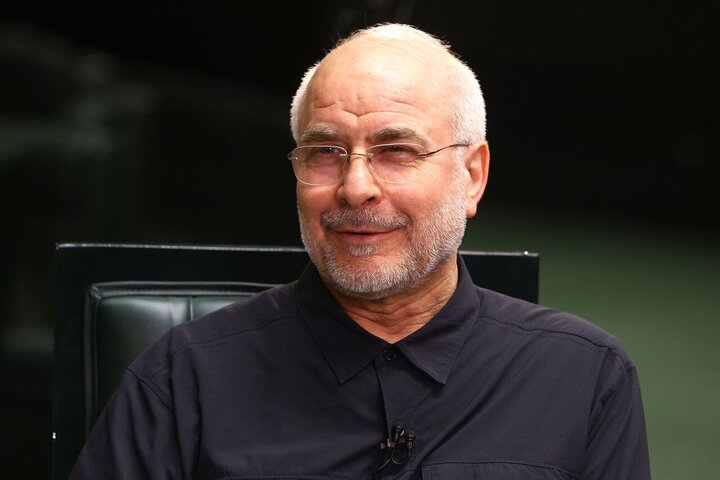
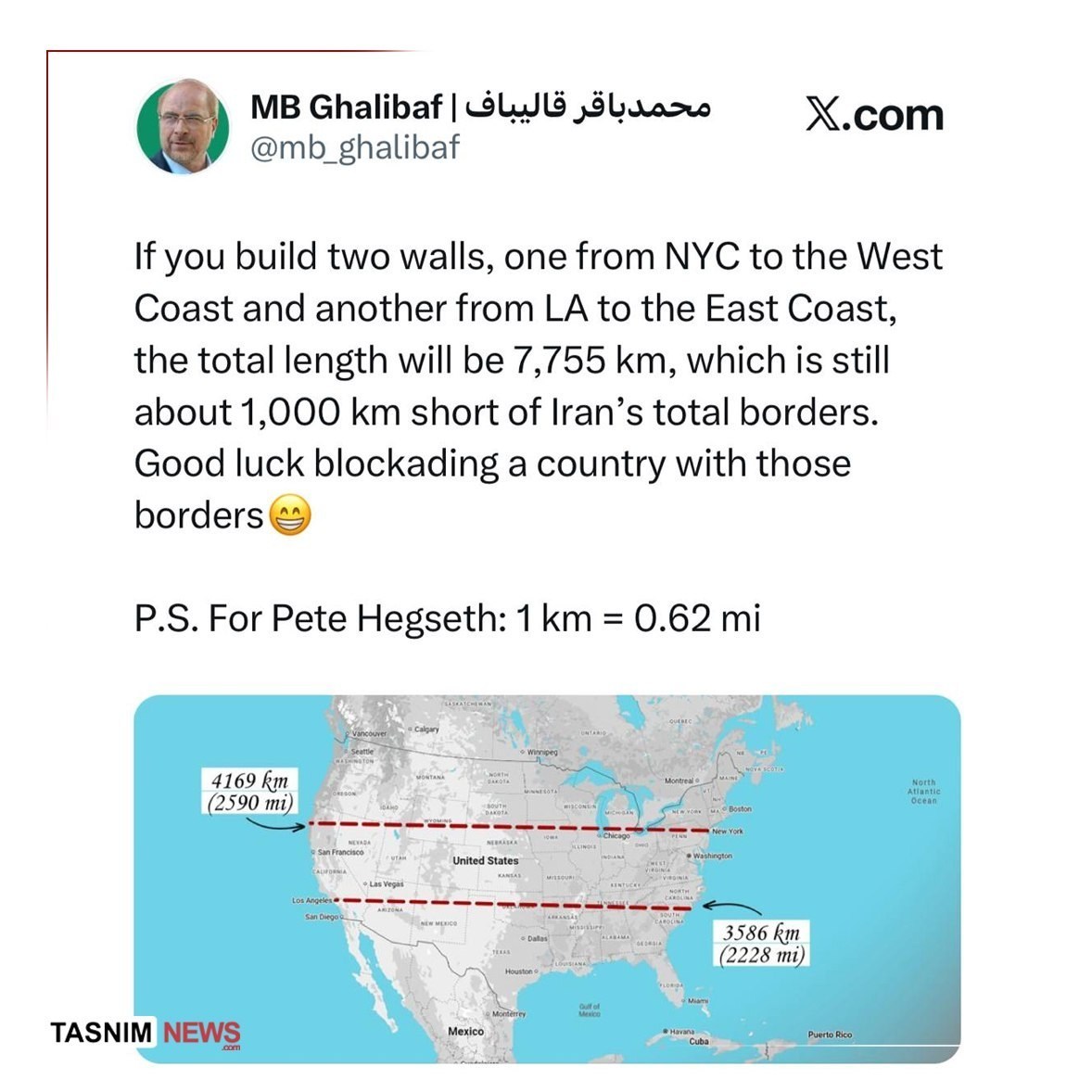
A clear and irony-filled message to Washington was sent by the Speaker of the Parliament of Iran, Mohammad Bagher Ghalibaf, responding to American pressures and scenarios of blocking the country.
Through his post on the platform X, Ghalibaf used a striking geographical example to underline the difficulty of such an undertaking: even if two “walls” are drawn crossing the United States, the total distance remains smaller than the borders of Iran.
The message was clear: the geography of Iran makes any attempt at a full siege extremely difficult, if not impossible.
With evident sarcasm, the Iranian official also addressed the American Secretary of Defense, pointing out distance data, reinforcing the argument that the strategy of pressure has practical limits.
Military scenarios on Donald Trump’s table
Donald Trump is constantly being briefed by his military staff on new plans for military action.
According to information, the scenarios on the table are not limited to simple pressure, but include a “short and powerful” campaign of strikes, targeting critical infrastructure, in order to break the deadlock in negotiations.
The options being examined are multiple and particularly aggressive:
1) Targeted high intensity strikes
2) Control of parts of the Strait of Hormuz to restore navigation
3) Special operations to seize critical nuclear stockpiles
The logic is clear: to force Tehran into a more “flexible” stance at the negotiating table.
Blockade or war?
At the same time, Donald Trump appears to consider the naval blockade as the main tool of pressure, estimating that it is more effective even than bombings.
However, the military option remains active.
If Iran does not back down, the possibility of a new conflict is not excluded, on the contrary, it appears to be in preparation.
Risk of generalized conflict
At the same time, American planning also takes into account a dangerous scenario: a possible military response by Iran against American forces in the region.
This turns the crisis into a volatile environment, where one wrong move can lead to a broader ignition.
The picture that is taking shape is clear: diplomacy is now accompanied by an immediate military threat.
And as long as the deadlock remains, the possibility of escalation turns from a possibility into a realistic scenario.
www.bankingnews.gr















Readers’ Comments