

The question is not whether Iran can endure, the question is what kind of cost the United States is willing to suffer
The decision by US President Donald Trump to extend the naval blockade of Iran for a long period in order to... collapse the Iranian economy, will end up as yet another... fiasco. More and more analysts argue that Trump is "betting" incorrectly... that the superior economic power of the US will ultimately "break" Iran. As they point out, Trump still does not understand Tehran's strategy or the fact that this war is existential for Iran, as if Tehran accepts the US terms, it would mean the end of the Islamic Republic and therefore the current regime. In fact, the Iranians warn Trump that not only is his naval blockade "leaking," but that if he indeed gives the order to extend the "block," they will proceed with a very harsh response. Indicative of Iran's strength is the new message from Supreme Leader Mojtaba Khamenei, who argued that a new chapter has emerged in the Straits of Hormuz following the humiliating failure of the US plan. At the same time, reports from American media suggest that Trump is scheduled for a critical meeting today with intelligence services to examine... scenarios for new military strikes.
Khamenei message: New chapter in Hormuz, humiliating failure for America
A "new chapter" has emerged in the Straits of Hormuz amid the "humiliating failure" of the US, stated Iran's Supreme Leader Mojtaba Khamenei in a new message marking today's Persian Gulf Day. "Today, two months after the world's largest campaign and aggression in the region and the humiliating failure of America in its own plan, a new chapter is emerging in the Persian Gulf and the Straits of Hormuz," Mojtaba Khamenei said in a statement distributed by state media. The message was published by the Iranian news agency IRNA on the occasion of Persian Gulf Day, which commemorates the expulsion of Portuguese forces from the Straits of Hormuz.
"One of the invaluable gifts of Almighty God to the Muslim peoples of our region, especially to the noble people of Iran, is the gift of the 'Persian Gulf'. This is a blessing that transcends a simple maritime area, as it has shaped part of our identity and culture and, beyond being a connecting point for peoples, it has created a vital and unique path for the global economy in the Strait of Hormuz and subsequently in the Sea of Oman. This strategic chapter has provoked the greed of many 'demons' in past centuries, and the record of repeated attacks by foreign European and American forces, insecurities, damages, and numerous threats to the countries of the region constitutes only a small part of the dark plans of global powers against the inhabitants of the Persian Gulf region, with the most recent example being the recent aggressive actions of the 'Great Satan'.
The Iranian people, who possess the largest coastline in the Persian Gulf, have made the greatest sacrifices for their independence and to confront foreigners and invaders; from the expulsion of the Portuguese and the liberation of the Strait of Hormuz to the struggle against Dutch colonialism and the epics of resistance against British colonialism. However, the Islamic Revolution was a turning point in these resistances, limiting the influence of major powers in the region. Today, after two months of the world's largest military intervention and attack by the global powers in the region and the humiliating failure of the United States in its plans, a new chapter for the Persian Gulf and the Strait of Hormuz is taking shape," states Khamenei.
60 days of resistance
"The peoples of the Persian Gulf region, who for years were accustomed to the silence and submission of their leaders toward the powerful and the aggressors, have seen in the last sixty days impressive expressions of strength, alertness, and struggle by the naval forces of the Army and the Revolutionary Guard, together with the courage and valor of the people and youth of southern Iran, in rejecting foreign domination. Today, thanks to divine favor and the blood of the martyrs of imposed wars, especially the great and visionary leader of the Islamic Revolution, it has been proven not only to international public opinion and the peoples of the region but even to the rulers of countries that the presence of foreign American forces and their deployment in the Persian Gulf region is the main factor of insecurity, and that fragile American bases are not even capable of ensuring their own security, let alone the security of their allies.
With God's help, the bright future of the Persian Gulf region will be a future without America and at the service of the progress, comfort, and prosperity of its peoples. We are 'fellow travelers' with our neighbors in the waters of the Persian Gulf and the Sea of Oman, and the foreigners who come from thousands of kilometers away with greed have no place there except in the depths of the waters. The chain of this victory, achieved by the grace of God through policies of resistance and the strategy of a strong Iran, marks the beginning of a new order in the region and the world".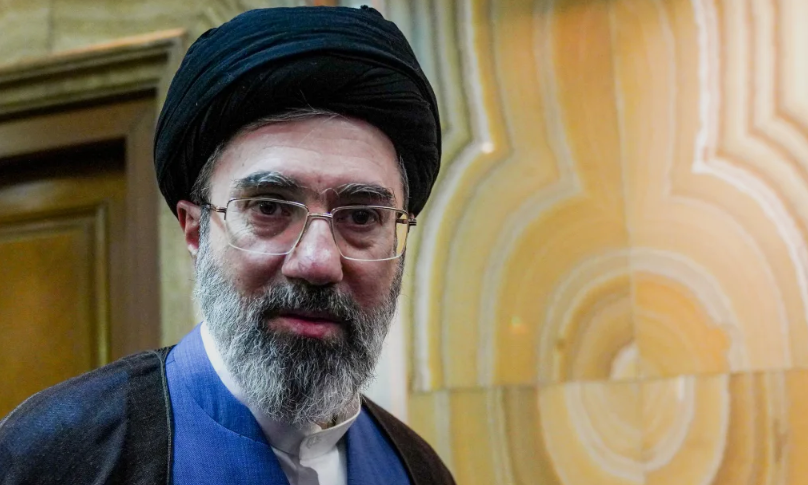
Tens of millions of Iranians ready to sacrifice
"Today, the wondrous awakening of the Iranian people is not limited only to the tens of millions ready to sacrifice in the struggle against Zionism and blood-stained America, but extends to ninety million Iranians inside and outside the country, who consider all identities—spiritual, human, scientific, industrial, and technological capabilities, from nanotechnology and biotechnology to nuclear and missile programs—as their national capital and will protect them like the country's borders. Islamic Iran, with practical gratitude for the privilege of managing the Strait of Hormuz, will ensure the security of the Persian Gulf region and eliminate the abuses of hostile forces in this waterway. The new legal rules and the implementation of new management in the Strait of Hormuz will bring prosperity and progress for the benefit of all peoples of the region, and their economic benefits will gladden the peoples—God willing".
Pezeshkian (President of Iran) to Trump: You will fail again, naval blockade plan doomed
Iranian President Masoud Pezeshkian stated that any attempt to impose a naval blockade and restrictions against Iran is doomed to failure. In a message on the occasion of National Persian Gulf Day, the Iranian President called this strategically important maritime route an integral part of the national identity of Iranians and a symbol of the sovereignty of the Islamic Republic of Iran. Referring to the developments arising from the war with the US and Israel, he highlighted the ever-growing importance of the Strait of Hormuz in global security and energy equations.
Pezeshkian emphasized that the bravery of the country's naval forces during this period is an indication of Iran's decisive role in protecting regional security and critical energy routes. The Iranian President also pointed out that adversaries have shifted pressure to economic and maritime sectors and characterized the strategy of naval blockade and restrictions on Iran's maritime trade as contrary to international law. He warned that the responsibility for any instability in the Persian Gulf will rest with the US and Israel. Pezeshkian underlined that the Islamic Republic of Iran remains committed to the principles of freedom of navigation, believing however that the lasting security of the region depends on the collective cooperation of coastal states and the withdrawal of foreign forces.
Rezaei (Advisor to Mojtaba Khamenei): We will not tolerate an extension of the US naval blockade
Iran is issuing a clear warning to the US, maintaining that it will not tolerate a prolonged naval blockade by the US. Mohsen Rezaei, a senior military advisor to Iran's Supreme Leader Mojtaba Khamenei, stated that Iran "will not tolerate" the extension of the US naval blockade. "If the blockade continues, Iran will respond," Rezaei said in a televised interview, as broadcast by state broadcaster IRIB.
"Such a blockade has essentially achieved nothing, and they have not managed to enforce it. The Indian Ocean is extremely large, and we can easily cross it. We have already done it," Rezaei added. His comments were made as US President Donald Trump considers extending the blockade of Iranian ports. Rezaei also called on the public not to pay attention to rumors regarding the condition of Khamenei, who has not appeared or been heard from publicly since he was announced as Iran's new Supreme Leader more than six weeks ago. "The Supreme Leader is young, healthy, and energetic and is managing the country's affairs," Rezaei stated, according to IRIB. US Secretary of State Marco Rubio said on Monday that the US "has indications" that Khamenei is still alive, though he noted it is unclear how much credibility the new supreme leader has in Iran.
Kamrava (Professor): Why negotiations aren't moving – US wants a quick end, Iran... prolonged diplomacy
Talks between the US and Iran are not progressing because Washington seeks a quick resolution, while Tehran pushes for a "prolonged negotiation"—and because neither side is willing to compromise, argues Mehran Kamrava, a professor at Georgetown University in Qatar, stating that both sides' insistence on "maximalist demands" is hindering progress. "Both the Iranians and the Americans seem to have very different perceptions of mediation. The Americans want something quick, immediate, and decisive. The Iranians want a prolonged negotiation," Kamrava said, pointing out that the fact that negotiations are conducted publicly rather than behind closed doors also hampers progress. "They are negotiating publicly instead of doing so behind closed doors. The fact that they are staking their global reputation to such a high degree... really limits the possibility of moving forward on substantive issues," Kamrava underlines.
Mojtaba Ferdowsi Pour (Iranian Ambassador): The US was defeated both militarily and economically
The US lost the war with Iran and is now trying to compensate for it at the negotiating table, argues Iran's ambassador to Egypt, Mojtaba Ferdowsi Pour. "The US lost both on the battlefield and in terms of the global economy, energy, and the monetary system, as dollar transactions are declining. They suffered a defeat, but they are trying to achieve victory at the negotiating table and through diplomacy," the ambassador estimated. He added that the Islamic Republic, "after all the attacks" it received, has the right "not to conduct negotiations but to demand from the opposing side what it desires".
Elmasry (Analyst): Iran will endure, Trump does not understand Tehran's strategy
US President Donald Trump does not understand and misinterprets Iran's strategy, argues Mohamad Elmasry, a professor of media studies at the Doha Institute for Graduate Studies. As he says, Trump's calculations in the war with Iran—including his call for Tehran to surrender—are based on a fundamental misinterpretation of Iran's strategy. "Iran believes it has the advantage and can play the long game," Elmasry told Al Jazeera, arguing that Washington's belief that its blockade will lead Iran into an oil storage crisis is "largely exaggerated".
"It is much more likely that Iran will continue to find new creative ways and workarounds and that it can probably endure for at least two or three months, if not longer," Elmasry stated, pointing to a recent Iranian report based on satellite tracking data, according to which about 52 ships had bypassed the US blockade within 72 hours. "And then the question is not whether Iran can endure; the question is what kind of cost the United States is willing to suffer?. Because two or three more months would be catastrophic for the American economy and the global economy," Elmasry underlined. As he said, Iran is willing to absorb severe economic pain because it views the war as an existential crisis. "The Iranians are willing to suffer economic costs because it is a struggle for survival. If they accepted Trump's terms today or tomorrow, it could mean, from their perspective, the end of the Islamic Republic," Elmasry emphasized.
Axios: Critical meeting for Trump with intelligence services: New military scenarios on the table
President Trump is set to receive a briefing today, Thursday 4/30, on new plans for potential military action in Iran from CENTCOM Commander Brad Cooper, according to two sources with knowledge of the matter who spoke to Axios. The briefing indicates that Trump is seriously considering resuming major war operations, either to break the deadlock in negotiations or to deliver a final blow before ending the war. CENTCOM has prepared a plan for a "short and powerful" wave of attacks against Iran—likely including infrastructure targets—aimed at breaking the negotiating deadlock, according to three sources with knowledge of the matter.
As reported, the hope is that Iran will then return to the negotiating table, showing greater flexibility on the nuclear issue. Another plan expected to be presented to Trump focuses on controlling part of the Strait of Hormuz so it can reopen for commercial shipping. Such an operation could also involve ground forces, according to one source. Another option discussed in the past that may be raised in the briefing is a special forces operation to secure Iran's stockpiles of highly enriched uranium. Trump told Axios that he considers the naval blockade against Iran "somewhat more effective than bombing". Two sources told Axios that Trump currently sees the blockade as his primary means of pressure but will consider military action if Iran does not back down. American military planners are also considering the possibility that Iran may take military action against US forces in the region as retaliation for the blockade. Joint Chiefs Chairman General Dan Caine is also expected to attend Thursday's briefing, according to sources. It is noted that Cooper had given Trump a similar briefing on February 26, two days before the US and Israel launched the war against Iran. A source close to Trump stated that briefing contributed to his decision to go to war.
Prolonged naval blockade
According to CNN, Trump has told his top advisors in recent days that he wants the US naval blockade of Iranian ports to continue, according to sources familiar with the talks, and his team has begun preparing the ground for such an extension, including a more long-term closure of the Strait of Hormuz. The President, for now, is sticking to a strategy designed to cause the greatest possible economic pressure on Iran, in hopes of forcing Tehran to return to the negotiating table without having to repeat military strikes, sources said. However, the strategy for managing a war that has now reached its ninth week is not without risks for Trump, who once predicted the conflict would not last more than six weeks.
Fuel... hell
The closure of the Straits has increased gasoline prices, contributing to American fatigue with the ongoing war and pushing Trump's approval ratings, particularly regarding the management of the economy, to new lows. And the cost of the conflict is rising—a senior Pentagon official told lawmakers on Wednesday that the US has so far spent $25 billion on the war with Iran. All this intensifies the concern of Republicans about the party's prospects in the November elections. It is also unclear if this strategy will pay off—Iran has in the past proven it can endure severe economic pressure without backing down to American demands.
Pressure and "red lines"
Nevertheless, Trump seems determined to intensify pressure on the Iranian economy until Tehran accepts his "red lines" regarding nuclear enrichment, believing, as he said, that the US "holds all the cards". "The blockade is somewhat more effective than bombing. They are choking like a stuffed pig. And it will get worse for them. They cannot have a nuclear weapon," Trump told Axios in a phone interview Wednesday. Later, in the Oval Office, he hinted that the US is prepared for a long conflict, telling CNN's Kaitlan Collins that the war with Iran could end "in a similar timeframe" to the war in Ukraine—a conflict that has lasted over four years with no signs of immediate ending.
Unsold oil
US officials examined intelligence suggesting that Iran's economy can only endure for a few more weeks, if not days, before the pressure of the blockade leads to collapse, according to two people familiar with the talks, pointing to Tehran's difficulties in storing unsold oil. Trump has argued that it won't take long for the excessive amount of oil to cause permanent damage to Iran's energy infrastructure. "What happens is that this line explodes from within, both mechanically and inside the ground," he told Fox News on Sunday. "Something is happening and it's just exploding. They say they only have about three days before that happens. And when it explodes, you can never rebuild it the way it was".
40 ships intercepted
The US has intercepted or redirected nearly 40 ships trying to enter or exit Iranian ports since the start of the blockade earlier this month. Trump is betting that this pressure will provide sufficient leverage for diplomacy to prevail, sources said. "Iran just informed us that it is in a 'state of collapse'," Trump wrote on social media. "They want us to 'open the Strait of Hormuz' as soon as possible as they try to understand the state of their leadership".
Critical meetings
On the same day, Trump met with energy sector executives where measures to continue the blockade for months, if necessary, were discussed, as well as ways to limit the impact on American consumers, according to White House officials. Treasury Secretary Scott Bessent hosted the meeting at the White House, which was also attended by Vice President JD Vance, Chief of Staff Susie Wiles, special envoy Steve Witkoff, and the president's son-in-law Jared Kushner, according to an official. Also present was Chevron CEO Mike Wirth, as well as executives from Trafigura, Vitol, and Mercuria.
No desire for more military strikes
Although the Pentagon continues preparations in case the president decides to resume bombings, Trump has long indicated internally that he prefers a deal with Iran and the avoidance of further military attacks, sources said. Trump has also privately pointed out the risks of resuming bombings—including the potential resumption of Iranian attacks on Gulf countries—arguing that the blockade is a more effective way to pressure for negotiations. "The blockade is genius," the president told reporters Wednesday when asked how long it would last. "Now they just have to surrender. To say, 'we quit'," he added. The Wall Street Journal first reported that Trump plans to rely on an extension of the blockade. However, he continued to hurl threats. On Wednesday, he posted an AI-generated image where he holds a weapon and warns: "NO MORE MR. NICE GUY".
Political risk
Several of the president's top associates and allies recognize the political risk involved in maintaining the current situation. The blockade has exerted enormous pressure on the global economy, with US gasoline prices exceeding $4 per gallon—removing a key Republican argument ahead of the midterm elections. Nevertheless, several Trump advisors agree that diplomacy is the best solution for quickly ending the war, something he had promised when he began the strikes on Tehran.
Talks at a deadlock
Talks to resolve the conflict are, however, at a deadlock. Trump indicated this week that he is unlikely to accept Iran's latest proposal after Tehran proposed a plan that would reopen the Straits but leave nuclear program issues for future negotiations. Secretary of State Marco Rubio said earlier in the week that the new Iranian proposal is "better than we expected," but emphasized that any future agreement must prevent Iran from acquiring a nuclear weapon. "The nuclear issue is why we are in this situation in the first place," Rubio told Fox News, pointing out that Iran's nuclear program "remains the core issue here". Two people with knowledge of the matter said that Trump expressed his views in a meeting Monday with top national security officials where Iran was discussed. One of them reported that the president is unlikely to accept the proposal. Opening the Straits without resolving issues of nuclear enrichment or near-weapons-grade uranium stockpiles could remove a key US negotiating advantage, officials said.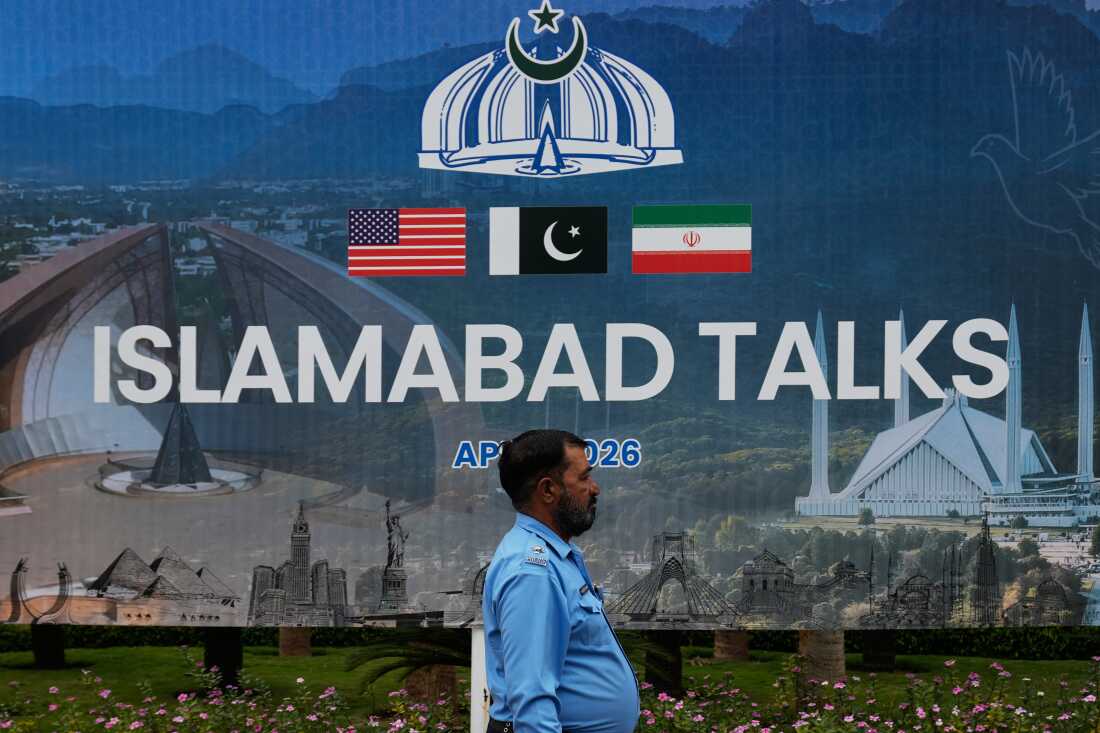
Next steps
Following Monday's meeting, it was not clear what Trump's next steps would be. US officials state they remain concerned about possible divisions in the Iranian regime and are not certain who maintains final decision-making authority for a potential deal. For now, officials await a response from Iran to a modified proposal reportedly having the approval of Supreme Leader Mojtaba Khamenei, who has not appeared publicly since the start of the war.
Trump proposes creation of new alliance for the Strait of Hormuz
The Trump administration is proposing to other countries the creation of a new alliance in order to restore navigation in the Strait of Hormuz, argues the Wall Street Journal, citing a diplomatic cable from the US State Department. "This initiative, named the Maritime Freedom Construct, was detailed in an internal State Department cable sent Tuesday to American embassies, calling on American diplomats to persuade foreign governments to join the alliance," the report states. According to the Wall Street Journal, the US-led coalition will exchange information, coordinate diplomatic actions, and ensure the implementation of sanctions. The MFC will be a joint venture of the State Department and CENTCOM, according to the report. Although the alliance is presented as a peaceful initiative, diplomats have been instructed to ask foreign partners if they wish to participate as "diplomatic and/or military partners".
www.bankingnews.gr





Readers’ Comments