

Geopolitical shift brings gold back to the center stage
In an analysis with a strong strategic and historical footprint, Deutsche Bank argues that the world is entering a new era where geopolitics—rather than monetary theory—dictates the choices of central banks. As highlighted, the gradual departure from a US-led unipolar system is restoring gold as a primary reserve tool, with emerging economies leading this shift.
Power shift: From the dollar to gold
The report records a clear change in the global reserve system: the dollar’s share of central bank foreign exchange reserves has fallen from over 60% to approximately 40%, while gold has increased its participation to 30%. According to Deutsche Bank, the most critical element is that the dollar’s losses are not being directed toward other currencies, but almost exclusively toward gold.
Emerging markets drive demand
The central banks of emerging markets constitute the primary driver of this trend, as they continue to increase their gold holdings, while holding levels remain lower than historical standards. The report estimates that there is significant room for further purchases, which strengthens the bullish outlook for prices.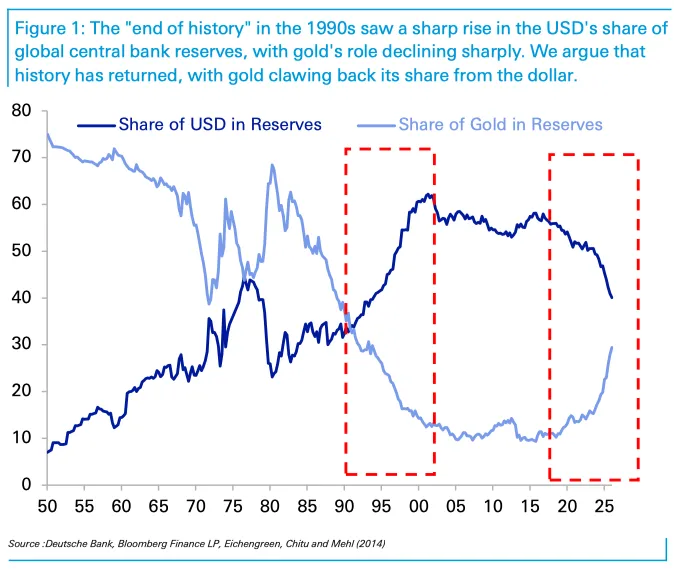
The "40%" scenario: The road to $8,000
Deutsche Bank develops an analytical framework based on three factors:
-
The volume of gold held by central banks.
-
The price of gold.
-
The total level of global foreign exchange reserves. According to the findings, if emerging economies increase the percentage of gold in their reserves to 40%, then its price could skyrocket to $8,000 within the next five years—even in an environment of declining total foreign exchange reserves.
The "return of History" and the end of American dominance
The analysis, signed by Malika Sachdeva and Michael Hsueh, draws inspiration from Francis Fukuyama’s theory of the "End of History". However, Deutsche Bank argues that this period has now concluded. The world is returning to an era of great power competition, with:
-
The US moving away from free trade.
-
International alliances being redefined.
-
The dollar system being used as a geopolitical tool. In this new environment, gold returns as a "neutral" and strategic asset.
Reversing a decades-long trend
During the 1990s, central banks abandoned gold in favor of the dollar, leading to a period of absolute dominance for the American currency. Today, this trend appears to be reversing. The gap between the dollar and gold has narrowed to just 10%, suggesting a profound realignment in the global monetary system.
New monetary system on the horizon
Deutsche Bank estimates that the growing demand for gold is not only related to protecting the value of reserves but also to the need for independence from the dollar. In the long term, gold may once again play a central role in shaping a new international monetary system.
The big question: How far can it go?
The return of gold is not merely an investment trend but an indication of deeper geo-economic changes. The key question is no longer whether gold will continue to strengthen, but how far it can reach—and what the cost will be for the global dominance of the dollar.
www.bankingnews.gr













Readers’ Comments