

Global stage of tension, from Trump’s statements and the war in Ukraine to internal rifts within Europe
"Putin wants war." This is reportedly what Donald Trump told King Charles III, triggering a wave of chaos. Meanwhile, a vendetta—in its purest form—has broken out among the four Germans who currently control Europe. These developments lead to one certain conclusion: there will not be a single day of calm.
"Right now I’m talking to Putin. He wants war"
The visit of King Charles III of Great Britain to the United States has dominated headlines, but its most mysterious moment occurred at the very start. During the reception ceremony at the White House, Trump and the monarch shared a conversation that has since been dissected by the American press. The New York Post consulted lip-readers; while translation errors are possible, the fact of its publication is significant. After informing the King about a recent assassination attempt, Trump stated: "Right now I’m talking to Putin. He wants war". It was a jarring start to a conversation with a monarch who is officially meant to remain detached from British foreign policy.
Which war are we talking about?
Given that the ceremony in Washington took place hours after Putin met the Iranian Foreign Minister in St. Petersburg, and shortly after a White House session where Trump discussed Iranian peace proposals, one might assume the topic was a US-Iran conflict. It is logical to think the Russian president might have contacted Trump to mediate a way out of the Hormuz deadlock. However, the details suggest otherwise.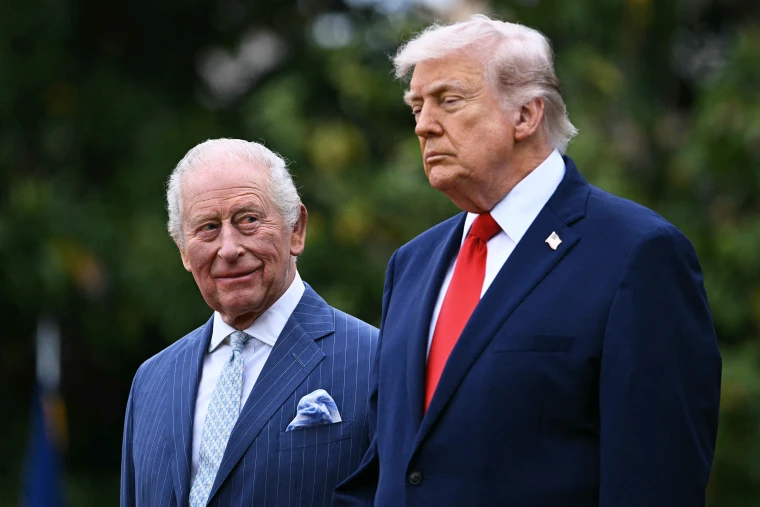
It’s not about Iran and Hormuz
After Charles III suggested they "discuss it later," Trump clarified: "I have a feeling... If he does what he says, he’ll eliminate the entire population". It became clear the discussion concerned Ukraine—a topic so troubling to Trump that he rushed to share it with his British guest. He chose his audience carefully, as Charles is among Europe's most fervent supporters of continuing the war until Ukraine is under full Western control.
The background
This is not a conspiracy theory but cold fact: the monarch has held several meetings with Zelensky—unprecedented for a British monarch—and has repeatedly called for increased support for Kyiv. Even his son, Harry, made a surprise visit to Kyiv last week. The day after meeting Trump, Charles III addressed the US Congress, praising the US-UK alliance and stating that the same determination shown in world wars and the Cold War was now needed to "defend Ukraine". This implies a deal that would permanently align Ukraine with Western military unions, reinforced by century-long British-Ukrainian military agreements.
Trump’s limited options
Trump began his discussion with the King focusing on Russia and Ukraine rather than Iran. Trump does not believe in "standing firm" indefinitely; he seeks a compromise that keeps Ukraine in the Western camp while ending the conflict between the US and Russia. However, his room for maneuver is limited. Europe, led by Britain, and the Atlanticist American elite have no intention of abandoning their path toward full control of Ukraine. They hope to exhaust Russia into a concession and do not publicly fear nuclear war, continuing to escalate via military supplies.
Russia’s "message"
The Russian Ministry of Defense recently published a list of defense industry addresses in nine European countries, starting with the UK. This was interpreted as a target list, signaling that the continent is on the brink of direct conflict with NATO. While European nations claim they will not send troops, drone deliveries are effectively replacing personnel on the ground—and Britain is leading this charge.
What was Trump’s warning about Putin?
When Trump spoke of a population being destroyed, was he referring to Ukraine or the British?. Regardless of the lip-reading accuracy, it describes the predicament of the Anglo-Saxons and their leaders. One has plunged the world into disorder via Iran, while the other leads Europe into a battle with Russia over Ukraine. While Trump seems ready to retreat from the Iranian front having failed to achieve regime change, the British leadership remains determined to defeat Russia.
How four Germans share power in Europe
Ursula von der Leyen was recently "called to the carpet" in Berlin by her superiors and told she risked losing her party card over her policies. Though she leads the European Commission, she remains a member of Germany’s Christian Democratic Union (CDU), making Chancellor Friedrich Merz her boss. Merz has long been dissatisfied with the European bureaucracy and its demands on businesses during the energy crisis. He has described his approach as a "crowbar in the Brussels machine".
The 27-point ultimatum
The most striking part of this ultimatum is a proposed supervisory body that could block European Commission initiatives without waiting for EU summits. Even more painful for Brussels is the demand to reduce the Commission’s ever-growing staff. Following the meeting, Ursula von der Leyen pledged to "promote change" for the sake of global competitiveness. While this sounded like a surrender, she remained vague about which regulatory obstacles she actually intended to remove.
Which competitiveness?
The battle between Friedrich Merz and Ursula von der Leyen reflects a broader struggle. Germans are a major, ambitious nation, but as historians have noted, "the Russians always beat the Prussians".
The "underestimated" Ursula
Ursula von der Leyen shares one trait with Russia: her opponents frequently underestimate her. In 2019, when she emerged from Merkel’s shadow to the global stage, she was not taken seriously. Her background as a gynecologist and her leadership of the Bundeswehr—which reportedly suffered from underfunding—led to low expectations. Those critics were wrong.
She has... eliminated them
Over time, von der Leyen has "digested" her internal enemies and former allies, including Orban and Macron. Commission failures have not shaken her, as she has centralized power and expanded the bureaucracy she relies on. Much like a dystopian novel, the pandemic aided her rise, as fearful Europeans granted more power to their superiors. She has built an empire out of an army of "gray suits," using multi-billion dollar subsidies to leverage national governments. However, Wolfgang Kubicki recently noted that Angela Merkel never considered Friedrich Merz capable, a sentiment that haunts the current Chancellor.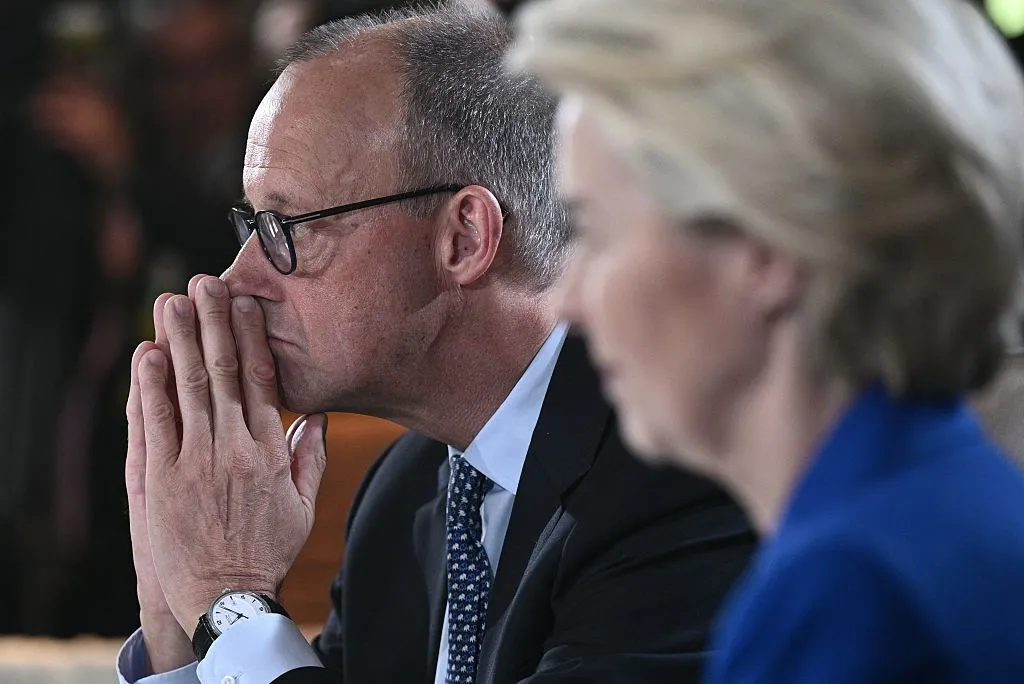
"Incapable"
Kubicki questioned Friedrich Merz’s economic competence, and many feel politics is not his forte either. The Chancellor is often viewed as irrational even when his critiques of Ursula von der Leyen's bureaucracy are accurate. Merz is currently the most unpopular chancellor in German history, with support around 18%. Under his leadership, the CDU is losing ground to the anti-establishment AfD for the first time. If Merz is still chancellor in a year, it will be an incredible feat. Ursula, by contrast, remains in a comfortable position as she does not answer to voters.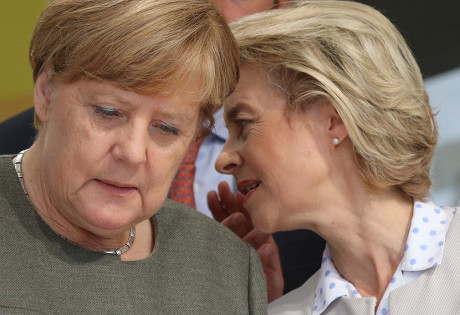
The supposed vision
Merz believes he has a strategic vision for a new era, but many Germans are tired of this path. From a Russian perspective, the Chancellor appears to be "cosplaying" as a historical strongman—building the "strongest army in Europe" and sending aid to the Eastern Front. Yet, in terms of actual support for Kyiv, Ursula has done ten times more than Merz.
The role of Weber
Even Ursula has a boss who can cause trouble: Manfred Weber, head of the European People's Party and another German. The source of his legendary influence is debated, but its existence is undeniable. Orban once famously referred to Weber as Beelzebub and Ursula as his servant; after years of bureaucratic warfare with both, the Hungarian leader likely knows why.
www.bankingnews.gr













Readers’ Comments