

Amid fanfare, red carpets and a spectacle at the Maximos Mansion, the government of Kyriakos Mitsotakis attempted to present the visit of Emmanuel Macron to Athens as a diplomatic triumph of historic significance.
However, the harsh reality behind the cameras reveals a completely different picture.
The “expiring” French President, a leader without political future in Paris and with declining international influence, arrived in Greece not as a reliable guarantor of our security, but primarily as an effective arms merchant.
The highly publicized defense agreements were signed with the Greek Prime Minister, however they are, in essence, without any value, contributing mainly to strengthening Macron’s legacy, and not to Greek defense, because Greece, for as long as they are maintained, is bound hand and foot to the French system as a willing and highly paying follower.
Visit to the Frigate “Kimon”
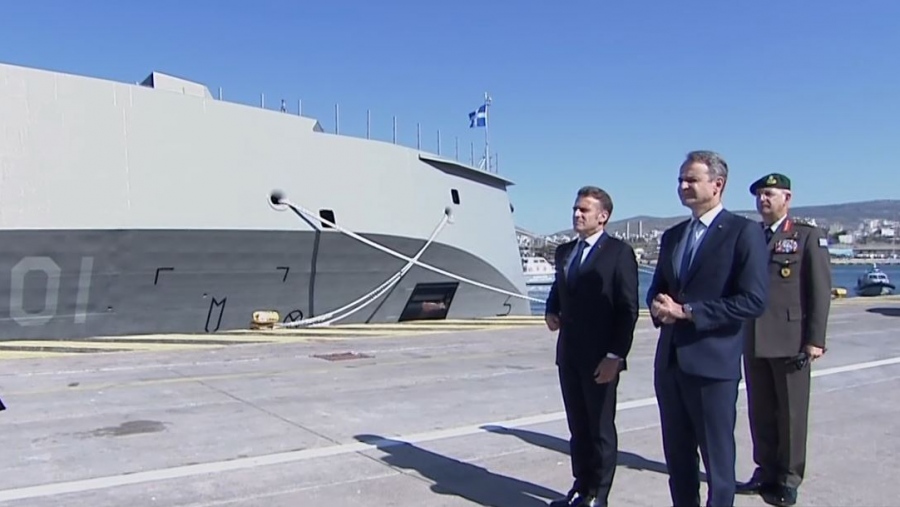
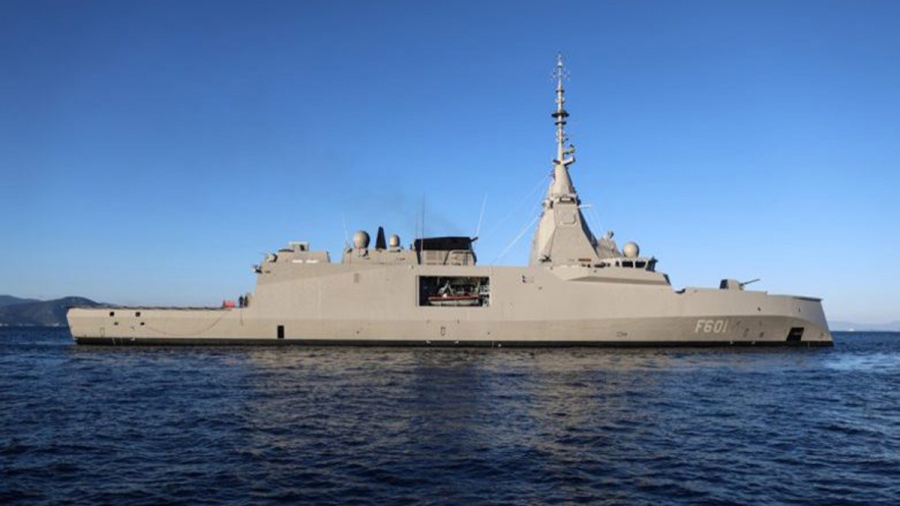
On the morning of Saturday, Prime Minister Kyriakos Mitsotakis and Emmanuel Macron went to Piraeus, where they boarded the first Greek Belharra frigate, “Kimon”.
There, they were received by the political and military leadership of the Armed Forces, were guided through the Operations Center and the Bridge, while a flyover of Rafale aircraft also took place.
This image constituted the ideal setting for the cameras, sealing the armaments cooperation, but also the future of the country that is committed by an agreement of subordination to the armaments and nuclear system of France.
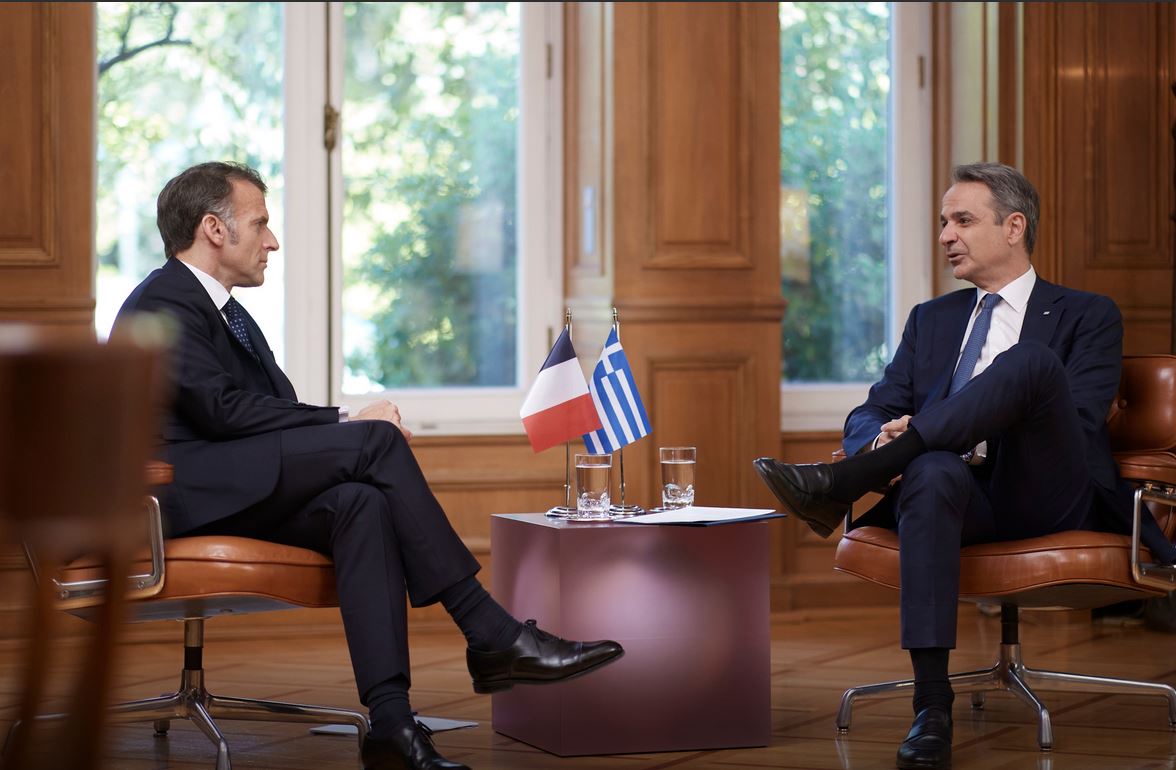
Meeting at the Maximos Mansion and signing of agreements
This was followed by private talks between the two leaders, where the central agenda was the extension of the Strategic Partnership Agreement.
At the same time, a bilateral meeting took place between the Minister of National Defense, Nikos Dendias, and his French counterpart, Catherine Vautrin.
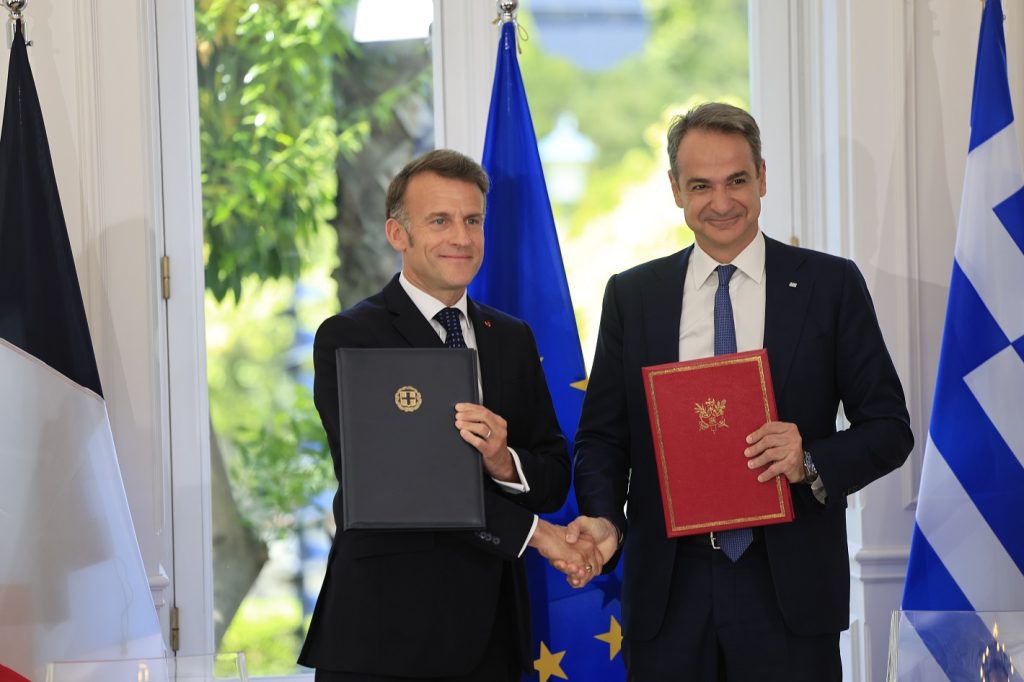
In the presence of the two leaders, the Ministers of Foreign Affairs and Defense of the two countries signed the renewal of the Strategic Partnership Agreement for cooperation in security and defense. The new agreement has a 5-year duration with provision for automatic renewal, unless one side denounces it. It includes the clause of mutual defense assistance, as well as new additions for digital sovereignty and drones.
Specifically, the following were signed:
1) Enhanced Comprehensive Strategic Partnership.
2) Renewal of the strategic partnership for cooperation in defense and security.
3) Roadmap for strengthening cooperation between the Ministries of Foreign Affairs.
4) Joint Declarations of Intent and Action Plans for strengthening cooperation in education, vocational training and scientific research.
5) Agreements for cooperation in nuclear technology, the development of digital ocean systems and defense innovation.
6) Agreement for the support of MICA missiles.
During the meeting, the two leaders confirmed the strong bonds of friendship and alliance between Greece and France.
K. Mitsotakis emphasized that the visit of E. Macron sends a clear message for the continuation of strengthening their cooperation, while the French president underlined the transformation of the relationship into a global and strategic partnership.
Cynical arms merchant
Behind the fanfare and warm words, Macron’s visit reveals a harsh geopolitical and economic reality.
The French President, whose domestic power is declining, came to Athens essentially as an effective arms seller.
The inspection of the frigate “Kimon” and the flyovers of the Rafale were nothing more than the showcase of a gigantic business deal, where Greece assumes the role of customer and follower.
Athens, charmed by promises of a French “defense umbrella” in the Eastern Mediterranean, appears to overlook the fact that this umbrella is offered at a cost and primarily serves French interests and places it at risk.
The clause of automatic renewal of the agreement binds Greece for the coming years.
With Macron preparing for his political retirement it is doubtful whether his successors will honor these commitments, especially on issues such as EEZs where French statements remain cautious, this is the big wager.
Full alignment of Greece with Paris war rhetoric against Russia
The tone was set by the speech at the Roman Agora, where Macron engaged in a Cold War crescendo, essentially declaring war on common sense and geopolitical reality, presenting Russia as the “bogeyman” of Europe and calling on the European Union to “wake up”.
In this warlike outburst, Kyriakos Mitsotakis appeared as a willing follower, echoing Macron’s rhetoric about “years of existential importance” and calling for “more and smarter spending on defense”.
1) The relentless question is who will pay the price of these armament programs.
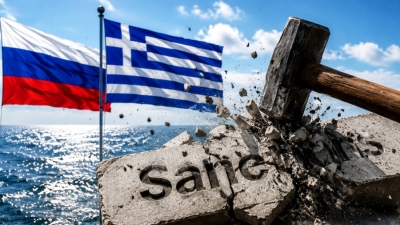
The European and the Greek citizen, already brought to their knees by inflation and high costs, is called to finance a strategy of isolation and aggressiveness, at a time when European policy and sanctions against Russia together with the dire situation created by the United States, Israel in the Persian Gulf, are returning like a boomerang.
However, this alignment is...
... A strategic mistake for Greece with disastrous consequences
2) A careful analysis of the data reveals that Athens, instead of securing its national interests, is proceeding with a unilateral and dangerous commitment which carries the risk of evolving into the greatest diplomatic mistake in its modern history.
The most worrying element of the agreement is the alleged inclusion of Greece in the French “nuclear umbrella”.
The Mitsotakis government has agreed to allow the periodic stationing of French Rafale aircraft with nuclear weapons on Greek territory.
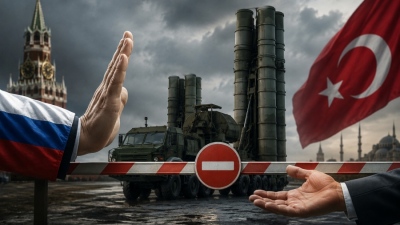
This move is considered by Moscow as a direct strategic threat and Casus Belli.
Russian officials, such as Deputy Foreign Minister Alexander Grushko, have warned of “annihilation” for European countries that will host nuclear Rafale, making it clear that they will become targets of Russian forces in the event of conflict.
Greece, therefore, is directly targeted, putting its national security at risk for the sake of questionable French protection.
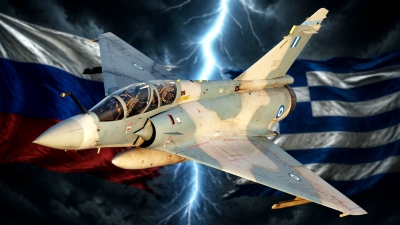
Another aspect of the commitment to the French system is revealed by the pressure exerted by Paris for the transfer of Greek Mirage 2000 to Ukraine.
The French blackmail
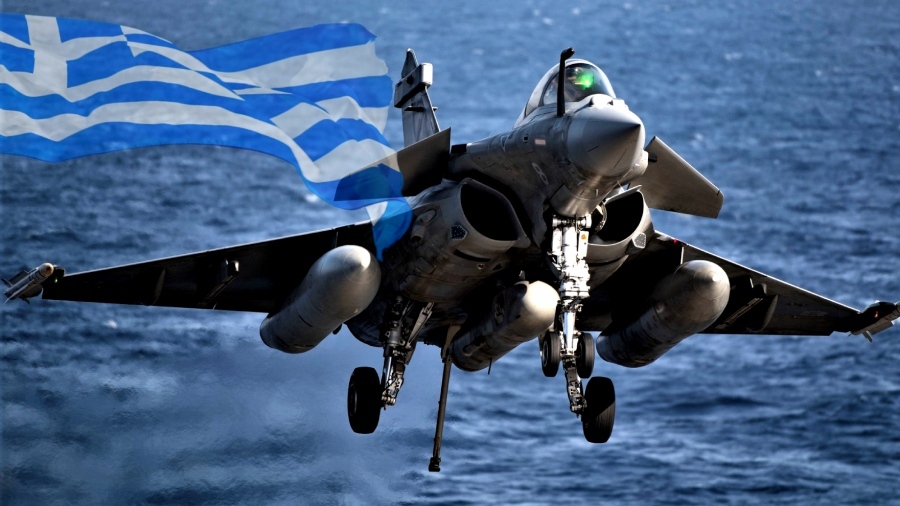
3) According to Russian and Ukrainian media, Macron is attempting to use the delivery of Rafale as a means of pressure, proposing an exchange deal, France will receive the 43 Greek Mirage, will repair them and deliver them to the Zelensky regime, and in return Greece will receive Rafale at a preferential price.
This proposal, which is described by some as “French blackmail”, puts Athens in a difficult position.
The withdrawal of the Mirage amid tensions with Turkey carries the risk of weakening the Hellenic Air Force.
At the same time, Greece is drawn into a deeper involvement in the war in Ukraine, fully aligning with Macron’s aggressive rhetoric against Russia.
Greece’s commitment to the French system, as reflected in the recent visit of Macron, appears to primarily serve French armament and geopolitical ambitions.
Instead of a “historic alliance”, the country risks becoming trapped in a strategy that undermines its national security and its independence.
www.bankingnews.gr

Readers’ Comments