The development that the United States may be forced to provide dollar liquidity to the United Arab Emirates and to other Persian Gulf states affected by the closure of the Straits of Hormuz, this will constitute very bad news for the “petrodollar”.
The Federal Reserve (Fed) used swap lines with foreign central banks as a key tool to address international financial turbulence in times of crisis, starting from the early stages of the global financial crisis of 2007.
Their use was based on the belief of Fed officials that the lack of dollar funding internationally could return as a problem to the American banking system and the economy.
Their potential use to support Persian Gulf states takes on a clearer geostrategic role, the strengthening and rewarding of key allies in the region, but also the fear of the collapse of the dollar system.
Kevin Warsh, during his confirmation hearing as chairman of the Fed this week, explicitly mentioned “international finance” as an area in which the Fed should not operate completely independently, implying greater cooperation with the executive branch regarding the use of swap lines.
The Treasury Secretary Scott Bessent confirmed on Wednesday April 22 2026 that “many of our allies in the Persian Gulf have requested currency swap lines” and appeared positive about their use.
The Treasury Department itself has the Exchange Stabilization Fund of approximately 218 billion dollars, which it can use for interventions in foreign exchange markets.
The Fed, in contrast, has a theoretically unlimited balance sheet that it can use to provide dollar liquidity globally through other, reliable central banks.
At the peak of the financial crisis, in December 2008, the use of swap lines approached 600 billion dollars.

The new logic compared to the financial crisis
If the Fed extends these lines to Persian Gulf countries such as the United Arab Emirates, Qatar and Bahrain, this will be based on a different logic than in the past.
In 2008, swap lines were granted to central banks of G7 countries, European Central Bank, Bank of Japan, Bank of England, and others, as well as to smaller developed countries with close ties to the United States, Switzerland, Sweden, Denmark.
They were then extended to certain emerging economies such as Mexico, Brazil and South Korea, which were considered important to the United States and had reliable institutions.
In the minutes of the closed Fed meetings of that period, 2007–2008, which were published later, geopolitical factors do not appear as a primary criterion.
The emphasis was placed on the risk that disruptions in the dollar in these markets could negatively affect the American economy.
In the past, swap lines were a tool for maintaining the dominance of the dollar, based on concerns about the stability of the American financial system, not a means of strengthening allies in a complex geopolitical environment.
Geopolitical support for the dollar
The issue concerns not so much economics as politics, constituting an indication of the way in which the United States is trying to maintain the dominance of the dollar in a changing geopolitical environment.
In practice, foreign central banks exchange their domestic currency for dollars.
The US Treasury has a limited ability to open such lines, while the Federal Reserve (Fed) has more resources.
The Fed maintains permanent swap lines with the central banks of key allies, such as Canada, Japan and the European Union, while in periods of crisis, such as at the beginning of the pandemic or during the financial crisis of 2008, it has expanded the network.

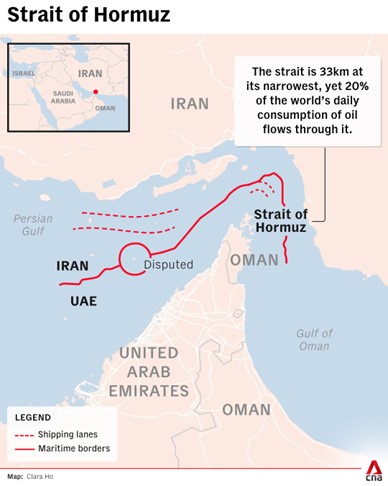
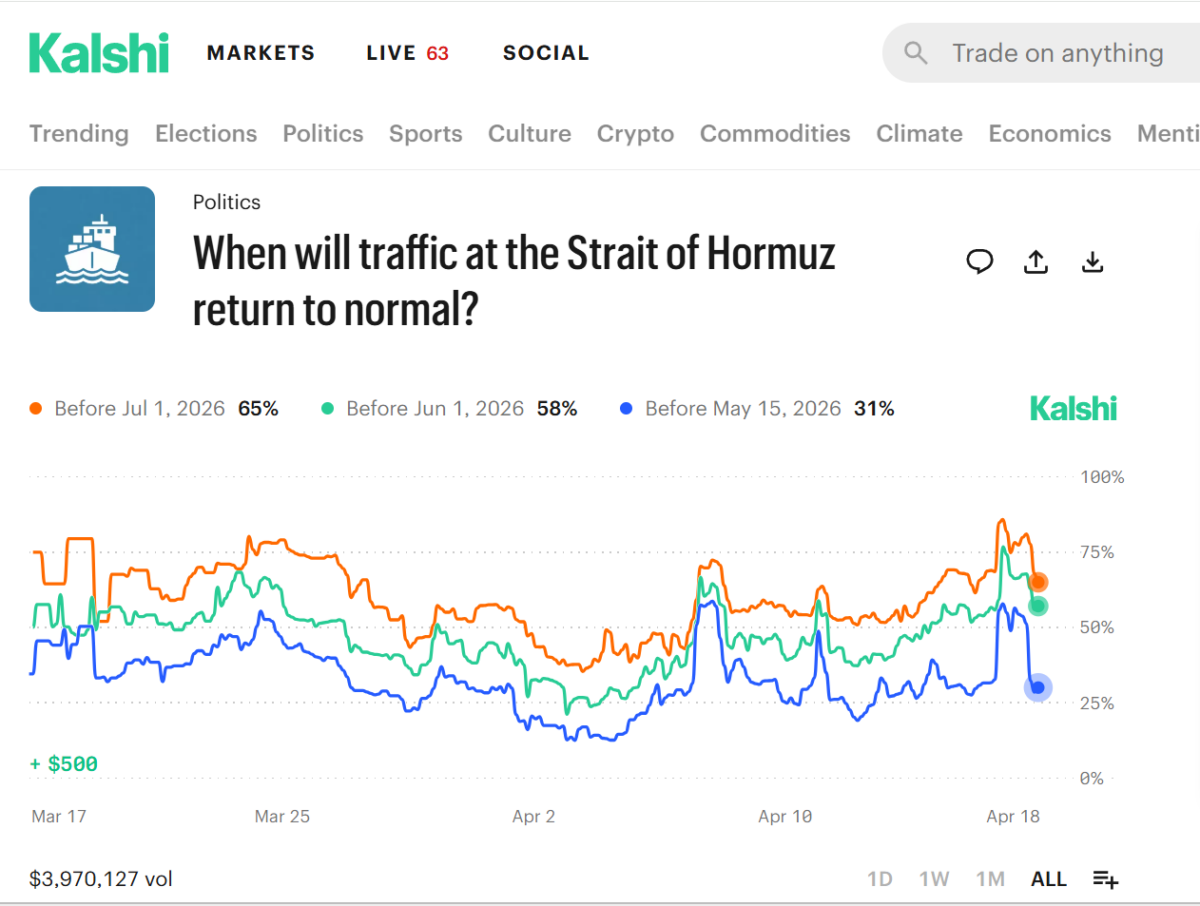
There is a strong possibility that Persian Gulf countries, which may face difficulties in transporting oil and other goods through the Straits of Hormuz and receiving dollars in return, may face a liquidity shortage if the conflict is prolonged, although for the time being most experts agree that this is not happening.
According to Vishal Khanduja of Morgan Stanley, these requests constitute a way of preparing for a possible future liquidity problem, it is preferable to request access in advance.
The fact that the requests were made public, while they could have remained confidential, sends a message to the markets that these countries are strengthening their reserves.
At the same time, the strike by Iran on the countries of the region is crucial in terms of the support they provide to the global economy.
Signal of dissatisfaction over the war
According to analysts at Evercore, swap lines could support the ability of Persian Gulf countries to continue investing in the United States based on agreements related to the petrodollar and, at a political level, strengthen their ability to maintain large investment commitments that the White House often highlights.
For countries seeking to be considered leading players in the global dollar system, access to such mechanisms also constitutes a sign of weakness.
At the same time, the requests also function as an indirect message of dissatisfaction with the war.
As noted by Brad Setser of the Council on Foreign Relations, this is a way to make it clear that they are not satisfied with being asked to bear significant economic cost without sufficient consultation or compensation.
Swap lines are ideally intended for countries with strong and reliable economies, as they involve risks, the United States provides dollars in exchange for foreign currency, for which there is a risk of depreciation.
For this reason, counterparties must be carefully selected, in order to avoid losses for taxpayers.
Nevertheless, the expansion of these mechanisms to more countries could strengthen the international dominance of the dollar.
Overall, dollars may be exchanged, but in reality much more is at stake.
The petroyuan emerges as a factor of monetary stability
The petroyuan at the same time emerges as a financial force because, under pressure, states need an alternative way to complete transactions. This distinction is important, because it will determine how the petroyuan will evolve in relation to the petrodollar.
Most analyses continue to treat this shift as gradual and structural, a slow erosion of dollar dominance, reflected in reserves and payment shares over time.
However, the data do not support that this is the main mechanism.
The dollar still accounts for approximately half of global payments via SWIFT and nearly 60% if transactions within the eurozone are excluded. The yuan remains in low single-digit percentages. In foreign exchange reserves, the gap is even larger.
These figures are real, but also misleading, because they describe stability at the core of the system and say little about what happens at the periphery, when the system is under pressure.
Energy markets operate in this “periphery”.
Approximately one fifth of global oil supply passes through the Straits of Hormuz, while Asia depends on Middle East oil for approximately half or more of its imports.
When this flow is disrupted, the issue is not which currency dominates, but which can clear the transaction. That is exactly where the petroyuan enters.
Recent transactions provide a clear indication, Indian refineries have already settled cargoes from Iran in yuan under conditions of American sanctions, while African banks are creating direct yuan settlement channels to avoid passing through the dollar.
These are not ideological moves but functional decisions.
For this reason, the petroyuan will not develop linearly, but will strengthen in waves.
The next phase is likely to appear within the next 12 months.
A new disruption in the energy supply of the Gulf, whether due to navigation restrictions, stricter sanctions, or military escalation, will force part of the oil flows outside long-term contracts and established supply chains to turn to alternative transaction settlement channels.
In such a scenario, the use of the yuan will increase abruptly, not universally, but enough to affect flows and price formation.
It will then likely recede as tensions de-escalate, dollar channels return, and liquidity is restored. At first glance it will appear that nothing has changed. This reading will be incorrect.
Each episode leaves “traces”, more counterparties will be willing to transact in yuan, more banks will be able to intermediate in this currency and more companies will hold balances in yuan.
The infrastructure for the petroyuan will gradually expand in the background.

The decline of the dollar system
The system will not be overturned abruptly, it will decline gradually.
This will create a pattern for which markets are not prepared, intermittent, crisis-driven increases in the use of the petroyuan, each time larger and more effective.
Foreign exchange markets are based on marginal flows.
They respond not to transaction volume, but to changes in the “periphery”.
If even a small part of energy trade moves away from the dollar in a period of crisis, then the way in which pressure is transmitted to the financial system changes.
In a typical oil shock, demand for dollars increases immediately.
Importers need financing, companies hedge risks and banks restrict liquidity. The result is synchronized, the dollar strengthens quickly and broadly.
With the existence of parallel settlement channels, this uniformity fractures.
Many transactions will continue to require dollars, but more and more will not.
Demand becomes uneven, as part of the system clears transactions through alternative routes.
The result is not the collapse of the dollar, but a distortion in the way monetary pressure is transmitted, dollar strengthening will be less “clean”, funding pressure less synchronized and prices less predictable.
That is where the first substantial effect will be seen, not in reserves or market shares, but in the behavior of markets in periods of tension.
At a second level, when a solution proves effective in crisis, it becomes part of normal practice.
Financial operations do not return to a single-currency system when they discover viable alternatives.
They maintain flexibility and diversify settlement channels.
Thus temporary adjustments become permanent features. The petroyuan does not need to displace the dollar to matter, it is enough to function reliably when the dollar system is under pressure.
This threshold is lower than many investors believe.
The petroyuan will mature through repeated episodes of geopolitical tension.
Each crisis will expand its use, each period of calm will conceal it, and the cycle will repeat at an increasingly higher level.
Within the next three years, this process will become evident in market behavior.
Energy shocks will no longer cause a single, immediate increase in demand for dollars, but a more fragmented and gradual reaction. Then the transition toward the petroyuan will have effectively been established.

www.bankingnews.gr













Readers’ Comments