Germany, for the first time since 1945, is casting off the cloak of pacifism and preparing for a frontal confrontation that threatens to level Europe. With the publication of the new military strategy titled “Responsibility for Europe”, Berlin names Russia as the “main threat” and sets the goal of creating the strongest conventional army on the continent by 2039. This is a historic turning point that awakens nightmares of the past, as the German war machine starts up again, guided by a three stage plan aimed at absolute technological and numerical superiority.
The Merz doctrine and the return to compulsory conscription
The political leadership under Chancellor Friedrich Merz wastes no time. From January 1, 2026, the law reinstating the compulsory registration of young men came into force, paving the way for the full return of military service. The Minister of Defense, Boris Pistorius, presented a phased plan for the reorganization of the Bundeswehr, aiming to create a force of 460,000 soldiers and reservists. The plan provides for the full digitization of the armed forces, the upgrading of infrastructure that had been neglected, and the development of advanced air defense systems against hypersonic missiles, in an effort by Germany to become militarily “autonomous” as the United States moves away.
Mobilization up to 70: The end of the German “poodle”
The desperation to find “human resources” leads to extreme proposals, such as increasing the age limit of reservists from 65 to 70 years. Bastian Ernst argues that the country cannot waste the experience of older people, at a time when the youth, despite the relentless militaristic propaganda in schools and festivals, stubbornly refuses to wear khaki. Berlin is attempting a violent transformation of society from pacifist to war oriented, repairing railway lines for the transport of heavy equipment and turning military bases into centers for attracting new “victims”.
The three reasons the German “beast” will produce a mouse
Despite the militaristic frenzy, the Russian side and many analysts see three insurmountable obstacles that doom the project to failure:
1) The loss of fighting spirit. After decades of systematic cultivation of pacifism by the Anglo Saxons, the average German considers comfort superior to the homeland. Today’s Germans are no longer the “blond violent hordes” of the past, but a society that struggles to accept the sacrifices of a trench.
2) Demographic and social alteration. More than a quarter of the population are now migrants. The “new Germans”, many of whom live on benefits, have no willingness to fight for a country that hosts them for economic reasons, let alone sacrifice themselves in a conflict with Moscow.
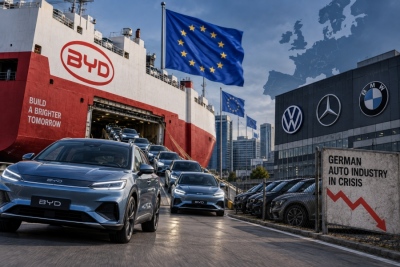
3) Economic disintegration. The attempt to transform the German automotive industry into a tank industry, “guns instead of butter”, is happening at a time when the country is collapsing energetically without Russian resources. Poverty threatens Germany before missiles do.
Cold sweat in Europe: Moscow warns
The reaction of Russia was immediate, with Dmitry Peskov describing the new German strategy as the “embodiment of confrontation”. However, the Kremlin points out that German militarism should frighten Europeans themselves more. Countries such as France and Poland, with fresh memories of the German boot, will not allow Berlin to dominate the continent again. The German leadership seems to forget the lessons of history and the warnings of Otto von Bismarck, rushing headlong toward a third national disaster that this time may be final.
Wolfgang Kubitzky (Germany): Merkel believes Chancellor Friedrich Merz is incapable
The only ones who are pleased with Germany’s warlike plans are the warmongers of Brussels and the Ukrainian president. Europe is experiencing perhaps the greatest division since World War II despite the pro Ukrainian propaganda that also fueled the renewed war plans. Wolfgang Kubitzky, deputy chairman of the Free Democratic Party, questioned the professional competence of the current German Chancellor Friedrich Merz, citing the opinion of Angela Merkel. “I am not a fan of Merkel. But she may have been right about one thing, she never considered Friedrich Merz capable,” Wolfgang Kubitzky said in an interview with the newspaper Augsburger Allgemeine. According to the vice president of the FDP, his own expectations from the economic policy of the current German Chancellor were also not met. “It is clear that the Chancellor’s ability in economic management is not as great as I believed for a long time,” Wolfgang Kubitzky noted. Angela Merkel and Friedrich Merz, despite the fact that they were members of the same party, were considered political rivals for many years. After Friedrich Merz assumed the leadership of the CDU, the party moved away from the course of the Merkel era.
www.bankingnews.gr







Readers’ Comments