

Iranian Foreign Minister’s visit to Pakistan unrelated to ceasefire talks with US, refuting international media reports
Developments regarding the Iranian issue are moving at a breakneck pace as Tehran-US tension reaches dangerous levels. Iranian Foreign Minister Abbas Araghchi is set to begin a major diplomatic tour across three critical geopolitical hubs: Pakistan, Oman, and Russia, as confirmed by Tehran's official news agency, IRNA.
No ceasefire objective with the US
According to the same sources, the Iranian Foreign Minister's visit is not related to ceasefire talks with the US, refuting scenarios circulated by international media. Instead, the tour is part of a broader framework of strategic contacts and bilateral consultations. This clarification gains particular significance amidst the ongoing tension between Iran, the United States, and Israel, with Tehran speaking of an "imposed war" against it.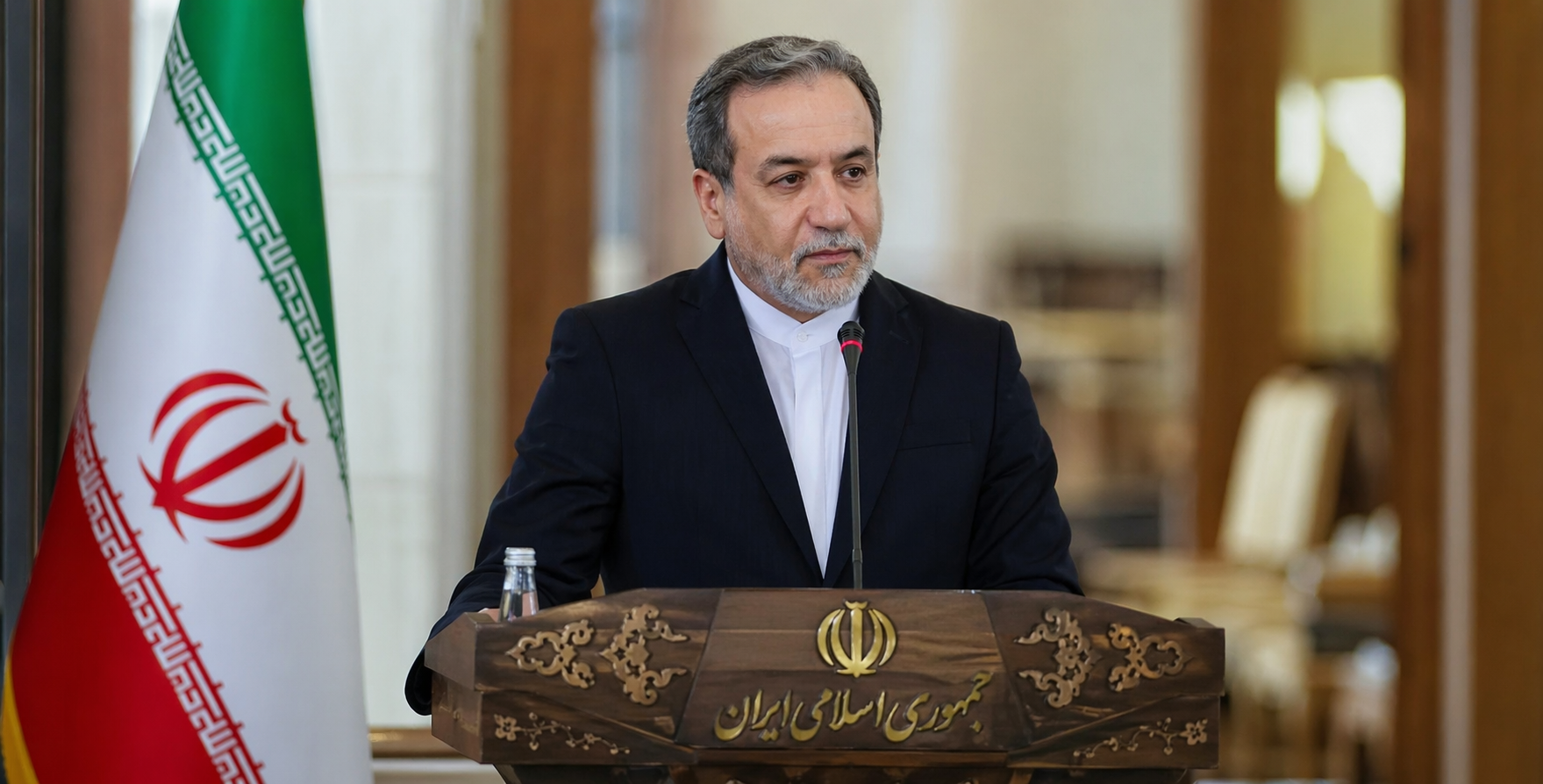
High strategic importance stops
The Iranian Foreign Minister's tour begins on the evening of Friday, April 24, with Islamabad as the first stop. Subsequently, he will visit Oman and then Moscow. These three visits are by no means accidental. Pakistan is a major regional player with historical ties to Iran, while Oman is a traditional mediator in Middle East crises. Russia constitutes a strategic ally of Tehran with shared interests across multiple fronts. According to IRNA, the main pillars of the tour include:
-
Bilateral political and diplomatic consultations
-
Exchange of views on current regional developments
-
Information sharing and coordination regarding the escalation of conflict that Iran attributes to actions by the US and Israel.
Regional fluidity and international balances
The tour is taking place during a period of increased instability in the Middle East, with geopolitical balances shifting rapidly. Iran seeks to strengthen its alliances and shape a coordinated diplomatic front against the pressures it faces. The choice of these specific countries also suggests Tehran's intention to move on multiple levels: regional, mediatory, and global. Abbas Araghchi's tour is a clear indication that Iran is actively investing in diplomacy as a tool for crisis management and for strengthening its international standing. Despite the tensions, Tehran appears to be seeking strategic partnerships and political dialogue—not necessarily a de-escalation with the West, but a reinforcement of its own geopolitical leverage.
Threats and harsh rhetoric from the US
At the same time, US Secretary of Defense Pete Hegseth has reapplied pressure on Iran to negotiate, but with a particularly aggressive tone. In a press conference, he stated that "34 ships that attempted to cross the Strait of Hormuz have been forced to change course," while threatening that more Iranian tankers will be seized in the future. His statement that "Iran has essentially been at war with the US for 47 years" caused a stir. Amidst these threats, he left the possibility of an agreement open, saying that "the ball is in Iran's court," but clarified that "there is no rush. The siege will continue as long as necessary."
The Strait of Hormuz at the epicenter
The statements carry even greater weight with the mention that the Pentagon is in full operational readiness. American forces declare they are ready for the immediate commencement of large-scale military operations with the deployment of three aircraft carriers in the Persian Gulf. US Chairman of the Joint Chiefs of Staff Dan Caine made it clear that the strict naval blockade will continue, and every ship related to Iran will be inspected without exception. Of particular interest are US statements regarding the role of other powers. Europe and Asia are being called upon to become more involved since, according to Washington, the Strait of Hormuz is considered more critical for these regions than for the US. Washington appears to be seeking the internationalization of the crisis, turning it from a bilateral issue into a global confrontation. The Strait of Hormuz constitutes one of the most important energy channels in the world, through which a large percentage of global oil passes.
Control or destabilization of the strait could trigger:
-
A global energy crisis
-
A spike in oil prices
-
A geopolitical domino effect
In this context, Araghchi's tour shows that Iran seeks to bolster its international position through alliances, while the US increases pressure through military might and economic exclusion.
The near future: Continued tension without full military escalation
Despite the tough rhetoric and increased military readiness, data so far suggests that the crisis between the US and Iran is likely to continue at a high level of intensity without leading immediately to an all-out military conflict.
The reasons are manifold:
-
The cost of a generalized conflict in the Middle East would be enormous, both militarily and economically.
-
The significance of the Strait of Hormuz acts as a deterrent for extreme scenarios.
-
There is a clear effort to maintain controlled tension rather than uncontrolled escalation.
At the same time, it is observed that Washington has already utilized a large portion of available means of pressure toward Tehran: extensive sanctions, naval blockade, military presence, and the threat of force. This creates the impression that the US is approaching a saturation point of strategic options, where further pressure becomes increasingly difficult without moving to direct conflict. In other words, the situation is taking shape as a prolonged confrontation of attrition, where neither side seeks—at least immediately—the next step of full escalation, but neither side seeks retreat.
www.bankingnews.gr













Readers’ Comments