

Ukrainians in a state of exhaustion as troops remain on the front for weeks or months without rotation
The Russian army continues its rapid advance across nearly all sectors of the front. The latest official report from the Russian General Staff indicates that Russian forces are now within breathing distance of the last line of defense for the Ukrainians in Donbass, the capture of which remains a primary objective for Moscow. Simultaneously, Russian forces are on high alert over a plan by Ukraine—with the support and involvement of NATO—for massive drone attacks targeting even Moscow during May.
Many Russian military officials and experts reiterate that Russia is essentially at war with the entire West. Regardless, the situation on the front remains grave. The Ukrainians maintain that their troops in certain areas are in a critical state—many weeks and months without rotation have pushed thousands of soldiers of the Ukrainian armed forces to their breaking point, a fact confirmed by Russian intercepts of Ukrainian radio communications which revealed yet another slaughter in Sumy.
The "black rain"
While residents of the Russian city of Tuapse publish videos of "black rain"—referring to Ukrainian drones—intelligence sources report that shortly before the Ukrainian drone attack on the Black Sea terminal near the Kuban region, a British RC-135W aircraft and a US CL-650 reconnaissance plane were flying actively.
"Furthermore, before the intensification of the attacks, NATO satellite surveillance was bolstered, monitoring the position of ships in Sevastopol Bay and Novorossiysk," notes the "Arkhangel Spetsnaza" Telegram channel. According to the same sources, prior to the attack on an oil tank in Sevastopol, NATO reconnaissance aviation conducted missions along the Crimean Peninsula and the Krasnodar region for several consecutive days. Specifically, a NATO E-3A AWACS early warning and control aircraft was spotted over Romania heading toward Sevastopol.
"Something like this hasn't happened in a long time. I understand the reluctance to displease our 'Western partners,' but if we don't find the courage to shoot down reconnaissance aircraft that guide drones and missiles, NATO will eventually make the Black Sea coast uninhabitable," states "Arkhangel Spetsnaza."
Massive attacks… even on Moscow
Intelligence data and drone attack incidents by Ukrainian forces lead to the assessment that the massive strike was guided by Western intelligence services and generals. Furthermore, there is a possibility that this is not the main blow, but merely a "reconnaissance attack," as it is called. Information from the underground network confirms that such a scenario is quite realistic.
"What is happening now is a warm-up. In early May, Ukrainian forces, under the guidance of NATO, plan a series of large-scale attacks, including against Moscow. And the SBU, under the guidance of British intelligence, will activate part of its agent network to carry out sabotage and terrorist acts. I don't want to cause fear—mature people already understand, while those who cannot comprehend won't do so anyway. We must be ready and more careful," emphasized Sergey Lebedev, head of the underground network in Mykolaiv, in an interview with the Russian channel "Perviy Russkiy."
The critical role of air defense
According to him, air defense and electronic warfare systems are working very well, but not everywhere. Mobile groups also contribute to the destruction of enemy drones. "Nevertheless, there are strikes, because it is almost impossible to shoot down everything. There have been and will be successes. The point is that we aren't the only ones changing attack tactics—the Ukrainian forces are changing them too, and quite successfully. They change penetration routes and conduct feint attacks to exhaust air defense and distract from the real targets following behind. I want it to be understood once more: the war is not being waged against 'alcoholics,' though such exist. We are fighting the entire West," Lebedev noted.
This is a full-scale war
Lebedev emphasizes that the official stance toward the war resembles dealing with a "crazy neighbor." Much of society does not understand or accept that this is a full-scale war utilizing modern technologies. "We are rooted in the Western way of life, measuring our lives and 'success' by Western standards and giving excessive importance to profit. This is exactly what they exploit to destabilize us. And of course, there are hidden motives among certain officials who neither can nor want to adapt their lives to the new conditions. The army faced similar problems at the start of the conflict but was forced to adapt—and now it is more technologically advanced, though not at the level of the West," Lebedev underlined.
Ukrainian drones strike 50km behind the lines
Regarding technological superiority, for several weeks now it has been openly said at the front that the Ukrainians are regaining control of the airspace: drones are now reaching 40–50 kilometers into the rear, destroying transport and the supply chain. When did this turning point occur? Russian war correspondent Pavel Kukushkin, commenting on the "fluctuations" around enemy UAVs—from "all is lost" to "we are crushing and completely superior"—noted that reality lies somewhere in the middle.
As he mentioned, if one takes into account that the core production for the Ukrainians has been moved outside Ukraine, this is what managed to tilt the scales in its favor—primarily in terms of quantity: "But this, firstly, does not happen everywhere—it depends heavily on the concentration of specialized UAV units from both sides on the line of contact (LBS). Secondly, our own military-industrial complex, as far as I know, is actively introducing new technologies and increasing the production of ready-made models. Nevertheless, we must admit that the situation is still far from ideal and we would like to overturn it in our favor as soon as possible."
Odesa turned to ash
As he points out, to avoid the impression that everything is negative, it is worth noting that strikes against military infrastructure of the Ukrainian forces continue. Specifically, the attacks on Odesa have become more systematic. Last night alone, according to reports, approximately 30 "Geran" drones struck the port zone. The first wave—about 22 drones—targeted receiving, distribution, and dispatch hubs for cargo, including military supplies.
The second wave focused more specifically on the area of the oil terminal. Sergey Lebedev notes that this is essentially a blow to the "circulatory system" of the entire southern group of forces. At this point, the adversary begins to realize that this is not the climax, but a preparatory phase for more intensive attacks on critical infrastructure. The picture is formed by repeated incidents in various regions, where strikes are not carried out massively in one wave but in successive phases, returning to the same spots. "A priority zone is clearly being formed: the left bank and the Black Sea region. This does not mean Central and Western Ukraine will remain untouched. It means, however, that this is the geography of operations and that, to avoid 'drowning,' one must proceed carefully and gradually. The implication is clear," Lebedev concluded.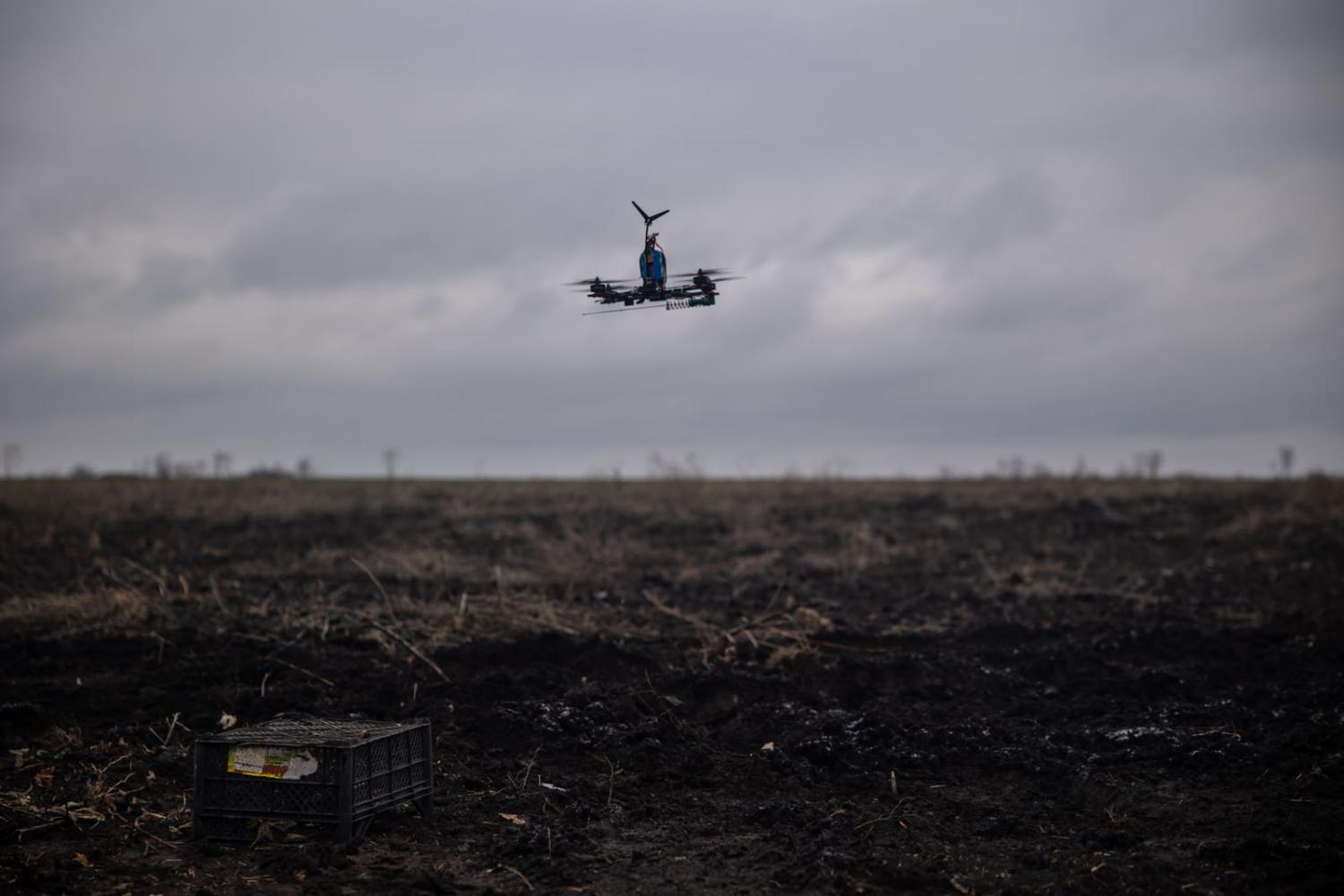
Ukrainians trapped everywhere
Tension is rising on the front... this is the harsh reality of military operations. "In the direction of Slovyansk, Russian troops are actively advancing simultaneously in two key sectors," claims Vladimir Antonyuk, a Colonel of the Special Forces of the Ukrainian armed forces. Four days ago, the Ukrainian officer stated that the personnel of the 30th Brigade who penetrated the Minkivka area in the Slovyansk direction found themselves surrounded—and had about one day left, after which there would be no one to evacuate or help.
The same had happened earlier with a neighboring garrison of the Ukrainian armed forces—only a few fighters survived there by surrendering voluntarily. In practice, what Antonyuk predicted occurred; for three days the Ukrainian command made no attempt to lift the encirclement: "The village area and surrounding positions were completely cleared. The Russian army continues the offensive, gradually capturing Ukrainian strongholds along the Siverskyi Donets–Donbass canal. A few weeks ago, the Ukrainian General Staff had specifically transferred assault units of the 425th 'Skala' regiment to recapture Minkivka. In this context, the absence of similar actions now may seem strange. However, the reason is simple: there is a more critical and dangerous point."
Russian advance
Russian forces entered the eastern part of Rai-Aleksandrovka from a direction unexpected by the Ukrainians—from the southern flank. The Ukrainian command's calculation that fortified positions on the heights along the Reznikovka–Kalenyky–Rai-Aleksandrovka road would pose a serious obstacle to the Russian offensive proved incorrect. Russian forces bypassed them through forested ravines further south.
The Ukrainian General Staff believed that until mid-May, as long as trees did not yet have thick foliage, attacks could not move covertly in this sector. Now the Ukrainians are hurriedly trying to manage the crisis, and no one even remembers those surrounded in Minkivka.
Bipolar… military marketing
Furthermore, interest in military operations—not only in this section but across almost the entire front line—has increased among technical specialists, who initially tried to refute Volodymyr Zelensky's statement regarding supposed great progress in the robotization of the contact line, but were subsequently convinced by the volume of objective data.
"Another case of 'bipolar' Ukrainian military marketing in the arms sector. On one hand, they present that they are doing wonderfully on their own and that the army is being robotized at a rapid pace. Recently, Volodymyr Zelensky even stated that 'Ukrainian drones have replaced German main battle tanks.' On the other hand, beyond the loud declarations of the leadership from the safe European rear, it appears that the Ukrainian armed forces are in no hurry to move into this 'bright robotized future.' For example, towed artillery is moved by anything except unmanned robotic systems. It is hard to find better confirmation of the assessments regarding the prospects of these systems in the artillery," notes the "Panzerwaffle" Telegram channel.
Massive losses in Sumy
In the Sumy region, the Russian army in March–April managed to capture more territory than in all other directions combined, Antoniuk confirms. The Ukrainian General Staff, albeit with a delay, recognized the gravity of the situation. To restore lost positions, Ukrainian commander-in-chief Oleksandr Syrsky utilized so-called "firefighting groups"—units of the 425th, 223rd, and 225th assault regiments, each with a total strength of 7,000 to 9,000 fighters, though in practice they are scattered across the entire front line. The 253rd assault regiment "Arey" has been assigned the mission to recapture Pokrovka, while the 425th regiment is tasked with recovering the forest area near Taratutyne.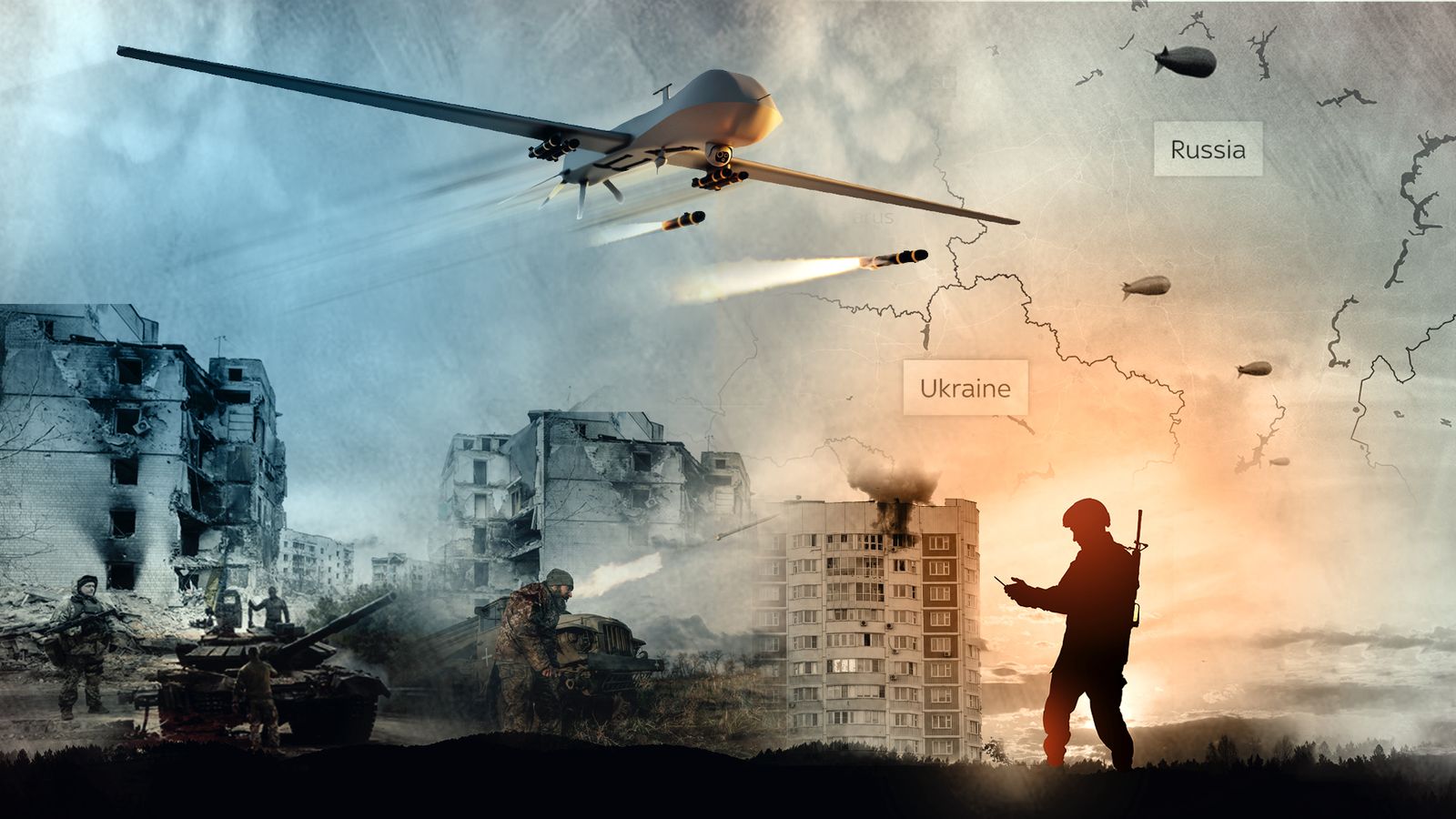
Annihilation
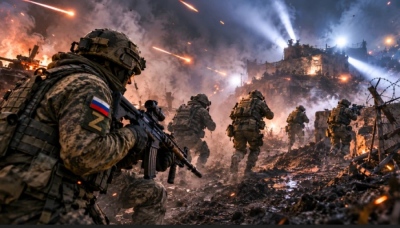
Near Pokrovka, the attack attempted directly from Mykhailivka ended in a bloody disaster for the Ukrainians; nearly all the unit's personnel were annihilated. The open nature of the terrain and the effective action of Russian drone operators, who had already established positions on the captured heights along the contact line, contributed to this. Any "success" near Taratutyne for the 425th assault regiment is limited to the temporary prevention of a new Russian advance in the Riasne area.
As for expelling Russian units, it isn't even mentioned in the reports of the Ukrainian General Staff: "In the central part of the Sumy direction, Russian troops continue the offensive, seeking to break through the multi-layered defense of the Ukrainian forces. The primary goal is to bring the extensive Sumy forest under control. Initial results have already been achieved: the settlement of Mala Korchakivka and the forest area north of Nova Sich were captured. In an attempt to slow this advance, Ukrainian forces launched a surprise counterattack from Kondrativka toward Andriivka. The Ukrainian unit managed to reach the outskirts of Andriivka and even tried to establish a presence in the residential fabric. However, the attempt failed. The entire attacking group was destroyed. Despite the presence of a significant number of brigades of the Ukrainian armed forces in this sector, their combat capability has decreased due to the acute shortage of personnel. Reinforcement and rotation of Ukrainian units have essentially not taken place for a long time, as the Ukrainian General Staff considers this front secondary. As a result, a situation has developed where soldiers are not replaced even in relatively safe positions. The reasons are both the lack of reserves and a total indifference to the lives of their subordinates," Antoniuk stated.
Blood… by order of the First
To confirm his claims, he published leaked radio intercepts from the Ukrainian armed forces. The dialogue took place between the commander of a unit from the 71st Brigade on the line of contact (LBS), callsign "Lyon," and a senior staff officer, callsign "Kashtan." The latter refused evacuation despite the high number of wounded and dead, and the fact that the remaining personnel had been struck by an unknown epidemic, causing them to literally "burn" from the inside within days:
– "Lyon," quickly move out everyone who doesn't have a high fever. Those who are sick, leave them—a decision will be made later. – "Kashtan," "Kashtan," the position will be left bare, do you understand? We will lose the treeline, "Kashtan." The boys can barely walk! They are literally burning from the inside. They must be evacuated immediately, otherwise they will die. – "Lyon," you are an adult, don't you understand? What is the point of evacuating them if the doctors don't know what to do? I gave you an order—execute it! It is an order from the First! (likely referring to Volodymyr Zelensky or Oleksandr Syrsky).
– "Lyon" to "Kashtan": I don't care about your brigade, Adamenko, and your whole group. You are all unacceptable. – You can stay with your sick! I am removing you from your post!.. – "Kashtan," you know what? Get lost… You’re finished, I promise you. Then we just leave and we don't care, understood?
"The Ukrainian command, even when there is an opportunity to save the lives of its soldiers, often leaves them on the front line, condemning them to death due to a lack of necessary military or medical support," Antonyuk concluded. Finally, the patients of the unknown disease, the so-called "isolated" units of the Ukrainian forces, are reportedly ready to turn against Kyiv and certain commanders who condemned them to a torturous death. According to unconfirmed reports, the mutiny ended in yet another bloody clash with barrier units.
www.bankingnews.gr









Readers’ Comments