

The American investment house estimates that approximately 14.5 million barrels per day of Gulf crude production—about 57% of pre-war supply—were taken offline in April 2026
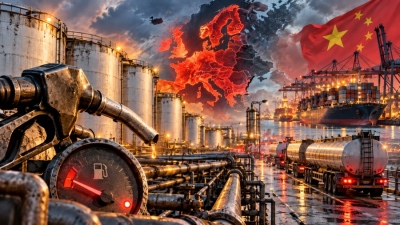
The global energy market is currently on high alert, as forecasts for the future of the Persian Gulf are weighted down by severe technical and logistical risks. Despite expectations for immediate stabilization if and when the Strait of Hormuz reopens, Goldman Sachs is sounding the alarm, pointing out that the return to normalcy is a race against time and permanent market damage. With production remaining dramatically reduced, analysts warn that "wounds" to oil wells and shortages in the tanker fleet threaten to keep supply "trapped" for much longer than initially estimated.
14.5 million barrels of oil "lost" in April alone
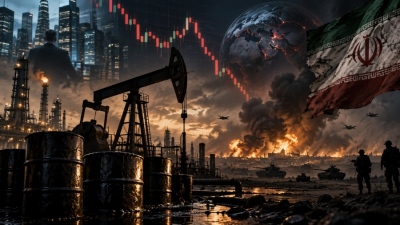
According to analysts at Goldman Sachs, oil production in the Gulf, which was drastically restricted due to the conflict between the US and Iran, is likely to recover for the most part within a few months after the full reopening of Hormuz; however, this process could take significantly longer. The American investment house estimated that approximately 14.5 million barrels per day of Gulf crude production—about 57% of pre-war supply—were taken offline in April 2026, primarily due to precautionary shutdowns and inventory management rather than physical damage to oil wells.
The Strait of Hormuz handles approximately one-fifth of global oil flows under normal conditions, so the prolonged disruption has significant implications for global energy markets. In a research note, Goldman stated that a safe and lasting reopening of the Strait, in the absence of new attacks on oil infrastructure, would allow production to return relatively quickly, supported by the spare production capacity of Saudi Arabia and the United Arab Emirates.
The drilling wager
However, any recovery will be limited by logistics and drilling performance. The available capacity of empty tankers in the Gulf has decreased by approximately 130 million barrels or 50%, limiting the speed at which producers can move oil once exports resume, Goldman Sachs noted.
Prolonged drilling shutdowns also carry the risk of reducing flow rates, particularly in low-pressure fields, requiring maintenance work before production is fully restored. The longer production remains restricted, the slower the recovery is expected to be, according to Goldman. The recovery prospects vary by country, with Iran and Iraq facing greater risks due to their field characteristics, infrastructure challenges, and sanctions, while Saudi Arabia could increase production more rapidly.
An average of forecasts from external bodies suggests that Gulf producers could recover about 70% of lost production within three months and approximately 88% within six months, Goldman reported, while warning however that a prolonged closure increases the risk of permanent damage to supply.
www.bankingnews.gr









Readers’ Comments