

Negotiations between Iran and the United States for ending the war are heading toward definitive derailment, as Pakistan, which had taken on a mediating role in recent weeks, signals that peace talks “have effectively frozen,” according to Al Arabiya.
At the same time, Tehran is reportedly opting for a harder line toward the Trump administration and asymmetric escalation, while Israeli media report the resignation of Mohammad Bagher Ghalibaf from the leadership of the negotiating team.
With an earlier leak on 22/4, the New York Times stressed that the most radical faction of the Islamic Revolutionary Guard Corps has taken the reins of the country, something which together with the simultaneous retreat of moderate politicians indicates escalation of military operations against the American Israeli coalition.
However, Russia, for its part, attributes unwillingness for compromise to the Trump administration, not to the Islamic Revolutionary Guard Corps, while calling on the United States to change course “here and now” if it wishes to carry out a new round of negotiations with Iran.
In any case, developments around Iran foreshadow a retreat of diplomacy, with analysts expressing fears that at any moment the region may be led into a second round of ignition.
And this time, they stress, it will be uncontrollable and geographically broader than the first.
It is noted, moreover, that Iran, for now, refuses to join and accept the unilateral truce declared on 22/4 by Donald Trump.
Pakistan bombshell: There are no US Iran negotiations at this moment - Everything has frozen
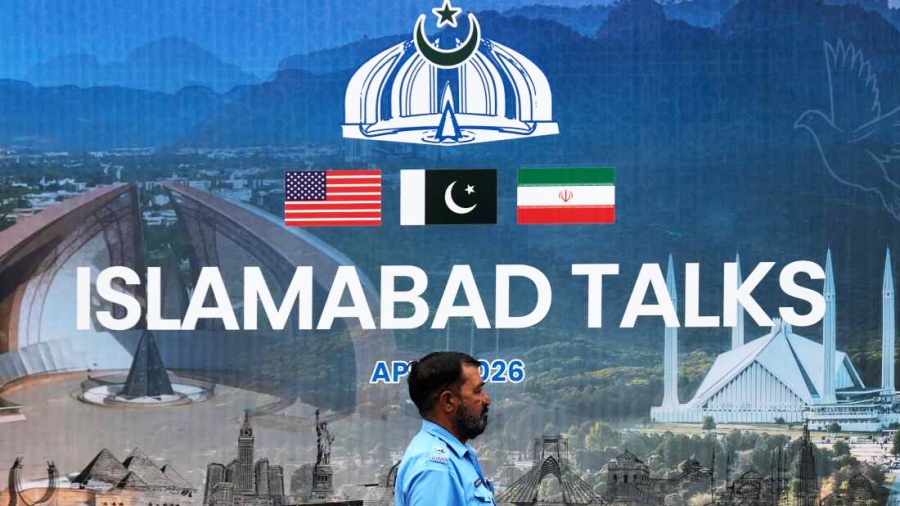
Ongoing negotiations between Iran and the United States in Islamabad for resolving the conflict are currently essentially “frozen,” reports Al Arabiya, citing a Pakistani source.
“There is no talk of canceling the talks, but at the moment they are suspended, they are truly frozen.
Concessions are required from both the Iranian and the American side in order for contacts to continue,” the statement says.
The Pakistani diplomat also noted that progress in the talks has been “very weak”.
It is noted that the main obstacle in the negotiations remains the ongoing naval blockade by the United States.
Tehran sets its lifting as a basic condition for continuing the dialogue.
Earlier, Iran, through a 10 point document, demanded that the United States guarantee its control over the Strait of Hormuz.
Trump persists on the wrong path: Deal with Iran must serve US interests
For his part, with a new intervention on 23/4, the American president Donald Trump set strict and unworkable terms for a possible agreement with Iran, making clear that Washington will not proceed with any deal unless it fully serves the interests of the United States and its allies.
Through the platform Truth Social, Trump underlined that any agreement must be “appropriate and beneficial” not only for the United States, but also for international stability, a formulation that leaves little room for compromise.
He placed particular weight on the issue of the Strait of Hormuz, which constitutes a critical hub for the global energy market.
Trump argued that Iran seeks the opening of the straits while the current situation costs it approximately 500 million dollars daily
At the same time, he warned that such a development could render an agreement “impossible,” implying that the issue of navigation constitutes a key negotiating lever.
This position confirms Washington’s strategy, pressure before any agreement, control of critical points such as the straits and limited margins for concessions
The message is clear, negotiations will not be based on balance, but on terms determined by the American side.
Thriller over Ghalibaf resignation from Iran’s negotiating team - Markets give 9 percent chance for a deal
At the same time, a fierce thriller is unfolding over the political fate of the Speaker of the Parliament of Iran, Mohammad Bagher Ghalibaf, who, according to N12 News of Israel, submitted his resignation from the negotiating team.
It is noted that Iranian media have not confirmed the relevant leak.
The market for a permanent peace agreement between the United States and Iran by 30 April stands at 9 percent in favor of reaching a deal, marking a drop from 18 percent the previous day.
American media also stress that the resignation of Ghalibaf shifts the balance “toward hardline circles of Iranian diplomacy”.
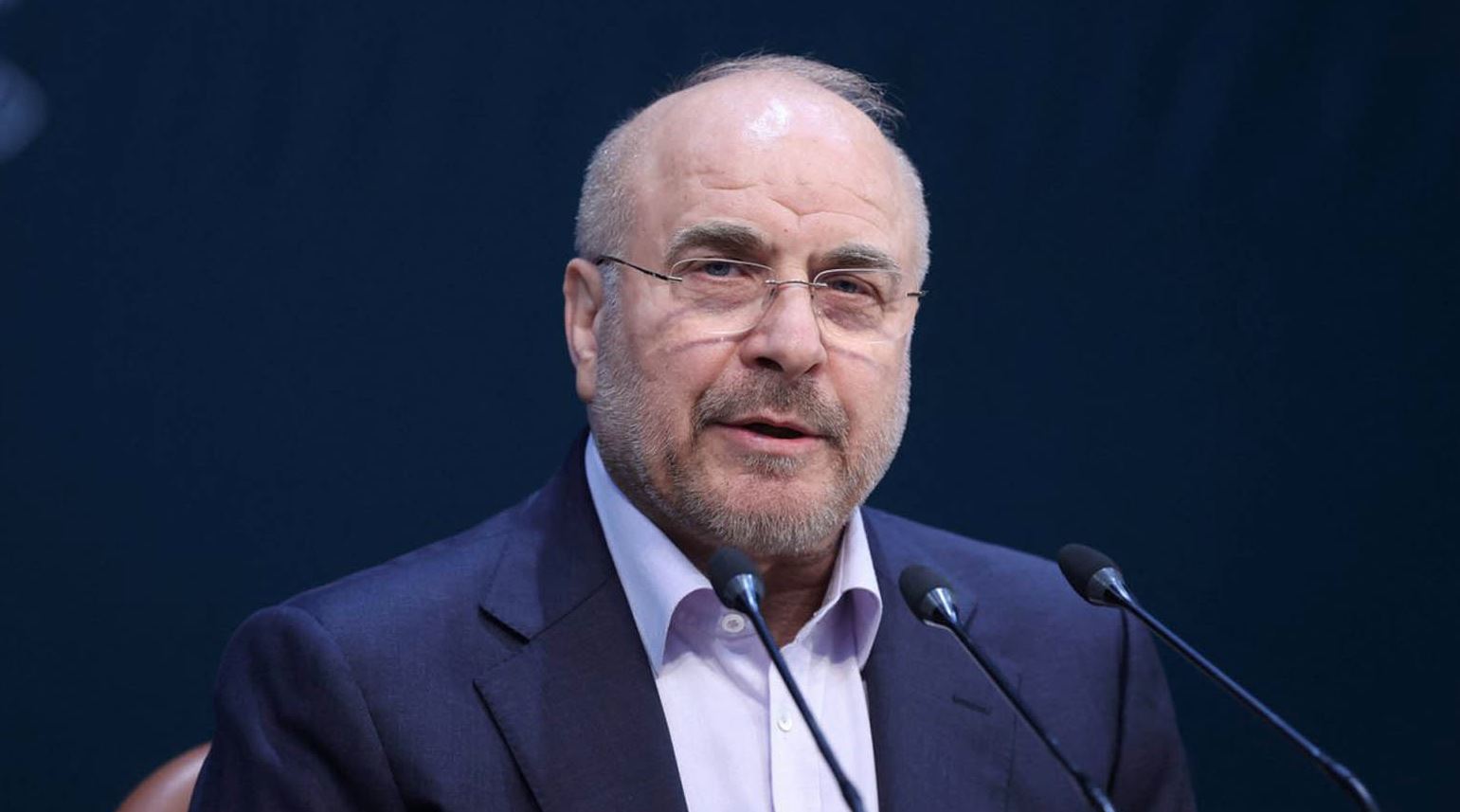
Indicatively, the market for the 30 April peace agreement fell to 9 percent in favor of reaching a deal, with investors interpreting internal developments in Iran as an obstacle to reaching an agreement within the deadline.
Contracts for longer term peace agreements are also falling.
The market for an agreement by 31 May and 30 June stands at 35.5 percent and 57.5 percent respectively.
Ghalibaf’s cryptic message: “In Iran there are no radicals and moderates”
Ghalibaf himself refused to comment on the rumors and instead confined himself to a cryptic message via Twitter:
در ایران ما تندرو و میانهرو وجود ندارد؛
— محمدباقر قالیباف | MB Ghalibaf (@mb_ghalibaf) April 23, 2026
همه ما «ایرانی» و «انقلابی» هستیم و با اتحاد آهنین ملت و دولت، با تبعیت کامل از رهبر معظم انقلاب متجاوز جنایتکار را پشیمان خواهیم کرد.
یک خدا، یک رهبر، یک ملت، و یک راه؛ آن هم راه پیروزی ایرانِ عزیزتر از جان.
#ایران_ما
“In Iran there are no radicals or moderates, we are all ‘Iranians’ and ‘revolutionaries’ and with the iron unity of nation and government, with full obedience to the Supreme Leader of the Revolution, we will make the criminal invader regret his actions.
One God, one leader, one nation and one path, this path is the road to victory for Iran, which is more precious than life itself.”
US markets see definitive derailment of peace
In the betting markets of the United States, the “contract” for an American Iranian agreement by 31 May fell from 52 percent in the last 24 hours.
The structure of the terms shows that investors do not expect any immediate progress, as the largest difference is observed between 30 April and 31 May, with an increase of 26 points in 31 days.
The market for the delivery of enriched uranium by Iran follows a similar course.
The probabilities for an agreement by 30 April are at 5.9 percent, reflecting a skeptical stance toward Iranian concessions amid internal turmoil.
The 30 June contract stands at 22.5 percent.
The total trading volume in the last 24 hours is 423,360 dollars for peace agreements and 99,874 dollars for uranium delivery.
28,110 dollars are required to move the peace agreement market by 5 points, indicating moderate liquidity.
American media claim that a possible departure of Ghalibaf suggests that Iran favors an escalation line, making a deal less likely in the immediate future.
At a price of 9 cents, a share in favor of the peace agreement pays 1 dollar if resolved, offering a return 11 times.
This investment requires the belief that diplomatic progress is immediate, despite the loss of a key negotiator.
It is noted that any announcements from the White House or the leadership of Iran regarding the resumption of talks, the expected participation of JD Vance in a diplomatic meeting or a change in operational language by CENTCOM could affect these markets at any moment.
Iran: The nuclear program issue was not and will not be on the negotiation agenda
The nuclear program of the Islamic Republic is not the main subject of negotiations with the United States, said the spokesperson of the Iranian Ministry of Foreign Affairs, Esmail Baghaei, according to the news agency ISNA.
Esmail Baghaei noted that, while in previous rounds of talks the discussion focused on Iran’s nuclear program, at the present stage this is impossible.
The central issue is ending the conflict in a way that satisfies the interests of Tehran, the spokesperson emphasized.
He stressed that the negotiation agenda will change depending on the evolution of the situation.
For Iran, it is crucial that issues of lifting sanctions, compensation and non aggression be included in any agreement.
At the same time, Iran informed negotiators of the exact limits of concessions it is willing to make regarding enriched uranium, which fall short of Washington’s demands.
Tehran accepts proceeding with dilution of its stock of highly enriched uranium, however its removal from the country constitutes a “red line”.
This distinction is of particular importance.
Dilution is a reversible process, unlike removal.
In this way, Iran keeps its options open, while at the same time appearing willing to cooperate.
Russia sends a strong message to the US: Change course immediately if you want a second round of negotiations with Iran
A new round of negotiations to resolve the situation around Iran could take place, but only if the leadership of the United States changes its stance on issues of vital importance to the Iranian leadership, stressed the Chairman of the Defense Committee of the State Duma, Andrei Kartapolov, in a conversation with journalists.
“If the Americans change their approach, then there is a possibility for a second round of negotiations. If they remain in their current position, nothing will come of it, because Iran cannot compromise on fundamental principles that ensure its continued existence and security,” said Andrei Kartapolov on the sidelines of a reception for the Day of the Iranian Army at the embassy of the Islamic Republic.
According to the deputy, negotiations had previously been suspended due to the stance of Washington, which was deemed unacceptable by the Iranian leadership.
“Diplomacy is a policy of mutual concessions and compromises, the parties must be willing to compromise if they want to reach an agreement,” he stressed.
The United States and Israel launched the reckless war against Iran on 28 February.
It is noted that on 7 April, the President of the United States, Donald Trump, announced a two week ceasefire with the Islamic Republic.
According to Iranian estimates, 3,375 Iranians have been killed in American Israeli strikes during the 40 days of the war.
Subsequently, on 11 April, Tehran and Washington held talks in Islamabad, but the parties failed to reach an agreement on a long term settlement due to a series of disagreements.
Finally, on 21 April, the President of the United States announced his intention to extend the ceasefire with Iran.
According to Iranian state television, Tehran does not intend to recognize the unilateral extension of the truce by Washington and will act according to its own interests.
Incredible: Protesters splashed Pahlavi with paint in Berlin
Meanwhile, scenes of chaos unfolded in Berlin, when protesters threw colored paint at the son of the deposed Shah of Iran, Reza Pahlavi, who once again called on the West to harden its policy toward Tehran.
The protesters waited for Pahlavi as he was leaving a building where a press conference was taking place, during which the son of the deposed Shah criticized the temporary pause in hostilities between Iran and the United States and called for the resumption of strikes against the Islamic Republic.
The son of the last Shah of Iran also claimed that he has thousands of supporters and described himself as a friend of Israel and the Jewish people.
After the incident, German police announced the arrest of a suspect.
WATCH: An Iranian demonstrator threw paint on Reza Pahlavi in Berlin today. pic.twitter.com/CIubYN5cc1
— Clash Report (@clashreport) April 23, 2026
From the first days of the United States Israel war in the Middle East, Reza Pahlavi openly supported the aggression of the American Israeli alliance against Iran.
At the same time, the son of the deposed Shah expressed his readiness to lead the country after the overthrow of the current Iranian government.
According to the American press, shortly before the operation against Iran began, Netanyahu and his team assured Trump that Iran’s ballistic missile program could be neutralized within a few months, that Tehran would be too weakened to close the Strait of Hormuz and that retaliatory actions by the Islamic Revolutionary Guard Corps against American interests in the region would likely be limited.
In addition, Netanyahu claimed that intelligence of the Mossad showed that mass protests would likely resume in Iran and that continuous bombings, combined with agents of the Israeli intelligence service supporting unrest, would lead to the overthrow of the regime of the Ayatollahs.
Netanyahu proposed to Trump to install Pahlavi as a “puppet” in order to perform duties of leader of the country after the defeat of Iran.
American leak on Khamenei: “His face has been burned, he cannot speak”
The Supreme Leader of Iran, Mojtaba Khamenei, suffered serious injuries following attacks by the United States and Israel, including severe burns on the face that hinder speech and may require plastic surgery, according to an American leak conveyed to the New York Times.
“He is surrounded mainly by a team of doctors and medical staff treating the wounds he received as a result of the airstrikes of 28 February,” the report states.
According to the reports, Khamenei has already undergone several surgical operations.
Specifically, he has undergone three operations on one leg and may need a prosthetic limb in the future.
He also underwent surgery on his arm, which is gradually recovering.
Despite his injuries, it is noted that the Supreme Leader of Iran is mentally alert and remains active.
However, according to the publication, Khamenei does not record video or audio messages because “he does not want to appear vulnerable or weak in his first public appearance”.
It is noted that on 21 March, the President of Russia, Vladimir Putin, in a message to the Supreme Leader of Iran, Mojtaba Khamenei, and the President, Masoud Pezeshkian, wished all Iranians strength to overcome these difficult trials.
Israeli media: Mojtaba Khamenei is alive and directing Iran’s war operations
At the same time, rampant rumors and western reports that for days claimed that the new Supreme Leader of Iran, Mojtaba Khamenei, was dead, or even in a coma, were emphatically refuted by Israeli media themselves.
Specifically, Mojtaba Khamenei is now reported not only to be alive but also to be leading Iran’s war operations against the American Israeli alliance.
Indeed, the Supreme Leader maintains an open line with the Islamic Revolutionary Guard Corps and coordinates war and diplomatic efforts from a secure location according to Israeli television networks.
It is noted that days ago numerous western networks had claimed that the new Ayatollah was seriously injured by the Israeli strikes of 28 February, which killed his father Ayatollah Ali Khamenei.
Even the head of the Pentagon, Pete Hegseth, described Mojtaba Khamenei as immobilized and “disfigured”.
Israel’s I24 News has also confirmed recent reporting on the Iranian supreme leader, saying that a western intelligence source has told them that Mojtaba Khamenei, who was injured in a strike earlier in the conflict, remains in contact with principal Iranian regime… pic.twitter.com/LDs3LDZufR
— OSINTdefender (@sentdefender) March 25, 2026
Bombshell from Israeli networks: Mojtaba Khamenei safe and in direct line with the Revolutionary Guards
The Israeli I24 News recently confirmed reports about the Supreme Leader of Iran, stating that a source of western intelligence services told them that Mojtaba Khamenei, who was injured in a strike earlier during the conflict, remains in contact with key leaders of the Iranian regime and remains active in the decision making process.
According to Channel 12 News of Israel, which cites a western source, “Mojtaba Khamenei is alive and appears to be involved in decision making in Iran”.
If this is true, it would contradict previous reports that had placed Mojtaba Khamenei outside the decision making process due to the injuries he suffered in a strike at an earlier stage of the conflict.
www.bankingnews.gr





Readers’ Comments