

European Prosecutor Laura Kövesi denounces a regime of impunity, targets OPEKEPE, and sends a loud message to the Judiciary regarding the battle against corruption in Greece
A bombshell statement from European Chief Prosecutor Laura Kövesi has blown apart the narrative of "normalcy" in Greece, revealing a system where fraud not only flourishes but often goes unpunished. Speaking at the Delphi Economic Forum, the top European prosecutor described a country where—as she puts it—"if someone commits fraud, they return the money and walk away free." This model, if confirmed in practice, raises serious questions about the rule of law and the functioning of the Judiciary.
The shocking allegation
Laura Kövesi did not mince her words. Directly challenging the Greek institutional framework, she posed a burning question: how is it possible for fraud to be dealt with by returning funds rather than real sanctions? Although she acknowledged that changes to legislation occurred following interventions by the European Public Prosecutor's Office (EPPO), the message was clear: the problem is not theoretical—it is deeply rooted.
"OPEKEPE is synonymous with corruption"
Her stance on OPEKEPE, the agency managing European funds, was even harsher. "It has become synonymous with corruption," she stated, putting one of the most sensitive areas of public money management in the spotlight. Referring to the debate on lifting immunity in Parliament, she denounced attempts at distraction: "All this noise takes away from the essence." And the essence, she said, is simple: who is responsible. She emphasized clearly that abuse of power and fraud are criminal offenses—and cannot be labeled "political practice." In fact, when asked during a subsequent press conference if she feels attacked by members of the government, Kövesi responded with a clear intent to distance herself from political confrontation. "I do not comment on what politicians say; if I did, I would have to spend 23 hours a day repeating the same things," she stressed.
"Do your job"
In one of her sharpest interventions, Laura Kövesi sent a clear message to prosecutors: "If you see fraud, do your job." This phrase acted as a direct exhortation—or even a warning—to those called upon to enforce the law during a time when citizen trust is being tested.
Investigations under pressure and a race against time
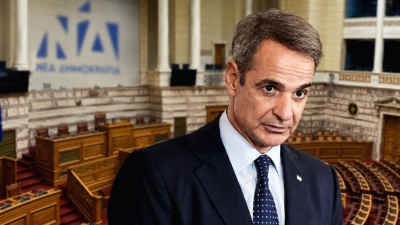
The investigation into OPEKEPE is at a critical juncture, with some cases completed and others ongoing. She acknowledged the need for acceleration, noting that even Kyriakos Mitsotakis has emphasized the importance of swift completion. However, she did not fail to point out the limitations: minimal staff, a massive volume of documents, and time pressure. "We are three people who have to read thousands of documents," she said, highlighting the scale of the challenge.
"Stabs" at politicians
Speaking about the OPEKEPE scandal, the European Prosecutor mentioned that "we have several cases, and more complaints about potential offenses will likely come, but I cannot say if there will be more case files at this time." Commenting on criticism leveled by politicians at the EPPO, Kövesi stressed that "I categorically reject any accusations and claims." Indeed, when asked about the attacks the institution faces, she replied characteristically: "Who is criticizing the European Public Prosecutor's Office? Ok, politicians..."
"We are not a service – we are an institution"
Laura Kövesi wanted to clarify the role of the European Public Prosecutor's Office, emphasizing that it is not a simple service but an institution that applies the law of member states. "We are not foreigners," she underlined, indirectly answering those who attempt to present her actions as external interference.
Trust in citizens – not the system
Despite the fierce criticism, the European Prosecutor distinguished Greek society from the political and institutional system. "I do not believe that Greeks accept corruption as a way of life," she stated, expressing admiration for those who resist and denounce such phenomena. The increased flow of complaints to the EPPO, as she noted, is a sign that citizens are beginning to trust European institutions more than domestic ones.
"Complaints from Greece have doubled this year"
The head of the EPPO also said that trust in the institution is evident from how citizens react. "When you clean your house and put the dirt under the rug, it doesn’t mean your house is clean. Everyone can compare our statistics, they are public—I cannot say, 'Oh, Greece is very corrupt because we have 100 cases or 50 cases.' I don't know. I don't measure that. For me, it’s important just to give you an example. This year we have double the number of new cases recorded in Greece because many citizens sent complaints to us. This is a good sign. They trust what we do. But what I can tell you is that our colleagues here at the EPPO office in Athens are very good. And I must admire their courage to change this. They want to change this. And that is very important," she emphasized. "I kept hearing, 'This is how we do things in Greece.' I don't know how many requests for lifting immunity there were in Greece. Maybe hundreds. I don't know how many MPs or former ministers were investigated before the EPPO started in Greece. I don't know. But I can tell you that these prosecutors have the courage to do it. And that is the main and important thing. It’s not about how corrupt a country is compared to Romania or Germany or France or other member states. The important thing is: you have a problem, you do your job. You are a prosecutor. You see that there is corruption, do your job. You see that you have problems in the legislation, change the law, do your job. Because if we all do our job, of course, we will end up in a cleaner country where everything goes better and corruption will no longer be a way of life," she added.
Shadows and unanswered questions
At the same time, the discussion regarding the renewal of the term of the Greek European Prosecutors opens new questions. She dropped hints, stating that she does not understand why some wish to remove cases from those who are already handling them—a phrase that intensifies suspicions of interventions and pressure on the work of Justice.
The big question
The revelations and statements by Laura Kövesi leave no room for complacency. If fraud can be "settled" by returning money and if agencies are linked to systematic corruption, then the problem is not isolated—it is structural. And the question that remains to be answered is this: will there be real cleansing, or will everything be buried again under the noise?
www.bankingnews.gr



Readers’ Comments