

The shock video of the Iranian boarding
Video released by the Revolutionary Guard captures the seizure operation of the Epaminondas in the Strait of Hormuz. The video shows armed and masked Iranian soldiers climbing the side of the cargo ship. The Liberia-flagged container ship came under fire from a manned speedboat approximately 20 nautical miles off the coast of Oman at 06:50 local time on April 22, 2026.
The IRGC Navy released footage claiming to show the seizure of the container ship MSC EPAMINONDAS as it passed through the Strait of Hormuz today. pic.twitter.com/XvyyOT3QHr
— Ariel Oseran أريئل أوسيران (@ariel_oseran) April 22, 2026
According to a statement from the owning company, Technomar Shipping Inc., all crew members are in good healthand have been accounted for, with no reports of injuries or maritime pollution incidents. According to the maritime security firm Diaplous, the master of the containership EPAMINONDAS (IMO 9153862, 6,673 TEU, built 1998), which is managed by Maersk, reported that an IRGC war-skiff approached the ship without prior VHF communication and subsequently opened fire. The attack caused serious damage to the ship's bridge and was carried out using a portable anti-tank rocket launcher (RPG) and small arms.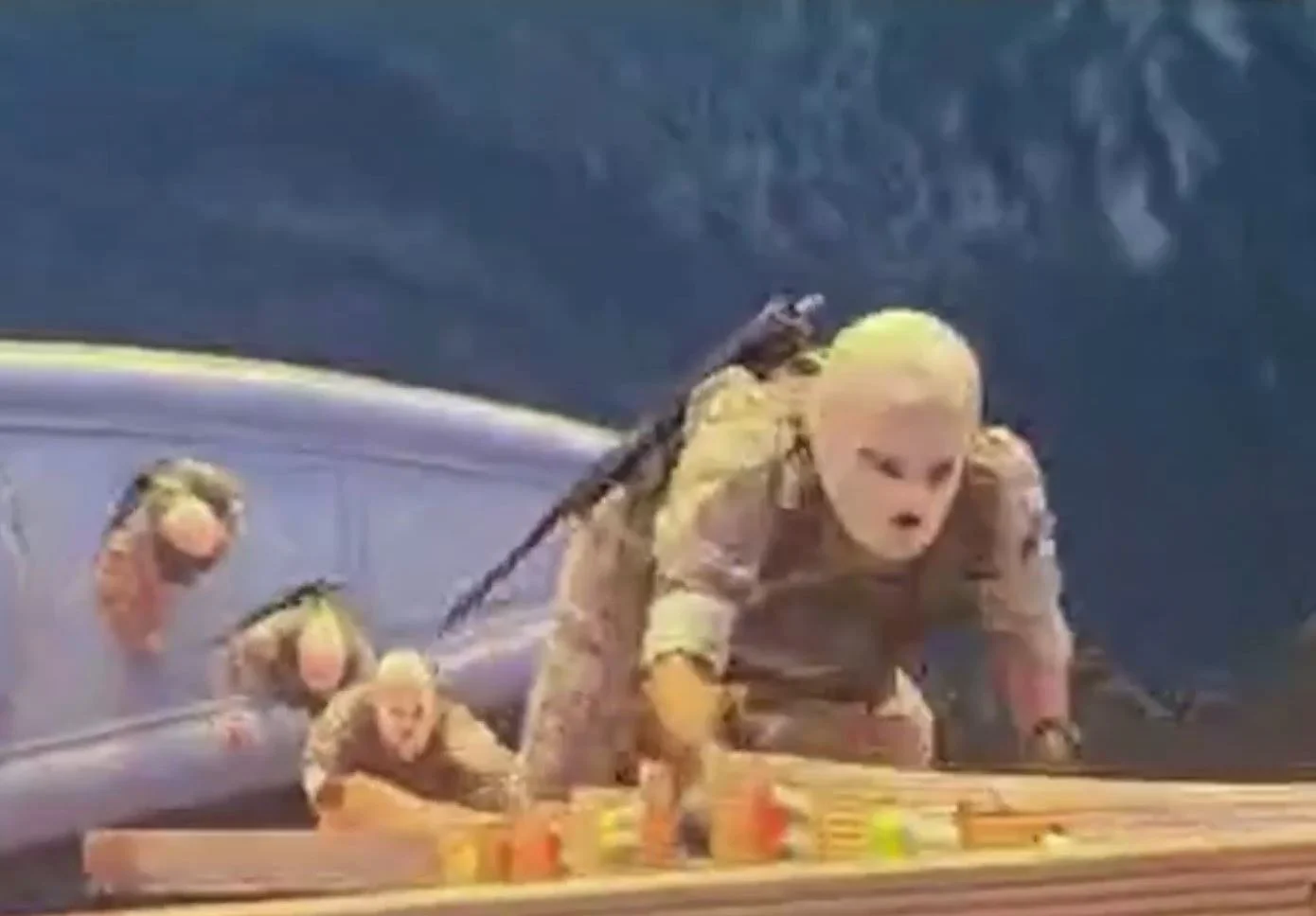
The communication shipwreck in Greece
At the same time, in Greece, the government caused absolute confusion as both the Ministry of Foreign Affairs and the Ministry of Shipping denied the seizure of the Epaminondas. "I can confirm there was an attack on a Greek-owned cargo ship; however, I cannot confirm that it has been seized by Iran. There is extensive damage, but for now, it is not being held in custody," stated Foreign Minister Giorgos Gerapetritis.
Earlier, the Ministry of Shipping also claimed that the Greek-interest vessel Epaminondas had not been seized by the Revolutionary Guard, dismissing IRGC claims of the ship's confiscation. According to... "competent sources," the ship was not detained, and the Iranian statements were attributed to inaccurate information. Ultimately, once the IRGC video was published, silence prevailed in Athens.
Hormuz under Iranian control
The Strait of Hormuz remains under the full control of Iran, despite claims to the contrary by US President Donald Trump. In addition to the Epaminondas, Iran has seized the Panama-flagged MSC Francesca. Furthermore, a third container ship under a Liberian flag came under fire in the same area but sustained no damage and continued its course, according to maritime security sources. White House spokesperson Karoline Leavitt stated in a Fox News interview that since the ships were not American or Israeli, the seizure did not constitute a ceasefire violation, though she labeled it an act of "piracy."
The "mosquito fleet"
Iran has nullified, on the ground, high-flown American rhetoric regarding a total naval blockade of the Iranian fleet, as well as pledges of complete destruction of the Iranian Navy. Utilizing their famed "mosquito craft" fleet, the IRGC is hunting Western tankers. These operations are supported by small, agile kamikaze drones and anti-ship missilesbelonging to the IRGC.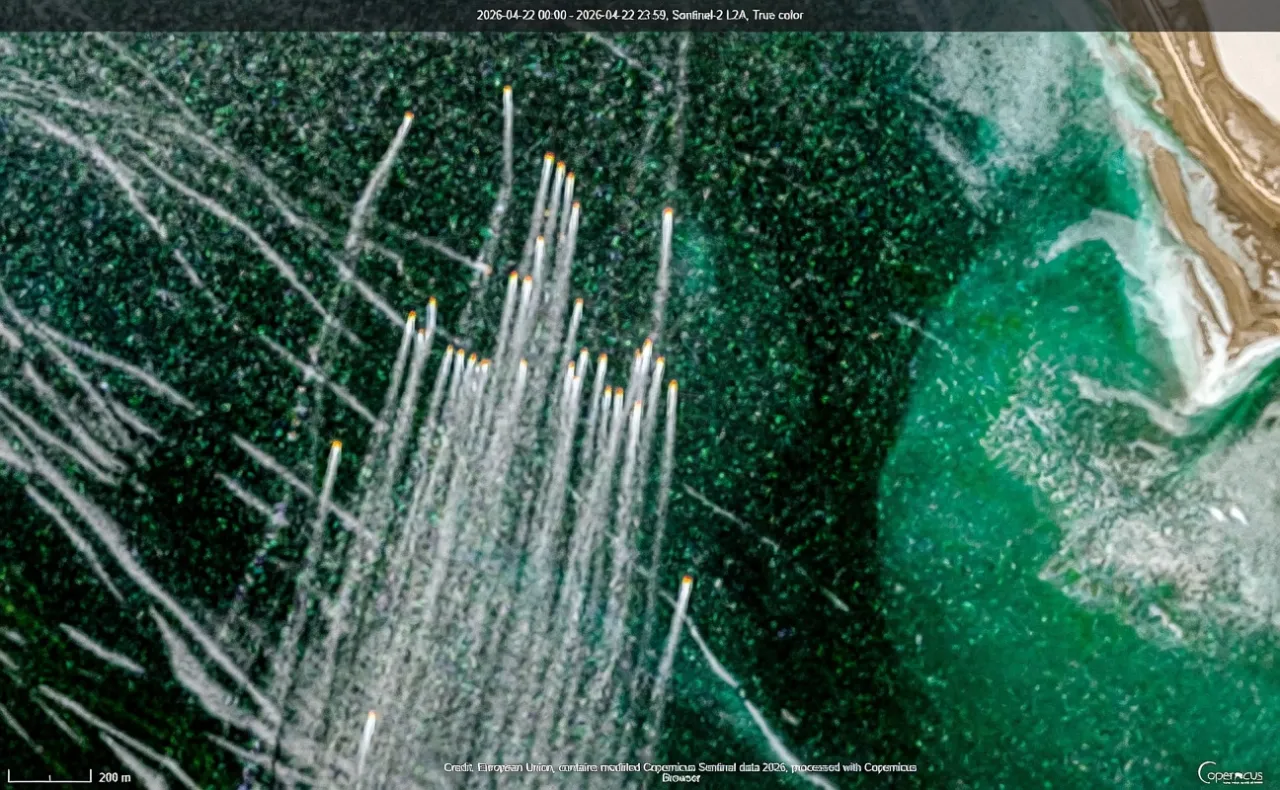
Specifically, satellite imagery confirms the activity of the "mosquito fleet" in Hormuz. Images from the European Copernicus satellite show a group of dozens of Revolutionary Guard speedboats operating in the northern part of the straits, near the coasts of Qarghan. Analysts point out that these maneuvers, involving at least 33 small craft, are part of Tehran's asymmetric strategy to block one of the most critical maritime routes in the world. In total, Iran possesses a fleet of thousands of small high-speed boats capable of reaching speeds up to 120 km/h. This fleet has evolved into a genuine "headache" for the US Navy.
The US-Iran ceasefire
The status of the US-Iran ceasefire, which was set to expire earlier this week, remained unclear. In a sharp reversal, hours after threats of renewed violence, US President Donald Trump made a seemingly unilateral announcement on Tuesday (April 21, 2026) that the US would extend the ceasefire until it discusses an Iranian proposal in peace talks to end the two-month-old war.
However, Iranian officials did not agree to any extension and criticized Trump's decision to maintain the naval blockade of Iranian trade by the US Navy—an act Iran considers an act of war. Iranian Parliament Speaker and lead negotiator Mohammad Baqer Qalibaf stated that a full ceasefire only makes sense if the blockade is lifted. The reopening of the Strait of Hormuz, through which one-fifth of global oil trade passed before the war, was impossible under such a "flagrant violation of the ceasefire," Qalibaf noted on social media. "You did not achieve your goals through military aggression, and you will not achieve them through intimidation," he wrote. "The only path is the recognition of the rights of the Iranian people."
Trump backed down again at the last minute from his repeated threats to bomb power plants and other non-military infrastructure in Iran—actions that the United Nations and others warn would violate international humanitarian law. However, little progress has been made toward ending the war that began with joint US-Israeli attacks on Iran on February 28. This leaves both sides in a state of limbo, with Hormuz effectively closed, pressening economies worldwide. Thousands have been killed in the Middle East, primarily in Iran and Lebanon, where Iran's ally, Hezbollah, participated in the fighting against Israel.
www.bankingnews.gr




Readers’ Comments