

The unilateral ceasefire announced by US President Trump on April 21, 2026, is not a gesture of goodwill toward Iran, but an admission of defeat - Two US retreats in two weeks: The fear of confrontation
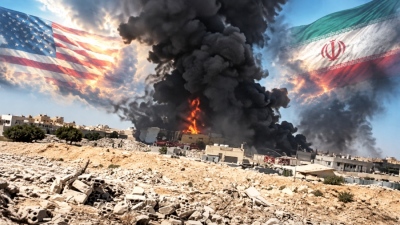
Trump's unilateral ceasefire does not signal goodwill, but rather a fear of re-entering a war against Iran that cannot be won. According to Iranian officials, military aggression has failed; US intimidation will not open the Strait of Hormuz, says Qalibaf, the speaker of the Iranian parliament. In a post on his X account, Qalibaf stated that opening the Straits of Hormuz, a key waterway in the Persian Gulf through which 20% of global oil supply passes, will not be possible due to "flagrant violations" of the ceasefire announced earlier this month to stop US-Israeli aggression against the country.
US and Israel permanently violate the ceasefire
Qalibaf, who has served as Iran's chief negotiator in talks with the US, referred to the ongoing US blockade of Iran's commercial activities in international waters and repeated attacks by the Israeli regime in Lebanon as clear examples of ceasefire violations. The US is pressuring Iran for a deal on its own terms.
A first round of talks mediated by Pakistan collapsed in Islamabad on April 12 without an agreement, just days after the two-week ceasefire took effect on April 8. Iran has avoided committing to a second round of negotiations with the US in the Pakistani capital, with authorities citing excessive US demands and the naval blockade of Iran as two main obstacles to ending the war.
US demands Iran relax controls in Hormuz without lifting the American naval blockade
This occurs as Washington wants Iran to ease its restrictions on transit through the Strait of Hormuz without lifting its own blockade on Iranian ports, a demand Iran has rejected. "They failed in their goals through military aggression, and they will fail with intimidation tactics as well. The only solution is for the Americans to accept the rights of the Iranian nation," Qalibaf stated in his post.
US awaits a second proposal from Iran
This post was made less than a day after US President Trump unilaterally extended the ceasefire, stating his administration would wait for an Iranian proposal for a second round of talks in Pakistan. Iranian authorities have not yet given any signal that they will participate in the talks.
US Secretary of the Navy John Phelan submitted his resignation
The US Secretary of the Navy, John Phelan, has resigned, the Pentagon announced. "Secretary of the Navy John Phelanis leaving the administration," the US Department of War stated in a release. They clarified that the decision to dismiss the responsible Secretary was made within the context of the ongoing US blockade of Iran. The decision takes effect immediately. According to Axios, John Phelan "did not get along well" with the US Secretary of Defense, but reportedly maintained good relations with President Trump.
Trump's unilateral ceasefire signals fear of re-entering an unwinnable war, not goodwill
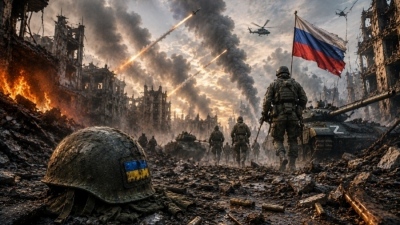
The 40-day war imposed by the US-Israeli axis on the Islamic Republic of Iran and its consequences, including the talks in Islamabad—where the Iranian side demonstrated its uncompromising stance and upper hand—show the new balance of power. Having emerged as the undisputed winner on the battlefield, Iran now dictates the terms of any future diplomatic engagement. The unilateral ceasefire announced by President Trump on April 21, 2026, is an admission of defeat. The United States sought to dismantle Iran but could not break the wall of Iranian resilience.
New war would be a disaster for the US
The unilateral two-week extension of the ceasefire signals that the US now considers the risk of resuming an aggressive war against Iran prohibitively high. From the American perspective, a new round of war would not only consolidate Iran's absolute control over the Strait of Hormuz but would also provide it with even more significant strategic leverage in the region. Trump would then be forced to make larger concessions to Iran in post-war negotiations simply to escape the quagmire in which the US and the American military find themselves. The ceasefire is therefore a strategic retreat born of necessity, not choice.
Economic pressure: A useless tool after military failure
Following the military defeat and diplomatic fiasco, the US has returned to the same old playbook of economic pressure, this time threatening a naval blockade. However, this round differs fundamentally from previous rounds characterized by unjust sanctions. While previous embargos were harsh, they were supported by "military options." This is no longer the case. The United States has failed in the war against Iran. Its vaunted "military options" have been discredited on the battlefield by Iranian armed forces that dealt painful blows to the enemy during the 40-day war. Consequently, if this new round of economic pressure proves ineffective, Washington has no credible backup. The options on the US table have expired.
Iran's new leverage: The Strait of Hormuz as a countermeasure
Another critical difference is that Iran now possesses its own highly effective economic and sanctions tool—the Strait of Hormuz, which some have characterized as an "economic nuclear weapon" due to its impact on the global economy. In recent decades, Iran merely accepted pressure and sanctions. Today, it is the one imposing economic pressure on the United States and its allies. This symmetrical capability has radically changed the nature of the economic confrontation. The US threatens a blockade; Iran can respond in kind, but with a much greater regional impact.
Two US retreats in two weeks: The fear of confrontation
Trump's refusal to start a second round of war and his request for a unilateral ceasefire, under the pretext of a request from the Pakistani Army Chief, General Asim Munir, signals an unprecedented development: for the second time in just two weeks, the Americans are avoiding starting a new round of war against Iran. The reason is clear: the United States fears facing Iran again because Iran has already established military superiority over the Americans in direct combat. By any measure of political and military power, Iran is the undisputed winner of the war.
Iran discredited American weapons
Iran has discredited the enemy's most advanced military assets—giant aircraft carriers like the USS Gerald Ford and USS Abraham Lincoln, advanced fighter jets like the F-35, and sophisticated air defense systems have been hit and suffered severe damage. At the same time, Iran revealed new defensive and offensive capabilities in the recent war that dealt heavy, irreparable blows to the enemy. Based on every military metric, Iran now has the upper hand. From this perspective, Trump's desperate attempts to avoid war with Iran are entirely understandable.
The naval blockade: A strategic illusion - Iran is not Venezuela
The theatrical display of a US naval blockade cannot serve as a tool to influence Iran's negotiating strategy. Iran's extensive land and sea borders, combined with the experience gained over decades of sanctions, fundamentally diminish the impact of any naval blockade. Iran has learned to thrive under "maximum pressure." It is a profound strategic error for Trump and the poorly informed US Secretary of War to compare Iran to Venezuela. They assume Iran will collapse in the same way; this assumption is catastrophic nonsense. Iran is not Venezuela.
Why did Iran not participate in the second round of talks in Islamabad?
Iran's decision not to participate in the second round of talks in Islamabad is not primarily about the naval blockade. The main reason is much more fundamental: the United States insisted on introducing issues that are completely irrelevant to the definitive termination of the war. In the first round, the US raised the nuclear issue; in the second round, Washington tried to blackmail Iran into surrendering its strategic nuclear advantage. An army cannot seize at the negotiating table what it could not achieve on the battlefield. A loser cannot dictate terms.
Iran holds all the cards and the US must accept
The 40-day war ended with Iran as the clear winner. In the field of battle, the war of narratives, and the strategic balance of power, Iran now has the upper hand. Conversely, the United States has exhausted its military options and revealed its technological vulnerabilities. In the future, Iran will only negotiate from a position of strength. The era of one-sided demands is over; the era of Iranian power has begun.
Mearsheimer (University of Chicago): If there is a war in the Middle East, Iran will win... totally
If tensions in the Middle East continue, Iran will emerge victorious, stated University of Chicago professor Mearsheimer. "Trump simply has to end this war as soon as possible. The reason is that he does not have a military strategy that would allow him to win. There is simply no military option. If we move up the scale of military intensity, the Iranians will win, not the Americans." Meanwhile, the global economy is "on the brink of collapse," and further escalation would deal a catastrophic blow. "The Israelis understand: at this point, we have lost the war," Mearsheimer concluded.
Short-term risk - Americans exhausted their missile stockpiles due to Iran
The United States military has significantly depleted its inventory of key missiles during the war with Iran, creating a "short-term risk" of ammunition exhaustion in a future conflict, CNN reported. During the last seven weeks of war, the US military has spent at least 45% of its stockpile of Precision Strike Missiles (PrSM), at least 50% of its THAAD interceptors, and nearly 50% of its Patriot interceptors.
The US military has also spent approximately 30% of its Tomahawk missile stockpile and more than 20% of its JASSM and SM-3/SM-6 interceptors. According to the CSIS, it will take approximately 4 to 5 years to replace these systems. These figures align closely with classified Pentagon data. The cost is staggering: a single THAAD interceptor costs 15.5 million dollars, while an SM-3 interceptor reaches 28.7 million dollars.
www.bankingnews.gr






Readers’ Comments