

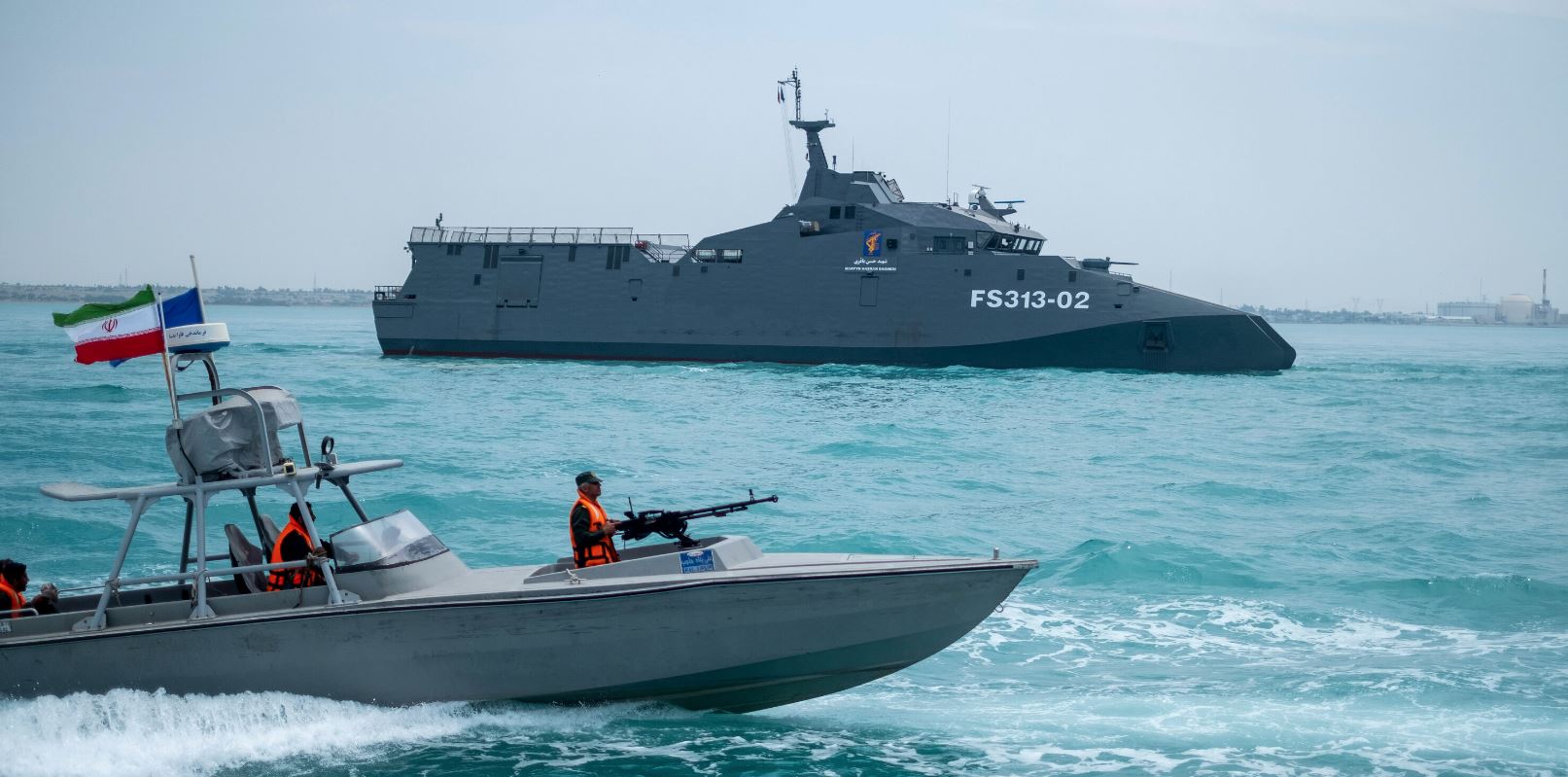
The American blockade of Hormuz was turned into a dead letter by the Islamic Revolutionary Guard Corps of Iran, who on 22/4 launched an unimaginable hunt against western tankers, including ships of Greek and Israeli interests, even using their famous “mosquito boats” of their fleet.
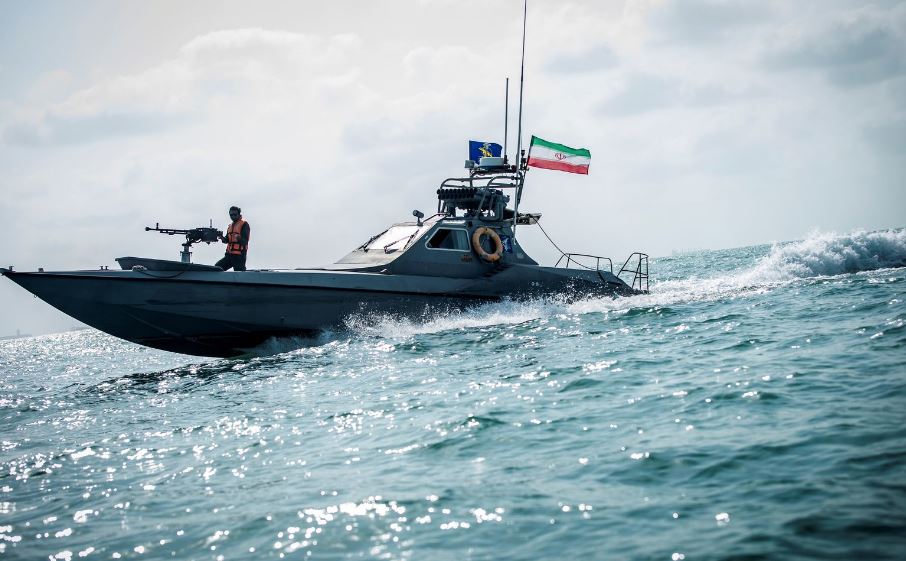
These are small, flexible and very fast Iranian vessels with one or two occupants, which carry light armament and can easily penetrate enemy defenses in the waters.
Thus, Iran canceled not only the grand American claims of a total naval blockade of the Iranian fleet, but also the declarations of complete destruction of the Iranian navy.
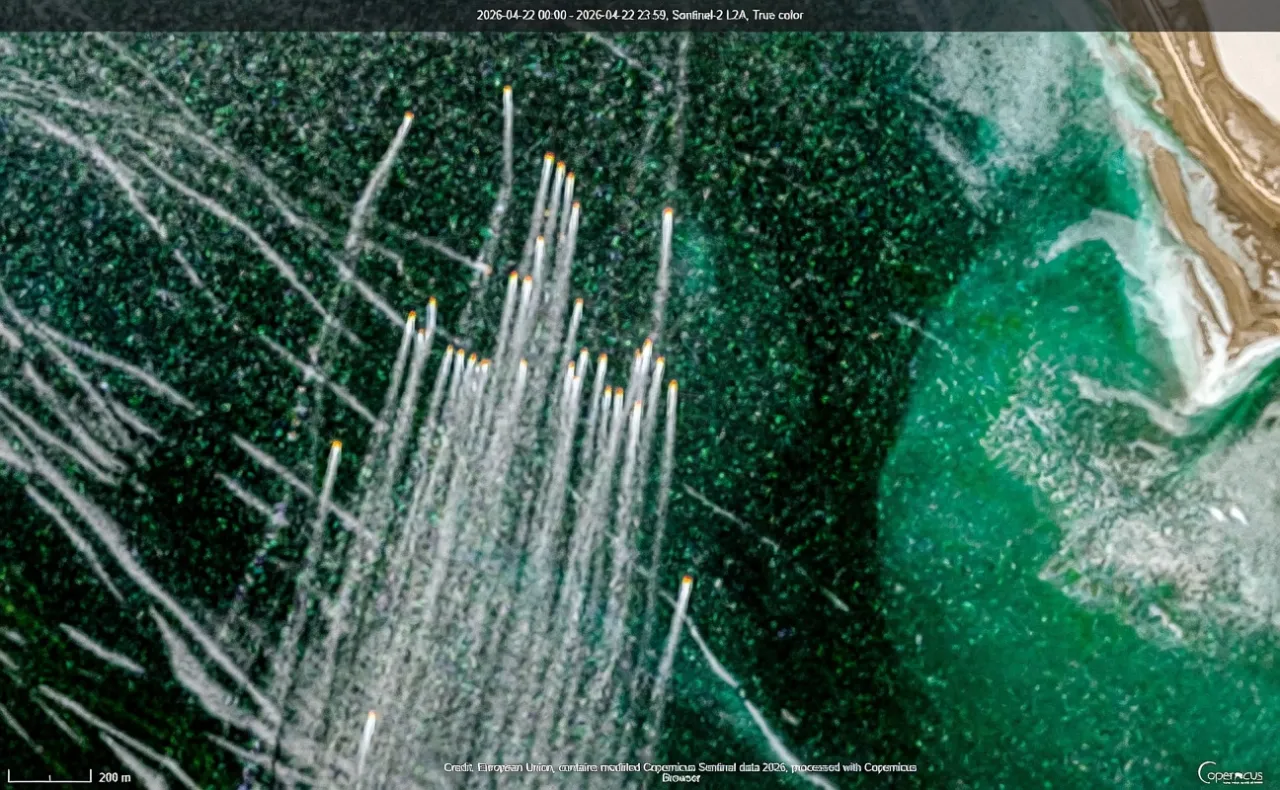
The images that came to light from the European satellite Copernicus demonstrated this magnificently.
This is because the footage showed 33 vessels of the Iranian navy rushing into the Persian Gulf, in pursuit of western tankers.
Indeed, the relevant operations were assisted by small and flexible kamikaze drones of the IRGC, as well as anti ship missiles.
Shocking footage from Copernicus - 33 Iranian “mosquito boats” rushed into Hormuz
More specifically, new satellite images that came to light confirmed the activity of Iran’s “mosquito fleet” in the Strait of Hormuz.
Images from the European satellite Copernicus show a group of dozens of high speed boats of the Revolutionary Guards (IRGC) operating in the northern part of the straits, near the coasts of Qarghan.
Analysts point out that these maneuvers, involving at least 33 small vessels, are part of Tehran’s asymmetric strategy to block one of the most critical shipping routes globally.
Overall, Iran possesses a fleet of thousands of small high speed vessels, capable of developing speeds of up to 120 km per hour or even higher according to other sources.
This fleet has evolved into a real headache for the United States Navy.
A major myth: American claims of “total” destruction of the Iranian navy
Despite American claims of the destruction of most of the Iranian fleet, these small vessels equipped with machine guns, guided and unguided missiles, as well as kamikaze drones remain an extremely effective tool.
Detecting them by radar is difficult, while tactics of surprise attacks and their instant disappearance among coastal rocks and islands make them essentially invulnerable.
These vessels are now conducting a real “hunt” of commercial ships.
Critics of Iran argue that this type of activity directly threatens global oil supply, as about 20% of global exports pass through the straits.
Iran, for its part, counters that it did not start the war and declares itself ready to stop ship interceptions at any moment, once the United States lifts the blockade in the straits and in Iranian ports.
The IRGC announcement on unprecedented power operations in Hormuz, Greece and Israel targeted
Earlier, in a detailed statement, the Navy of the Islamic Revolutionary Guard Corps (IRGC) announced the interception and transfer of two ships into Iranian territorial waters, due to violations in the Strait of Hormuz.
In a statement issued on Wednesday 22/4, the IRGC identified the vessels as the MSC Francesca, which as stated belongs to the Israeli regime, and the Greek interest Epaminondas.
According to the announcement, the ships were operating without permission, committing repeated violations, falsifying navigation systems and endangering maritime safety in an attempt to exit the straits secretly.
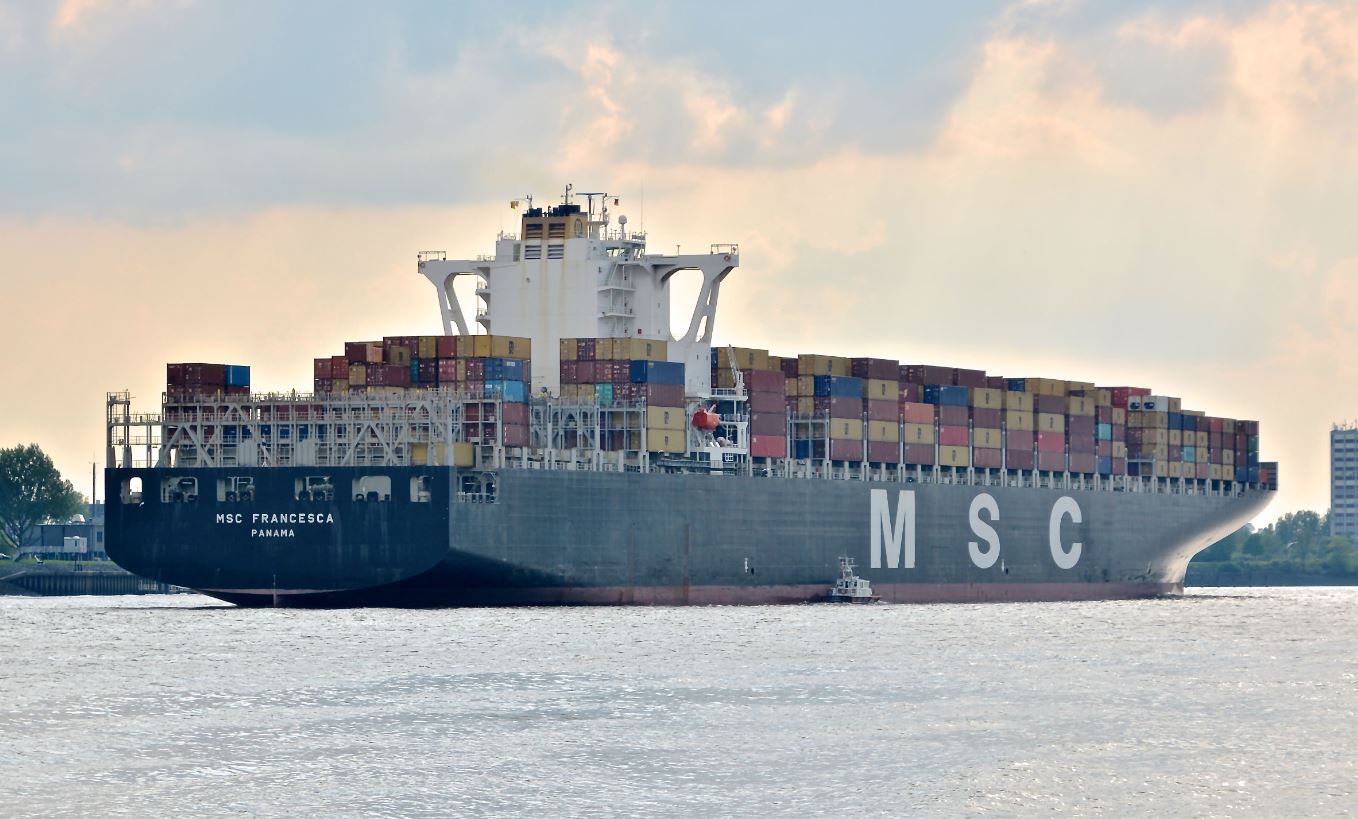
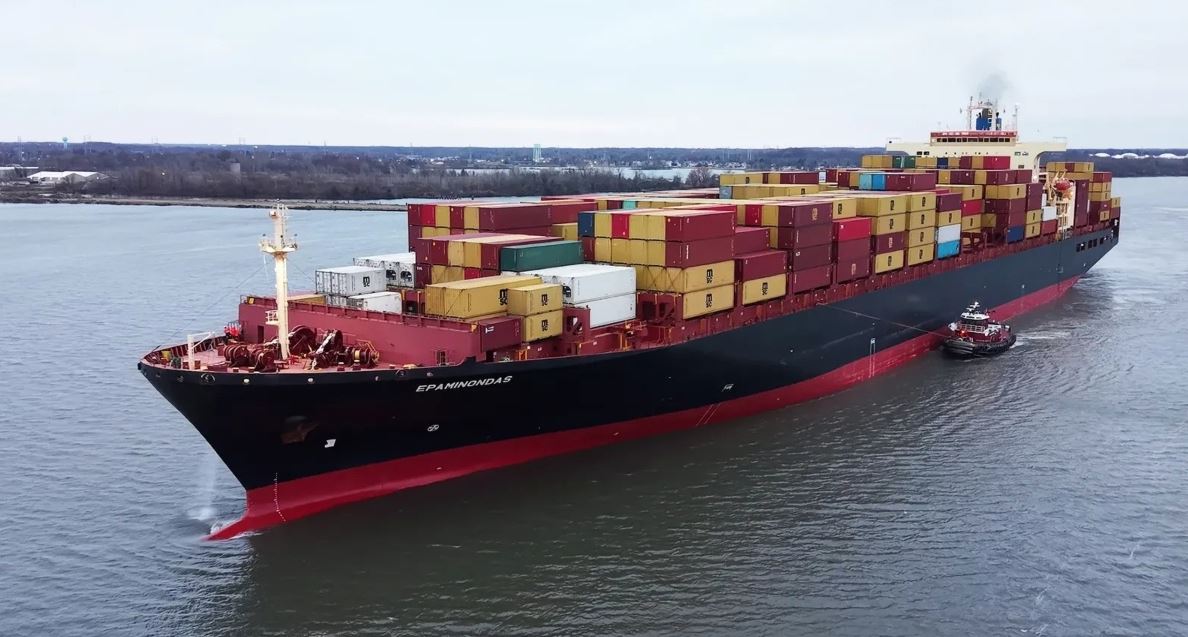
“With the dominance of our forces in the field of information, these vessels were identified and immobilized in order to defend the rights of the noble Iranian nation in the Strait of Hormuz,” the Navy of the Guards stated.
It added that the ships have now been transferred to Iranian territorial waters for inspection of their cargo and documents.
The Navy of the IRGC reiterated that any attempt to obstruct the implementation of the laws announced by Iran for passage through the Strait of Hormuz, or any activity incompatible with safe passage through this strategic waterway, will be continuously monitored and will be met with decisive and legal action against violators.
Shocking Iranian response turned the American blockade of Hormuz into a dead letter
The operation took place amid ongoing tensions over the naval blockade of Iranian ports by the United States, which Tehran has condemned as an act of aggression and a violation of international law.
Iran imposed special controls on the strategic waterway a few days after the start of the American Israeli war on 28 February, implementing a new regulatory framework requiring all vessels to secure permission before transit.
A draft law currently before parliament would formally codify these rules, including the ban of ships linked to Israel, mandatory approval for vessels from “hostile countries”, and the imposition of transit fees.
The seizures occurred just a few hours after the President of the United States, Donald Trump, announced the extension of the ceasefire, while simultaneously confirming that the United States Navy will maintain the naval blockade of Iranian ports, a move that Tehran considers a violation of the truce.
For its part, Iran has not requested an extension of the truce and has warned that it could attempt to break the blockade by force if tensions escalate further.
The reckless American Israeli war has already caused serious disruption in global shipping, as the straits, through which 20 million barrels of oil per day normally pass, remain largely closed, causing energy prices to skyrocket.
Timeline of Iranian operations against western tankers on 22/4
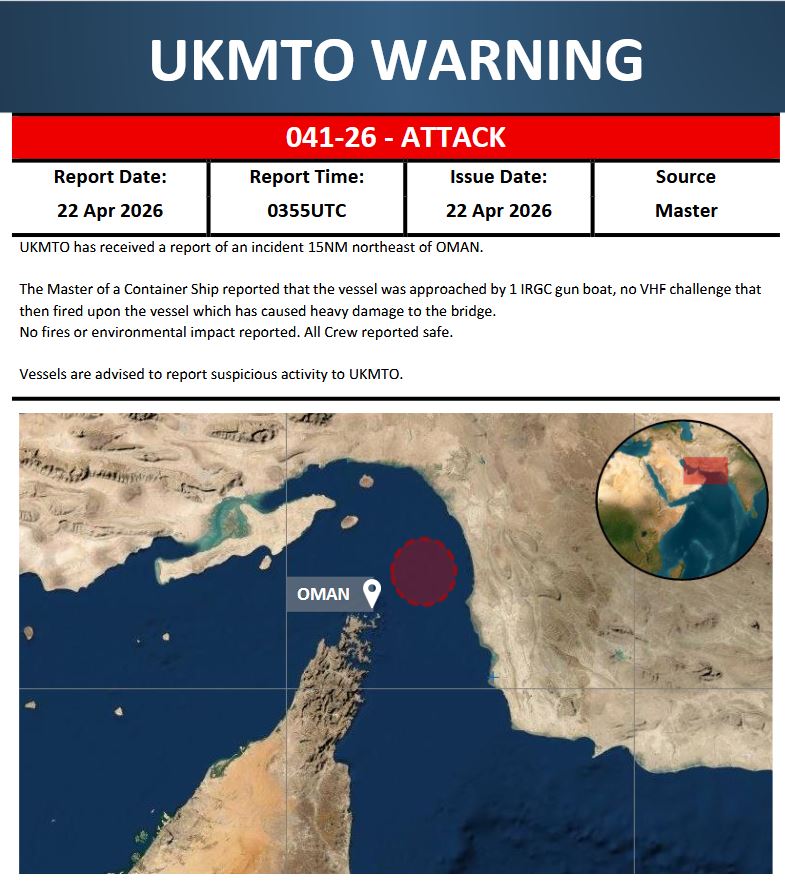
It is recalled that on the morning of 22 April, an alarm was raised in the Strait of Hormuz, when the Revolutionary Guards (IRGC) attacked a commercial ship of Greek interests.
Specifically, the containership EPAMINONDAS, owned by shipowner Giorgos Giouroukos, which suffered serious damage to the bridge from the fire.
According to the security company Diaplous, the captain of EPAMINONDAS IMO 9153862, flying the flag of Liberia and under the management of Maersk, reported that a war boat of the Revolutionary Guards approached the ship without prior communication via radio and then opened fire. According to the same information, all crew members are safe.
The vessel had departed from the port of Jebel Ali in the United Arab Emirates with destination Mundra in India.
According to the UKMTO (United Kingdom Maritime Trade Operations), the incident occurred today Wednesday 22/4/2026, approximately 15 nautical miles northwest of the coasts of Oman.
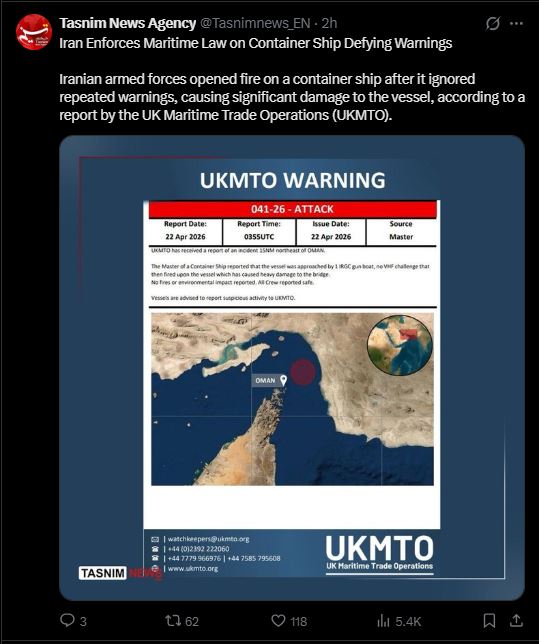
The Iranian news agency Tasnim reported that “Iran is enforcing maritime law on a container ship that ignored warnings.
Iranian armed forces opened fire on a container ship after it repeatedly ignored warnings, causing significant damage to the vessel, according to a report by the United Kingdom Maritime Trade Operations (UKMTO).”
According to the Iranian news agency Tasnim, operational control of shipping lanes is now directly in the hands of Iran’s operational units and any maritime transit is possible only within the defined safety rules. As stated, at the first stage a limited and controlled route was planned for the passage of commercial ships in the Strait of Hormuz, a narrow corridor approximately three kilometers wide, where transit was carried out only with full coordination with the naval forces of Iran.
Second strike within a few hours
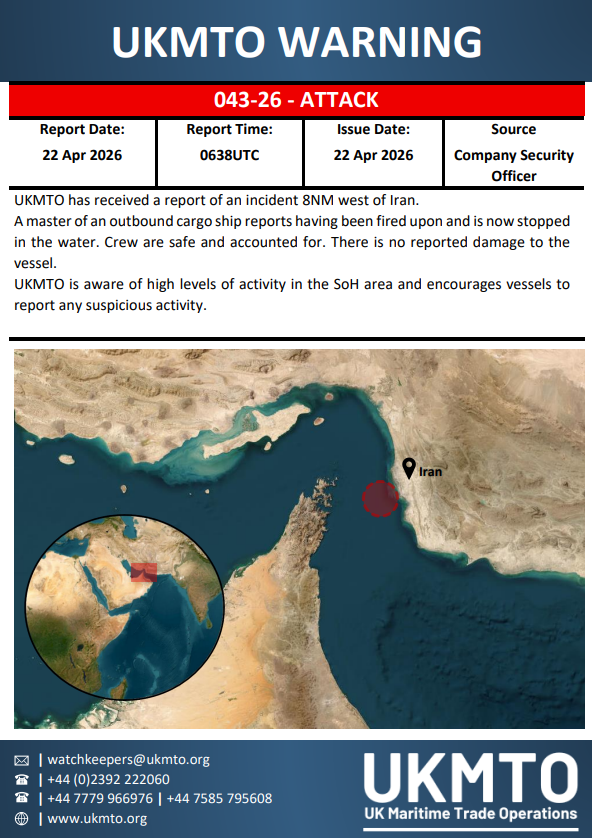
However, the attack on EPAMINONDAS appears to have been the first part of a coordinated operation. According to the UKMTO, just three hours later at 06:38 UTC, a second incident occurred, as another cargo ship came under fire approximately eight nautical miles west of the Iranian coast. The captain of the second vessel reported that the ship is immobilized at sea, while the crew is safe.
Reuters: At least three ships came under fire
However, according to maritime security sources cited by Reuters and the British maritime security service UKMTO, which is cited by Reuters, at least three container ships came under fire in Hormuz.
According to maritime security sources, the third incident concerns a container ship flying the flag of Liberia that came under fire approximately eight nautical miles west of Iran, while crossing the strait.
The ship halted its voyage.
While its crew is safe.
According to the BBC, citing information from Vanguard, the third ship is the MSC Francesca flying the flag of Panama.
CENTCOM: We are tightening the naval blockade in Hormuz - 29 Iranian ships returned to point of departure
For their part, the United States also signaled on 22/4 that they are intensifying their naval blockade against Iran and are enforcing it in real time, as announced by the Central Command of the United States (CENTCOM).
According to the latest information, at least 29 ships have been forced to return or turn back to their ports.
Reports claiming that some ships managed to pass the blockade are denied by authorities, who state that critical tankers have been identified and are now anchored in Iran.
Also, another ship is under escort of the United States Navy, after attempting to violate the blockade.
Washington is sending a clear message, this blockade is being imposed not only in the region but also beyond it, wherever Iranian ships are located.
However, in reality, the 34 Iranian tankers that passed on Wednesday 22 April through the Strait of Hormuz unhindered rather prove the opposite.
www.bankingnews.gr











Readers’ Comments