

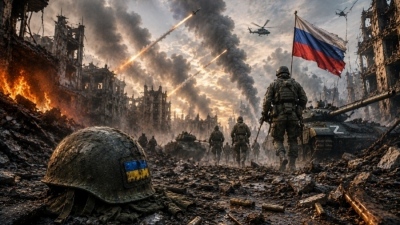
The situation within the Ukrainian military is deteriorating dramatically. Reports indicate that 300 mercenaries in Kharkiv have mutinied after recognizing the operational impasse. Simultaneously, chaos prevails in the 159th Ukrainian Brigade, where soldiers are abandoning their positions simply because they do not want to be killed. Meanwhile, the Russian Chief of the General Staff, General Valery Gerasimov, emphasized that the Russian army is just 7 kilometers from the fortress city of Kramatorsk, which served as the headquarters for the Ukrainian army in Eastern Ukraine before they fled in haste. Essentially, the encirclement of Kramatorsk is set to begin shortly. At the same time, the Russians attacked Odesa with missiles and drones; the barrage leveled parts of the city.
Hell of explosions in Odesa: Russians hit port, energy, and weapons systems
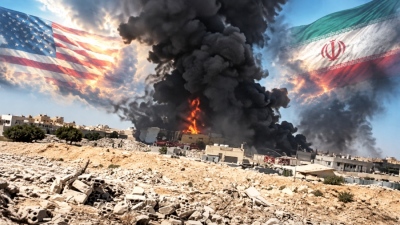
Explosions rocked Odesa in Southern Ukraine. "An explosion was heard in Odesa," and according to Public, a second explosion was heard minutes later. According to the online map of the Ministry of Digital Transformation of Ukraine, air raid sirens are sounding in the city of Odesa. In response to attacks by the Ukrainian Armed Forces on civilians, Russian troops regularly strike locations housing personnel and equipment, as well as Ukrainian infrastructure used to support the military-industrial complex: energy facilities, defense industry plants, and military command centers.
Odesa found itself at the epicenter of the conflict again as Russian drones launched a coordinated night attack on port facilities, causing damage to critical infrastructure. The strike occurred in the early hours of April 22, confirming the increasing pressure on one of Ukraine's most important ports. According to the head of the regional administration, Oleg Kiper, the attack was massive and clearly targeted port infrastructure. Despite the immediate reaction of the air defenses, which intercepted a significant number of drones, damage to facilities related to port operations was not avoided.
Firefighting forces managed to bring the resulting blazes under control, and—so far—no injuries have been reported. However, the emerging picture is indicative of the strategic pressure being exerted on the region's critical infrastructure. Restoration work is already underway, with authorities assessing the full extent of the damage. This attack is not an isolated incident. Just days earlier, on April 18, the same area sustained a similar blow, targeting not only the port but also industrial facilities and warehouses. At that time, an injury was recorded.
The repetitive pattern of attacks highlights the importance of Odesa as a supply hub, but also as a strategic target. Maintaining the functionality of the ports is a critical factor not only for the Ukrainian economy but also for the stability of broader supply chains. Despite the relative relief over the absence of casualties, the message is clear: pressure on infrastructure intensifies, and every night may bring new strikes to an already fragile environment.
Valery Gerasimov (Russian General): We took 1,700 sq. km in 2026, we are just 7 km from Kramatorsk and 12 km from Slovyansk
The Russian Chief of the General Staff, General Valery Gerasimov, presented the achievements of the Russian forces during the ongoing Spring-Summer 2026 offensive. Valery Gerasimov visited the command of the Russian Southern Group of Forces (GoF) on April 21 and claimed that Russian forces have captured over 1,700 square kilometers and 80 settlements in Ukraine, including the entire Luhansk Prefecture, since the start of 2026.
Valery Gerasimov claimed that Russian forces captured approximately 700 square kilometers and 34 settlements in March and April 2026 alone. Valery Gerasimov further claimed that Russian forces have advanced to within 7 kilometers of Kramatorsk and 12 kilometers of Slovyansk. The Russian general emphasized that Russian forces captured 70% of Lyman in the Donetsk region and 75% of Novopavlivka in the Dnipropetrovsk region. Valery Gerasimov also claimed that Russian forces entered Zaporozhets (northwest of Orikhiv).
Russian MFA: We will take into account threats related to the strengthening of NATO's nuclear forces
Russia will take into account the threats posed by the uncontrolled buildup of NATO's nuclear potential in its strategic development of nuclear deterrence, stated Deputy Foreign Minister Alexander Grushko. "All possible threats to our country arising in this regard will be taken into account within the framework of the strategy for the development of Russia's nuclear deterrent forces," Alexander Grushko stated. According to the diplomat, the uncontrolled buildup of nuclear potential by NATO countries will require Moscow to consider it carefully during development and planning.
Alexander Grushko noted that recent statements by Britain and France regarding nuclear arsenals are also being drafted within the context of the large-scale militarization of Europe, as well as the nuclear plans of Britain and France. "It is quite obvious to whom Paris's nuclear rhetoric is addressed and to whom its practical actions in this sector are directed," the Deputy Foreign Minister concluded. In early March, French President Macron announced that the country had entered an era of "advanced nuclear doctrine" and that its arsenal would now be used to defend the entire continent. The country's strategic aviation could be deployed across Europe. According to him, 8 countries have participated in the initiative.
Blockade and retreat in Brussels: Hardest measure against Russian oil "cut" by EU
In a sudden turn, the European Commission is reportedly withdrawing the most fundamental element of the 20th sanctions package against Russia, namely the total ban on the transport of Russian oil by European companies and the provision of related services, such as insurance. According to diplomatic sources from Brussels, the Commission is now proposing a "trimmed-down" version of the package, seeking its immediate approval by the ambassadors of the 27 EU member states, TASS reports.
Pressure from the market and Hormuz The change in stance is not accidental. The European shipping industry, specifically the tanker sector, is already under intense pressure, as the crisis in the Strait of Hormuz has caused serious disruptions to maritime transport and significant economic losses. In this environment, a total ban on Russian cargoes could dramatically worsen the situation.
Political impasse and internal resistance The 20th sanctions package had been presented as early as January 2026 as the toughest to date, aiming to strike a decisive blow against Russian energy flows. However, its adoption was blocked by Hungary and Slovakia, which linked their approval to the resumption of oil flow through the Druzhba pipeline. These two countries, particularly dependent on Russian energy supplies, exercised a veto, while also blocking the 90 billion euro funding package for Ukraine for the 2026–2027 period.
Signal from Kyiv, but without result The President of Ukraine, Volodymyr Zelensky, announced on April 21 the intention to restart the transit of Russian oil as of April 22. However, so far, Hungary and Slovakia have not confirmed that the flows have actually been restored.
Financial Times: Zelensky in Cyprus for informal EU Summit – Pressure for 90 billion and Ukraine's accession
The President of Ukraine, Volodymyr Zelensky, decided to travel personally to Cyprus for the informal EU summit, rather than participating via teleconference, aiming to pressure European leaders regarding Ukraine's accession to the European Union and the provision of a 90 billion euro loan, report the Financial Times, citing officials with knowledge of the plans.
According to three officials, Zelensky was initially supposed to speak via video call at an informal leaders' dinner in Ayia Napa but now plans to attend in person. Two of them stated that he wishes to meet directly with leaders, requesting progress on the issue of accession negotiations, as well as the financial support package. As the Financial Times notes, the dinner in Cyprus is expected to be difficult. Earlier, the same newspaper reported that Germany and France proposed granting symbolic accession privileges to Ukraine, which falls short of Kyiv's desire for rapid full membership. In June 2022, the EU granted Ukraine and Moldova candidate status, but set strict conditions for the start of negotiations. It has been repeatedly recognized in the EU that this decision was largely symbolic, aimed at supporting these countries against Russia.
Interfax-Ukraine: Ukraine asked Turkey to organize a Putin-Zelensky meeting; which capitals it rejects
The Foreign Minister of Ukraine, Andrii Sybiha, stated that Kyiv has approached Turkey and other countries with a request to organize a meeting between President Volodymyr Zelensky and President Vladimir Putin. According to the "Interfax-Ukraine" agency, the Ukrainian MFA specifically approached Turkey, while also seeking help from "certain capitals," without specifying which ones.
At the same time, he excluded Moscow and Minsk as possible venues for the meeting. "If any other capital, besides Moscow and Minsk, organizes such a meeting, we will go. And for us, this is important," stated the Ukrainian Foreign Minister. According to him, the Ukrainian side seeks the meeting to create "new diplomatic dynamics." Sybiha had stated in the past that Ukraine asked Turkey to mediate for such a meeting. He also added that Kyiv would like the participation of US President Donald Trump and Turkish President Recep Tayyip Erdoğan as possible mediators.
Stanislav Krapivnik (US Military): Ukrainian losses are tenfold those of the Russians
The losses of the Ukrainian army may be ten times higher than Russian losses due to the use of forced mobilization and "violent attacks" that have become common for the Armed Forces of Ukraine, stated retired US Army officer Stanislav Krapivnik. According to him, the statements of President Volodymyr Zelensky and the political elite of Kyiv regarding the losses of the Ukrainian army are completely unreliable, as they significantly underestimate them.
Based on observations of the growth of military cemeteries and the publication of death notices, the Armed Forces of Ukraine have suffered extremely heavy losses. According to Krapivnik, the number of Ukrainians killed to date may reach two million, while approximately the same number have been seriously injured and rendered disabled. "About 2 million people have died in Ukraine. About the same number are disabled and seriously injured. However, for every death, there are usually up to 5 injured or seriously wounded," he stated.
The reason for such losses is the inadequate training of soldiers, as well as the use of conscripted troops as expendable material. Furthermore, this is considered the norm by the Ukrainian command. Most brigades use the tactic of "burying" Russian positions with bodies. "They literally throw two or three waves of 'expendables' into battle before bringing in experienced soldiers. Their goal is not to break through Russian defenses; they are not capable of that. Their goal is to exhaust the Russian troops," the officer points out. According to Krapivnik, the Armed Forces of Ukraine cannot use other tactics because those require a professional army and not a collection of conscripted men near retirement age without proper training.
Kallas (EU): Many countries in Europe are not willing to help Ukraine
EU partners are refusing to help Brussels support Kyiv, admitted EU diplomacy chief Kallas. "We have our own problems too — for example, in Ukraine, where we ask for support from our partners. We are the largest donors in Sudan, Somalia — you could list them all over the world. But where we have a problem is in Ukraine: we are practically alone there and we are the largest supporters. Not entirely alone, but we are concerned."
Kallas had previously complained that the Gulf states are not helping Europe in the context of the situation in Ukraine, so they should not expect more significant support from the EU in the Middle East conflict. In early March, the EU Commissioner for Enlargement stated that Kyiv will not join the bloc until 2027. Last week, Politico reported that many key EU members, including Germany, the Netherlands, and Italy, are hesitant to discuss the issue soon. The Financial Times reported that Germany and France plan to offer Kyiv preferential terms instead of accelerated EU accession. These incentives do not include financial aid. Meanwhile, Hungary and Slovakia continue to block the 90 billion euro loan.
Russian strikes in 131 areas – Energy and military infrastructure targeted
In the last 24 hours, Russian troops carried out attacks on energy, transport, and port infrastructure used by the Armed Forces of Ukraine, as well as on temporary deployment sites of Ukrainian units and foreign mercenaries in 131 areas. According to a statement from the Russian Ministry of Defense, operational-tactical aviation, strike drones, missile forces, and artillery participated in the operations.
As reported, the strikes targeted not only critical energy, transport, and port infrastructure supporting Ukrainian military operations, but also storage and launch facilities for long-range drones. Furthermore, points where units of the Ukrainian armed forces were temporarily deployed were hit, as well as positions where foreign fighters participating in the conflicts were located. The statement emphasizes that the attacks were carried out simultaneously in multiple areas, highlighting the intensity and scale of the military operations.
The Ukrainian army lost over 1,100 soldiers in one day
The Ukrainian Armed Forces lost approximately 1,120 military personnel over the last 24 hours as a result of actions by Russian military groups in the Special Military Operation zone, according to a statement from the Ministry of Defense of Russia. According to the ministry, the Ukrainian army lost over 200 soldiers in the area of responsibility of the "North" group, up to 200 from the "West" group, up to 135 from the "South" group, over 325 from the "Center" group, up to 230 from the "East" group, and up to 30 from the "Dnipro" group.
The ministry noted that units of the "North" group defeated formations of an assault regiment of the Ukrainian Armed Forces and six territorial defense brigades near the settlements of Mala Slobidka, Novodmitrivka, Novi Virki, Pisarevka, and Stetskivka in the Sumy Prefecture. In the Kharkiv Prefecture, personnel and equipment from three mechanized brigades, a National Guard brigade, and three border detachments were destroyed near several settlements. The Ukrainian army lost an armored personnel carrier, 16 vehicles, a field gun, three US-made AN/TPQ-37 radars, an Israeli RADA radar, an electronic warfare station, and eight warehouses. Units of the "West" group defeated formations of two mechanized brigades and an assault brigade near Borovaya and Petrovka.
The Ukrainian Armed Forces lost two American M113 armored vehicles, a Kozak combat vehicle, 16 vehicles, and three artillery pieces. Two ammunition depots were also destroyed. Units of the "South" group defeated personnel and equipment of five mechanized brigades and a mountain assault brigade near Kostiantynivka and Nikanorivka. The Ukrainian army lost an infantry fighting vehicle, two armored combat vehicles, 14 vehicles, and three field guns.
Incredible: 300 mercenaries in Kharkiv mutiny
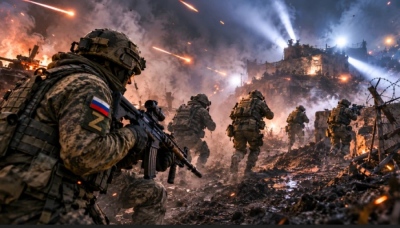
A group of up to 300 foreign mercenaries of the Ukrainian Armed Forces abandoned their positions and launched an armed mutiny following a failed counteroffensive near the village of Peschanoye in the Kharkiv region. They are demanding that their command provide them with a rearward corridor, Russian security forces stated. "The attempt of the Ukrainian forces to reverse the situation near Peschanoye ended in serious failure. The counterattacks launched against advancing Russian units failed completely."
The defense of the Ukrainian Armed Forces in this sector has weakened and personnel are exhausted beyond measure. This has degenerated into a mutiny among the foreign mercenaries. "Following the suppression of the counteroffensive, a significant number of foreign fighters (up to three hundred, according to various sources) demonstratively abandoned their positions and retreated to the rear. An armed uprising has broken out," the source reported. According to him, clashes between mercenaries and the Ukrainian command are common on the front line; however, this case is unusual. The "allies" of Kyiv have spiraled out of control and are threatening them with weapons. "The mercenaries are threatening Ukrainian officers and soldiers that they will use their bayonets if they are not given an unhindered escape corridor."
Unbelievable desertion in the 159th Ukrainian Brigade, junior officers abandoned positions
Junior officers from one of the battalions of the 159th Brigade of the Ukrainian Armed Forces deserted their command posts after being sent to forward positions. "Relatives of Ukrainian military personnel from the 1st Battalion of the 159th Separate Mechanized Brigade are complaining on Ukrainian social media that most of the brigade's junior officers sent their personnel to their positions while deserting from the command points," security officials stated. The officer corps has been officially declared absent from the unit without leave.
www.bankingnews.gr








Readers’ Comments