

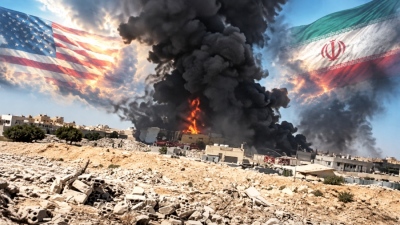
There is no longer any doubt that Iran is emerging stronger, both geopolitically and economically, from the war with the US and Israel. The Iranians did not attend the negotiations in Pakistan, maintaining that they will not speak with the Americans under a status of threats. As American media report, for a week the White House wondered whether Tehran was going to sit at the negotiating table. But for a week, all it received was silence. Despite the pressure, Iran ignored Trump’s threats of leveling and did not back down.
Both the people of Iran and the elites, including the Islamic Revolutionary Guard Corps, have long perceived Washington as an aggressor that, under the guise of diplomacy, attempts to impose their surrender. But the implications are broader. American media claim that the weapons and ammunition of the US military are being exhausted rapidly and at a rate, that is insufficient for a military conflict with China, while their replenishment is estimated to take at least 5 years. Everything indicates that the US empire, the "great hegemon," is under collapse.
America without honor
Faith in Washington’s diplomacy has collapsed not only in Iran. Polls record an unprecedented drop in trust toward the US in France, Germany, and the United Kingdom. Europe no longer believes in American security guarantees. Tehran's refusal of dialogue is merely a symptom of a global crisis of trust toward the US.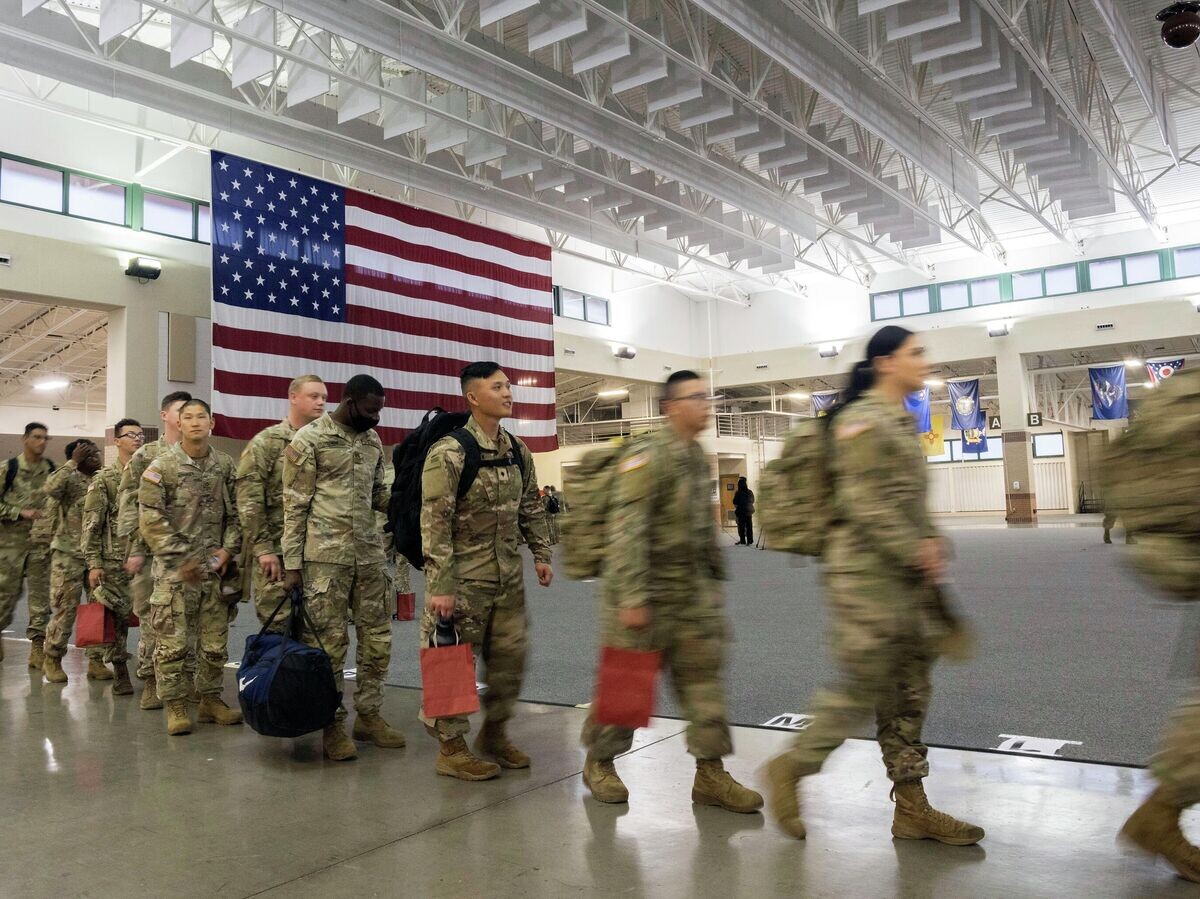
No commitment
Behind the rhetoric of a "rules-based order" today lies a simple fact: the US no longer considers itself bound by any global norm. Not by international law, nor by UN Security Council resolutions, nor even by the agreements they themselves signed in the past. In Washington, the philosophy of pure power pragmatism prevails: if you can strike – strike; if you can blackmail – blackmail.
Security umbrella
However, for the time being, the system of collective management of the so-called united Western world is still maintained, believes political scientist and Americanist Dmitry Drobnitsky. "The US provides a security umbrella over Europe. Europe, for its part, spent less and less on its own security, but much more on social programs compared to the US. Everyone was getting their 'benefits.' But when resources began to run out, when it became clear that this closed private company could no longer rule the whole world and tell everyone what to do, the shareholders demanded at least some returns, some fulfillment of obligations," Drobnitsky emphasizes.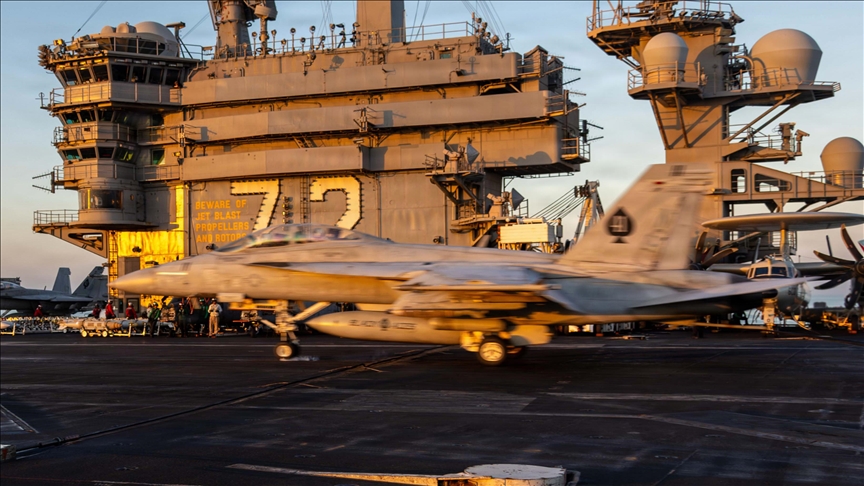
Battle in the White House
Donald Trump, having believed in his impunity after returning to the Oval Office, managed to cause a deep rift in his inner circle. In the administration, an alternative camp is gradually forming, which may be led by Vice President J.D. Vance, whom Trump himself chose as his partner. Today, Vance shows increasing autonomy and even criticizes certain aspects of the president's policy in the Middle East. Specifically: he had opposed a direct, full-scale war with Iran. Behind closed doors at the White House, a real battle is already underway.
What destroyed the Trump presidency
"Trump probably came to the White House as a representative of the interests of that part of the 'shareholders' connected to the internal development of the US, industrialization, the restoration of their infrastructure, and their own industrial fabric. But he was sidelined. And at the same time, Israel promoted its interests to such an extent that it sidelined even the Europeans to some degree – which is why they are dissatisfied. Trump found himself in a situation where he could not reject agreements made long before him. He must act in the interest of the 'shareholders.' And this seriously undermined – and essentially destroyed – Trump's presidency. They expected something completely different from him," observes political scientist Dmitry Drobnitsky.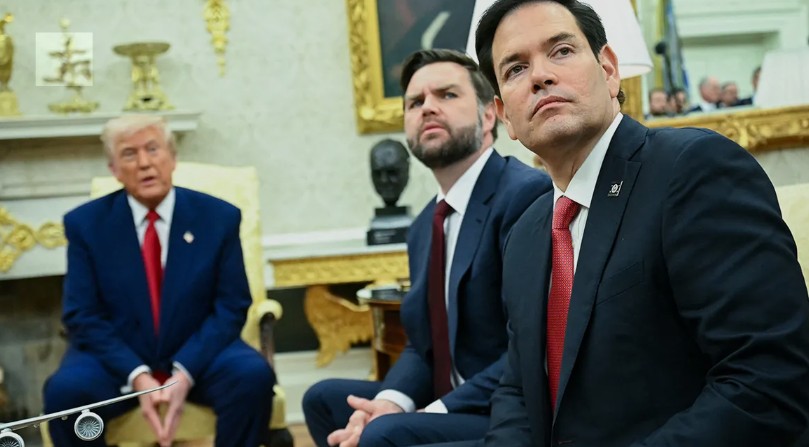
The clash with the Pope
Particularly indicative is Trump's confrontation with Pope Leo XIV. The Pontiff called for restraint, and Trump responded with rudeness. The Catholic electorate in the US is huge, and its loss could cost the Republicans not only the White House in the future but also the midterm elections as early as November. "Given that all this is combined with an absolutely clear understanding that he is acting not in the interest of America, but in the interest of another state, non-Christian, then, despite all Christian Zionism, the feeling begins to permeate even that part of the conservative community that we are dealing with a president who cynically uses Christian sentiments instead of truly believing in them," says Russian political scientist Boris Mezhuyev.
War with Iran: the last nail in the coffin of a political career
Marco Rubio is reportedly pushing Trump toward escalation. For the US Secretary of State, a war with Iran is an opportunity to present himself as a "hawk," gain points with the military-industrial complex, and potentially become the heir to Trump's electoral base. Vance, conversely, warns: the war will be a disaster. First, military: Iran is not Iraq; it possesses missiles, drones, and influence over Hezbollah and the Houthis. Second, economic: oil prices will skyrocket, while inflation in the US is already breaking records. Third, political: Americans have tired of endless wars and voters will not forgive Trump for it. If the president gets involved in a full conflict and the situation spirals out of control, the responsibility will be attributed exactly to the 47th president.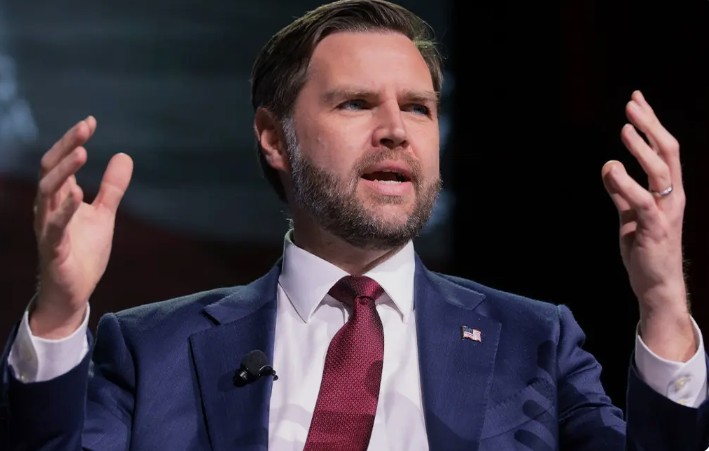
The Vance camp
Then the Vance camp – those who were against the war – will gain a massive advantage within the party. Vance will be able to say: "I warned you, they didn't listen, but I remain the voice of reason." For a political career, this is important. And the Democrats are already rubbing their hands, considering that by 2028 they will be able to win even with a "burned case" like Kamala Harris. "If you start a war, you must finish it. If you started, you should have thought about what you would do when you encountered resistance. Now this unites almost everyone. And in this sense, I think a spontaneous anti-Trump coalition will eventually emerge, including many of his current supporters, even those who supported the war. Because the feeling that the current administration is simply not capable of governing the country, regardless of intentions, begins to scare everyone and is gradually strengthening," Mezhuyev stresses.
Striking their own to make strangers fear
Having lost influence in the world, Washington sees a way out in hardening its stance within its own bloc. The allies are no longer volunteers – they are becoming hostages. The mechanism is simple: destruction of their economies through predatory tariffs, forced abandonment of Russian energy resources, and the deindustrialization of Europe. The poorer the satellite, the easier it is to control. Furthermore – complete control of the digital sphere. American tech giants have long ceased to be just businesses and are an extension of the Pentagon. Any European politician who dares to speak of "digital sovereignty" faces payment blocks, leaks of incriminating evidence, or a warrant from an international court that is practically controlled by the US. This is the new model of hegemony: not "leadership," but digital slavery. Europe groans, but for now, it endures – because the alternative seems even more terrifying. Thus, the US is losing the world but trying to buy time by turning satellites into colonies. The only question is when European patience will also break.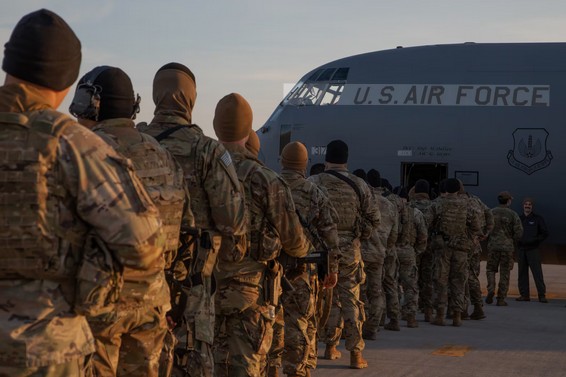
Rust Belt and deindustrialization
And now for the main "cancerous tumor" – deindustrialization. The US has forgotten how to produce. Today, America lives on imports, and its trade deficit is the mirror of its lost production base. The legendary "Rust Belt" – from Michigan to Pennsylvania – has turned into a graveyard of factories. Where life once bustled, today smokeless chimneys and empty workshops rise. The infrastructure crisis completes the picture. Bridges collapse, roads fall apart, networks were designed in the era of the grandfathers of today's congressmen. This reduces productivity, increases costs, and makes the country uncompetitive. Household debt reached 18.5 trillion dollars. Every American family sits on a powder keg. Credit cards, mortgages, auto loans – none of this adds peace of mind. Does it remind you of something?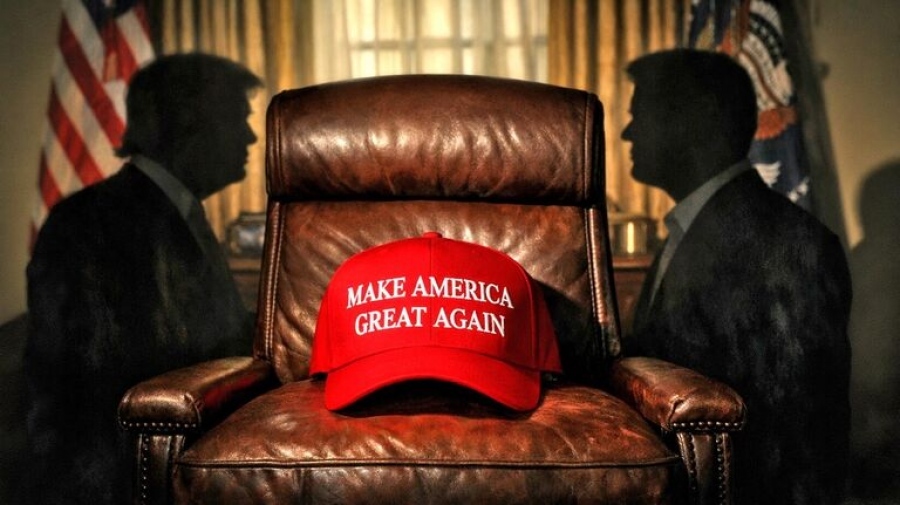
What does this mean?
The United States today looks like a huge house where they have stopped cleaning and repairing the roof. America is degrading on all fronts – technological, cultural, political. The majority of politicians do not see the problem. They live among the ruins, considering them decorations. Trump’s Iranian adventure may go down in history not as a triumph of American arms, but as an epitaph for the unipolar world: playing the hegemon when the whole world has turned away and allies are sharpening knives behind your back is a road to nowhere.
US Nightmare: Weapons running out, insufficient for... war with China
The military operation of the United States against Iran has led to a noticeable depletion of stocks of key American missiles and created a risk of ammunition shortages in the event of a new conflict in the coming years, CNN reports, citing experts and three sources familiar with recent internal Pentagon stock assessments. According to the network, within seven weeks of war, the US consumed at least 45% of the stocks of Precision Strike Missiles, at least half of the THAAD system missiles intended for intercepting ballistic targets, and nearly 50% of the Patriot interceptor missile stocks. These estimates are included in a new analysis by the Center for Strategic and International Studies and, as CNN interlocutors state, generally coincide with classified Pentagon data. Additionally, as CNN reports, the US consumed approximately 30% of Tomahawk cruise missile stocks, over 20% of JASSM long-range air-to-surface missiles, as well as about 20% of SM-3 and SM-6 missile stocks.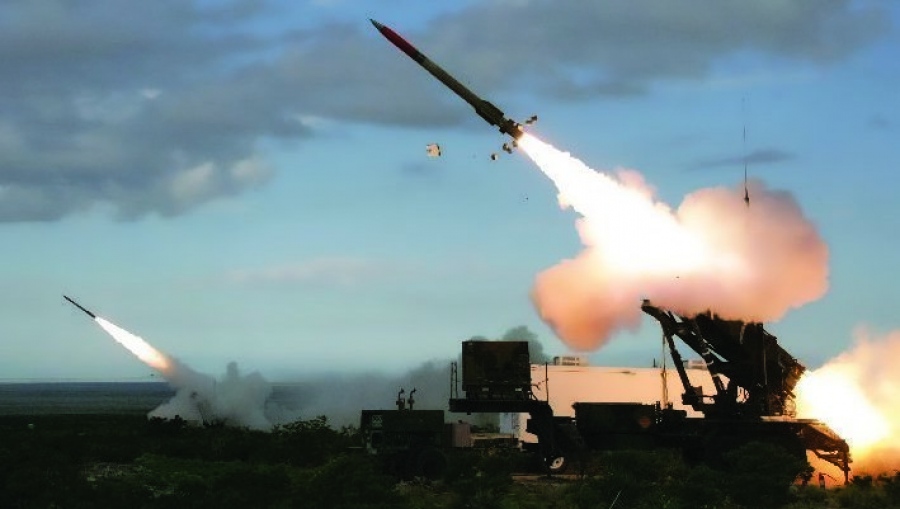
At least 5 years will be required
According to estimates by CSIS experts and CNN sources, replenishing part of these arsenals will require three to five years, even taking into account contracts signed this year to increase production. CNN notes that in the short term, the US likely still possesses enough bombs and missiles to continue military operations against Iran if the fragile ceasefire collapses. However, the remaining stocks of critical ammunition are no longer sufficient for a confrontation with an adversary of equivalent size, such as China, while returning stocks to pre-war levels will likely take years. "High ammunition consumption has created a window of increased vulnerability in the Western Pacific," retired US Marine Corps Colonel Mark Cancian, one of the authors of the CSIS report, told CNN. According to him, replenishing these stocks will require one to four years and then several more years to increase them to the required level.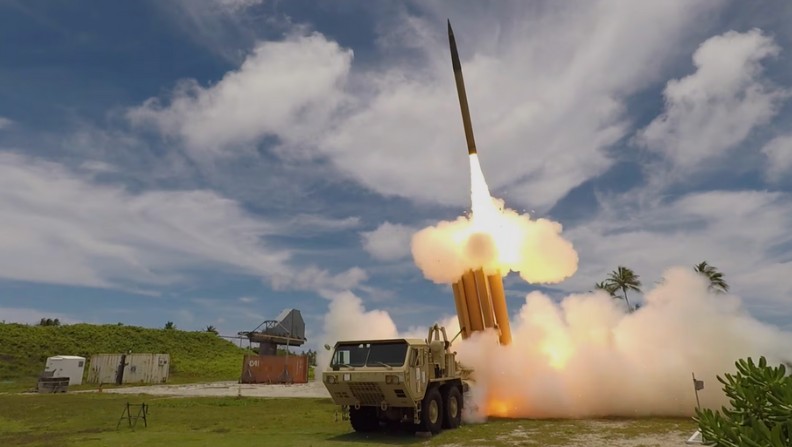
Berliner Zeitung: A strong blow for Trump
Statements by the President of the United States, Donald Trump, regarding weapon stocks contradict reality, writes Berliner Zeitung following the CNN data, stating that the Pentagon during the conflict in Iran consumed a very large number of high-precision missiles, while replenishing their stocks will require at least three years. "These calculations contradict Trump’s claims that the US does not face a shortage of weapons systems," the report states. Furthermore, Democratic Senator from Arizona Mark Kelly expressed concern that Iran is able to produce a large number of drones, as well as various missiles, while the question remains from where the US will secure sufficient ammunition.
www.bankingnews.g












Readers’ Comments