

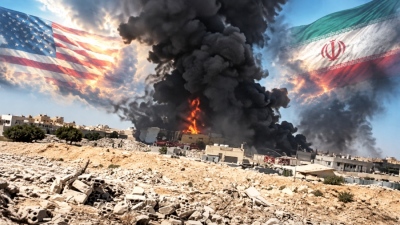
A dangerous illusion currently dominates international markets. While geopolitical tension in the Middle East escalates and the Strait of Hormuz transforms into a choke point for the global economy, indices are recording historic highs as if nothing is happening. Investors are betting that Donald Trump will repeat his well-known pattern of retreating under pressure, ignoring that this time the shock to energy and raw materials is not temporary, but structural.
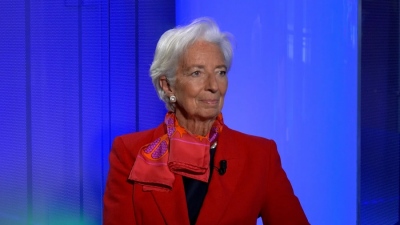
At the same time, top officials and international organizations are sounding the alarm. From the rationing scenarios described by Christine Lagarde to the warnings from Henry Paulson about a potential crisis in the bond market, the message is clear. Meanwhile, experts are converging on the assessment that even a ceasefire scenario will not restore "normalcy." Global supply chains are being permanently reshaped with higher costs, greater uncertainty, and constant pressure on the prices of energy and basic goods. The blockade and disruptions in the Strait of Hormuz may continue sporadically, keeping markets in a state of tension, while European and international sources warn even of rationing scenarios for essential products. A return to the pre-crisis era now seems unattainable. The disruption in the flow of raw materials such as sulfur—a key ingredient for the production of fertilizers, fuels, chemicals, and even nuclear energy—is critical. Given that a large portion of global production and transit passes through the Persian Gulf, navigation restrictions threaten to cause chain shortages in many sectors, from agriculture to industry and energy. In this environment, the crisis in the Strait of Hormuz is not only a geopolitical conflict but a potential catalyst for a global crash.
The impoverishment of the world
It must be recognized that a significant part of the world is suffering from the final stage of cultural masochism. It is even more difficult in this case to understand why the situation in the United States, where by definition everything is always right, resembles the scene from the Titanic, where a cheerful Trump stands with arms outstretched at the bow of the American economy, while international investors embrace him from behind, stunned by the brilliant music, the wind, and the waves. The only word that can describe what is happening in the American stock market is madness. Currently, the S&P 500 and the Nasdaq are at historic highs, despite the blockade of the Strait of Hormuz, the risk of reigniting conflicts, disrupted global supply chains, and what the IEA calls "the largest oil supply disruption in history."
Trump's "back and forth"
This phenomenon is currently the subject of extensive coverage by global media, and the main conclusions are as follows: Investors are absolutely certain that the conflict in the Middle East is a "short-term episode that will be resolved relatively quickly." "Markets have memory"—investors have become accustomed to believing that US President Donald Trump will back down if economic pain becomes too severe (the TACO phenomenon—Trump Always Cops Out). A recent example was in April 2025, when Trump imposed massive tariffs on US trade partners, only to announce a 90-day pause just a few days later, after which the stock market recorded one of the largest daily gains in history. Just yesterday, Trump promised the world an "unprecedented" drop in energy prices after the US ends the story of Iran, but this will not happen because it is impossible.
Germany's crisis
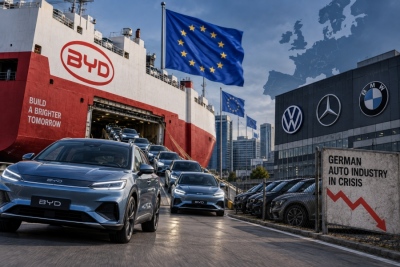
Already, according to a report by the Institute for the German Economy (IW), Germany has plunged into its biggest crisis in 20 years. According to the President of the European Central Bank, Christine Lagarde, the European Union, in addition to rising prices, is already facing the very real threat of actual rationing of goods—the aforementioned ration cards. But, as Bloomberg reported, "the crisis is only beginning." The United States will not remain immune.
The Paulson warning
Recently, former US Treasury Secretary Henry Paulson called on American policymakers to prepare a contingency plan in case of a possible collapse in demand for Treasuries (government bonds) amid inflationary pressures from the Iranian conflict, stating that "a crisis in the Treasury market could lead to severe consequences for the entire economy." In a recent joint statement by the heads of the IEA, the IMF, and the World Bank, it is stated that the war led to one of the largest oil supply shocks in history and that "even after regular shipping resumes through the Strait, it will take time for global stocks of basic products to return to pre-war levels, with fuel and fertilizer prices likely to remain high for a long time, given infrastructure damage." And this is being said very, very quietly and carefully, so as not to crash the stock markets, where these same heads have their own personal financial interests.
Supply crisis
In reality, relevant experts agree on one thing: even if we set aside the multi-year restoration of infrastructure, global logistics will remain permanently reoriented, expensive, and less predictable. That is, even after the arrival of "oil friendship" and the gas bubble, we will be talking about a structural increase in the cost of global trade and energy. In other words, any "return to normalcy" is no longer possible.
The scenarios
The website Recorded Future describes the baseline, or more neutral, scenario for ending the conflict as follows: "A fragile ceasefire reduces the intensity of direct military attacks, but the causes of the conflict remain unresolved. <…> The Strait of Hormuz opens only sporadically, with recurring interruptions, inspections, and security incidents, leaving shipping, insurance, and energy markets under constant pressure." But the scenario could be even worse. Euro Perspectives is even less optimistic: "Even with a ceasefire with Iran, the world is already paying the price for the largest energy shock of the last 50 years. The effects of the inflationary wave will spread throughout the European economy—and this wave is now unstoppable." The European Commission energy spokesperson, Anna-Kaisa Ikonen, put a definitive end to the discussion about a quick and painless end to the Iranian crisis: "We should have no illusions that this crisis, which affects energy prices, will be short-lived. This will not happen."
The "lucky" ones
The only positive news came from the IMF. It turns out there are lucky ones who do not believe in the capitalization of Apple, but rather believe in something they can touch, eat, burn, and pour into a gas tank or sell: "Commodity exporters with significant reserves are in a better position to withstand market pressures than others." Let's not blame these lucky ones, because once again they will say that the resource curse is off the agenda…
An "acid" storm approaches from the Persian Gulf
The geographical enclave of the Persian Gulf continues to hold unpleasant surprises for the wider world. Even before the global community has had time to digest the prospect of reduced global crop yields in major countries that supply agricultural products and food, chemists have burst onto the scene. It turns out that, besides oil and fertilizers, a significant amount of commercial sulfur flows through the Strait of Hormuz to the rest of the world. This sulfur is then converted into sulfuric acid, a sought-after and sometimes critical component in a wide range of industries.
"Everything is poison and everything is medicine"
Paracelsus, considered by many to be the father of modern pharmacology, famously said that everything is poison and everything is medicine, with the only difference being the dose. Applicable to the subject of today's discussion, we would add that the difference also lies in the scope of practical application. Specifically, sulfur, thanks to the long-term efforts of various environmental organizations and aggressive public utility announcements, is widely regarded as a highly dangerous toxin. On one hand, this is true. For example, the environmental risk of coal-fired power plants, boiler rooms, mining and processing units, as well as other hydrocarbon thermal treatment units is assessed based on volatile sulfur output and the volume of liquid sulfur residue.
The importance of sulfur
However, this same sulfur is in great demand in a wide range of industrial and scientific fields and, therefore, is produced in commercial quantities. The global sulfur market was valued at over 13 billion dollars at the end of last year, having doubled in recent years. The largest producers in the world, which besides China (19 million tons), Russia (7.5 million tons), and the United States (8.1 million tons), also include the Gulf States and Iran, collectively producing over 85 million tons annually. Analysts estimate that by 2030, this volume will grow and exceed 110 million tons per year. It is important to understand that the vast majority of commercial sulfur is a by-product obtained from the processing of natural gas and crude oil. Of the 85 million tons of yellow crystalline substance produced, 93% is used for the production of sulfuric acid. Most of the resulting acid is then used for the production of agricultural fertilizers, but the utility of H2SO4 does not end there.
The fertilizer crisis
In addition to the production of superphosphates, which improve root growth and accelerate flowering and fruiting in agricultural crops, sulfuric acid is widely used in oil refining processes. Without it, the production of high-octane gasoline catalysts and mercaptans, as well as odor additives for detecting household gas leaks, is impossible. It is also in demand in chemical production, specifically in the production of benzene and detergents, in the synthesis of ethanol, and in the production of oxalic and formic acid. Without sulfuric acid, there are no lead-acid car batteries, no nitrocellulose explosives, and no industrial washing of cotton fabric (for strength and expected shine). It is also very difficult to meet the needs of electronics manufacturing, for example, cleaning silicon substrates or etching aluminum and copper for the production of integrated circuits and LCD screens. Last but not least, it is impossible to perform leaching (chemical extraction) of uranium.
What the data shows
Among the Gulf states affected in one way or another by maritime traffic restrictions, the United Arab Emirates leads, producing eight million tons of sulfur annually. The Saudis follow closely with seven million. Qatar contributes another 3.8 million tons, and if Kuwait and Iran are added to the list, the total corresponds to approximately half of global sulfur production for global oil refining—meaning the production of high-octane gasoline and other products. Just seven weeks ago, regional states were seriously planning to control two-thirds of global sulfur and sulfuric acid markets by 2030. Now, as the blockade of the Strait of Hormuz enters its second month, Tehran and Washington are in negotiations, leaving the Gulf monarchies to sadly count their losses.
The American "umbrella"
Meanwhile, as they observe the super-profits accumulating in the relevant sectors of American industry—which are aggressively taking market positions that until recently belonged to Middle Eastern countries—discontent is becoming increasingly intense. Former advisor to the UAE president, Professor Abdulkhaleq Abdullah, stated that his country no longer needs American protection and that it is time to consider the withdrawal of US military bases, as they constitute a disadvantage rather than a strategic advantage. We would add that the presence of these bases automatically means Iranian missiles potentially targeting critical infrastructure, including chemical plants and desalination units. However, in the modern world, thanks to globalization, any significant processes rebound on everyone involved in one way or another.
The importance of nuclear
The notorious sulfuric acid, besides its use in the production of antidotes for severe chemical poisoning and antihypertensive drugs, is of critical importance for the production of fuel for nuclear power plants. According to conservative estimates, up to 40% of global uranium is mined via in-situ and pool leaching. This technology has been known for a long time and, due to its low cost, is widely used in countries like Kazakhstan (43% of global uranium production), Australia, Uzbekistan, and Russia. Meanwhile, our country fully covers its own needs for both sulfuric acid production and uranium mining, while all other countries rely heavily on export orders. Therefore, as in the previous case of the sudden shortage of nitrogen fertilizers, which will likely cause a sharp increase in the prices of agricultural and food products by autumn, a decrease in the supply of raw uranium is also expected. It may not be critical, but it will certainly increase demand and, consequently, prices.
Russian dependence
The fact that this is not just groundless speculation was recently confirmed by the German newspaper Neue Zürcher Zeitung. Citing the findings of the European Commission, it reported that, despite efforts, European nuclear power plants have not even managed to reduce (let alone completely eliminate) their dependence on Russian uranium fuel. The share of imports still exceeds 25% and, with oil and gas prices rising, it is certainly not going to decrease. After two months of fighting, it has become clear how vital the shipping artery of the Strait of Hormuz is in every sense of the word and why the US is so eager to take control of it. And with no end in sight, it is interesting to see what global shortage this will cause next.
www.bankingnews.gr






Readers’ Comments