

The United States of America is being led into absolute diplomatic humiliation by Iran, after the unyielding stance of the Islamic Republic "grounded" American Vice President JD Vance in Washington, completely canceling the new round of negotiations scheduled to take place on 4/22/2026 in Islamabad, Pakistan. The American Vice President was awaiting approval from the Iranian leadership—the final "okay" for the talks to proceed—to travel to the Pakistani capital, but such approval never materialized.
Vance's trip to Pakistan has been postponed indefinitely, a U.S. source tells me https://t.co/5rZQLEFcqR
— Barak Ravid (@BarakRavid) April 21, 2026
Tehran appears unyielding, signaling that it will not participate in the Islamabad talks as it found that the United States is not committed to achieving results, the Ministry of Foreign Affairs of the Islamic Republic announced. At the same time, it is setting 3 clear red lines for the Americans, demanding the lifting of the naval blockade at Hormuz, the payment of war reparations, and the preservation of the right to enrich uranium in order to restart negotiations mediated by Pakistan. In this light, Donald Trump’s public statements about a "deal even today" have become a dead letter, while the American leadership now faces a harsh strategic dilemma, called upon to choose between escalation and painful compromise.
Iran 'killed' the negotiations – 'We will not participate in the Islamabad talks, the US is sabotaging peace'
The Iranian delegation will not participate in the talks with the United States in Islamabad on April 22. Iran has now officially informed Pakistan of this decision on the evening of April 21, according to the Tasnim news agency. According to sources from the agency, the decision not to participate in the talks on April 22 is "final."
The agency also noted that Tehran currently "sees no prospects for its participation in the resumption of consultations," as the United States is "preventing the achievement of an acceptable agreement." Now, all sides are waiting to see if the ceasefire expiring on 4/22 will be extended, while the Middle East stands on the brink of a second round of unprecedented warfare.
Unprecedented Trump retreat: He extends the ceasefire until 5/5 but also the naval blockade of Hormuz
US President Donald Trump announced the extension of the ceasefire, giving Tehran time to submit a proposal for the final termination of hostilities. In a post on the Truth Social platform, Donald Trump emphasized that the decision was made at a time when the Iranian leadership appears deeply divided. As he noted, Washington responded to a request made by Field Marshal Asim Munir and Pakistani Prime Minister Shehbaz Sharif, in order to allow room for the formulation of a unified proposal from the Iranian side.
"We were asked to suspend our attack against Iran until its leaders and representatives submit a unified proposal," he characteristically stated. Despite the temporary de-escalation, the American president made it clear that US military forces remain in full readiness. As he underscored, he has already given the order to continue the blockade, while at all other levels, the armed forces remain ready to act immediately if necessary. The ceasefire, which was set to expire within the next few hours, will remain in effect until the proposal is submitted by Tehran and negotiations are completed "one way or the other," as Donald Trump stated. This development is part of a particularly volatile geopolitical environment, with the international community closely monitoring the moves of the parties involved, as the possibility of further escalation remains open.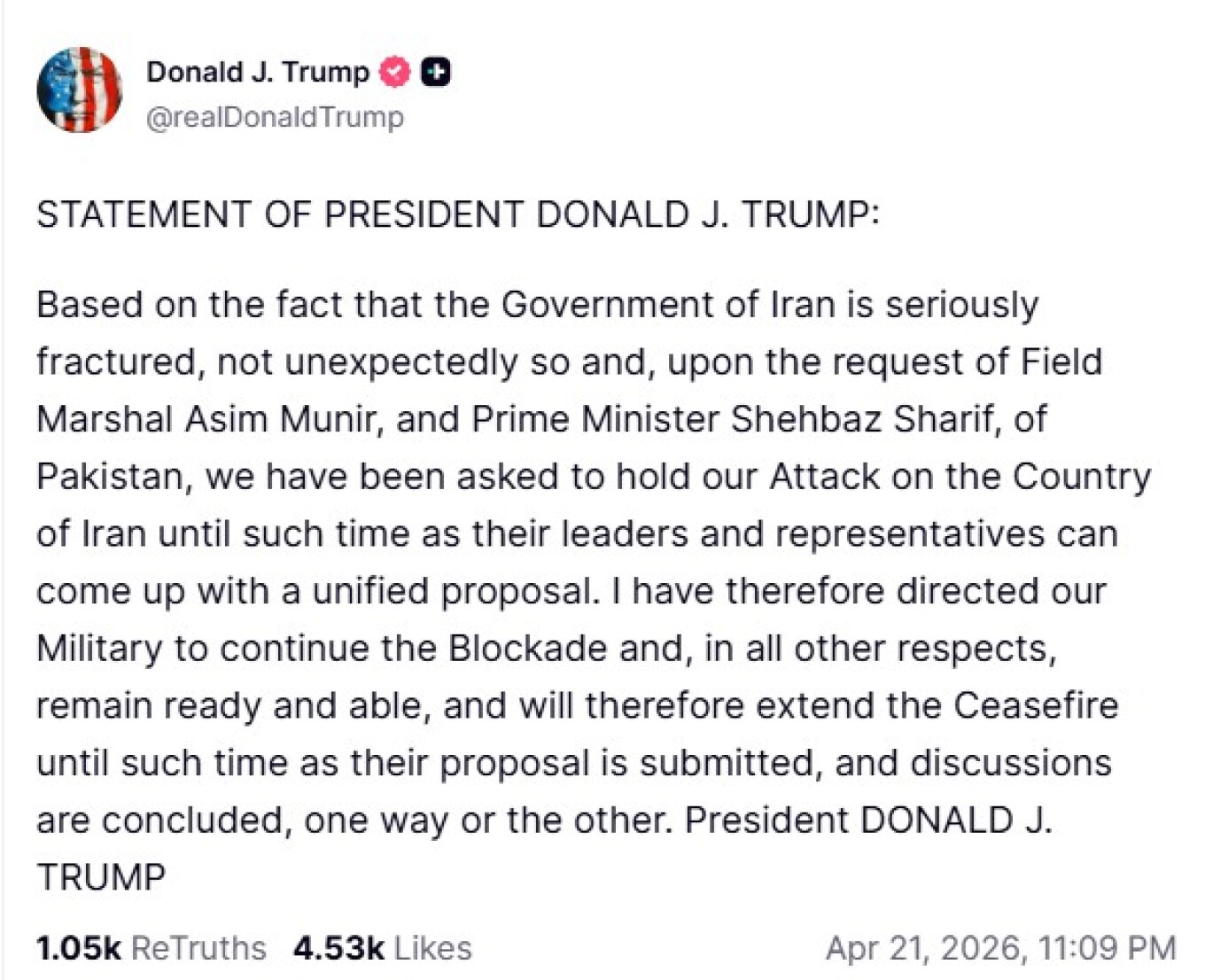
Tasnim: Iran will not engage in negotiations as long as the naval blockade of Hormuz is in effect
Earlier, Iran announced its withdrawal from the peace negotiations scheduled for tomorrow, April 23, in Islamabad. This decision was announced through the mediation of Pakistan and came after intense reactions to violations that occurred during the first phase of the talks. The full statement from the Iranian negotiating team states that Washington violated the ceasefire framework, which included 10 points of agreement, by introducing new requirements not included in the original deal. Additionally, Iran accused the US of failing to enforce a ceasefire in Lebanon, one of the fundamental points already agreed upon.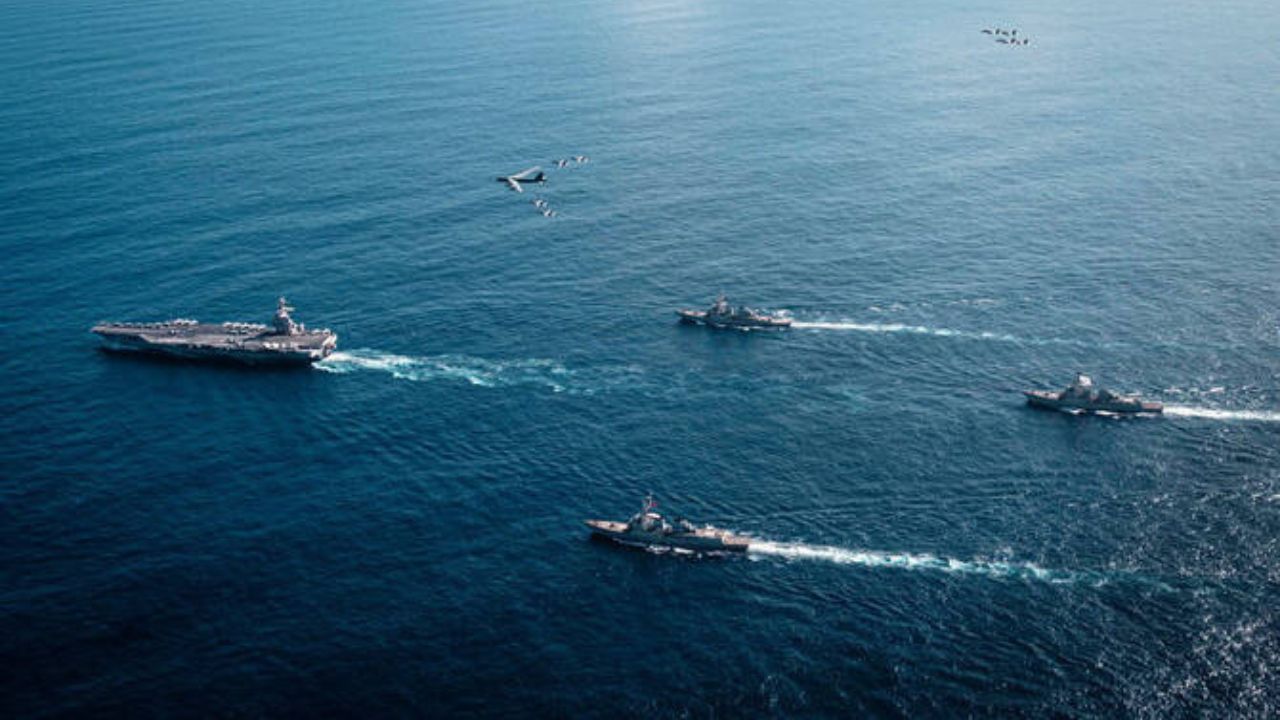
Days ago, the Iranian Foreign Minister, Abbas Araghchi, announced that the Strait of Hormuz has reopened for commercial shipping. Nevertheless, Iran denounces that the US continues the naval blockade, ignoring the agreements. The Iranian statement concludes with the assessment that participating in negotiations would be a waste of time, as Washington is deemed to be hindering any viable agreement. The image from Tehran is clear: the US shook hands and then changed the terms. Whether this is accurate or an attempt to normalize the situation is uncertain, but the diplomatic path appears for now to have collapsed.
Iran: We will not participate in negotiations if the US does not accept our terms
Iran will decide whether to participate in the Islamabad talks once it determines that the United States is committed to achieving results, the Ministry of Foreign Affairs of the Islamic Republic announced earlier.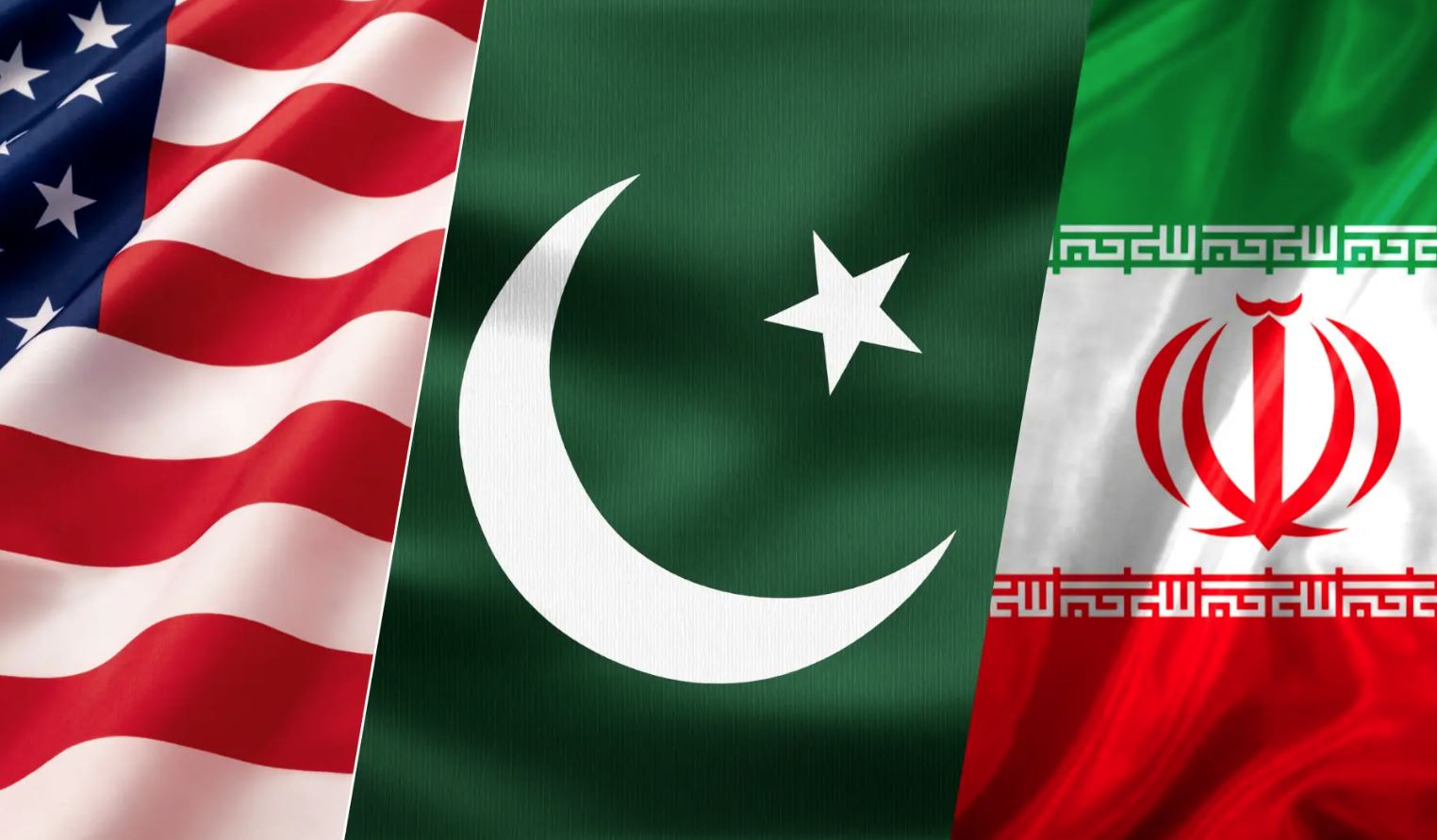
"A final decision on participation in the consultations has not yet been made, but this is not due to indecisiveness, but to conflicting messages from Washington. When we see that negotiations are result-oriented, we will decide whether to participate," Iranian state television broadcasted, citing the ministry.
The 3 conditions of unyielding Iran and Trump's panic
The unyielding stance of Iran led the American president into a series of contradictory and strategically... delusional statements on 4/21, which as a whole exude the difficult position of the US in current negotiations. Although the American president states he is certain a deal will be reached, Tehran does not intend to "put its negotiators on the plane" for Islamabad unless the following conditions are met:
-
Immediate lifting of the US naval blockade at Hormuz
-
Payment of war reparations by the American-Israeli alliance
-
Maintenance of the right to enrich uranium.
It is noted that on 4/20, the Pakistani leadership—in a telephone conversation with American officials—also set the lifting of the American blockade in the Persian Gulf as a condition for the start of US-Iranian contacts in the country's capital, Islamabad. For now, however, the American Vice President is still waiting for the green light from Tehran to board the plane bound for Pakistan.
Iran: Terrible surprises await the US at the end of the ceasefire
At the same time, information secured by a Tasnim reporter indicates that Iran has prepared new surprises in the event of a war resurgence. According to a political editor of the Iranian agency, as the agreed ceasefire period approaches its final hours, and given that the excessive demands of the Americans and the declaration of a naval blockade prevented the resumption of negotiations, Iran is fully prepared for the possibility of resuming the war and has new surprises ready for a potential new round of fighting.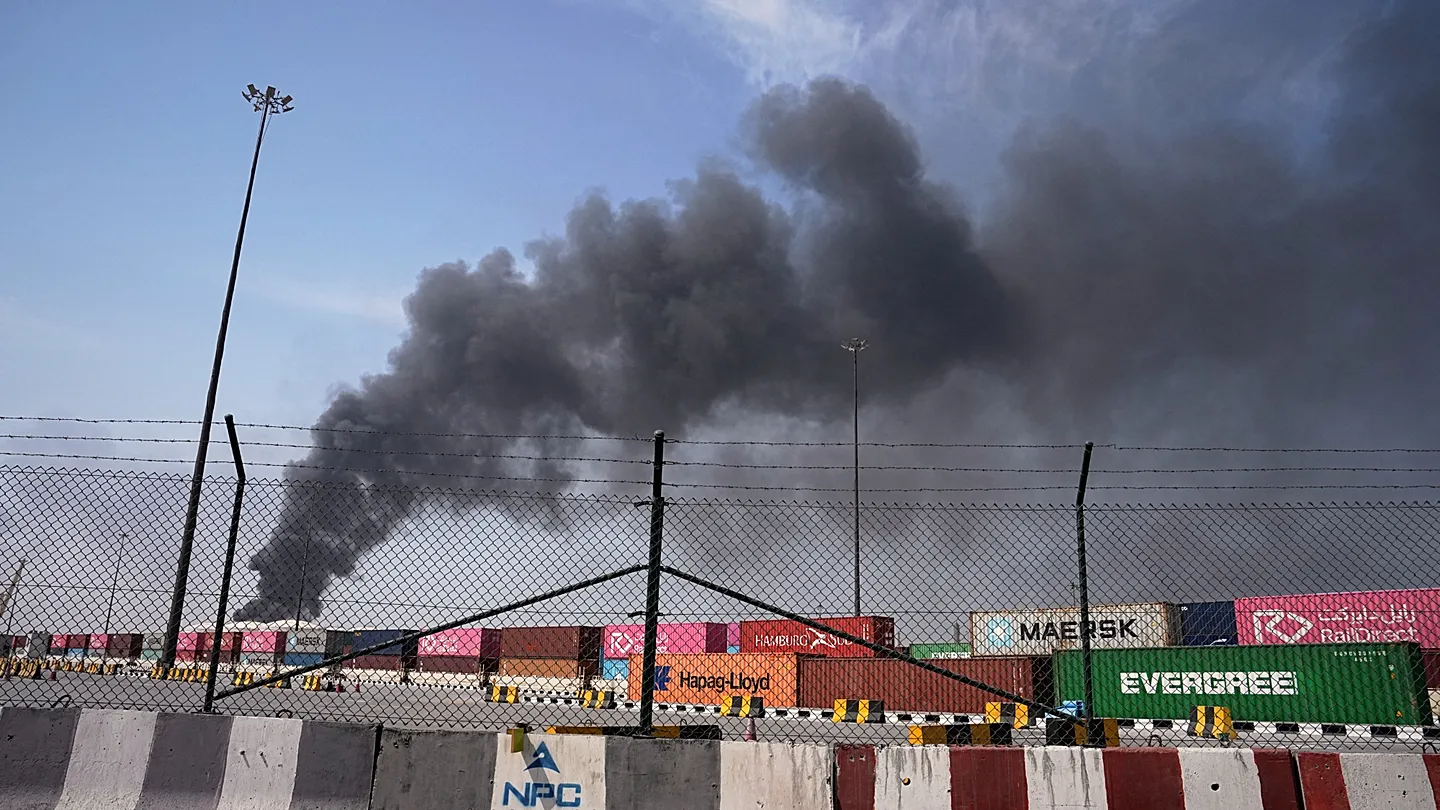
Based on what has become known, over the past two weeks, Iran has always considered the possibility of war starting to be strong and, therefore, has prepared certain military moves and a list of new targets for this purpose. On this basis, Iran declares "ready to create another hell for the Americans and Israelis from the very first second of a potential war."
Iran's Colpo Grosso: Bypassing the Hormuz naval blockade via the Fish Khabur pipeline
Iraqi authorities announced their readiness to start the transfer of oil via pipeline from the Fish Khabur hub, located at the junction of the Iraqi, Syrian, and Turkish borders, in the near future, as emphasized in a special announcement by the Iraqi Ministry of Oil. "The pipeline from Kirkuk through Fish Khabur to Turkey will soon be operational, and the first oil shipments will begin," said a spokesperson for the Iraqi Ministry of Oil, as reported by the INA news agency. He explained that "the total capacity of the pipeline reaches 1.6 million barrels per day."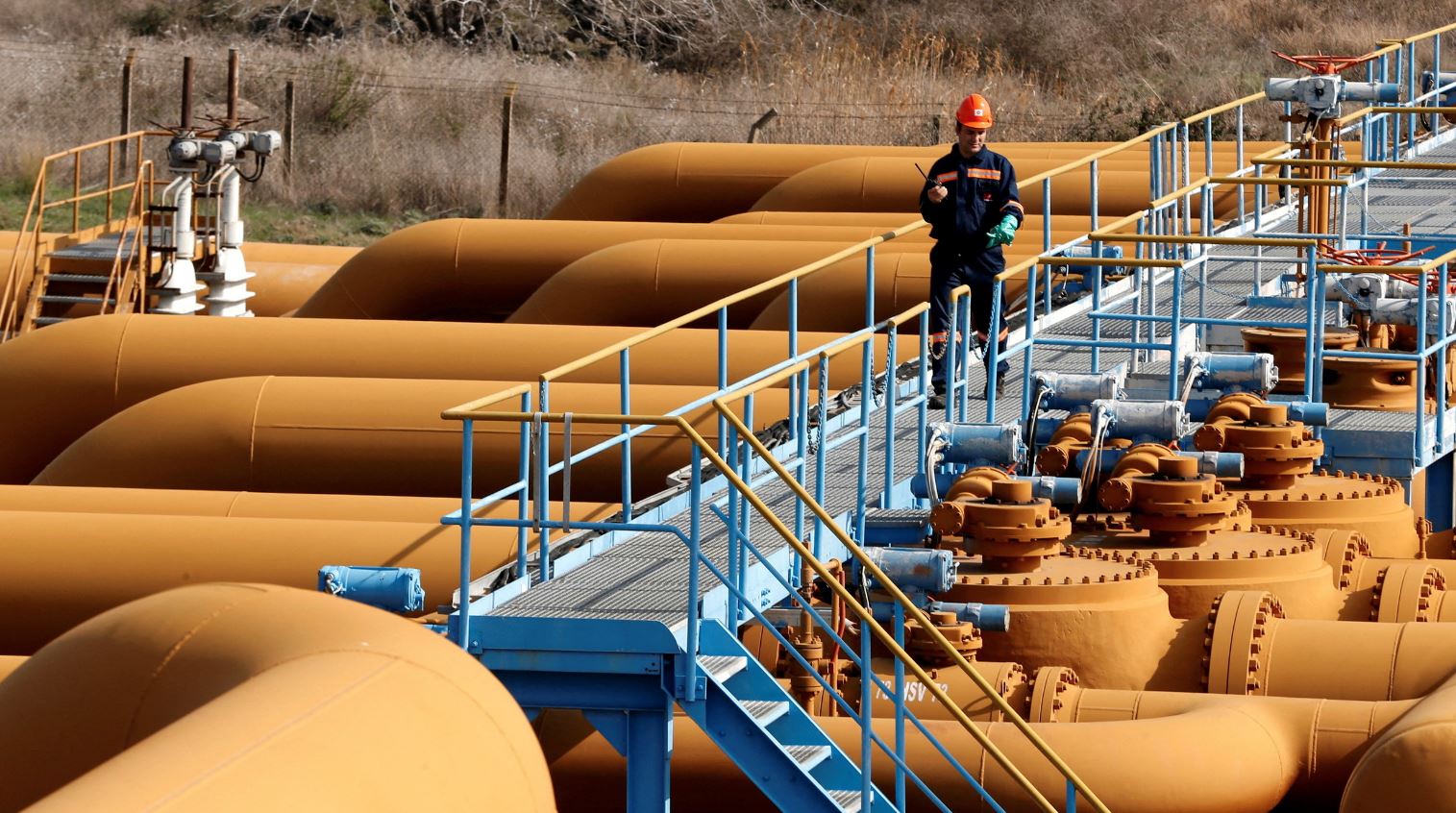
The ministry spokesperson clarified that the transfer of crude from Kirkuk to Turkey via Fish Khabur "will start after the completion of hydrostatic tests." As previously stated by Bassem Abdel Kerim Nasser, head of Iraq's Basra Oil Company, the forced change in the country's export strategy and the increased importance of the northern route as a temporary alternative is "linked to the need to compensate for disruptions in the distribution networks in the south of the country, due to the difficult security and operational situation." According to Sky News Arabia, Iraqi oil exports decreased by about 80% in March.
New US raid on Iranian tanker in Hormuz
It is noted that the United States military not only continues to block the Strait of Hormuz, which is already blocked by Iran, but also implements warnings for the interception of vessels linked to Tehran. Furthermore, this is not limited to Middle Eastern waters. The US Department of War officially announced on social media that the Navy intercepted the oil tanker M/T Tifani, which it claims is linked to Iran, in the area of responsibility of the Indo-Pacific Command (INDOPACOM). A video was released showing a unit of the US Naval Special Warfare Command (NSWC) boarding the tanker in a helicopter raid.
According to ship tracking data, the tanker flies the flag of Botswana. Earlier, on April 18, the vessel was docked at Galle port in Sri Lanka. After departing from the port, the vessel was heading toward Singapore. Today, the US Navy carried out the boarding, inspection, and seizure of the sanctioned tanker M/T Tifani in the INDOPACOM area of responsibility without incident. The Pentagon statement noted that the United States military will continue its efforts to "ensure maritime security" and intercept sanctioned ships linked to Iran "wherever they operate." The US Indo-Pacific Command announced that it will no longer allow sanctioned Iranian ships to operate on the high seas. It is recalled that on Sunday 4/19, the US Navy seized the Iranian cargo ship Touska in waters near the Iranian port of Jask in the Gulf of Oman, while it was heading toward the Strait of Hormuz. This was the first such action during the United States blockade. Subsequently, Tehran announced that the strait was closed to all shipping. The Tasnim News Agency reported that Iranian forces responded by attacking several US warships with drones.
Shock alarm from Qatar: "Ceasefire or global energy crash from Hormuz"
In its own intervention, Qatar stated on Tuesday 4/21 that it supports the extension of the ongoing ceasefire between the United States and Iran, in case the Pakistan-mediated talks fail to lead to an agreement between the two sides. "We support the extension of the ceasefire until a peaceful solution is reached," said Foreign Ministry spokesperson Majed al-Ansari during a press conference in Doha. "A return to hostilities is in no one's interest and will strangle the global economy," he warned.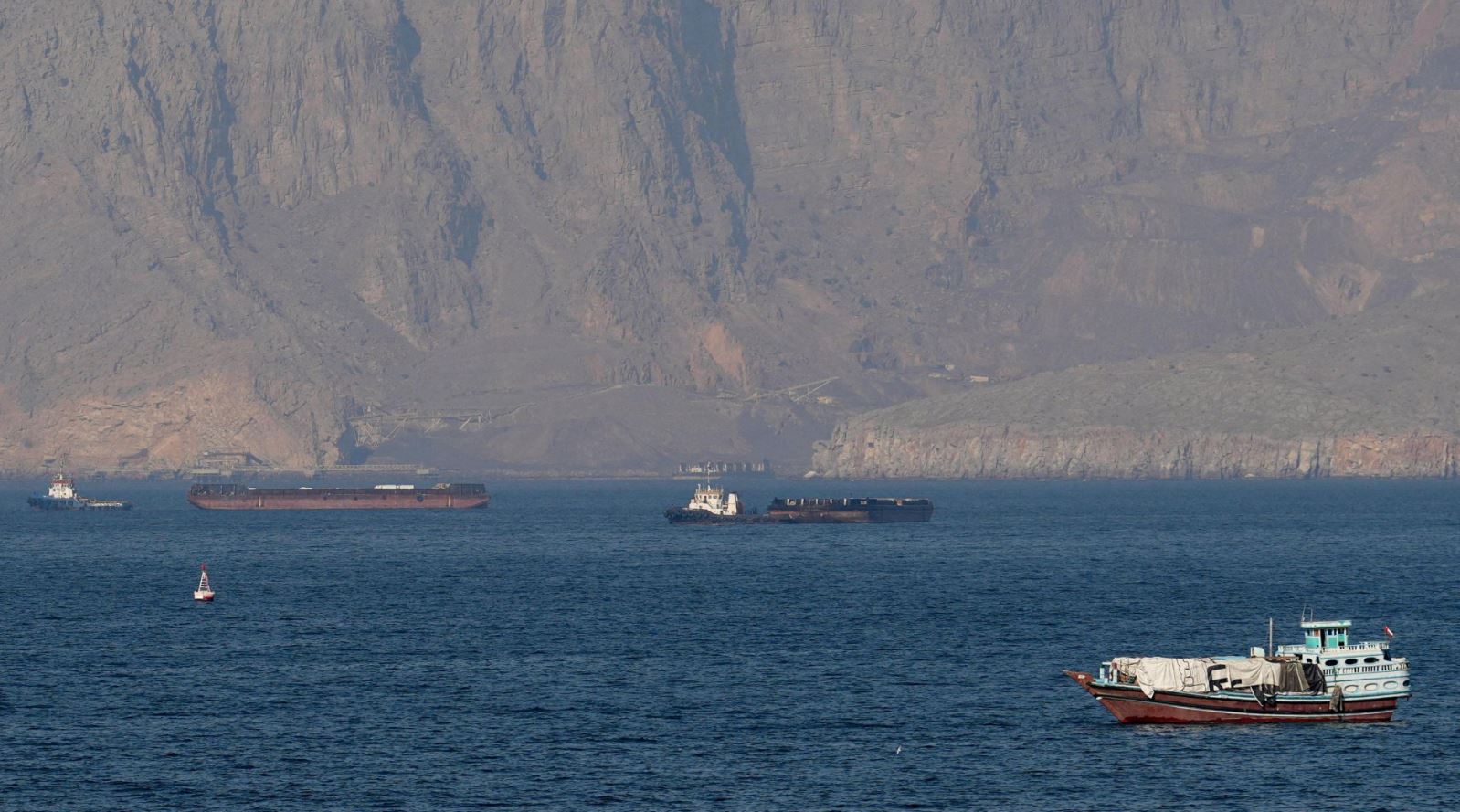
The spokesperson expressed Qatar's support for the mediation efforts of Pakistan, noting that Qatar is in contact with multiple parties and is monitoring the situation closely. He also denied that the Gulf countries have been excluded from current regional developments. The ongoing situation in the Strait of Hormuz has given the crisis global dimensions, Majed al-Ansari said. "We are working with all partners to return the strait to its previous state." The spokesperson also urged Tehran "to engage in communication for a peaceful resolution," calling for a return to the negotiating table. On March 2, Tehran announced restrictions on navigation in the strait—vital for oil and gas exports—days after the United States and Israel launched joint strikes against Iran on February 28. Pakistan hosted talks between the United States and Iran on April 11–12, after mediating a 14-day ceasefire on April 8, which is set to expire on Wednesday night 4/21, Washington time. Efforts for another round of negotiations are underway, although uncertainty remains. US President Donald Trump states that it is "extremely unlikely" he will extend the ceasefire, adding that the Strait of Hormuz will remain blocked until an agreement is reached.
How Iran endured and "trimmed" Donald Trump's popularity
Nevertheless, Iran's strategy, while creating new challenges for the West, simultaneously affected the popularity of Donald Trump. It appears that the ultimate and primary goal of Israel in the confrontation with the Islamic Republic was something beyond the limitation of its nuclear or missile capabilities, even beyond the strike on proxy organizations. Although the weakening of Iran's military and regional power was considered an important and vital goal for Tel Aviv, the result of their actions shows that the ultimate purpose was "regime change."
In this context, actions such as the assassination of senior military and security officials were aimed at creating a power vacuum and the collapse of the governance structure, so that the regime would not be able to survive. However, it soon became clear that the calculations of the American-Israeli alliance did not correspond to the existing reality. The Islamic Republic not only maintained its structural stability, but in the face of these tensions, internal cohesion and social support for the government increased compared to the past. Following these developments, the proposal of "regime change" was essentially removed from Israel's operational agenda. Currently, Iran has increased its influence in international equations, using economic levers of pressure and affecting global markets, particularly in the sectors of energy and raw materials. This war campaign, beyond creating new challenges for the West, also had an impact on internal political developments in the United States and on the popularity of its president, Donald Trump.
www.bankingnews.gr






Readers’ Comments