

The US is facing an unprecedented challenge, a development that is leading President Donald Trump into a... deadlock at a time when he has open fronts... everywhere. This is because the war in Iran is not an isolated case; on the contrary, it triggered the collapse of NATO, with Europe turning its back on the US President, who in turn threatens to dissolve the Alliance. Now, the US finds itself before the ultimate nightmare… The dual nuclear threat from China and Russia.
Shock warning of a dual nuclear threat
Robert Kadlec, the US Assistant Secretary of Defense for Nuclear, Chemical, and Biological Defense Programs, described the situation as a "crisis of now" during a recent hearing before the Senate Armed Services Committee. "For the first time in its history, the United States will face the challenge of simultaneously deterring two nuclear peers, China and Russia, as well as regional powers with growing capabilities," Kadlec stated. "This is not a hypothetical future problem. It is a crisis of now. We are in a new and more dangerous era." Kadlec noted that Washington will continue to cooperate with NATO allies to strengthen the credibility and effectiveness of the Alliance's nuclear deterrence mission.
Rift in NATO
However, the war in Iran has revealed rifts within the transatlantic alliance, with US President Donald Trump expressing deep dissatisfaction over the reluctance of European allies to provide military support during the conflict. Trump even described NATO as a "paper tiger" and accused allies of treating it as a "one-way street" where the United States shoulders the main burden of collective defense without mutual support in times of need. He went even further, stating that he is "seriously considering" the withdrawal of the United States from NATO, while describing the review of US participation as something that is no longer out of the realm of reality. "I was never convinced by NATO. I always knew it was a paper tiger, and Putin knows this too, by the way," the US President told the British newspaper Telegraph in an interview published in early April. He also posted on social media that "NATO was not there when we needed it and will not be there if we need it again." Collective defense is the most fundamental principle of NATO. Article 5 stipulates that an armed attack against one NATO member is considered an attack against all. However, over the past seven decades, NATO's Article 5 has been activated only once, following the September 11 terrorist attacks in the US in 2001.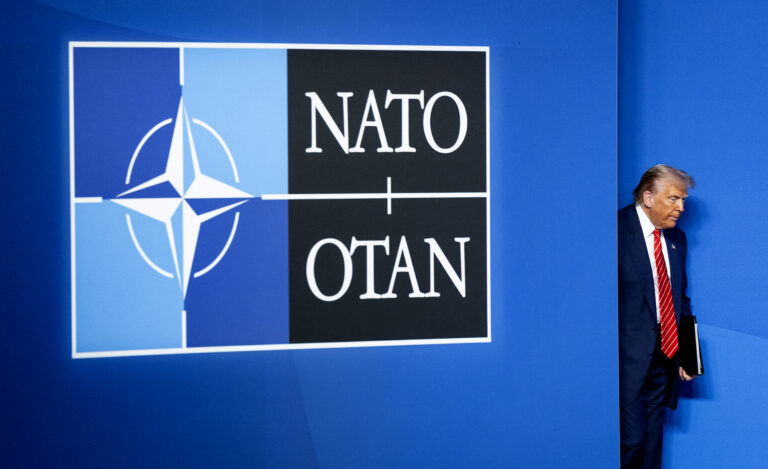
Sanctions on European allies
According to reports from the Wall Street Journal, the American president is considering imposing sanctions on some of his NATO allies. One proposal includes the withdrawal of US troops from European countries. The WSJ notes that Trump's plan has received support at the highest levels of the government. On one hand, the plan is much less drastic than Trump's frequently repeated threat of a complete withdrawal from NATO. At the same time, the administration believes that some punitive action is necessary to make it clear that the failure to support the US at a critical moment will have consequences and that American military support cannot be one-sided. Accordingly, the NATO members that did support the US must be rewarded. Therefore, the plan provides for the transfer of US troops from countries that did not support Washington to countries that did. Currently, approximately 84,000 American soldiers are stationed at various bases throughout Europe. These military bases have been central to European defense and security since the end of World War II. However, in the wake of the Russian military invasion of Ukraine, these American military bases in Europe have acquired new significance and criticality. The US is also seriously considering closing an American military base in one of the countries that was most vocal in its opposition to the war in Iran.
Which NATO allies opposed the war in Iran
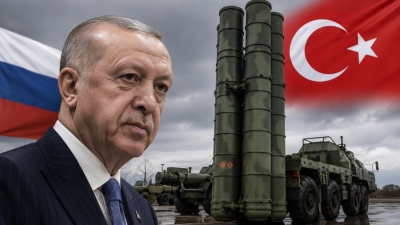
Spain has been the most vocal opponent of the American war in Iran. Spain not only condemned the conflict but also closed Spanish airspace to American military aircraft involved in the war. Spanish Prime Minister Pedro Sánchez and Defense Minister Margarita Robles repeatedly characterized the war as "illegal," "unjustified," and "deeply unfair," presenting Spain's stance as a defense of international law. Turkey also adopted a critical stance, although its opposition was largely seen as expected due to its large Muslim population, its proximity to Iran, and their long shared border. In addition to Spain and Turkey, Italy refused permission for US military aircraft to use the Sigonella airbase in Sicily for operations linked to the war in Iran, citing procedural issues and authorization matters. Earlier, Trump launched a sharp critique of Italian Prime Minister Giorgia Meloni, saying: "I am shocked with her. I thought she had courage, but I was wrong," in an interview with the Italian newspaper Corriere della Sera. "She is unacceptable because she doesn't mind that Iran has a nuclear weapon and would blow up Italy in two minutes if it had the chance," Trump stated. 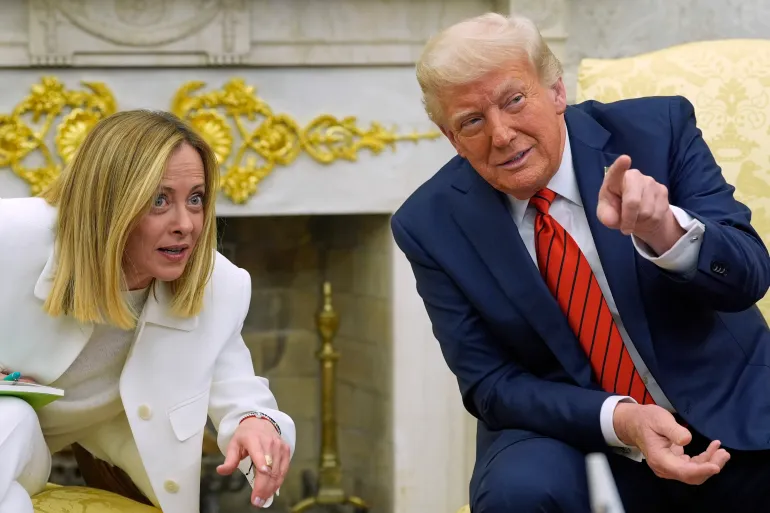
Meloni had been one of Trump's closest allies in Europe and often sought to act as a mediator between diverging American and European views. But the president said they had not spoken this month, "or for a long time," adding: "She isn't helping us with NATO. She doesn't want to help get rid of a nuclear-armed Iran. Very sad... She is very different from what I thought." France also denied overflight rights for certain aircraft carrying military supplies to Israel and was described by President Trump as "very unhelpful." While Paris deployed naval forces in the Mediterranean for defensive purposes and participated in diplomatic efforts for the security of the Strait of Hormuz, it categorically rejected participation in any offensive operation. Germany expressed significant reservations, with senior officials emphasizing that "this is not our war" and ruling out a direct military contribution to opening the Hormuz. Public opinion in Germany also showed strong opposition to the attacks. In contrast, Eastern European allies such as Poland, the Czech Republic, and the Baltic states offered stronger rhetoric and, in some cases, practical support for US positions, often citing Iran's role in supplying drones to Russia as a common threat.
US in a deadlock
Consequently, the US and Donald Trump are being led into a deadlock. On one hand, they need NATO to deal with Russian and Chinese nuclear threats, and on the other hand, they are considering cutting ties with the world's strongest military bloc.
www.bankingnews.gr

Readers’ Comments