

The next 48 to 72 hours are terrifyingly critical for the Iranian issue as the deadlock returns to the forefront. Iran, with determination as the victor in the war, emphasizes that there will be no talks with the US under a regime of threats; furthermore, it did not send a delegation to Islamabad, Pakistan, as long as the US maintains the naval blockade in the Strait of Hormuz. In fact, the Iranians emphasize that they are ready to reveal new cards on the battlefield. For his part, Trump warned that the naval blockade of Hormuz will not be lifted as long as the Iranians do not come to the table for dialogue and do not agree to the American terms. Additionally, Trump states that he does not plan to extend the ceasefire which expires between April 21 and 22, 2026, hence there is an obvious impasse. Some military experts warn that the next 48 to 72 hours are terrifyingly critical, although the American television network CNN reported that talks are scheduled to take place tomorrow, Wednesday, April 22, while noting that the situation remains extremely fluid.
CNN: US-Iran talks on April 22, White House does not confirm
The second round of negotiations between the US and Iran to settle the crisis is scheduled for April 22 in Islamabad, according to CNN, citing informed sources. "The second round of talks between the US and Iranian delegations is currently scheduled for Wednesday in Islamabad," the network reports. Sources underlined that the timetable has not been finalized due to the heightened rhetoric between the US and Iran. Meanwhile, the White House told CNN that it currently cannot officially confirm the date, but noted that the American delegation is expected to depart soon for the talks. Earlier, it became known that US Vice President JD Vance will depart for Islamabad not on Monday, as Donald Trump had previously stated, but on the morning of Tuesday, April 21.
Qalibaf (Iran): Trump's delusions, no talks under threat, Iran will reveal new cards on the battlefield
The speaker of the Iranian parliament, Qalibaf, stated that Iran will not accept negotiations with the US under the shadow of threats. Qalibaf denounced US President Trump for acting based on a delusion. His comments came in response to ongoing violations of the ceasefire agreement by the US reached two weeks ago, including the naval blockade and an attack on an Iranian merchant ship in the Sea of Oman on Sunday, April 19, 2026. "Trump, by imposing a blockade and violating the ceasefire, wants—in his delusion—to turn the negotiating table into a table of surrender or to justify a renewed warmongering stance," stated the head of the negotiating team. Qalibaf made it clear that pressure tactics will not yield results at the negotiating table. "We do not accept negotiations under the shadow of threats," Qalibaf said. "In the last two weeks, we have prepared to reveal new cards on the battlefield." These comments came as the next round of talks between the US and Iran was surrounded by uncertainty following American aggression at sea, after the US Navy violated the truce by targeting the Iranian merchant ship named Touska in the Sea of Oman. The Iranian military described the incident as a violation of maritime conduct and reiterated that its reaction posture remains active, while emphasizing confidence in national capabilities.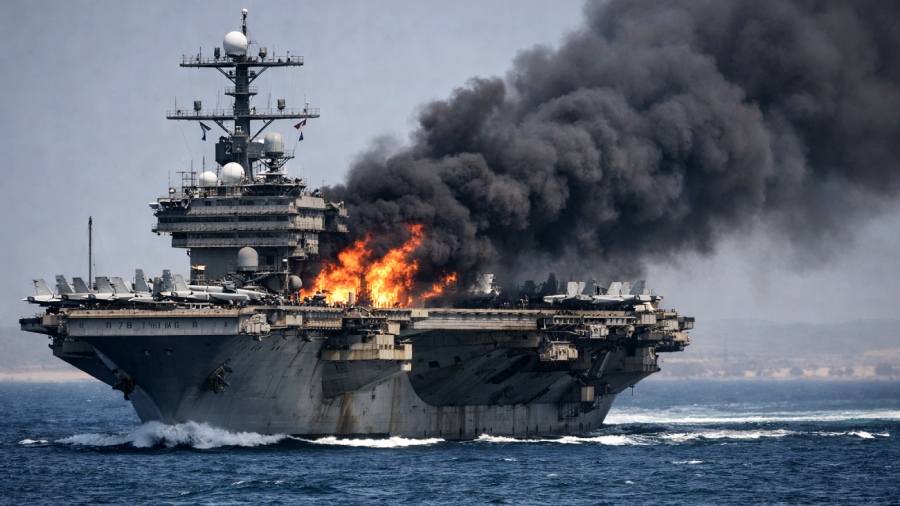
Iran does not succumb to ultimatums
Iranian President Masoud Pezeshkian rejected US threats as pressure tactics, saying that Iran will not succumb to coercion, even as Washington continues to push military and diplomatic ultimatums. According to reports in American media, the US delegation was to fly to the Pakistani capital, Islamabad, on April 21 for the next round of talks with the Iranian delegation.
Message from Iranian Foreign Ministry to US: Release the ship Touska and its crew now
The Iranian Ministry of Foreign Affairs condemned the seizure of the Iranian cargo ship Touska by American forces and demanded the "immediate release of the Iranian ship, its sailors, the crew, and their families," in a statement published on Tuesday. The US Navy opened fire and seized the Iranian-flagged ship on Sunday after it attempted to pass the American naval blockade in the Gulf of Oman, according to Donald Trump. Footage released by the military showed a guided-missile destroyer firing at the ship and Marines rappelling from helicopters onto its deck. Iran had already promised retaliation for the seizure of the ship, which the Foreign Ministry characterized in its statement as "extremely dangerous" and "criminal." "There is no doubt that the Islamic Republic of Iran will use all its capabilities to defend Iran's national interests and security and to safeguard the rights and dignity of its citizens," the statement said. "It is also clear that the full responsibility for any further escalation in the region lies with the United States." It is not clear how many people were on board or if they are Iranians.
We will tear everything down warns Trump if Iran does not agree
"We are offering a very fair and reasonable deal and I hope they accept it, because if they don't, the United States will tear down every power plant and every bridge in Iran," Trump wrote on his social media pages. His bellicose rhetoric coincided with the decision of the American military to resort to piracy at sea, targeting Iranian merchant ships in blatant violation of the ceasefire. The spokesperson for the Khatam al-Anbiya Central Headquarters condemned the criminal operation of the US Navy, saying that it violated the ceasefire and committed maritime piracy by firing on an Iranian merchant ship in the waters of the Sea of Oman.
Trump: Exporting enriched uranium from Iran's underground is a long and difficult process
US President Donald Trump argues that the process of exporting enriched uranium from underground in Iran will be long and difficult following the military operation of June 2025. "Operation 'Midnight Hammer' (the military strikes on Iranian nuclear facilities in June 2025) constituted a full and complete destruction of nuclear dust facilities in Iran. Therefore, their excavation will be a long and difficult process," Trump stated in a post on Truth Social. It is noted that in statements on John Fredericks’ radio show, Trump said the US would very soon secure Iran's commitment that it will never acquire nuclear weapons. "It will happen, I believe, very soon," said Trump, who also expressed his certainty that the Iranians will participate in the negotiations in Pakistan. "They will negotiate. If they don't, they will face problems they have never seen before. I hope they make a fair deal and rebuild their country, but when they do, they won't have a nuclear weapon. We cannot allow that," the American leader stressed.
IRGC: Iran does not trust the US in talks, will respond decisively to any threats
The Commander of the Aerospace Force of the Islamic Revolutionary Guard Corps (IRGC), Seyed Majid Mousavi, says that Iran does not trust negotiations with the United States aimed at ending the illegal American-Zionist aggression, but trusts in national strength. Brigadier General Seyed Majid Mousavi made these statements amidst US threats against Iran, despite Pakistan's mediation efforts for a second round of talks before the expiration of the ceasefire between April 21 and 22. The Iranian commander stated that the country has passed the era of weakness and surrender. "Wherever you are, we will respond vigorously whenever we want." The unprovoked, illegal American-Israeli aggression against Iran began on February 28 with airstrikes that assassinated senior Iranian officials and commanders. The Iranian armed forces launched 100 waves of decisive, successful retaliation against sensitive and strategic American and Israeli targets across the region.
Asim Munir (Pakistan General): US blocking solution with the naval blockade
According to reports, the head of the Pakistani army, Asim Munir, told Trump that the ongoing naval blockade of Iranian ports by the US was hindering Pakistan's efforts to mediate a second round of negotiations aimed at the definitive end of the American-Israeli aggression against Iran.
Trump: I will not open the Strait of Hormuz until a deal is signed with Iran
US President Trump stated that he will not open the Strait of Hormuz until an agreement is signed with Iran, despite the rise in oil prices amid the ongoing blockade, the American President Trump stressed in an interview with Bloomberg. "They want me to open it. The Iranians desperately want it opened," the American leader argued. "I will not open it until a deal is signed."
Ramin Kamran (Sorbonne): Trump at a crossroads, humiliating retreat or humiliating defeat
Ramin Kamran, a researcher at the Sorbonne University in France, stated that Trump is at a crossroads between a humiliating retreat or a humiliating defeat and said: "Iran is involved in a second Mongol invasion, but in a modern and contemporary form. An attack aimed at destroying Iran, but they will certainly not be able to do it."
Daniel Davis (US Lieutenant Colonel): The American military is at risk, President Trump end the war
Retired US Army Lieutenant Colonel Daniel Davis called on President Trump to end the conflict in the Middle East. "The next 48-72 hours could be critical for America's interests. If President Trump attempts again to destroy Iran, the damage to our military and the corresponding weakening of our overall national security will be severe. Most importantly, we could light a fuse that would ignite the global economy and destroy our own, and in the worst case, it could take a generation to recover," Daniel Davis pointed out. According to Daniel Davis, Iran's geographical position, size, culture, and defense capabilities cannot be overcome with the resources available to the United States. "Even if we decided to commit our entire force, including hundreds of thousands of ground troops, we would simply increase casualties. It is time to recognize reality, limit the damage, and end this war diplomatically," Daniel Davis concluded.
New York Times: Iran possesses 70% of its pre-war ballistic missile stockpiles
Estimates by US intelligence agencies suggest that Iran likely still has access to about 70% of its pre-war ballistic missile stockpiles and about 60% of its missile launchers, according to a report in the New York Times. According to the Times, when a two-week ceasefire between Iran and the United States came into effect on April 8, the Islamic Republic had access to about half of its ballistic missile launchers. Since then, it has managed to retrieve another 100 missile launchers from underground, bringing the total of operational missile launchers to about 60% of the pre-war total. Iran is also working to unearth any missile stockpiles buried under rubble as a result of American and Israeli attacks. Once completed, US intelligence officials believe Tehran will have missile stockpiles amounting to about 70% of its pre-war levels. Iran also maintains about 40% of its drone arsenal, according to the Times, which cited US intelligence and military officials. Recent reports directly contradict claims made by the US and Israel shortly after the war began. The militaries of both countries argued that most of the Islamic Republic's ballistic missile stockpiles and launchers were essentially eliminated.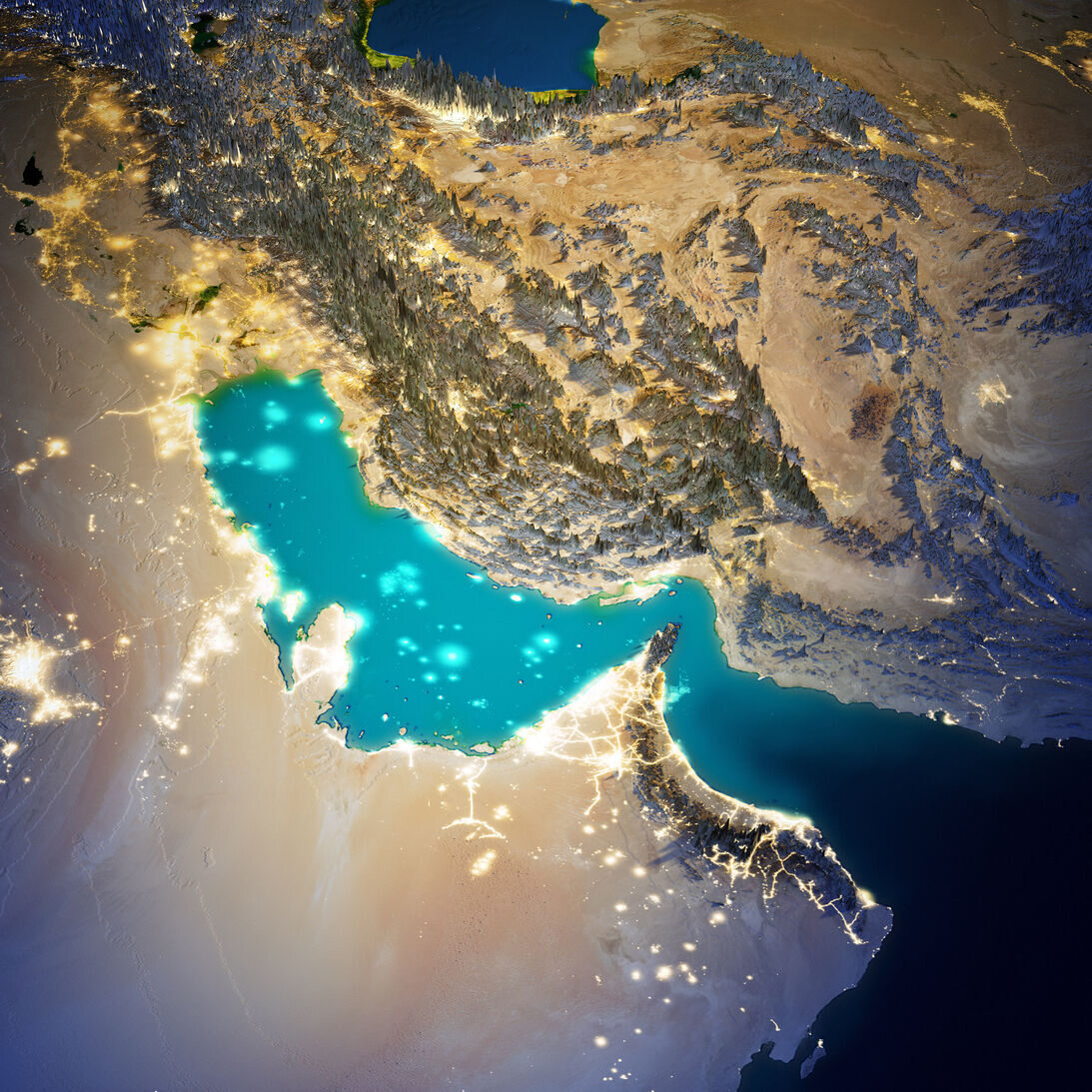
www.bankingnews.gr







Readers’ Comments