

The visit of the Swedish delegation to Ukraine and the agreement to strengthen military cooperation between Kyiv and Stockholm have opened a new cycle of intense geopolitical discussion. At the center are the Swedish Gripen fighters, the training of Ukrainian pilots, and the gradual formation of a framework that, according to Russian interpretations, is not limited to Ukrainian defense but may be linked to a broader strategy of pressure against Russia, from the Baltic to the Arctic.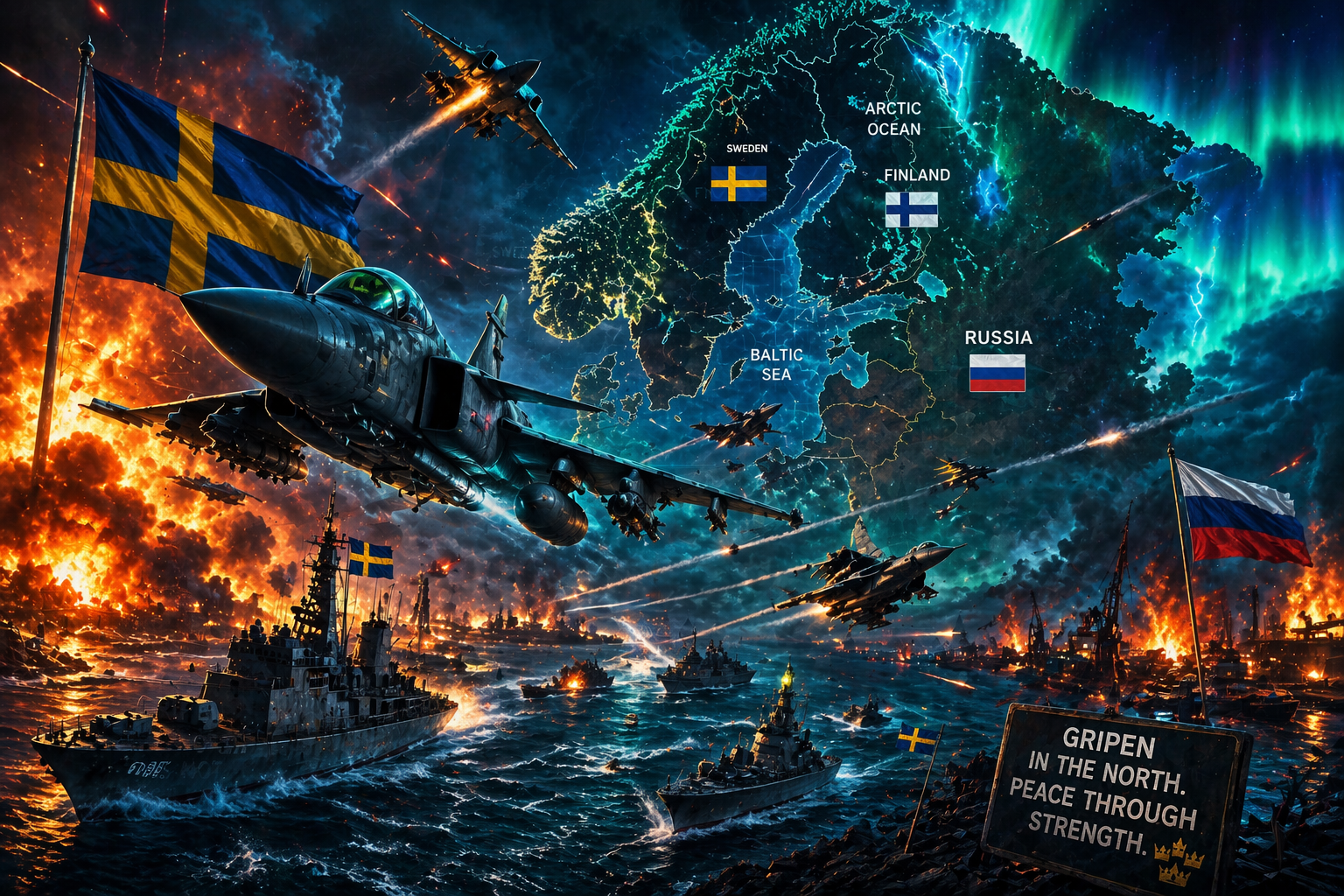
On April 17, in Lviv, an agreement was formalized providing for the supply of Gripen E interceptor fighters to Ukraine, as well as the training of Ukrainian military pilots for their use in combat conditions. The agreement was approved by Volodymyr Zelensky and King Carl XVI Gustaf of Sweden, who made a highly symbolic visit to Ukraine alongside Swedish Foreign Minister Maria Malmer Stenergard.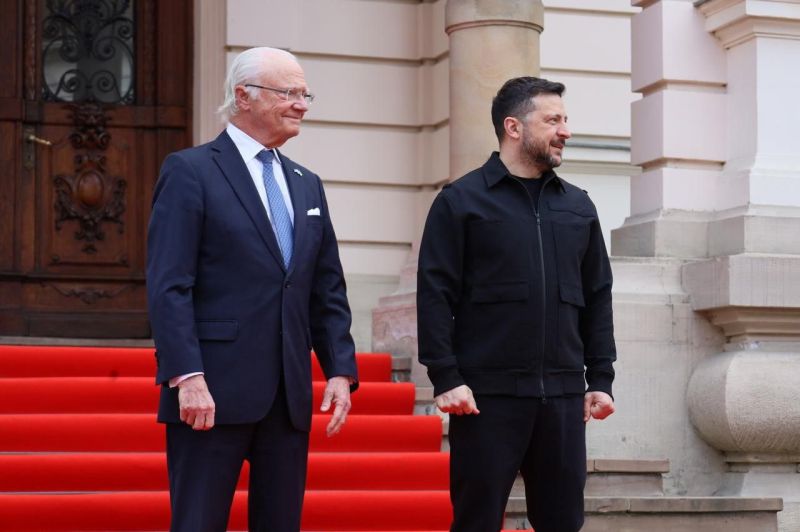
The message sent by the visit was clear: Sweden wants to appear not merely as a supporter of Ukraine, but as an active player in the new security architecture of Northern Europe. Zelensky, for his part, was quick to link the agreement to a broader strategic goal: strengthening Ukrainian air defense and building a future domestic production base for air defense systems, missiles, and related equipment. At the same time, he expressed concern that the conflict in the Middle East and pressure on international energy markets risk distracting the West's attention from Ukraine. Within this context, Sweden's support acquires particular military and political significance for Kyiv. Stockholm, however, is not moving solely in terms of solidarity.
Sweden in NATO: What changes
The strengthening of Ukraine is simultaneously integrated into Sweden's own defense planning, which has accelerated following Sweden's accession to NATO. The country, which for more than two centuries avoided direct involvement in war, is now rearming at rates reminiscent of the Cold War. The Gripen jets are a key element of this strategy, as Sweden considers them critical for surveillance and deterrence in areas such as the Baltic, the Barents Sea, and the Arctic. In other words, the Ukrainian dimension of the agreement is only one side of the coin. The other is Northern Europe's own preparation for a new era of confrontation with Russia.
Despite the noise already created, the full implementation of the program is not immediate. Ukrainian pilots will begin training, but the utilization of Gripen E in actual combat conditions is not considered a matter of months. It is most likely that three to five years will be needed for substantial operational integration. Furthermore, Sweden itself only recently began integrating the first Gripen E into its own air force. This means that if an interim solution exists for Kyiv, it could be based on older versions, such as the Gripen C and D.
There begins the real military discussion. The older versions of the Swedish fighter are considered reliable for interception, training, and operations in a limited threat environment, but they face serious limitations in a high-intensity war against an opponent like Russia. Their value increases only when operating in cooperation with more powerful platforms, such as the F-35, British E-7 Wedgetail early warning aircraft, or French Rafales. In such a scenario, the Gripens do not function as an autonomous spearhead, but as part of a broader combat network, where other sensors and platforms provide coverage, targeting, and situational awareness.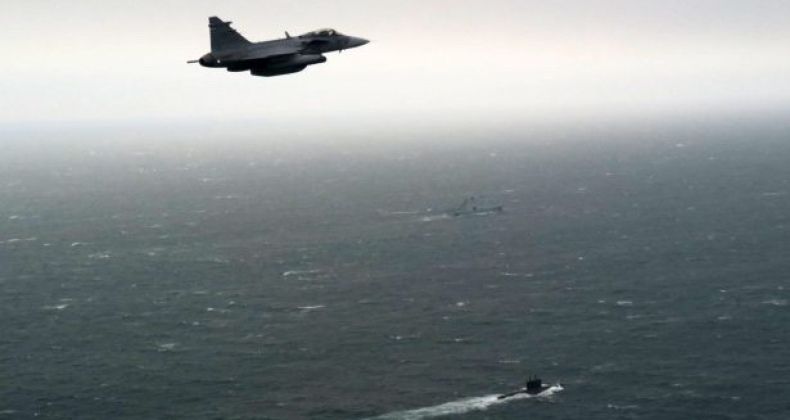
Even more concerning for the Russian side is the fact that Sweden is equipping the Gripen C and D with Taurus missiles, capable of striking hard or buried targets at great distances. This is a weapon that does not change the rules of dogfighting but exponentially enhances strike capabilities against infrastructure, ports, crossings, and other critical targets. In a zone like the Baltic or in a scenario of pressure along Russia's northern maritime borders, such weapons acquire obvious strategic weight.
Against this backdrop, Moscow sees a dangerous model taking shape. Not just the strengthening of Ukraine, but the creation of a web of cooperation between Ukraine, Sweden, France, Britain, and more broadly NATO, centered on Russia's northern and northwestern maritime fronts. The assessment being formulated is that in a future scenario, operations could be launched from airfields outside Ukraine, even from Swedish territory, with the operational participation of Ukrainians or other NATO factors. Such a development would bring the conflict to an extremely dangerous level, as it would blur the lines between Ukrainian military action and the direct involvement of NATO member states.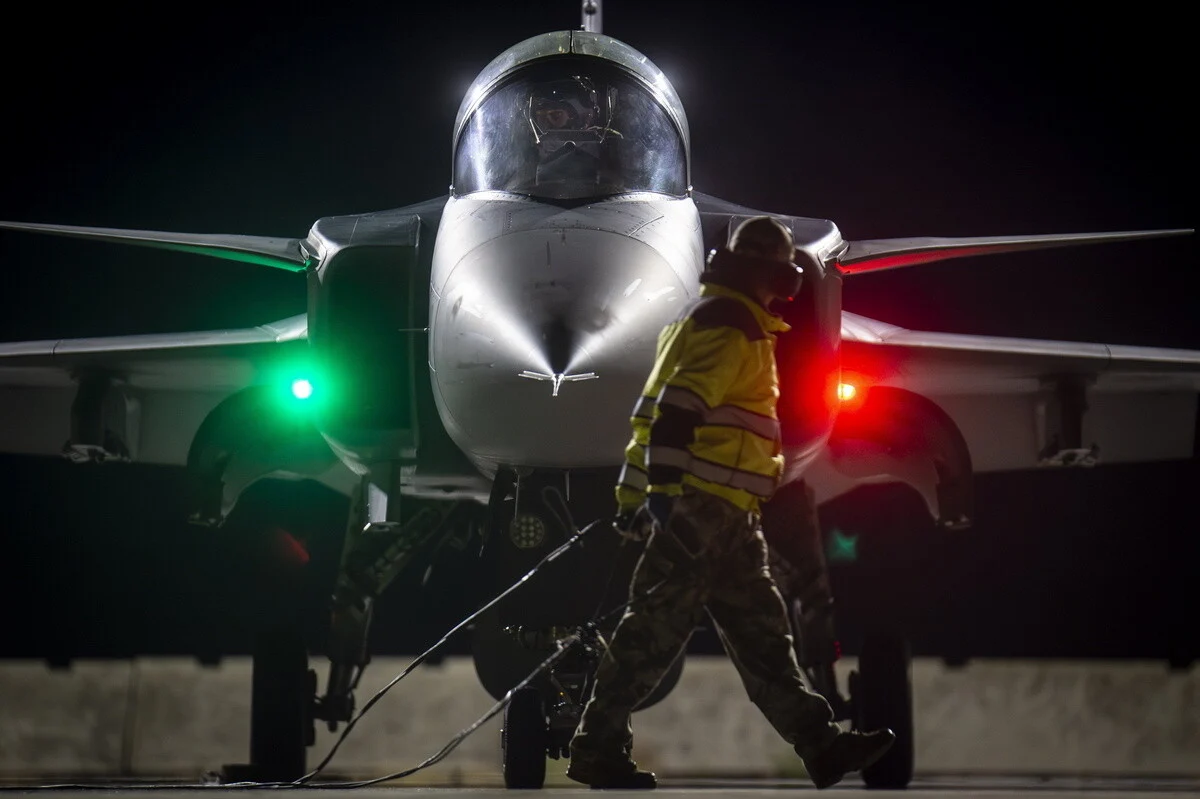
That is why some are already speaking of a "Northern War 2.0." Not in the historical sense of reviving the past, but as a description of a new phase of confrontation where Scandinavia, the Baltic, and the Arctic acquire a front-line role. In the Russian view, Sweden does not appear as a neutral supporter of Ukraine, but as a country that has openly moved into a strategic confrontation with Moscow, investing politically, militarily, and industrially in this direction.
The question, ultimately, is not only if Ukraine will receive the Gripens at some point. The real question is whether this agreement constitutes the beginning of a much larger shift: a new northern containment line of Russia, where Ukraine will function as the vanguard and Sweden as a critical link in the European military chain. If this is confirmed in practice, then the Lviv agreement may prove much more significant than it appeared on the day it was signed.
www.bankingnews.gr







Readers’ Comments