

Another thriller is unfolding in the Middle East, as scheduled US-Iran negotiations hang in the balance following the seizure of the Iranian container ship Touska by American naval forces in the Sea of Oman. Iran claims the Americans violated the ceasefire, with the Iranian military threatening severe retaliation, while Tehran has not clarified if it intends to send a delegation to the talks scheduled for later today, 20/4, in Islamabad, Pakistan, where all security measures for the meetings are being taken.
For his part, US President Donald Trump announced that the American delegation—which will ultimately not include Vice President J.D. Vance—will be in Pakistan this evening. With only hours remaining before the expiration of the two-week ceasefire (ending tomorrow, Tuesday 21/4), the question remains whether we will face a second round of war, with more analysts estimating that a military conflict, if it occurs, will be far more intense than what we saw in the first 40 days. After all, Trump threatened once again to level Iran, destroying bridges and power plants, at the same moment Iran was striking a US ship with drones and re-closing the Strait of Hormuz.
Baghaei (Iran MFA spokesperson): No plan for second round of talks with US
There is currently no plan to hold a second round of negotiations with the United States, stated Iranian Foreign Ministry spokesperson Esmail Baghaei. "There is no schedule for holding a next round of talks," Baghaei said, according to the Tasnim agency. He also added that no decision has yet been made regarding new negotiations with the US. According to him, Tehran views the seizure of the Iranian cargo ship Touska by American forces as an attack and a violation of the ceasefire status. "We are facing what they call a naval blockade in the Straits of Hormuz.
A few hours earlier, there was an attack on an Iranian commercial vessel. Tehran considers all of this a violation of the ceasefire," Baghaei stated. Furthermore, he mentioned that the US is constantly changing its position in negotiations and obstructing dialogue with loud media statements. Baghaei also pointed out that Iran does not plan to transfer enriched uranium to the US or any other country. "At no stage of the current or previous negotiations was the issue of handing over Iranian enriched uranium to the US or another country raised.
Overall, this option is not part of the agenda of the Islamic Republic of Iran," Baghaei stated, emphasizing that Iran intends to maintain its achievements in the nuclear sector within Iran. Baghaei said Iran cannot forget that the US "betrayed diplomacy twice" and attacked the country. He emphasized that Tehran approaches every diplomatic process with great caution and that "distrust toward the enemy is a form of rationality."
Iran: Waiting for a positive signal from the US – Our red lines must be respected
Iran will send a negotiating team to Islamabad for a new round of talks before the ceasefire with the US expires, provided there is a positive signal from the American side, Ebrahim Azizi, head of the Iranian Parliament's National Security and Foreign Policy Committee, told Al Jazeera. "We have never feared the principle of negotiations itself. Perhaps today or tomorrow, after further evaluation, we will consider it possible, provided that the American negotiating team and the messages received from Iran give a positive signal," Ebrahim Azizi stated. As Azizi said, Iran will not accept any US approach in the negotiations and is not interested in a deal at any price.
"The continuation of negotiations does not mean reaching an agreement at any price nor accepting any approach of the other side," stated Azizi, who argued that the Iranian side treats the current talks as a continuation of the military confrontation. "If the talks yield results that validate achievements on the battlefield, then the negotiating arena can be an opportunity for us. But not if the Americans intend to turn it into a pretext for excessive demands, based on their aggressive approach," he added. He also stressed that Iran has set "red lines," which he said must be respected.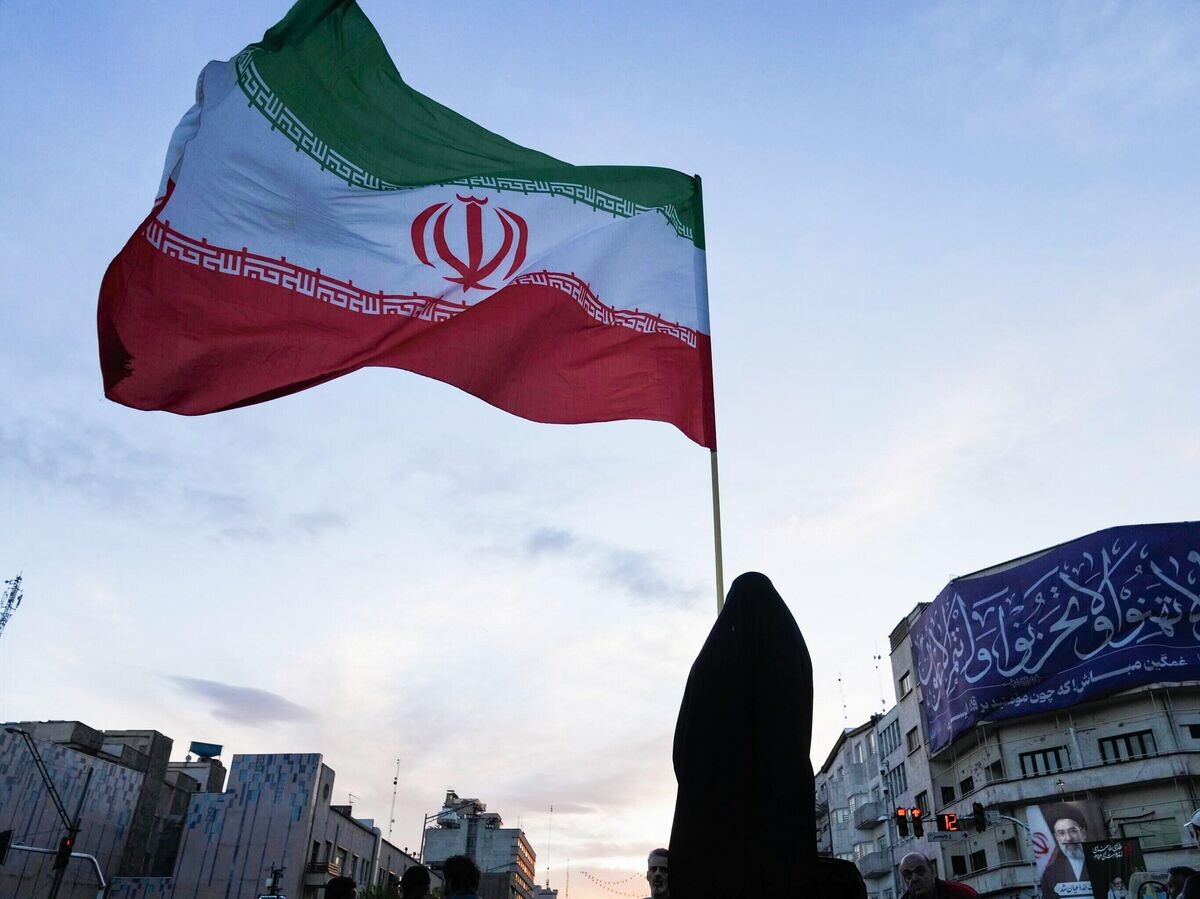
IRNA: Iranians are not going
However, the Iranian agency IRNA had earlier reported that Iran refused to participate in the second round of negotiations, a fact that highlighted the contradictions and uncertainty surrounding the restart of talks. Journalist Barak Ravid from Axios, citing Iranian officials, wrote that Tehran fears new American strikes under the pretext of resuming negotiations. According to the same information, the Iranian side has lowered its expectations for diplomacy and views White House statements about continuing talks with suspicion, considering they may be cover for a surprise strike.
Fearing a trap
Several Iranian officials left open the possibility that the real intentions of the US are the resumption of war. Iranian state media reported that Tehran rejected new peace talks, citing the ongoing blockade, threatening rhetoric, Washington’s shifting positions, and "excessive demands" by the US. "One cannot restrict Iran’s oil exports and simultaneously expect free security for others," Iran's First Vice President Mohammadreza Aref wrote on social media. "The choice is clear: either a free oil market for everyone, or the risk of significant costs for everyone," he added.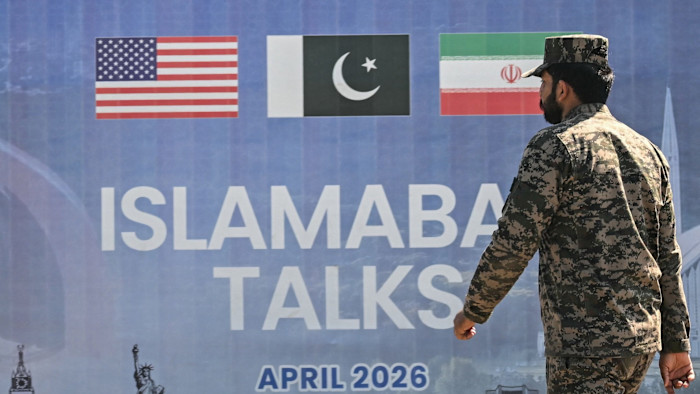
Message from Pezeshkian (President of Iran): Utilize every logical and diplomatic avenue to reduce tension with the US
The President of Iran, Masoud Pezeshkian, stated in remarks today that every logical and diplomatic avenue must be utilized to reduce tension with the United States. He emphasized, however, that vigilance and distrust in contacts with Washington are an "undisputable necessity," according to the Iranian agency IRNA. According to Iranian media, Pezeshkian also linked the American blockade with "repetition of previous patterns and the betrayal of diplomacy."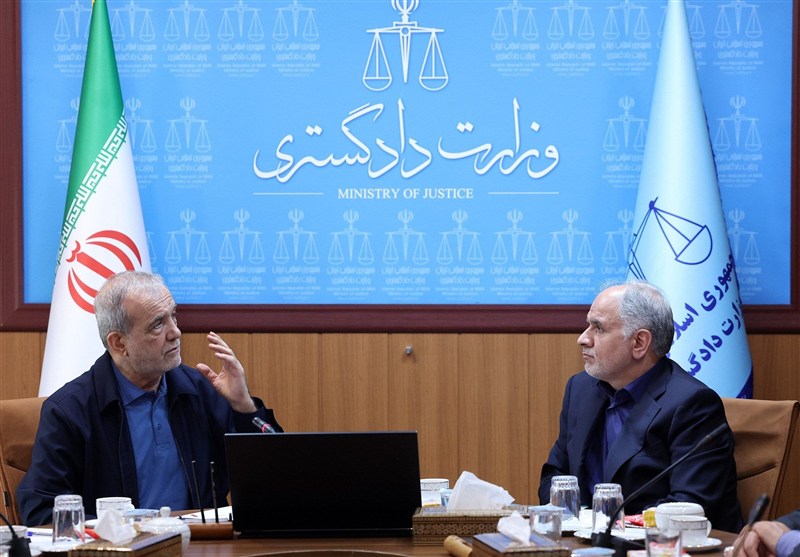
What the US says
For his part, US President Donald Trump stated yesterday, Sunday 19/4, that his envoys are heading to Islamabad for talks on Iran. Trump, speaking to a journalist, stated he "feels confident" about the negotiations and estimates that a deal is close. "The basic architecture of the agreement is already ready. I think we have very good chances to complete it," Trump stated.
However, confusion prevails regarding the American delegation itself, as officials initially reported that Vice President JD Vance would participate, before Trump later stated he would not attend. This development strengthened doubts about whether the talks will proceed. The permanent representative of the US to the UN, Mike Waltz, claimed that US-Iran talks would resume within the next 24 hours.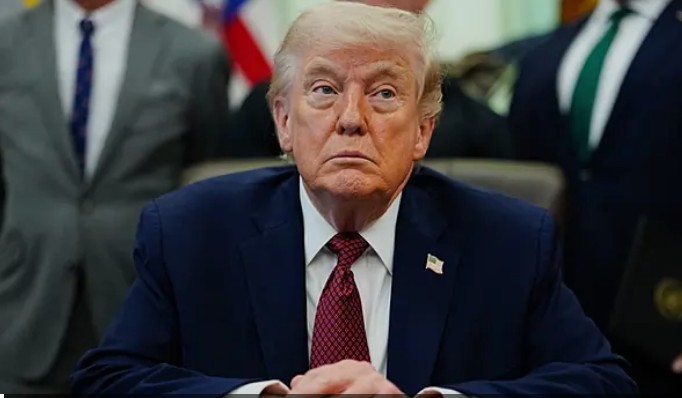
Trump threats of leveling
Nonetheless, Donald Trump warned earlier that the United States will destroy every bridge and every power station in Iran if Tehran rejects his terms. Iran has stated that if the US strikes its civilian infrastructure, it will respond by hitting power stations and desalination plants in Arab Gulf states. This warning further intensifies concern over the expansion of the crisis beyond Iran and the United States, with potential consequences for critical energy and water infrastructure across the entire region.
When the ceasefire expires
It remains unclear exactly when the ceasefire between the United States and Iran expires. Donald Trump announced the two-week ceasefire on April 7, at 6:32 PM US Eastern Time (22:32 PM GMT, i.e., 01:32 AM on April 8, Greece time). Although he has not specified the exact time of expiration, April 21 marks the completion of two weeks since the announcement. This could mean Tuesday night in the United States—or Wednesday morning in Iran. Over the weekend, when a journalist asked Trump if he would extend the ceasefire if no deal is reached by Wednesday, he replied: "I don't know. Maybe not. Maybe I won't extend it. But the blockade will remain. And maybe I won't extend it. So there is a blockade and unfortunately, we will have to start dropping bombs again." The statement strengthened the uncertainty over whether the ceasefire will continue or if there is a risk of resuming military operations.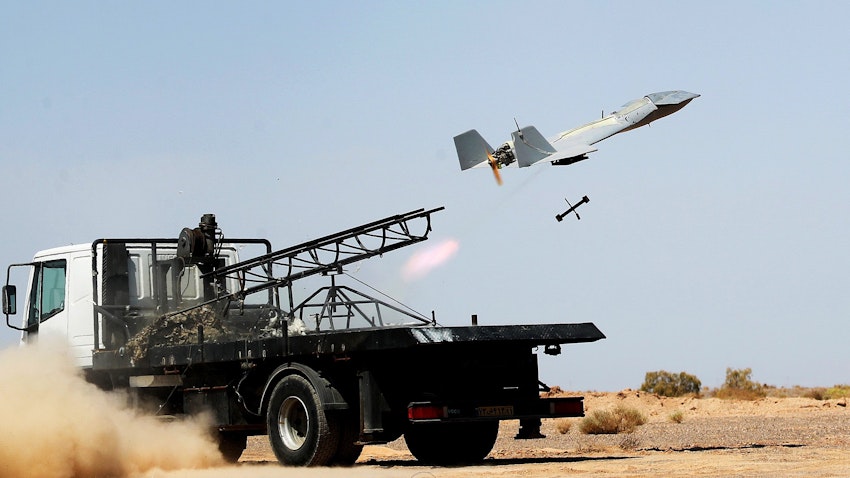
Iran struck American warships with drones
The Iranian Armed Forces announced they launched drone attacks against American warships in response to the seizure of the ship Touska belonging to the Islamic Republic. A spokesperson for the Khatam al-Anbiya Central Headquarters of the Iranian Armed Forces emphasized that the Iranian ship seized by the American military was en route from China to the Gulf of Oman. They fired upon it, violating the ceasefire, and disabled its navigation system. In response, Iran attacked the American ships using unmanned aerial vehicles. A spokesperson for the central headquarters stressed that the Republic's Armed Forces intend to continue responding to "piracy" and attacks by the US. The Iranian military spokesperson stated that "the aggressive United States, by violating the ceasefire and engaging in maritime robbery, opened fire on an Iranian merchant vessel in the waters of the Sea of Oman, disabled its navigation system and, by landing a number of terrorist marines on the deck of said vessel, committed an act of aggression against it." "We warn that the Armed Forces of the Islamic Republic of Iran will soon respond to this piratical and armed action by the American military and will take retaliatory measures," the Iranian official pointed out.
JUST IN: ???? Video shows the moment US Marines raided and seized Iran's Touska cargo ship. pic.twitter.com/2OD603SjSR
— BRICS News (@BRICSinfo) April 20, 2026
What will happen with the Iranian ship Touska
The American military fired upon and seized the Iranian-flagged cargo ship M/V Touska on Sunday, which—according to CENTCOM—attempted to break the American blockade of Iranian ports. According to maritime analysts, the Touska will likely be led to an anchorage or port for inspection. Once checked and its cargo determined, there is a possibility it could even come under the ownership of the US government as a "prize of war" (prize). Jennifer Parker, a former officer of the Royal Australian Navy, stated that based on the naval law of war, a ship attempting to break a blockade can be seized. If Washington wants to keep the ship long-term, it will need—as she said—a process before a Prize Court. Analyst Carl Schuster, a former US Navy captain, stated the ship can be treated as a war prize, like material or assets captured in armed conflict. According to MarineTraffic data, the Touska had been operating in recent years between Zhuhai in China and Iranian ports, while it had been under sanctions since 2018. The MarineTraffic platform reported the ship is loaded, without specifying exactly what it carries. The fate of the crew depends on their nationality. According to Parker, if they are Indian or Filipino sailors, they will likely be disembarked and repatriated. If, however, the crew is Iranian, they may be detained. If members of the Revolutionary Guards are on board, they could even be treated as prisoners of war, according to her. Parker added that if the Touska was carrying weapons or military material to Iran, then the crew will likely be detained. CNN reported it has requested comment from CENTCOM on the crew's nationality and the ship's status.
Message from the Iranian army: When we will strike the Americans...
Iran will take measures against American forces once the safety of the crew of the seized ship is ensured, stated the spokesperson for the Khatam al-Anbiya central headquarters, Ebrahim Zolfaqari. "Given the circumstances, once we are certain of the safety of the families and the crew of the ship that came under American attack, the armed forces of Iran will take the necessary measures against the US military," Zolfaqari stated, according to Iranian state broadcasting. As he said, Iranian forces were "ready to respond decisively to the American invasion forces" after what they described as a "flagrant act of aggression." According to the Tasnim news agency, Iranian forces faced "specific restrictions" due to the presence of crew members' families on board the ship. "Based on the present circumstances, as soon as the safety of the families and the crew of the ship targeted by the United States is ensured, the powerful armed forces of the Islamic Republic of Iran will take the necessary measures against the terrorist American army," Tasnim broadcasts.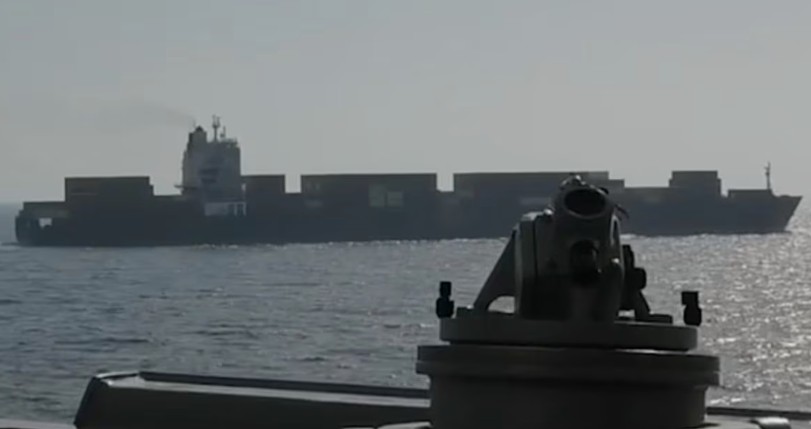
Hanging by a thread
The ceasefire in Iran and this week's peace talks are hanging by a thread, as tensions escalate and the conflict shows, as critics warn, signs of having slipped out of President Donald Trump’s control. On Friday, Trump stated that Iran "agreed to everything," causing markets to rise with hope that the war might soon end. However, by Sunday, this looked like another case of excessive optimism for diplomacy, as the president was again threatening to destroy Iran’s bridges and power plants, while Tehran re-closed the Strait of Hormuz.
Chaos and absence of a plan
According to CNN, the mutual lack of trust and fears of a full return to war became evident after the US Navy opened fire and seized an Iranian cargo ship that attempted to break the blockade. These sharp shifts are characteristic of Trump’s war leadership, moving between triumphant predictions of imminent peace and alarming threats of violence. His opponents see chaos and absence of a plan, while his associates insist he is skillfully using leverage to force Iran to back down.
Fog of war
But Trump’s "fog of war" is being tested again, as a second round of US-Iran talks is expected in Pakistan before the ceasefire expires. The coming days may show whether the intimidation strategy creates diplomatic openings or if its effectiveness is being exhausted. If it fails, Trump may find himself again facing the choice of escalating American military involvement, with potentially catastrophic consequences for the global economy and for his own declining popularity.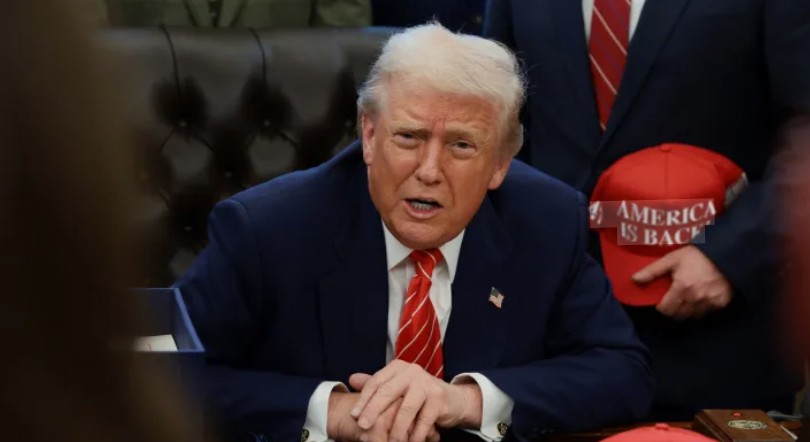
Conflicting messages
One of the most confusing features of this war is that it is almost impossible to assess the sincerity or accuracy of statements from either the US or Iran. No one outside Iran can say with certainty which leaders are taking decisions after the waves of assassinations of regime officials. This makes it difficult to appraise Tehran’s diplomatic strategy. Meanwhile, Trump’s mood—at least as captured in his posts—changes constantly. American officials claimed last week that Iran might be ready to abandon support for allies like Hezbollah and Hamas, as well as hand over enriched uranium stockpiles. This would constitute a major victory for the Trump administration. But recent history and Iran's behavior breed doubts.
Reasons for avoiding a new conflict
Despite the rhetoric and aggression, there are serious reasons for both sides to avoid a new war ignition. Trump’s insistence that a deal is close might suggest reduced enthusiasm for a war that has a heavy economic and political cost in a midterm election year. The Wall Street Journal reported that, despite his rhetoric, Trump has serious fears about the consequences and risks of escalation. For the Iranian regime, mere survival after the war could be considered a victory. The blockade of Iranian ports threatens to turn a ruined economy into social collapse.
Pressure to break Tehran's resistance
The administration believes it can break Tehran’s resistance by increasing pressure. Energy Secretary Chris Wright, speaking to CNN, explained Trump’s "No More Mr Nice Guy" post, where he threatened to bomb every bridge and power plant in Iran. "The president seeks maximum pressure," he said. He claimed he is not worried because "the noise" in Iran shows a regime in decomposition and that the end of the war "is not far." US Ambassador to the UN Mike Waltz presented a similar image, saying that Iran has never been more isolated. "Iran has no cards," he stated.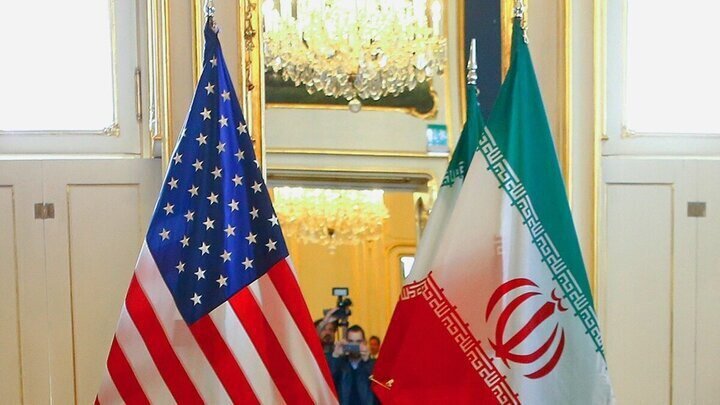
Tehran disagrees
Iran, for its part, rejects American claims that it is ready to back down. Lead negotiator Mohammad Bagher Ghalibaf stated that there has been progress, but significant gaps remain over the Strait of Hormuz and nuclear issues. He emphasized that Iran will not hand over the enriched uranium. Like Trump, Ghalibaf is also addressing domestic audiences, adopting a tough stance ahead of potential talks. Trump stated that American representatives are traveling to Islamabad. Iran has not yet publicly confirmed that there will be talks.
The image may not be so favorable for the US
Although American and Israeli strikes caused significant damage, the Iranian regime survives. Nor has there been a popular uprising to overthrow it. Meanwhile, the collateral damage for the US is serious: • NATO cohesion is being questioned. • Trump has angered allies. • His administration even clashed with Pope Leo XIV over anti-war positions. The Democrats, citing a drop in Trump’s popularity (37% in an NBC/SurveyMonkey poll), present him as trapped in Iran and without a strategy. Congressman Ro Khanna stated: "The enriched uranium is still there. The regime is more hardline. China has more influence in Iran. We have less, not more, leverage in the Strait of Hormuz."
The pressure increases
The war has now surpassed by more than a week the original six-month limit that was considered its maximum duration. Trump has never been under greater pressure to end it—and to prove that he will weaken Iran, instead of strengthening a declared enemy of the US.
www.bankingnews.gr













Readers’ Comments