

Italian archaeologists are bringing new data to light, estimating that their findings may cast a fresh perspective on the question of Jesus Christ's burial site, without, however, providing definitive answers. In the Gospel of John, considered by many researchers to be the most recent of the four canonical gospels, there is a brief but highly characteristic reference: "at the place where Jesus was crucified, there was a garden, and in the garden a new tomb, in which no one had ever been laid." This description creates a sharp contrast between the site of execution, the hill of Golgotha, and a vibrant, fertile garden, while lending symbolic coherence to the narrative of the Passion.
What Christian tradition reports
Despite its literary power, this reference is insufficient as clear historical evidence for the exact location of the burial. For centuries, Christian tradition has placed the tomb in the area where the Church of the Holy Sepulchre stands today in Jerusalem, attracting millions of faithful who honor the spot where, according to their faith, Jesus remained dead before the Resurrection.
Archaeological investigations at this site were extremely limited for decades, primarily due to disputes between the religious communities that manage it. Only in 2019 was the renovation of the church agreed upon, paving the way for systematic excavations beneath the floor. This opportunity was seized by a team from La Sapienza University of Rome, under the guidance of archaeologist Francesca Stasolla.
The excavations began in 2022 and revealed a complex historical stratification. Beneath the 19th-century floor, an ancient Iron Age quarry (1200–586 BC) was identified, which was later converted into a cemetery with rock-cut tombs—a common phenomenon in ancient Jerusalem. During the Roman period and before the construction of the first Christian church by Constantine the Great, the area appears to have been used for agricultural purposes.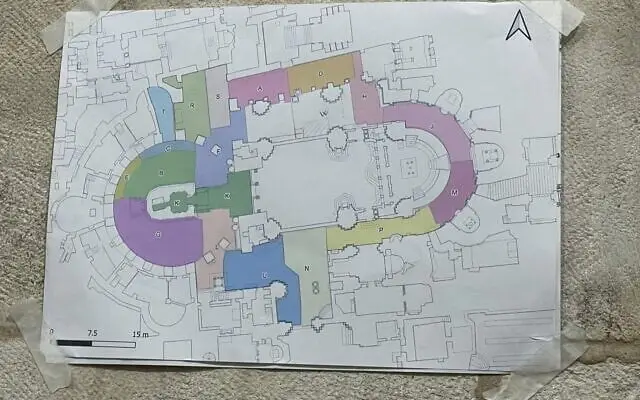
Findings
Of particular interest are the archaeobotanical findings, which indicate that beneath the current church, there were cultivated fields with olive trees and vines. Scientists also identified stone structures that functioned as terraces, holding fertile soil. This image strongly reflects the evangelical description of a "garden" near the place of burial.
Despite the impressive findings, experts remain cautious. As Francesca Stasolla points out, years will be required for the full analysis of data, while the primary conclusion for now concerns the continuous transformation of the site: from a quarry to a cemetery, and from arable land to a sacred place.
Responding to the question of whether the discovery definitively proves that the tomb of Jesus of Nazareth was located there, she avoids categorical statements. As she emphasizes, the most significant finding is not a material object, but the centuries-long human presence and faith that rendered this space sacred, regardless of historical certainty surrounding the tomb itself.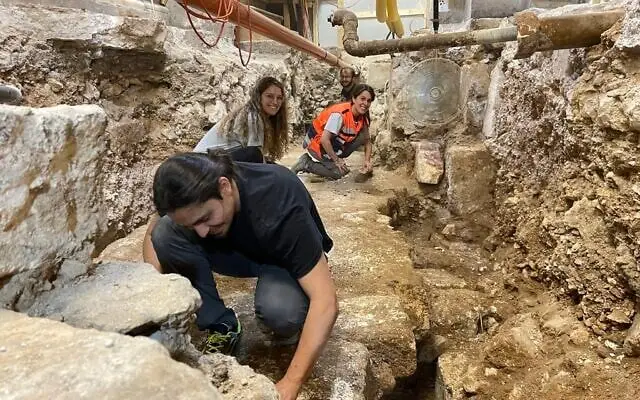
www.bankingnews.gr











Readers’ Comments