

Chaos has returned to the Persian Gulf as the black clouds of war reappeared following a deadlock in negotiations. The American Fleet once again committed a blunder and violated the ceasefire by striking the vessel Toska, an Iranian container ship. Iran's response was immediate, as it struck US warships located in the Gulf of Oman. The Khatam al-Anbiya Headquarters of the Iranian Armed Forces announced that it attacked the American ships using unmanned aerial vehicles. Escalation is intensifying and Brent crude in the derivatives market has already surged to $95, up from a recent low of $85 per barrel. It should be noted that Iran has declared a strategic defeat for the US in the Persian Gulf; the Iranians are insisting on a 10-point proposal that amounts to a demand for American capitulation—truly humiliating for the Americans—while they have made it clear they will not surrender any Uranium, and that Hormuz belongs to them administratively and operationally. The Americans are increasing the concentration of troops and weapons and are planning a surprise attack on an Iranian island. The aircraft carrier USS Gerald R. Ford is returning to the Middle East, accompanied by the destroyers USS Mahan and USS Winston S. Churchill, reinforcing the force already forming around the USS Abraham Lincoln, which is operating in the northern Arabian Sea.
Iran struck US warships with drones
The Iranian Armed Forces announced that they launched drone attacks against American warships in response to the seizure of a vessel belonging to the Islamic Republic. A spokesperson for the Khatam al-Anbiya Central Headquarters of the Iranian Armed Forces emphasized that the Iranian ship seized by the US military was en route from China to the Gulf of Oman. They fired upon it, violating the ceasefire, and disabled its navigation system. In response, Iran attacked the American ships using unmanned aerial vehicles. A spokesperson for the central headquarters stressed that the Republic's Armed Forces intend to continue responding to "piracy" and attacks by the US. The Iranian military spokesperson stated that "the aggressive United States, by violating the ceasefire and engaging in maritime robbery, opened fire on an Iranian merchant vessel in the waters of the Sea of Oman, disabled its navigation system and, by landing a number of terrorist marines on the deck of said vessel, committed an act of aggression against it." "We warn that the Armed Forces of the Islamic Republic of Iran will soon respond to this piratical and armed action by the US military and will take retaliatory measures," the Iranian official pointed out.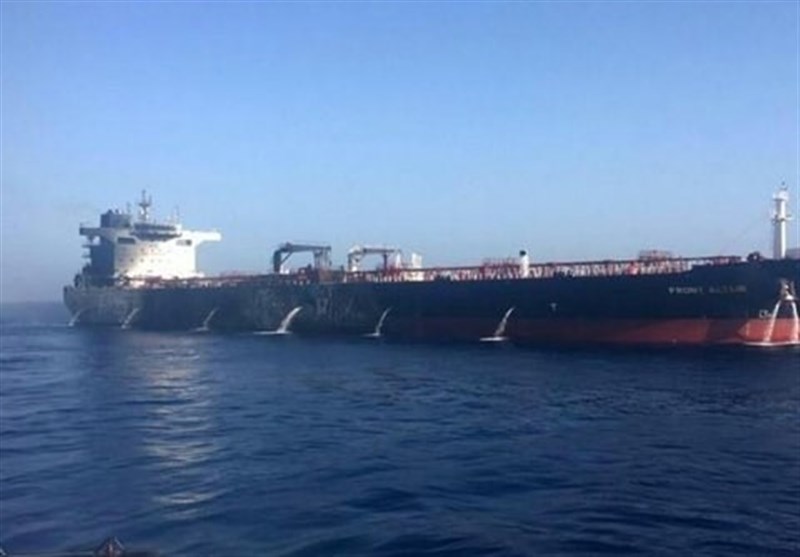
Attack on the Iranian container ship Toska by the US Navy... they are the pirates of the sea
The world's greatest military power has become the leader of pirates, the Iranians emphasize. American terrorist soldiers attacked an Iranian container ship named Toska, which was on a route from China to Iran, in the Gulf of Oman. After the Americans attacked this ship, Iranian forces also attacked certain American military ships with drones. Trump claimed that American terrorists had captured the ship. Iran has already announced that it will retaliate against any action by the Americans. Simultaneously with the announcement of a naval blockade of Iran by the United States, Iran also completely closed the Strait of Hormuz, and any ship or tanker passing through the area without Iranian permission will be punished by Iranian forces.
CENTCOM: The ship seized by the US was heading to Bandar Abbas, Iran
The cargo ship Toska, seized by the United States, was heading toward the Iranian port of Bandar Abbas, emphasized the US Central Command (CENTCOM). "The guided-missile destroyer USS Spruance intercepted the Toska as it crossed the Arabian Sea at 17 knots (31.4 km/h), heading toward Bandar Abbas, Iran," the American command stated. According to the US military, the crew of the Toska, which was sailing under the Iranian flag, failed to respond to repeated warnings for six hours, after which the USS Spruance fired several shots from a 127mm Mark 45 gun into the vessel's engine room. Subsequently, Marines boarded the Toska, according to CENTCOM.
Abbas Araghchi (Iran Foreign Minister): US lack of seriousness in resolving the conflict is evident
The threats against Iranian ships by American forces and Washington's irrational demands toward Tehran confirm the US lack of seriousness regarding the resolution of the situation in the Persian Gulf, stated Iranian Foreign Minister Abbas Araghchi during a telephone conversation with the Pakistani Foreign Minister. "The threats to Iranian ports and ships, as well as Washington's irrational demands, demonstrate the US lack of seriousness regarding the resolution of the situation in the region," he said. Araghchi added that, in his opinion, "the contradictory position of the US and the violations of the ceasefire demonstrate America's bad intentions." The Iranian Foreign Minister emphasized that his country "will use all available means to protect its interests and national security." At the same time, he confirmed "the continuation of consultations to maintain peace and security in the region."
Iran is ready for a new war – It will launch hundreds of missiles in the first hours
Iran is ready for the possibility of war re-emerging. Iran is prepared to create difficult moments for America and Israel with the reconstruction and preparations of the last two weeks. Monitoring the movements of the Americans in recent days indicates specific actions, some of which are as follows:
-
The movements of certain American warships
-
The creation of an unprecedented airlift for the transport of equipment
-
The involvement of several C5 and C17 heavy aircraft for the transport of weapons
-
An exercise for the seizure of islands in Bahrain and rapid seizure of coasts
-
Extensive flights of American reconnaissance drones over the islands
-
The movement of certain American defense systems in the region
Iran considers two scenarios
Consequently, Iran is considering two scenarios simultaneously and has taken the necessary measures for both. The first scenario is that the US is using these preparations to create psychological pressure in order to extract concessions in the negotiation room. On the one hand, America threatens, and on the other, it constantly intensifies the pulse of negotiations in the media. Iran has presented its proposals based on realism and the fundamental rights of the Iranian people, and it is America that must stop being excessively ambitious. Therefore, just as such pressure and threats had no effect at the negotiation table in the past, they will have no effect this time either.
Preparing for a surprise and rapid military attack on certain Iranian islands
The second scenario involves the preparation of a surprise and rapid military attack on certain Iranian islands. The Americans have extensive experience in deception through negotiations and attacked Iran twice a year during negotiations, while constantly speaking about the progress of negotiations. Iran is fully prepared this time as well and has essentially considered the war scenario more likely than the continuation of negotiations. Therefore, Iran is ready to establish unforgettable hours of hell from the very beginning of the conflict with the United States and Israel with the reconstructions and preparations it has made in the last two weeks. Also, an analysis of Iran's positions shows that if the war begins and infrastructure is targeted again, Iran will completely abandon some of its restrictions from the first round of the war regarding Aramco, Yanbu and Fujairah.
Massive strikes
Even more striking are reports that, in the event of new attacks against Iranian infrastructure, Tehran may abandon previous restrictions and expand potential targets to energy facilities such as Saudi Aramco, Yanbu, and Fujairah. The developments reinforce fears that the region is now approaching not a simple escalation, but an open military confrontation with broader regional consequences. It is worth noting that Iranian officials consider it quite likely that the US will attack before the ceasefire expires on 4/21/2026. It is recalled that the American president threatened unprecedented bombing of Iran's civilian infrastructure if it does not sign an agreement. Tehran, for its part, replied that it does not intend to send a negotiating team to Pakistan unless the naval blockade in the Persian Gulf is lifted.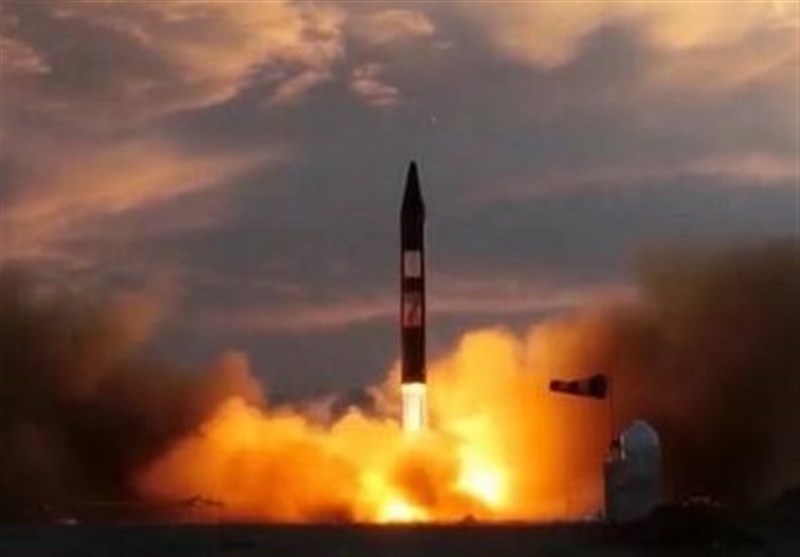
Iran: All missiles activated – Hundreds of ballistics will be launched in the first hours of war
Iran is proceeding with a new demonstration of military readiness, with reports that Tehran utilized the ceasefire period to fully reactivate all missile and drone bases. The Iranian side considers that it turned the ceasefire into a "golden opportunity" for regrouping and military preparation, implying that the country's operational capabilities have now been fully restored according to Tasnim. The warning that, in the event of a resumption of war, hundreds of ballistic missiles could be launched within the first hours of the conflict causes awe. Tehran's message reinforces the chances for a new escalation, with the ceasefire now appearing not as a de-escalation, but as a period of preparation for a potential next round of conflict.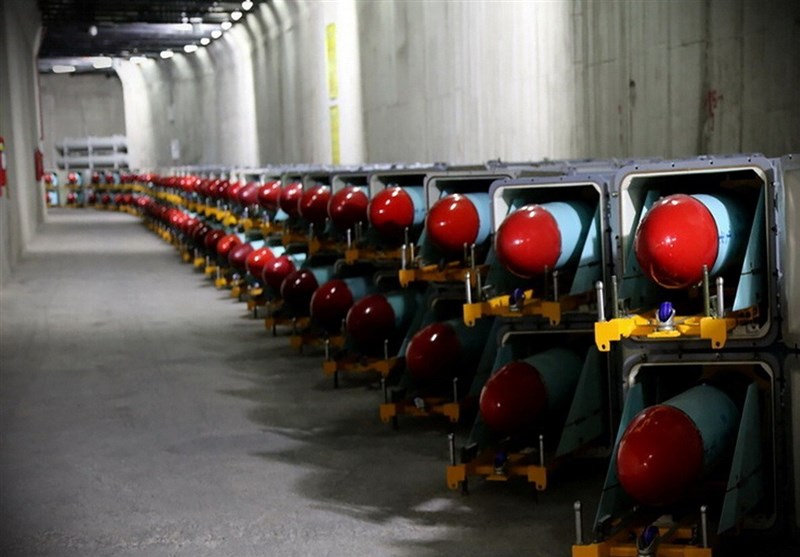
The US is also preparing for war with Iran – The aircraft carrier Ford returns
The Middle East is entering a new phase of military escalation, as the US significantly strengthens its naval presence in the region. The aircraft carrier USS Gerald R. Ford is returning to the Middle East, accompanied by the destroyers USS Mahan and USS Winston S. Churchill, reinforcing the force already forming around the USS Abraham Lincoln, which is operating in the northern Arabian Sea. At the same time, the USS George H. W. Bush is en route and, according to information, is expected to arrive before the end of April. According to Tasnim, movements of American military equipment and personnel have been recorded in the region in recent days, with reports of a broader redeployment of forces. The new concentration of war assets reinforces scenarios of preparation for a prolonged military presence or even potential operational escalation, at a time when tension in the region remains at peak levels.
? BREAKING:
— Mario Nawfal (@MarioNawfal) April 19, 2026
???? The USS Gerald R. Ford is returning to the Middle East alongside destroyers USS Mahan and USS Winston S. Churchill, joining the USS Abraham Lincoln already operating in the north Arabian Sea.
The USS George H.W. Bush is also en route, expected to arrive… https://t.co/0oe1tL7lhm pic.twitter.com/8VMHKFialv
Iran's clear answer to Trump: No negotiations unless the naval blockade is lifted
Earlier, Iran gave a clear answer to the threatening ultimatum of US President Donald Trump regarding the signing of an immediate agreement with the US, so that the Asian country is not bombed. Tehran responds to Trump that it does not intend, at this time, to send a negotiating team for a second round of talks with the US in Pakistan. The Iranian side makes it clear that there can be no new negotiation as long as the naval blockade remains in force which, according to Donald Trump's statements, has already been imposed, reports Tasnim. This development puts the brakes on scenarios for an immediate resumption of talks in Islamabad and sharply increases the uncertainty surrounding the diplomatic course of the crisis. According to the same information, the exchange of messages between Washington and Tehran via Pakistani mediation continued in recent days, however, it remained essentially a continuation of the same deadlock that characterized the first round of contacts. The Iranian side reportedly considers that American demands were excessive, leading the previous talks to a deadlock. Now, Tehran's message appears absolute: first lifting of the naval blockade—then negotiation, reports the IRNA agency as well. This position constitutes a direct challenge to Washington and may completely overturn the negotiation scene at a time when tension in the Persian Gulf remains at peak levels. The question now is not only whether the talks are freezing. It is whether diplomacy is moving away—and conflict is approaching.
American Conservative: Empire in decline – The war in Iran marks the end of US global dominance
By launching the military operation against Iran, US President Donald Trump ended a century of American dominance in global politics, argues the American Conservative magazine. "The ill-organized war in Iran, started by an empire in decline, will likely go down in history not so much for its immediate military results, but because it signaled the end of US global dominance. Donald Trump lost the opportunity to transform a great power for the next 250 years," the publication points out, mentioning that the US will be able to continue its existence only if it realizes how destructive reckless and excessive spending on military adventures truly is. "The war with Iran, in essence, will become the last war of the century of American unilateral dominance. In reality, this may finally force the country to understand that prudence and the reduction of military spending are the key to survival," admits the American Conservative.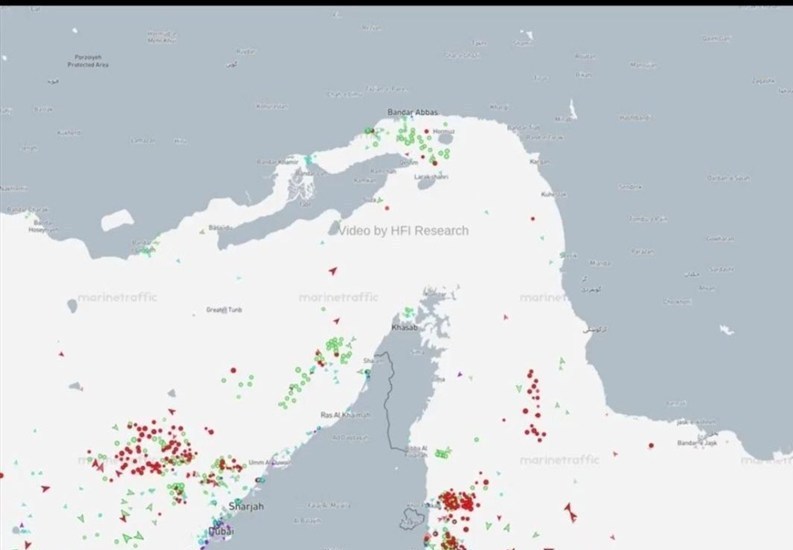
Iran imposes rules on the Strait of Hormuz - Stopped two tankers
The decision of the Revolutionary Guards (IRGC) to force two tankers with flags of Botswana and Angola to retreat and change course in the Strait of Hormuz on Sunday morning (4/19/2026) constituted a clear message of power. The message was clear: Iran considers that it controls the security and terms of passage in one of the planet's most important strategic passages. The Strait of Hormuz is not just an ordinary sea passage. A vast percentage of global energy trade passes through there. Every move by Tehran there has international weight. The decision to prevent the passage of ships that, according to Iranian sources, were attempting "illegal" movement, was not presented only as a military measure. It was presented as an act of sovereignty. And this changes the facts.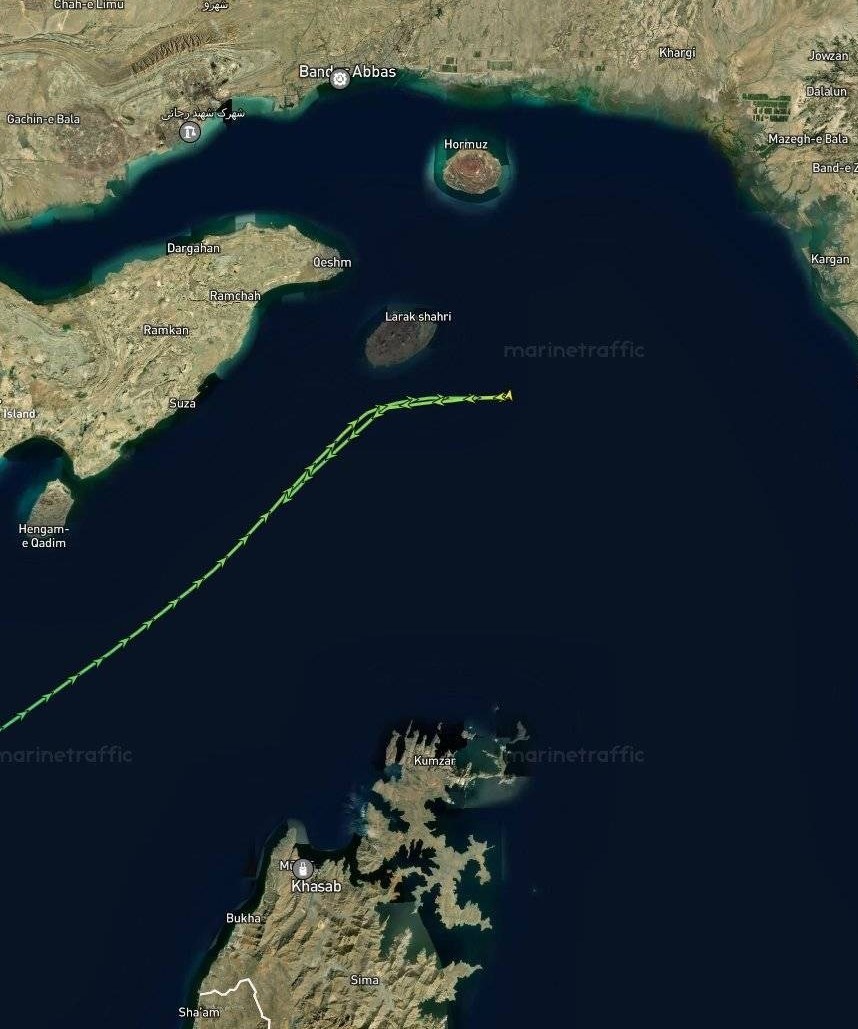

Mousavi: Clear Iranian victory at Hormuz, Americans you are incompetent
Majid Mousavi, commander of the Revolutionary Guards' Aerospace Force, speaks of a clear declaration of victory, saying that Hormuz has definitively passed into the hands of the Resistance. According to him, the enemy lost Lebanon and broader strategic control of the region. Mousavi released audiovisual material depicting feverish preparations in Iran's strategic material warehouses, emphasizing that the ceasefire period is not a time of idleness, but an opportunity for the full modernization of the country's weapons systems. "During the ceasefire, we are modernizing and replenishing missile and drone launch platforms at rates faster than before the war," he characteristically stated. The Iranian commander launched a fierce attack on the logistical infrastructure of his rivals (US and Israel), arguing that Tehran possesses the advantage of domestic production: According to Mousavi, the enemy is incompetent to create similar replenishment conditions for itself.
TWZ: US Army investigates the possibility of aerial refueling for MV-75 tiltrotor aircraft from drones
The US Army is investigating the possibility of aerial refueling for MV-75 Cheyenne II tiltrotor aircraft, which are expected to replace H-60 Black Hawk helicopters, from MQ-25 Stingray unmanned aerial vehicles (UAVs), according to TWZ. According to the publication, a US Army unit has already received a special version of the MV-75 Cheyenne II with aerial refueling capability. Citing Army Major General Claire Gill, TWZ notes that the use of a UAV refueling system will significantly increase the range of the new tiltrotor aircraft.
www.bankingnews.gr







Readers’ Comments