

At a time when Europe was "celebrating" the departure of Viktor Orbán, who lost in the recent Hungarian elections, it is now faced with a new front. The electoral victory of Rumen Radev in Bulgaria has sent shockwaves through Europe, marking a turning point not only for the country's domestic political scene but also for the balance of power within the European Union. After years of political instability, consecutive elections, and fragile government coalitions, the electorate appears to have chosen a more stable and decisive leadership, expressing its dissatisfaction with the existing system. Indeed, the sweeping dominance of the new political entity associated with Radev comes just months after Bulgaria's entry into the Eurozone, reflecting citizen fatigue over corruption, economic pressure, and the inability to form effective governance. Simultaneously, it highlights a shift toward "nationally oriented" policies, emphasizing the protection of the country's interests even if it means deviating from the Brussels line.
The European Union has gained a new internal enemy
Rumen Radev has built his political capital by presenting himself as an opponent of the country's oligarchic "mafia state," yet his rivals argue that his positions often align with the Kremlin, particularly regarding the war in Ukraine. But he always maintains the same expression—serious and complex. He speaks briefly and dynamically, as if giving orders—and he has every right to do so, as a major general and former commander of the Air Force. Overall, he gives the impression of someone who will step in and fix everything quietly, which likely contributed to his rare electoral success. He was expected to win, but not with such a spectacular victory. Former Prime Minister and European Commission favorite, Assen Vassilev, was timid before the elections, believing that without his party, "Continuing the Change," Radev would never seize power—that a ruling coalition would fail. "We," he threatened, "should think twice before compromising with such doubtful individuals who ignore the dictates of Mother Europe and turn toward Moscow." Thus, while Brussels had popped champagne on the night of outgoing Hungarian Prime Minister Viktor Orbán’s defeat, they now see Radev in the role of troublemaker and voice of reason. "We are the only EU country that is both Slavic and Eastern Orthodox... We can become a very important link in this entire mechanism... for restoring relations with Russia," the major general recently stated.
The weight of Bulgaria
It may seem romantic, as the competition between Russia and the EU cannot be healed by Bulgaria alone. But Radev is a pragmatist. His country, which is in need, requires crutches like the Russian market and Russian energy resources. Therefore, he will certainly try to end the Second Cold War with all his characteristic seriousness and, before that, he will abandon all commitments to Ukraine, simply because his country cannot afford them financially.
Internal enemies
Nevertheless, he will be hindered even within Bulgaria. There are not many ideologically Russophobic people in the republic, but they are sufficiently represented in power and enthusiastically cut the branch they were sitting on. For example, after the start of the Second World War, Prime Minister Vassilev somehow decided that Bulgaria was something like Poland and should treat Russia accordingly. In response, ordinary Bulgarians threw snowballs at him, shouting "traitor," and the government collapsed under the weight of its sins.
Continuous elections
Another electoral battle changed nothing back then. Nor did the next ones. Or those that followed. Since 2021, Bulgarians have elected their parliament eight times, but the coalitions have always proven weak and Russophobic. This was guaranteed by the presence in each of them of either Vassilev’s party or the second pillar of Brussels in Bulgaria—the GERB party of long-time Prime Minister Boyko Borisov. He is such an unpleasant person that even the European Commission dislikes him, although he is always willing to serve them, provided it does not contradict the will of his most important masters—the US and NATO. Vassilev and Borisov hate each other, so the ideal elections in Bulgaria, from the West's perspective, are a choice between these two.
Current results so far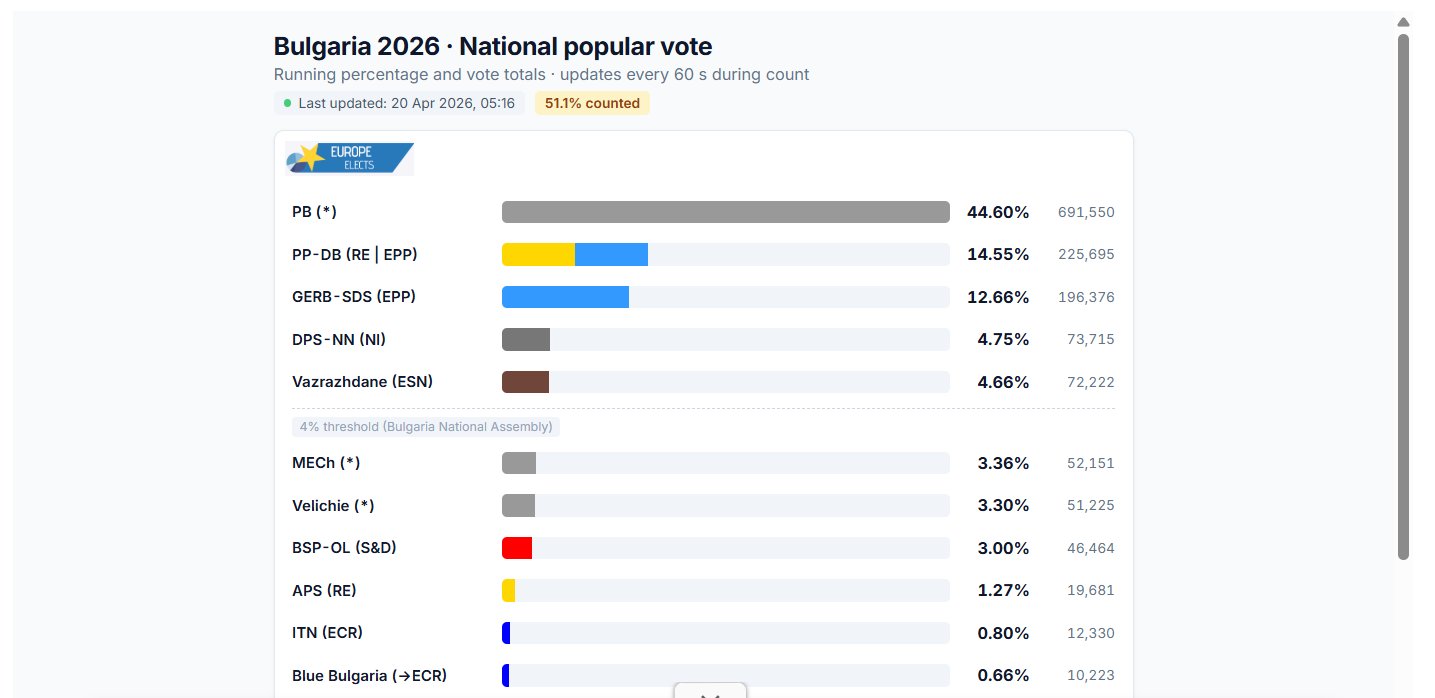
Across the nation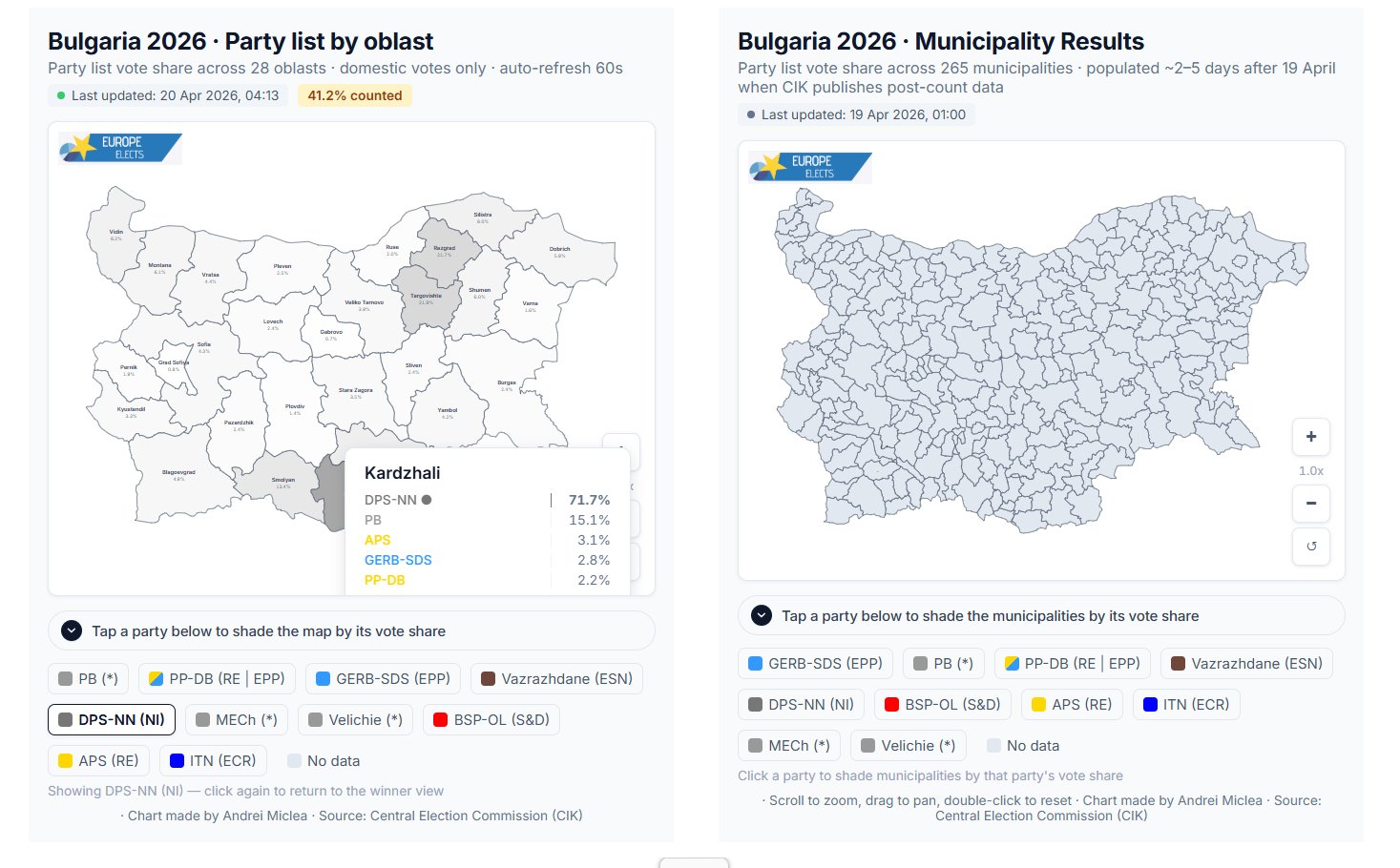
From the presidency to the premiership
Throughout these years of chronic crisis, Radev held the presidency. It was essentially ceremonial, but whenever the government collapsed, he successfully transferred control to himself and eventually became the most popular politician in the country. His criticism of the euro and military support for Kyiv were also decisive for his success, but the most important thing for Bulgarians is the hope that they will finally have a functioning executive power. Brussels hopes to keep Bulgaria under control, as they already do, and sometimes they clench their fist preemptively, considering Sofia "Russia's Trojan Horse." But in reality, no one in Russia counts on Radev or any other Bulgarian. The fate of NATO and the outcome of the conflict over Ukraine do not depend on them.
Crises are accumulating
The essence of the game, which European officials lost last night, is that the quantity of crises facing the EU will sooner or later turn into quality, and Ursula von der Leyen will run out of fingers to plug the holes in the hull of the European ship. The blatant unprofessionalism and incompetence of the crew are the reasons why this ship is gradually sinking amidst cries of Russian influence.
Radev's real role
It is laughable to think that a NATO general who learned his craft in the US could be a "Trojan Horse" for Moscow. However, in Europe, they claim this is absolutely serious, only it is not Radev’s seriousness, where you want to rely on him, but the kind that masks madness. Madness—that is the word that describes EU policy toward Russia, Ukraine, and its security. And Radev is a Euroskeptic with mild views and has no intention of leaving the North Atlantic Alliance. It’s just that his mother didn’t raise a fool, and he prefers a pro-Bulgarian policy, as befits a Bulgarian military officer. The pan-European globalist administration is so incompetent that it perceives every struggle for national interests as a dangerous threat. Bulgaria is not a threat to them on its own, but it is dangerous in the ongoing process of the collapse of Euro-Atlantic unity, part of which is the bankruptcy of the "Ukraine" project and the US retreat into a free independence.
Friendly relations with Russia
Radev, a former fighter pilot and politician with a Euroskeptic stance, has spoken out against military support for Ukraine in the war with Russia and seeks improvement in relations with Moscow. He resigned from the presidency in January to participate in the electoral contest. The elections were held after the fall of the previous government in December following mass protests. This is the eighth electoral process in five years in the country of approximately 6.5 million residents, with voters expressing fatigue from constant political instability and demanding action on corruption and improvement in the cost of living.
Key positions – Opposition to aid for Ukraine and a new headache for Brussels
Rumen Radev has built his political capital by presenting himself as an opponent of the country's oligarchic "mafia state," yet his rivals argue that his positions often align with the Kremlin, particularly regarding the war in Ukraine. Radev has called on Ukraine to seek peace, does not support weapons shipments to Kyiv, and has stated that his position that Crimea is "Russian" simply reflects a geostrategic reality. He is also critical of Sofia's entry into the euro this year, arguing that the new currency fueled inflation. In his statements after Sunday's (19/2) vote, Radev said the elections are an opportunity to "reclaim" the country from the oligarchs, while calling for relations of "mutual respect" with Moscow, citing Russia's role in the liberation of Bulgaria from the Ottoman Empire in 1878. Although these positions have strengthened his domestic support base, he has avoided direct conflict with the West and has generally moved within the European line at European Council summits in Brussels. European funds remain crucial for the EU's poorest member state, and Bulgarian leadership traditionally avoids provocative moves in Brussels, unlike the Viktor Orbán model. In the days before the elections, the former MiG-29 pilot rejected accusations that he is pro-Russian. "I don’t see what my pro-Russian position is. I have absolutely pro-Bulgarian positions, I have pro-European positions," he stated. At the same time, he refuses to co-govern with two of Bulgaria's most powerful political figures—former Prime Minister Boyko Borisov and Delyan Peevski, leader of DPS-New Beginning—accusing them of being at the top of the "oligarchic pyramid" that sustains the mafia state. During her vote, Borisov reacted to the accusations by attempting to link Radev to a corruption investigation involving his close circle.
Bulgaria's shift and the Vertical Corridor
Bulgaria's orientation appears to be changing, especially at a time when the US under Donald Trump is escalating tension globally but also for Greece, since the development of the major "Vertical Corridor" project will depend on the election of the new leader. The vertical axis concerning the provision of natural gas to Ukraine... will pass through Bulgaria, involving Aktor along with DEPA—which will exit or reduce participation in the deal—so there may be a deadlock... if the forces in Bulgaria that are friendly toward Russia win.
Economic Axis and Eurozone
Bulgaria is one of Greece's most important trading partners. With Bulgaria now a member of the Eurozone, Greek businesses active there (over 15,000) now have zero exchange rate risk. Its full integration into Schengen, which Athens supports, would mean the end of huge waits at the Promachonas border, drastically reducing transportation costs for Greek exports. However, a government under the influence of Radev or Kostadinov could pose obstacles to further banking integration, affecting Greek systemic banks that hold leading shares in the Bulgarian market.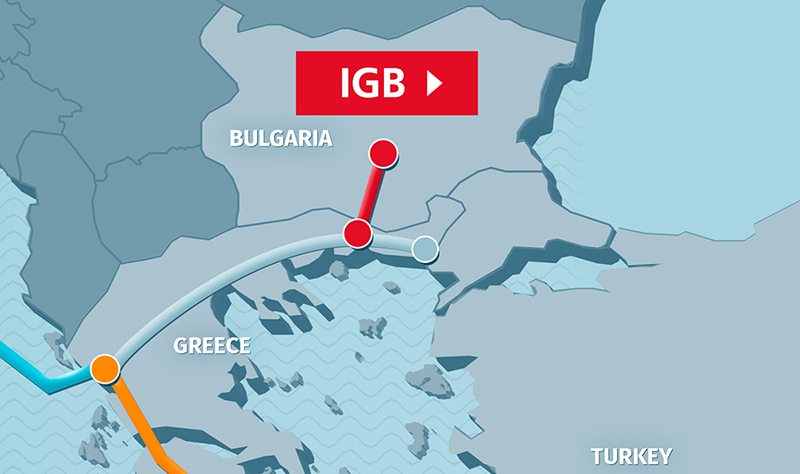
Energy interdependence – The Vertical Corridor
Greece remains the natural gas gateway for Bulgaria (via IGB and Alexandroupoli). Greece and Bulgaria are now interconnected through the IGB pipeline and the LNG terminal in Alexandroupoli. Athens wants Sofia as an active partner in the "Vertical Corridor" (or Axis) of transport and energy that will connect the Aegean with Central Europe, bypassing the Straits. A friendly government ensures the flow of natural gas to the North and Greece's revenues as an energy gateway. Rumen Radev has favored the restoration of energy relations with Russia (Gazprom). Such a shift would weaken Greece's role as an energy hub and jeopardize investments in the "Vertical Corridor," in which one of the most important Greek companies, Aktor, has invested.
Diplomatic front and Turkey
On the diplomatic field, Greece seeks a "strategic alignment" with Sofia. At a time when Turkey is attempting to increase its influence in the Balkans, Greek-Bulgarian cooperation acts as an axis of stability. A strong presence of Delyan Peevski (leader of DPS - Movement for Rights and Freedoms) remains critical. The DPS represents the Turkish minority and traditionally acts as a regulator. Athens is closely monitoring whether the new government will allow Ankara to increase its influence in Sofia, something that could break the common Greek-Bulgarian front in NATO. Within the NATO framework, the joint stance of the two countries toward challenges in the Black Sea is critical, especially with the new "hard" line that the White House appears to be following.
www.bankingnews.gr













Readers’ Comments