

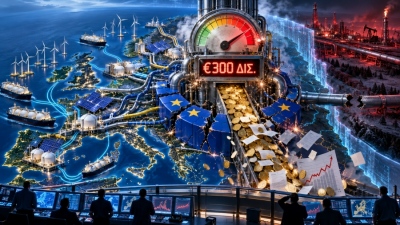
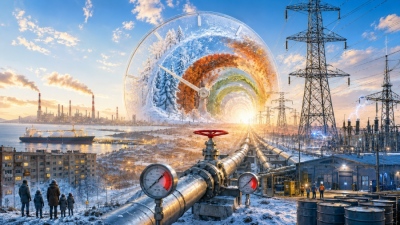
The failing and ineffective energy policy of the European Union is now under open fire from both political leaders and international organizations. The consensus is that it is leading to a dead end for the economy and society, particularly following the clearly suicidal decision for "decoupling" from Russian energy products. As European economies can no longer sustain a wave of subsidies and aid—similar to the Covid 19 pandemic response which cost approximately 1.2 trillion euros—due to the worsening fiscal positions of debt-threatened states, a new approach is being prioritized. As seen between the lines of International Monetary Fund proposals, the focus has shifted to reducing consumption (in economic jargon, tackling rising prices by suppressing demand). This effectively means economic and social suicide: the destruction of production as numerous industries shutter and households are forced into energy poverty. These are merely the immediate consequences.
Italian Deputy Prime Minister Matteo Salvini has explicitly called for a return to Russian natural gas markets, warning that Europe otherwise risks an "energy lockdown." Speaking in Milan on April 18, 2026, he argued that the EU must immediately change course, launching a fierce critique against the current Brussels leadership. His primary target was European Commission President Ursula von der Leyen, with Salvini stating that "her... brilliant proposal is a new lockdown," implying that policies restricting consumption and energy decoupling are leading to factory closures and economic paralysis.
Call to lift sanctions on Russia
Citing the United States, he noted that Washington suspended sanctions hindering the trade of Russian oil until May 16, emphasizing that "if such decisions are made there, the same must be done in Brussels." Furthermore, he highlighted that Europe is not at war with Russia and should source energy "from everywhere," while simultaneously calling for the suspension of the Stability Pact.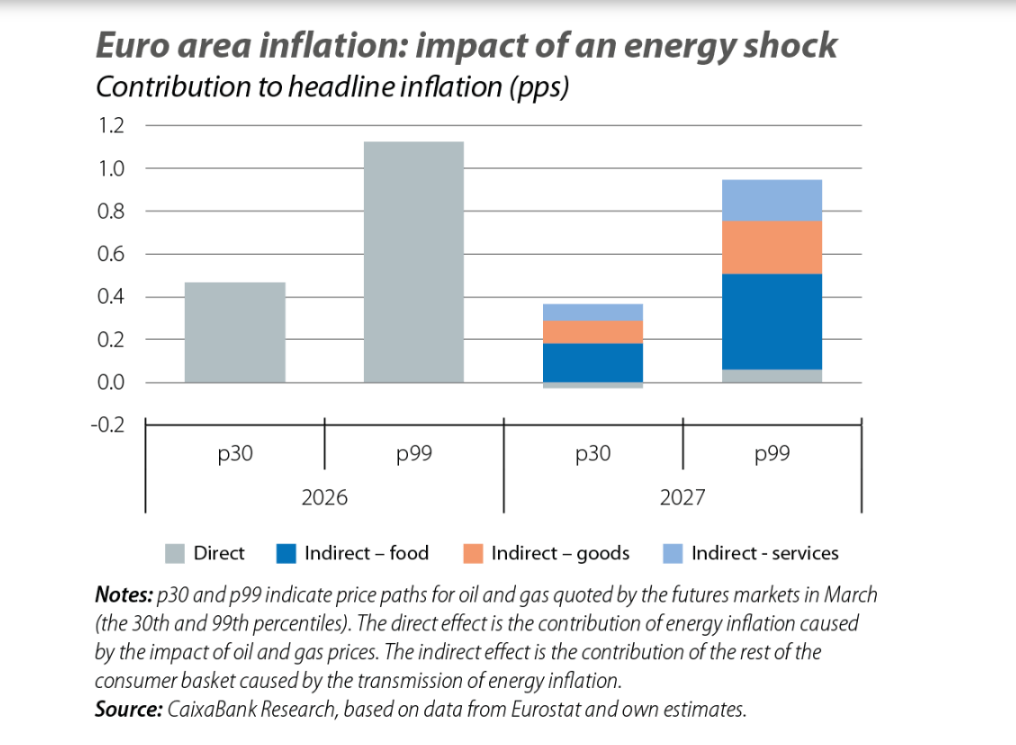
Remote work returns, public transport priority
The European Commission will encourage remote work and subsidies for public transport to reduce fossil fuel use as countries face the shock of high energy prices caused by the war in the Middle East, according to a report by the FT on Sunday, April 19, 2026. The Commission will present a series of measures to member states next week aimed at reducing demand, improving energy efficiency, and facilitating the transition to clean energy, per a document revealed by the FT. These measures aim to provide "immediate relief" from high energy costs. The recommendations are based on measures implemented during the previous energy crisis triggered by the Russian military operation in Ukraine. They are part of efforts to reduce reliance on fossil fuels and promote green energy. Businesses should be encouraged to establish at least one mandatory day of remote work where possible, the Commission states in draft annexes. It also proposes subsidizing public transport and reducing VAT for heat pumps, boilers, and solar panels. Brussels will also set "ambitious" but undisclosed targets for electromobility, according to the document, which remains unfinished. The announcement, to be presented to heads of state next week, is largely non-binding.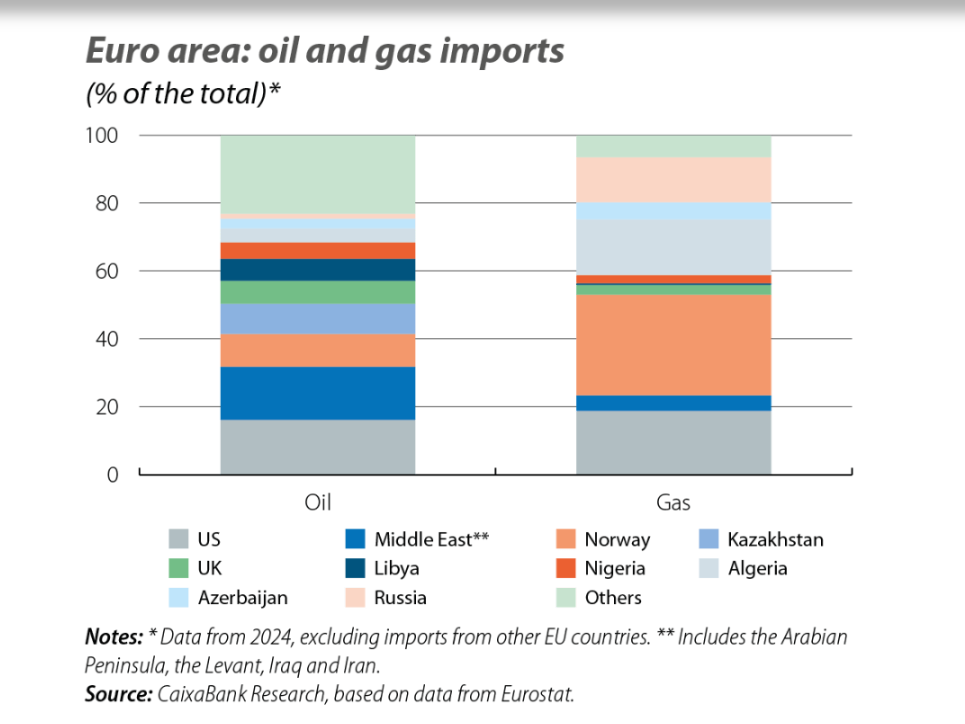
Legislative initiatives
However, the Commission will push two legislative initiatives to reduce costs. These include laws to adapt electricity market rules to lower transmission costs. This will involve an efficiency assessment of different grid operators and recommendations for charges to heavy industry. It will also seek to amend a directive so that electricity is taxed at lower levels than fossil fuels. A more ambitious proposal was withdrawn in 2025, but officials are optimistic that the energy crisis will restart the debate. The document states that member states will have the option to zero out electricity taxationfor energy-intensive industries. Additionally, the Commission will help member states design price cap systems and income support, as well as evaluate windfall taxes, though without fully satisfying the demands of some states for a unified European windfall tax.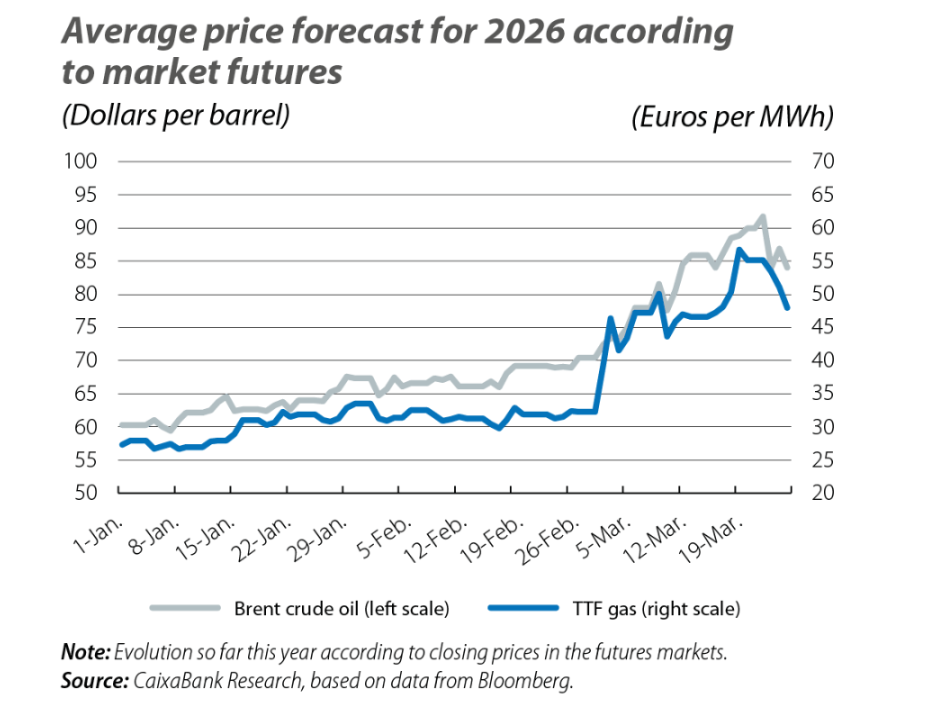
No to subsidies, say IMF and ECB – Risk of over-indebtedness and inflationary explosion
At the same time, from the other side of the spectrum, the International Monetary Fund warns the EU against proceeding with massive fuel subsidies, arguing that such interventions exacerbate the problem rather than solving it. The head of the IMF's European department, Alfred Kammer, emphasized that high energy prices act as a market balancing mechanism by reducing demand. "Many of the measures discussed weaken this signal," he stated, warning that generalized subsidies lead to a waste of resources. IMF data is revealing: during the previous energy crisis, the fiscal cost in Europe reached approximately 2.5% of GDP, with 70% to 80% of measures being non-targeted. In contrast, targeted support for the most vulnerable households would cost less than half.
Despite the warnings, Europe remains trapped in an energy dependency on imports, primarily from the Middle East, especially after cutting ties with Russia. New geopolitical tension, with the US-Israel war against Iran, further burdens energy policies, causing new price hikes and market instability. The European Commission itself, through Energy Commissioner Dan Jørgensen, calls on member states to avoid overly generous aid, fearing the energy crisis could turn into a fiscal crisis. Meanwhile, the European Central Bank warns that horizontal measures fuel inflation and keep demand artificially high. The result is a glaring contradiction:
-
On one hand, political choices that restrict energy supply,
-
On the other, efforts to curb social impacts through subsidies.
The IMF, European Commission, and ECB converge on one point: Europe must avoid generalized interventions and turn to targeted solutions—even if this means short-term costs for citizens. However, political criticism, such as that from Salvini, shows that pressure is mounting. The core question is no longer just economic, but strategic: Will Europe continue an energy policy that increases costs and dependency, or will it radically revise its stance before the "energy crisis" turns into a total economic and social collapse?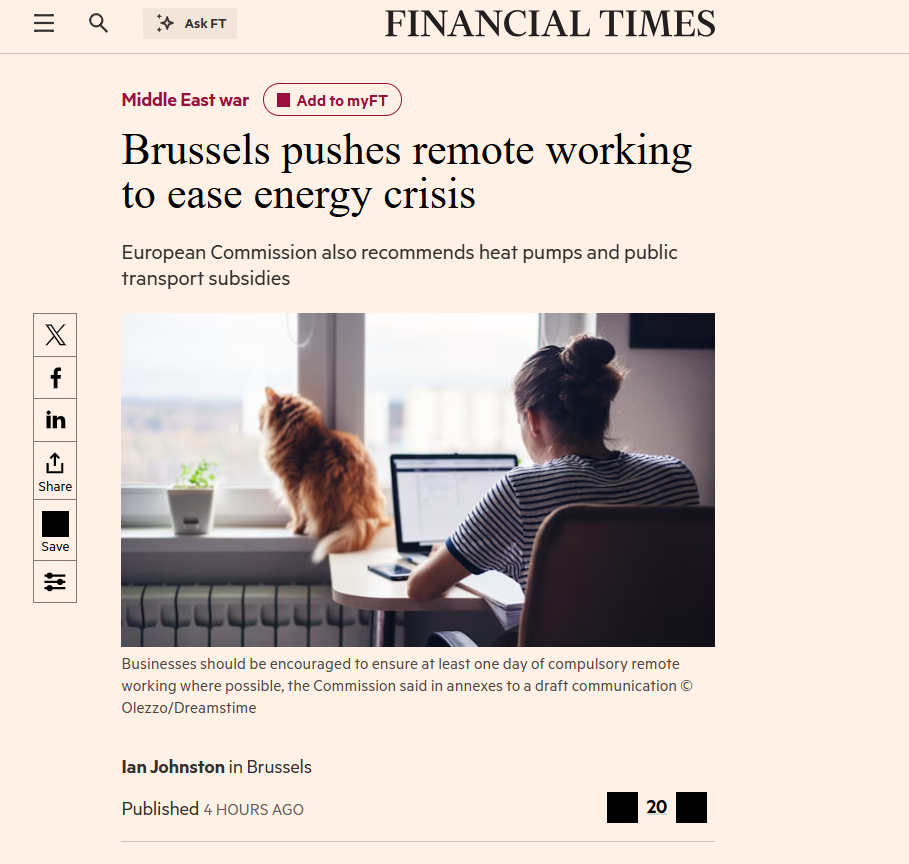
www.bankingnews.gr

Readers’ Comments