

How is it possible for some to predict with extraordinary precision the developments in negotiations for the control of the Strait of Hormuz—which cause intense fluctuations in energy markets due to disruptions in oil supply—and reap massive profits? Suspicions of insider information point toward the White House, and investigations by competent authorities are already underway. Let us look at the facts. Large, well-coordinated trades in global oil markets are once again drawing global attention after investors placed a $760 million bet on falling crude prices just minutes before a critical announcement regarding the Strait of Hormuz, as reported by Reuters.
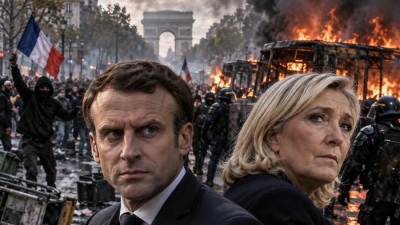
Data from the London Stock Exchange Group (LSEG) showed that on April 17, between 12:24 GMT and 12:25 GMT, traders sold a total of 7,990 Brent futures contracts, with the transactions valued at approximately $760 million at the time. Approximately 20 minutes later, at 12:45 GMT, Iranian Foreign Minister Abbas Araghchi announced via X that the Strait of Hormuz would remain open for the duration of the ceasefire for all commercial vessels, alongside the announcement of the ceasefire in Lebanon.
This pattern has a history
Evidence shows that similar trades occurred repeatedly:
-
March 23: ~$500 million before a Trump announcement → ~15% drop
-
April 7: ~$950 million before the US–Iran ceasefire
-
April 17: ~$760 million before the Hormuz announcement
Sixteen bets of $100,000 each accurately predicted the timing of US airstrikes against Iran on February 27. Later, a single investor would win over $550,000 after betting that Ayatollah Ali Khamenei would be overthrown, just minutes before his assassination by Israeli forces. On April 7, exactly before Donald Trump announced a temporary ceasefire with Iran, traders bet $950 million that oil prices would fall. And fall they did. Furthermore, the density of events on weekends has been noted; while Brent and WTI futures markets trade nearly 24/7, they open Sunday night (European time) and operate continuously from Monday to Friday.
Additionally, other well-timed bets accurately predicted the exact timing of major developments in the US-Israel warwith Iran, creating huge profits and raising concerns about potential insider trading. Betting—which was previously limited mainly to sports events—has now expanded to include contracts on news events, where insider information could give an advantage to certain traders.
The betting markets
The proliferation of online betting markets such as Polymarket and Kalshi has allowed bets on almost any news event. Meanwhile, it is easier than ever to buy commodity derivatives, such as oil contracts, where traders bet on where the price will move in the future. Leaders of some US federal agencies and members of Congress stated they want to crack down on suspicious trading activity taking place across different markets, but it is unclear how much progress regulators will be able to make. "Is the problem that we don't have legislation or that we don't have the ability to enforce it?" said Joshua Mitts, a law professor at Columbia University. "Having a law that cannot be effectively enforced due to technological limitations is like putting the cart before the horse."
Perfect timing and prior knowledge - How they won from Khamenei's elimination
On the evening of February 27, a day before the US and Israel carried out attacks in Iran, an unusual influx of about 150 accounts on Polymarket placed bets that the US would attack Iran the following day. An analysis by the New York Times found that the bets totaled $855,000, with 16 accounts winning over $100,000 each. Shortly after, an anonymous Polymarket user named "Magamyman" won over $553,000 after betting that Khamenei would be "removed" from power, just minutes before he was killed by an Israeli airstrike, according to a complaint filed with the Commodity Futures Trading Commission (CFTC) by the organization Public Citizen.
The complaint also cites a cryptocurrency analysis firm that identified six "suspicious accounts" that won a total of $1.2 million following Khamenei's death. A similar surge in betting was observed on April 7, when at least 50 accounts on Polymarket bet that the US and Iran would reach a ceasefire hours before Trump announced it via Truth Social. Earlier, the president had stated that "an entire civilization will die tonight" if Iran did not open the Strait of Hormuz. But traders were not only active on Polymarket: similar spikes in activity were recorded in oil futures, just hours before Trump announced developments that led to a price drop.
On March 23, traders placed $580 million in oil contracts just 15 minutes before Trump stated on social media that the US had "productive" talks with Iran, according to the Financial Times. Traders reaped large profits when the statements triggered massive sell-offs and a price collapse. The same happened on April 7, when traders placed $950 million betting that oil prices would fall, hours before the ceasefire was announced. "We cannot say from the outset if any of these trades were illegal. It could be luck or based on legal information," said Andrew Verstein, a law professor at UCLA. "But many of them bear the hallmarks of suspicious transactions that warrant investigation."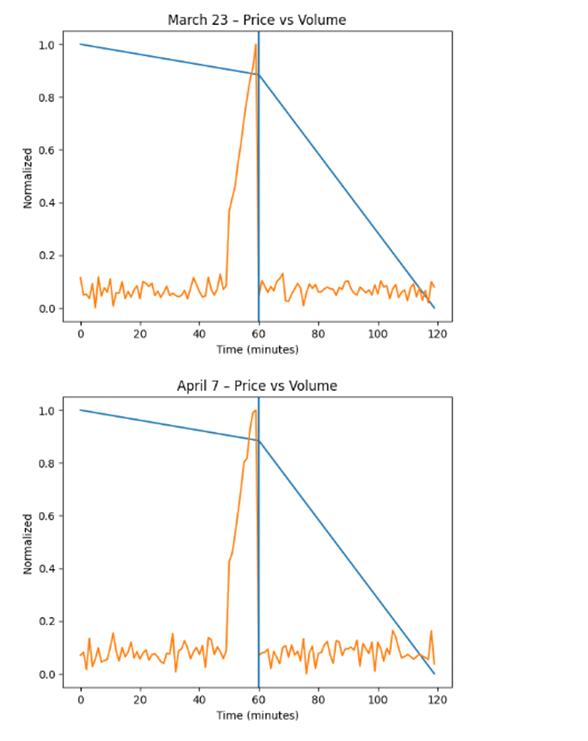
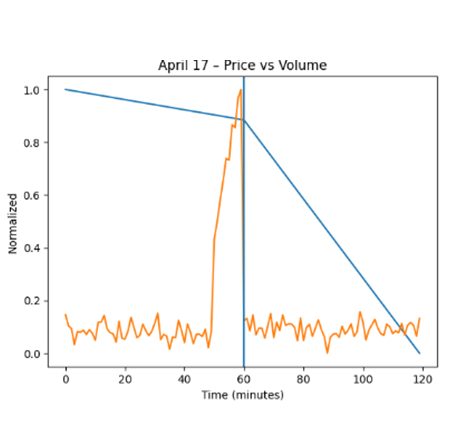
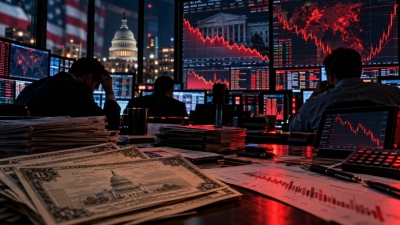
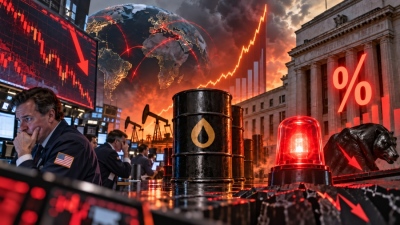
What the charts essentially show: In all three cases, there is a large intraday range. The drops are abrupt and synchronized with events. Most critically: March 23: −15% within hours, April 17: −10% within minutes. These are extreme moves for oil. If we look at them as real trading charts: These are not random market moves as all trades were made before the event.
"Wild West"
For those closely monitoring trading patterns, the intense activity before these events seems too large to be attributed to luck. "Not only the timing, but also the size of these bets suggests that someone likely had insider information," said Craig Holman of Public Citizen. Holman expressed doubts about how dynamically the CFTC will move, given its current structure under the Trump administration. The commission currently has only one commissioner, Michael Selig. At the same time, the CFTC is in a standoff with US states regarding who has the authority to regulate these markets. Holman described the situation as a "Wild West phase" that has now expanded to financial markets.
Risky bets
Federal law prohibits federal employees from using non-public information for personal gain. A bipartisan group proposed a law that would prohibit members of Congress from participating in such bets. However, experts emphasize that insider trading legislation is complex and new technology makes detection difficult. "The problem is that these transactions are done via blockchain and anonymously, so it is difficult to track who is behind them," Mitts said. The stakes are high: such practices can undermine trust in both markets and governments. "Unlike corporate insider trading, here the government itself can influence reality," Verstein said. "Actual decisions may be influenced by financial bets."
www.bankingnews.gr


Readers’ Comments