

The elections are considered critical for Sofia's orientation, especially as the US under Donald Trump escalates global tensions, and for Greece, as the fate of the "Vertical Corridor" project depends on the new leadership.
Today, Sunday, April 19, 2026, Bulgarian citizens are heading to the polls to elect 240 members of the National Assembly. This marks the seventh snap election since 2021, a fact that highlights the depth of the political crisis in the country. The political landscape in Bulgaria remains extremely fluid as the nation attempts to overcome a multi-year cycle of instability.
These elections are considered critical for the orientation of Bulgaria, particularly during a period when the US under Donald Trump is escalating tensions globally. For Greece, the outcome is vital, as the evolution of the major "Vertical Corridor" project will depend on the new leader. This vertical axis concerning natural gas supply to Ukraine will pass through Bulgaria; involvement from Aktor alongside DEPA—which may exit or reduce its stake—could lead to a stalemate if pro-Russian forces prevail.
Parameters
The polls opened at 07:00 AM on Sunday, April 19 (Greek time), and will remain open until 20:00 PM. A total of 6,575,151 citizens are expected at the ballot boxes, representing the entirety of the voting population.
24 lists for 240 seats
A total of 24 parties and alliances are contesting the 240 seats of the 52nd National Assembly. The system is proportional representation, meaning the number of seats for each party is nearly proportional to its percentage. Forming a government requires 121 seats. With so many lists, fragmentation is guaranteed, and a single-party government is almost impossible.
4% entry threshold
This is the most critical element for stability. A party must receive at least 4% of valid votes nationwide to enter Parliament. This matters because if many small parties fall just below the threshold (e.g., at 3.8% or 3.9%), their votes are "lost," and their seats are redistributed to the larger parties. In previous contests, small parties like Velichie barely made it or were left out. If 7 or 8 parties enter today, creating a government will be a diplomatic labyrinth.
Bulgaria: National parliament election today:
— Europe Elects (@EuropeElects) April 19, 2026
➤ Eligible voters: 6,575,151
➤ Polls open: 6 AM-7 PM CEST (7 AM to 8 PM EEST)
➤ 24 lists are running for 240 National Parliament seats
➤ Threshold: 4%
➤https://t.co/qCe3ZH1JoZ#Bulgaria
Dominant forces and their programs
The political field is divided into three main poles, with alliances being the "key" to government formation:
GERB-SDS (Boyko Borisov): The center-right party of Boyko Borisov is betting on "experience" and stability. Borisov remains a central player following the resignation of the Zhelyazkov government last December. He promises full integration into the Eurozone and the Schengen Area (for land borders) while maintaining a balanced stance between Brussels and the requirements of the new administration in Washington. His rhetoric focuses on crisis management and maintaining the European path.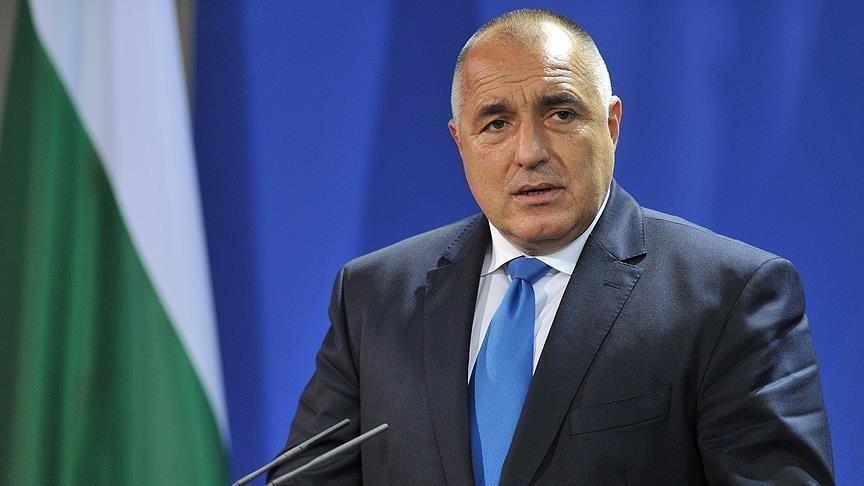
(Boyko Borisov)
PP-DB (Assen Vassilev): Following Kiril Petkov's move away from the front line, Assen Vassilev leads this pro-European alliance. Their program focuses on judicial reforms and anti-corruption efforts, though they have suffered wear from previous coalition governments. This reformist force pushes for an absolute break from Russian energy dependence.
(Assen Vassilev)
Progressive Bulgaria (Rumen Radev): This is the new major power of the elections. The former President, who resigned in January to run, is the favorite. His rhetoric is anti-corruption but also skeptical toward NATO and Ukraine. Rumen Radev founded this center-left formation in March 2026. His move is considered a "game changer," as he expresses mild euroscepticism and opposes sanctions against Russia.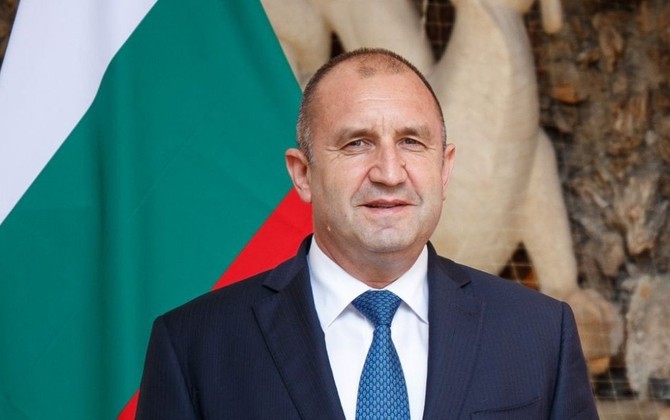
(Rumen Radev)
Vazrazhdane (Kostadin Kostadinov): Kostadinov remains the strong voice of the far-right, calling for a referendum on exiting NATO and questioning the recent entry into the Eurozone. This ethno-centric, pro-Russian party is gaining ground by exploiting the high cost of living. Its program includes suspending the adoption of the Euro.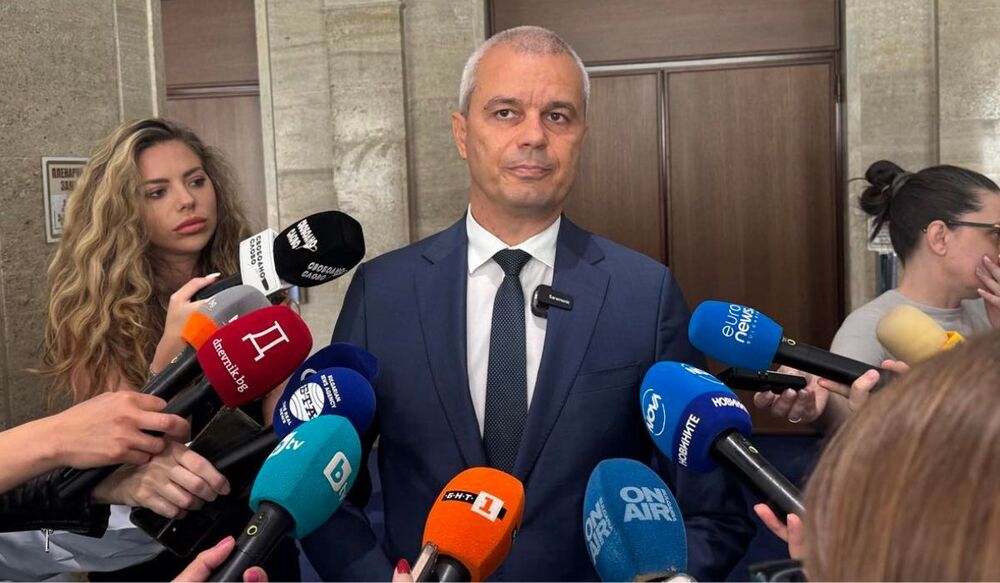
(Konstantin Konstantinov)
The big question: Abstention
Abstention remains the great unknown. After 7 consecutive elections since 2021, the public is exhausted. If turnout is low (below 35-40%), it favors parties with a "disciplined" base, such as the DPS (Turkish minority) and the nationalists of Vazrazhdane, making the result more unpredictable for the larger formations. The first exit polls will be released at 20:00, showing if Rumen Radev confirms polls placing him in first place with over 30%.
The historic turning point of January 1, 2026
Bulgaria officially joined the Eurozone on January 1, 2026. This is the central theme of debate in today's elections. While Borisov and Vassilev present accession as a success, Radev and Kostadinov exploit the price hikes observed in the early months of the year, blaming the EU for "imported inflation."
What this means for Greece: Economy and diplomacy
For Athens, today’s ballot decides the continuation of strategic cooperation on two levels:
Economic axis and the Eurozone Bulgaria is one of Greece's most important trading partners. With Bulgaria now a member of the Eurozone, Greek businesses operating there (over 15,000) have zero exchange risk. Full Schengen integration, supported by Athens, would end massive delays at the Promachonas border, drastically reducing transport costs for Greek exports. However, a government influenced by Radev or Kostadinov could hinder further banking integration, affecting Greek systemic banks that hold leading shares in the Bulgarian market.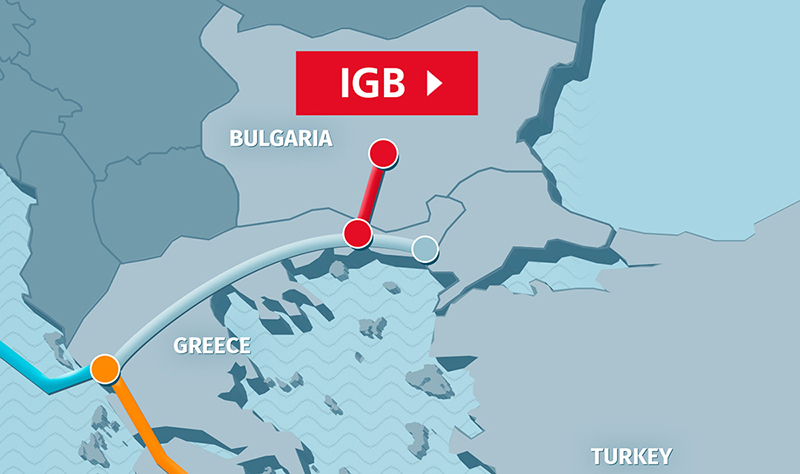
Energy interdependence - The Vertical Corridor
Greece remains the natural gas gateway for Bulgaria (via IGB and Alexandroupolis). The two countries are now linked through the IGB pipeline and the LNG terminal in Alexandroupolis. Athens wants Sofia as an active partner in the "Vertical Corridor" plan to connect the Aegean with Central Europe. A friendly government ensures gas flow north and Greek revenue as an energy hub. Rumen Radev has favored restoring energy ties with Russia (Gazprom). Such a shift would weaken Greece’s role and jeopardize investments in the corridor by major Greek firms like Aktor.
Diplomatic front and Turkey
Diplomatically, Greece seeks a "strategic alignment" with Sofia. As Turkey attempts to increase influence in the Balkans, Greek-Bulgarian cooperation acts as an axis of stability. The presence of Delyan Peevski (leader of the DPS) remains critical as a regulator for the Turkish minority. Athens is watching whether a new government will allow Ankara to increase its influence in Sofia, which could disrupt the common Greek-Bulgarian front in NATO.
The stakes for Europe
Bulgaria serves as the EU's "southeast fortress." A stable, pro-European government in Sofia means strengthening Balkan cohesion and shielding Europe's energy diversification. Conversely, a government with nationalist elements could turn Bulgaria into a "second Orban" within the EU, creating obstacles to Russian sanctions and further European integration.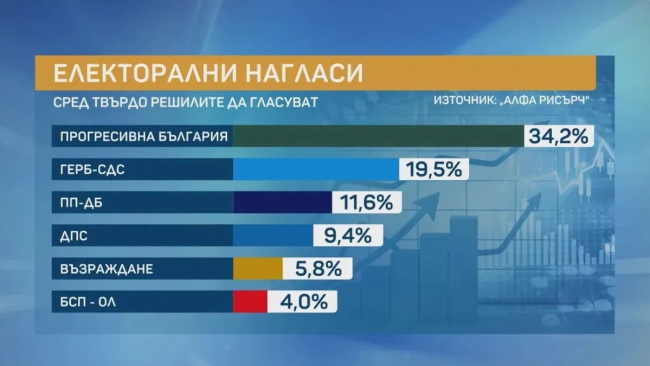
The final "snapshot" of the Bulgarian elections: Radev dominance and survival thriller
Today, Sunday, April 19, 2026, polls opened with the latest data showing a solid lead for the country's new political force, but a "thriller" regarding how many parties will cross the 4% threshold. Major firms like Alpha Research and Trend converge on a fragmented Parliament that will dictate future alliances.
X-ray of the percentages: Who is leading? The big surprise is Progressive Bulgaria (Rumen Radev), which seems to lock in first place with percentages reaching or exceeding 34%. Radev successfully mobilized voters seeking an alternative to the traditional system. In second place is GERB (Boyko Borisov) at around 19%, showing remarkable resilience. The battle for third is between the reformists of PP-DB (Assen Vassilev) at 11% and the DPS (Delyan Peevski) near 9%. Vazrazhdane appears strengthened at 5.8% to 7.4%.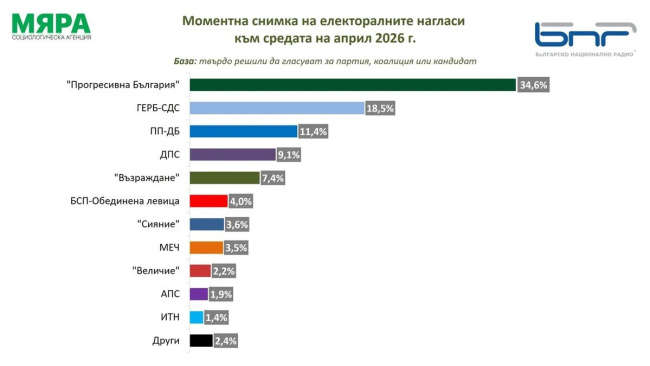
The 4% limit and players on the edge
The night's great intrigue, as noted by sociologist Boryana Dimitrova, is the number of parties entering. The Socialist Party (BSP) is in the most critical position, placed exactly at 4%. A tiny deviation could leave it out of Parliament for the first time in decades. Other groups like "Siyanie" (3.2%) and "Greatness" (2.9%) remain within breathing distance of the entry limit. If participation is higher than expected, the threshold rises, making entry even harder.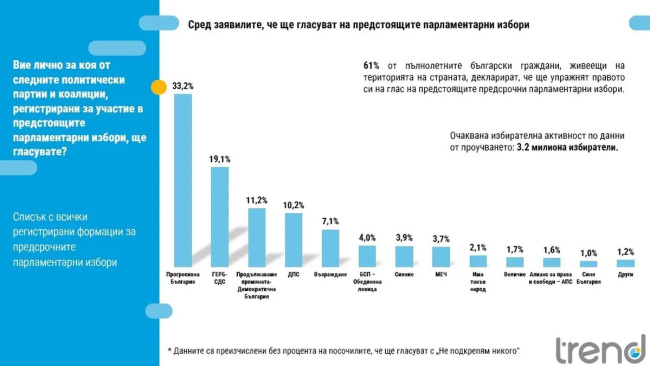
Participation and integrity of the process
Analysts estimate that roughly 3.3 million citizens will vote. However, the shadow of electoral fraud remains: 41.2% believe the elections will be similar to previous ones in terms of integrity, while 15.6% express fears of irregularities. A concerning 5.6% admitted being open to "incentives" for their vote, though researchers warn actual vote-buying numbers are likely higher.
What the "polling snapshot" means for Greece
Greece must prepare for a two-speed Bulgaria: on one hand, a strong frontrunner (Radev) who may seek to renegotiate the country's position in the EU and NATO. On the other, a Parliament with 5 or 6 parties that will make forming a government extremely painful. Economically, if the BSP or Vazrazhdane are strengthened, rhetoric against the Eurozone will intensify, causing instability for Greek banks. Diplomatically, Athens will need to find communication channels with Radev's new environment to ensure energy projects like the IGB and Alexandroupolis LNG are not sacrificed for a new rapprochement with Moscow.
www.bankingnews.gr











Readers’ Comments