

Tehran is hardening its stance and announces it is proceeding with a full blockade of the Strait of Hormuz until US aggression ends and lasting peace is achieved, the Supreme National Security Council (SNSC) of Iran emphasized as the US relaxed the naval blockade it has imposed. At the same time, rumors are intensifying regarding seizures of Iranian ships in the coming days by the US Navy. Simultaneously, the US President states that "we are talking" with Iran while declaring that the US will not be blackmailed regarding the Strait of Hormuz. New American proposals were reportedly received by Iran through Pakistani mediation, according to an announcement by the Security Council in Tehran.
As reported, the proposals were transmitted in recent days during the visit of the Pakistani army chief to Tehran, who reportedly took on the role of mediator in negotiations between Iran and the US. "The Americans have submitted new proposals, which the Islamic Republic of Iran is examining without, however, having responded yet," the Security Council said in a statement, according to Fars News.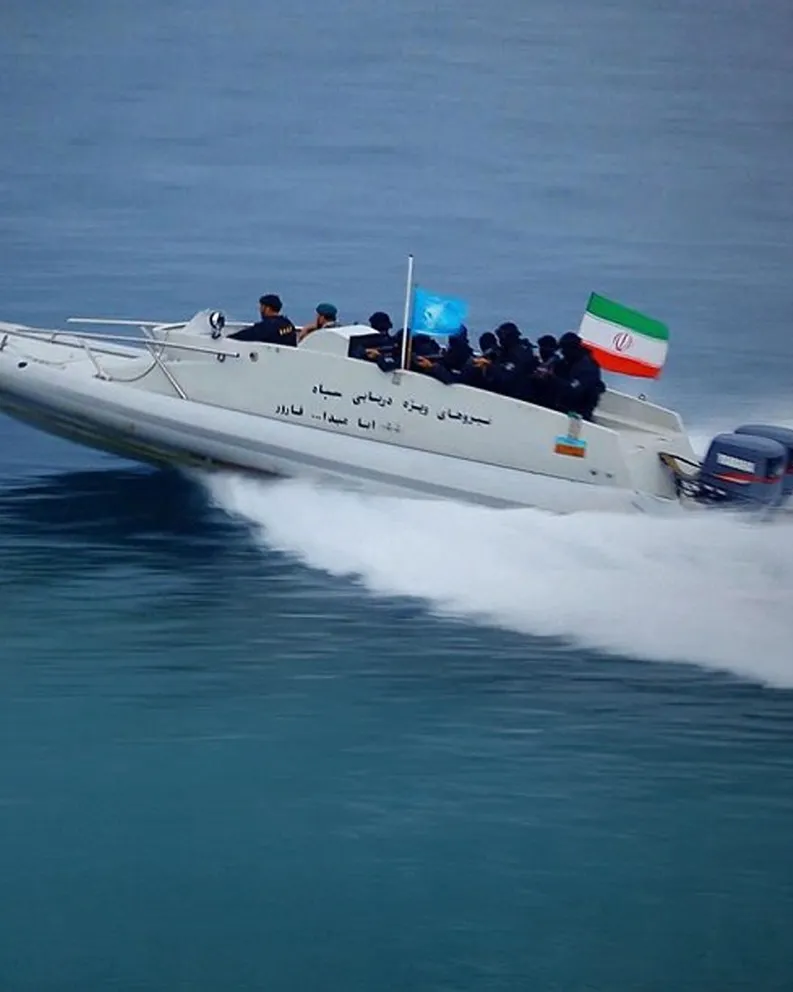
Full blockade of the Straits, Trump unreliable
The Navy of the Islamic Revolutionary Guard Corps (IRGC) announced that the Strait of Hormuz remains closed as of Saturday afternoon, April 18, citing—as it stated—the refusal of the United States to lift the naval blockade despite the terms of the ceasefire. Prior to the announcement, several civilian vessels had received permission to pass through the Straits via the Larak corridor under Iranian supervision and coordination. However, as stated, the Islamic Republic closed the strategic sea route following a violation of ceasefire commitments, accusing the United States of maintaining naval restrictions on Iranian ships and ports.
"The IRGC Straits are closed as of tonight (18/4) until the naval blockade [by the US] is lifted," the announcement said. The force warned that any ship moving from an anchorage in the Persian Gulf or the Sea of Oman toward the Straits will be considered to be cooperating with the enemy and could be targeted. At the same time, it called on ship managers to follow updates exclusively through official IRGC channels on maritime communication channel 16, while dismissing statements by US President Donald Trump as unreliable.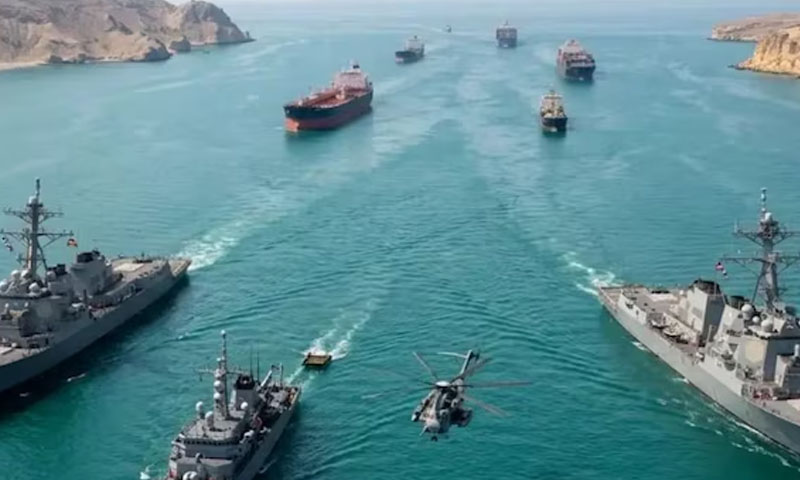
Wall Street Journal: US ready for ship seizures
At the same time, the United States is preparing, according to American officials, to begin boardings and potential seizures of ships linked to Iran in international waters within the coming days, in a significant escalation of naval pressure against Tehran. According to a report by the Wall Street Journal citing officials, the target may be tankers and commercial ships considered part of Iranian oil transport networks or linked to sanctions violations.
The development comes while the US is already implementing a naval blockade, with CENTCOM reporting that 23 ships have been forced to change course since the start of the operation. Until now, most interventions involved course reversals and not boardings. If boardings at sea begin, this will mark a qualitative change in the rules of engagement. Analysts estimate that any American boardings of Iranian-linked ships could trigger an immediate reaction from Tehran and increase the risk of military conflict in the world’s most important energy sea route.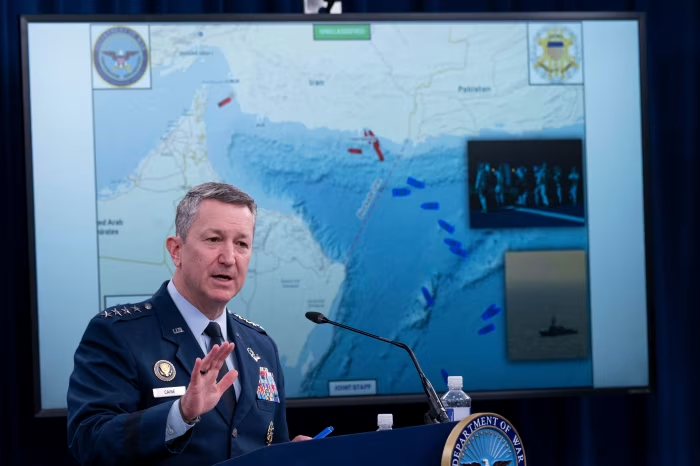
Straits closed until further notice
Iran stated on Saturday (18/4) that it is tightening control over the Straits, warning mariners that the vital energy route is closed once again. Tehran reported it is reacting to the ongoing American siege of Iranian ports, characterizing it as a ceasefire violation, while Supreme Leader Mojtaba Khamenei stated that the Iranian navy is ready to deal "new bitter defeats" to its enemies.
Maritime sources reported that at least two ships stated they came under fire and were hit while attempting to cross the waterway. State media in Iran reported that the Supreme National Security Council stated Iranian control of the Straits includes a requirement for payment of fees related to security, protection, and environmental safety services. There was no immediate indication that direct US-Iran talks are underway, despite Trump stating on Friday (17/4) that negotiations would take place. This development is considered indicative of the continuation of diplomatic contacts despite the difficulties and tensions that continue to characterize relations between Tehran and Washington. Tehran's response to the new American proposals may be a decisive factor for the course of negotiations in the coming period.
Attacks on ships – The heat rises in the Straits
Two gunboats of the Islamic Revolutionary Guard Corps (IRGC) opened fire on a tanker in the Strait of Hormuz, according to the British UK Maritime Trade Operations (UKMTO) agency. The incident occurred approximately 20 nautical miles northeast of Oman, and according to reports, the crew is safe. In a separate incident, a container ship was hit by an "unknown projectile" 25 nautical miles off northeastern Oman, causing damage to some containers, also according to the UKMTO.
No fire or environmental damage was reported, while authorities are investigating the nature of the strike. The two incidents dramatically intensify concerns over the safety of navigation in the region, as they occur while Iran has reintroduced restrictions in the Strait of Hormuz and tension with the United States remains high. The attacks are considered among the most serious maritime incidents of recent days and reinforce the risk of a broader military escalation.
Reduction of maritime traffic through the Straits
Data and images from the ship-tracking platform MarineTraffic show a noticeable decrease in maritime traffic through the Strait of Hormuz following the reintroduction of restrictions by Iran. Earlier in the morning, around 07:40 (local time), when US President Donald Trump and Iranian Foreign Minister Abbas Araghchi stated that the Straits were open, a small number of ships were recorded passing through, while several more were near the entrance of the passage.
However, following the statements by the Revolutionary Guard (IRGC) and the Supreme National Security Councilof Iran that they are reintroducing restrictions, the image recorded by MarineTraffic around 17:00 BST showed a marked reduction in movement, with fewer ships attempting passage and more waiting outside the main shipping route. The development is seen as an indication that shipping companies and captains face increased risk and are temporarily avoiding passage, intensifying concern over potential impacts on energy flows and global trade.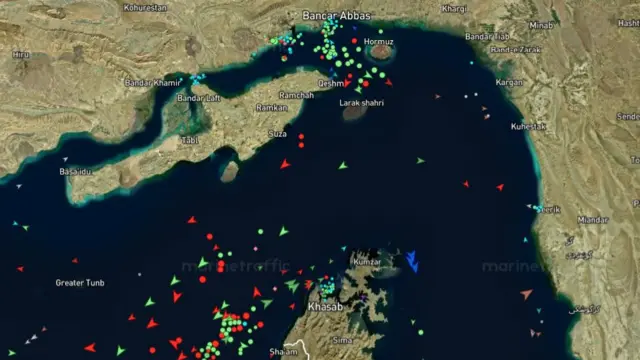
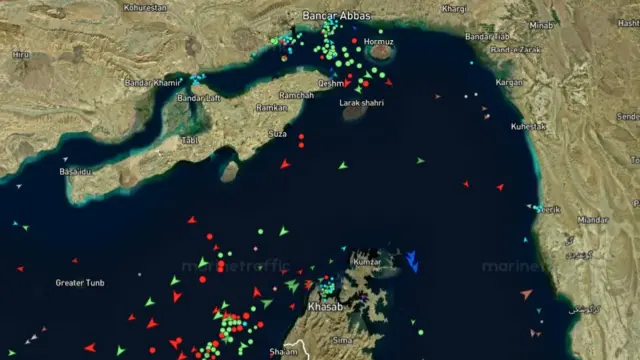
Iran will seek control of the Strait of Hormuz either through negotiations or by force, the Vice President of the Islamic Republic stated on Saturday (18/4). The secretariat of the Security Council of Iran stated in a communication on Saturday, April 18, 2026, that following the failure of the attacking parties on the battlefield and the subsequent requests by the United States for negotiations, Iran agreed—through Pakistani mediation—to hold talks aimed at ending the conflict based on a proposed framework.
New proposals under review: What are the terms?
In its announcement, the Security Council pointed out that the Iranian delegation participated in long negotiations, during which it consistently presented the country's positions despite deep distrust toward the United States. According to the announcement, the talks eventually failed because the other side raised additional demands, which Iran rejected, insisting it will not compromise on its core positions.
The announcement added that new proposals have recently been received through Pakistani mediation and are under consideration, without a response having been given yet. It emphasized that the Iranian negotiating team will not back down on national interests and will continue to defend the rights and sacrifices of the Iranian people.
Regarding the ceasefire in Lebanon
"One of the key conditions for Iran's acceptance of a temporary ceasefire was the cessation of fire on all fronts, including Lebanon. But the Zionist regime violated this term from the beginning with violent attacks on Lebanon and the heroic Hezbollah," the announcement added. It also stated that at Iran's insistence, the Zionist regime accepted a ceasefire in Lebanon and it was agreed that, provided the ceasefire is observed on all fronts by the adversary, the Strait of Hormuz would open temporarily and conditionally only for commercial ships—not military ships or non-military ships of enemy countries—under the control and permission of the Armed Forces of Iran and through routes defined by Iran.
Given that most of the logistical support for US military bases in the Persian Gulf is provided via maritime traffic through the Strait of Hormuz, which constitutes a threat to the national security of Iran and the region, Iran underlined it is determined to enforce oversight and control over transit through the Straits until the definitive end of the war and the establishment of lasting peace.
Transit certifications
It explained that this control is exercised by obtaining full information from passing ships, issuing transit certificates in accordance with the regulations of the Islamic Republic of Iran, as well as the payment of relevant fees for security, protection, and environmental safety services. The announcement further emphasized that as long as the adversary seeks to disrupt navigation or impose measures such as a naval blockade, the Islamic Republic of Iran will consider it a ceasefire violation and will prevent even the limited and conditional opening of the Strait of Hormuz.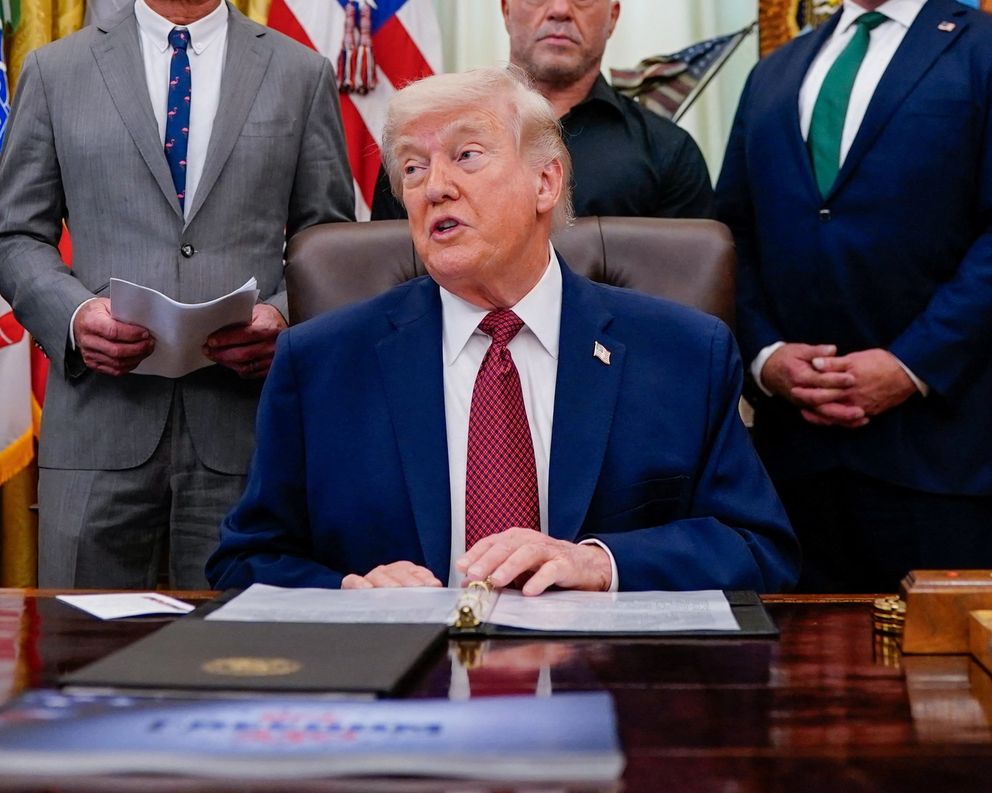
Donald Trump: We do not accept blackmail… we have good talks
US President Donald Trump stated (18/4) that Iran "cannot blackmail us," following the country’s announcement that it is reintroducing restrictions in the Strait of Hormuz Saturday morning. "We have very good talks ongoing. They are going very well," Trump said. "They tried to get a little cute, as they’ve been doing for 47 years, and nobody ever dealt with them. We dealt with them. They have no Navy. They have no Air Force. They have no leaders. They have nothing. In fact, their leaders... that’s regime change."
Despite Iran wanting to close the Straits again, Trump stated from the Oval Office that negotiations are "actually going very well" and promised more information "by the end of the day." Trump also mentioned that oil tankers are now heading to US ports, including in Texas and Louisiana, for refueling. "We’re taking a tough stand. They’ve killed a lot of people. A lot of our people have been killed. A lot of your soldiers have been killed over the years by Iran," Trump said, referring to the order he gave for the strike that killed Qasem Soleimani, commander of Iran’s elite Quds Force, in January 2020.
Trump described Soleimani as the "father of the bombers." "When you see soldiers walking around without legs, without arms, or with blown-apart faces, that was Soleimani's work, it was Iran that did it," Trump said. "We have a very different approach from other presidents. They got away with it for 47 years. They won’t be getting away with it anymore."
UKMTO: Incident off the coast of Oman
The British UK Maritime Trade Operations (UKMTO) agency reported an incident near a cruise ship off Oman, as the ship reported an impact or a falling object into the sea ("splash" is the technical term) at a distance of three nautical miles east of Oman. The UKMTO advised ships in the area to report any suspicious activity, intensifying concern for the safety of navigation near the Strait of Hormuz.
The incident comes at a time of increased tension in the region, with successive reports of episodes in the waterway, military patrols, and stricter controls by Iran. Although it has not been clarified whether the "splash" is related to gunfire, a missile, a drone, or a warning action, the fact is being treated as a serious security event.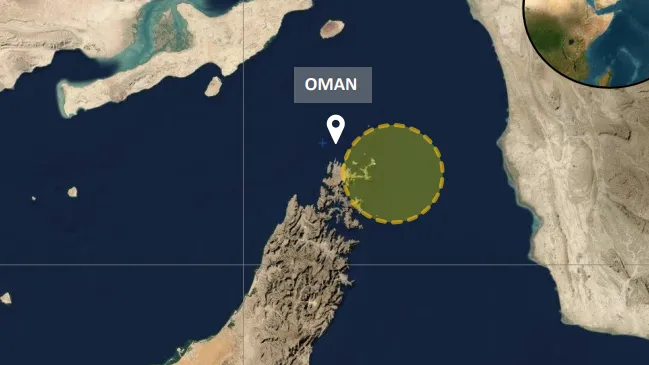
www.bankingnews.gr













Readers’ Comments