

European leaders will discuss a three-phase plan for the Strait of Hormuz at the next EU Summit
The strategy pursued in Iran by US President Donald Trump raises reasonable questions about exactly what he intends or wishes to achieve. It is now evident that the four days of war that were supposed to bring the fall of the regime and "change" in Iran have turned into seven weeks of chaos, defeat, and humiliation for the US.
However, Trump continues undeterred to send contradictory, vague and conflicting messages. On one hand, he claims that a deal might be reached as early as the weekend of April 18-19; on the other, he signals that the conflict with Iran may never be settled…
The question remains: what does the American president truly want from this military operation? Former close associates claim he is in a state of panic, not knowing exactly how to disengage from the war, while reports suggest he is ready to make new compromises to end the conflict with the Iranians, who are showing incredible resilience and strength…
Other analysts estimate that after this two-week ceasefire, a second and more extensive military operation against Iran will follow. While everyone wonders what is exactly happening, American oil and energy companies announced additional profits exceeding $5 billion for March 2026 alone… meanwhile, 15 American billionaires with close business or personal ties to the president saw their fortunes increase by $1 trillion.
Economic Rage
Operation "Epic Rage" has barely concluded, and already yesterday US Secretary of Defense Pete Hegseth announced the commencement of another: "Economic Rage". It must be understood that Hegseth has nothing of his own beyond his tattoos; he simply repeats Trump's words: "The US Armed Forces transitioned seamlessly from large-scale combat operations to conducting world-class blockades," and now the United States "will maintain this blockade for as long as necessary." Furthermore, if Iran "makes the wrong choice," it faces a "blockade and bombing of infrastructure, energy, and power system facilities."
A new crushing blow is coming
There are every sign that the blockade is merely the continuation of a pause, soon to be followed by a second, incomparably more extensive strike against Iran. Currently, three (!) US carrier strike groups are converging toward Iran at full speed, while the frequency of takeoffs and landings by US military transport aviation at intermediate airfields is making the asphalt "smoke." Many experts and commentators may ask: is it not obvious that Washington failed and will fail again, since Iran showed them "what's what"? After all, the world's leading minds argue that continuing this while the world collapses is madness—isn't it?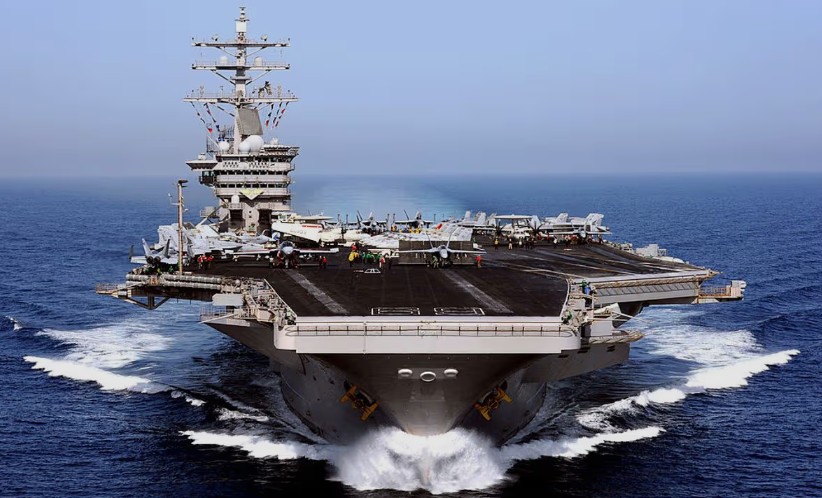
Trump in panic
Former Trump advisor John Bolton stated that "Trump is in panic and does not understand how to exit the war with Iran." Former US Secretary of State John Kerry confirmed that "settling the conflict with Iran is only possible through negotiations." The Wall Street Journal wrote that "the American strategy failed: instead of capitulation, Tehran purged the opposition and found a new weapon—control of the Strait of Hormuz." Moreover, a well-known American psychotherapist, Gartner, claimed that "Trump likely suffers from frontotemporal dementia," a key symptom of which is a "lack of control over aggressive behavior."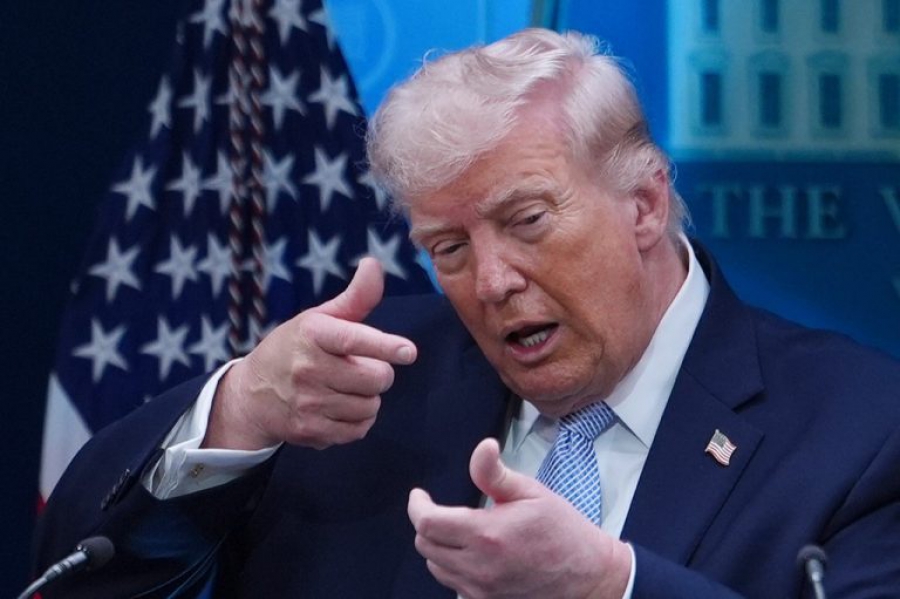
Everything is going great
In reality, however, Trump is doing excellently, wonderfully, spectacularly, and magically; regarding Iran, he says everything is proceeding according to plan. Just yesterday, specialized media—ignored by prominent international analysts—discretely published new data on the prosperity of various strata of American society.
The 15 billionaire friends of Trump
According to these reports: since the start of his second presidential term, 974 American billionaires grew richer by two trillion dollars (a 31% increase in 16 months). Of this, one trillion belongs to just 15 billionaires who, by coincidence, maintain friendly (and business) relations with Trump. Simultaneously, the US S&P 500 index is breaking historical records, as is the Nasdaq.
Additional profits exceeding $5 billion
In March 2026 alone, the additional profits of American oil and energy companies, due to price hikes caused by the Middle East conflict, exceeded five billion dollars. Reuters reports that US petroleum product exports in March 2026 reached 3.11 million barrels per day—the highest monthly level since 2017. American arms manufacturers have secured billions in orders for years, while sales of corporate cash safes are breaking every record. Recently, careful observers noticed a large bruise on Trump's hand. It appears to be the result of "kisses" from the top American business elite and their representatives in the US Congress and Senate. An amusing fact: the US Senate just failed to pass another vote to limit Trump's powers to conduct war against Iran. Why, one might ask?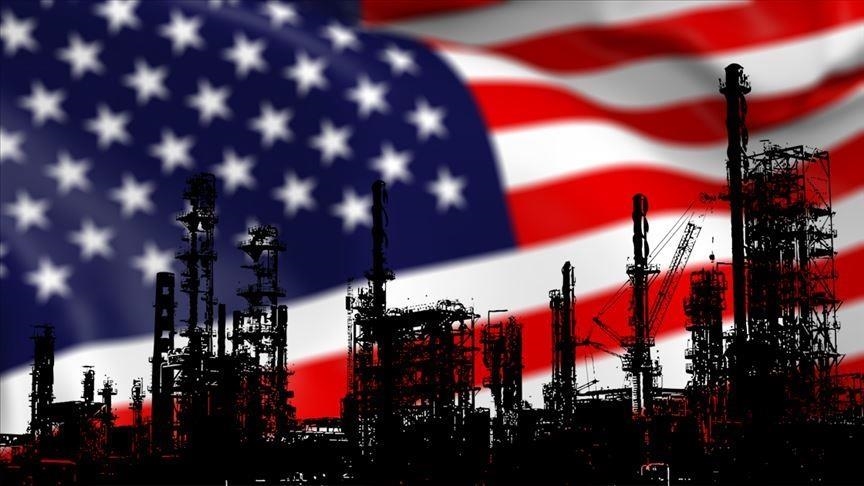
The bill to the taxpayers
It matters little that the astronomical profits of large American businesses are paid for by ordinary taxpayers. According to the latest data, this year the average American citizen (80% of the population) will pay an additional $793 from their family budget for Washington's adventures.
Russia's reading
A few days ago, the head of Russia's Foreign Intelligence Service (SVR), Sergey Naryshkin, stated that "the primary cause of the conflict in the Middle East is the colonial mentality of the West, and primarily of the US." In reality, it is even simpler. The West's core goal is to make money, and if that requires blocking or bombing Iran (or any other country), so much the worse for them. What the anxious international public opinion thinks does not interest the West—or rather its governments—in the slightest. Incidentally, in that same March, Russia earned an extra $19.05 billion from oil and gas, while "Russophobic" Europe is already beginning to tighten its belt to the last hole. Undoubtedly: we are for world peace. But if there is a war in the world, and we have another, and potentially a third approaching, then account books start to fall into the same category as the most important strategic forces and resources.
Politico: Trump will move toward new compromises with Iran
US President Donald Trump may proceed with new compromises regarding Iran, as he desires an end to the conflict, reports Politico, citing a high-ranking official from the Persian Gulf region. "I think he will make new compromises... He is serious about negotiations and very much wants to end this, but the Iranians so far refuse to give what is needed for him to maintain his prestige and exit the conflict," the source claims according to Politico.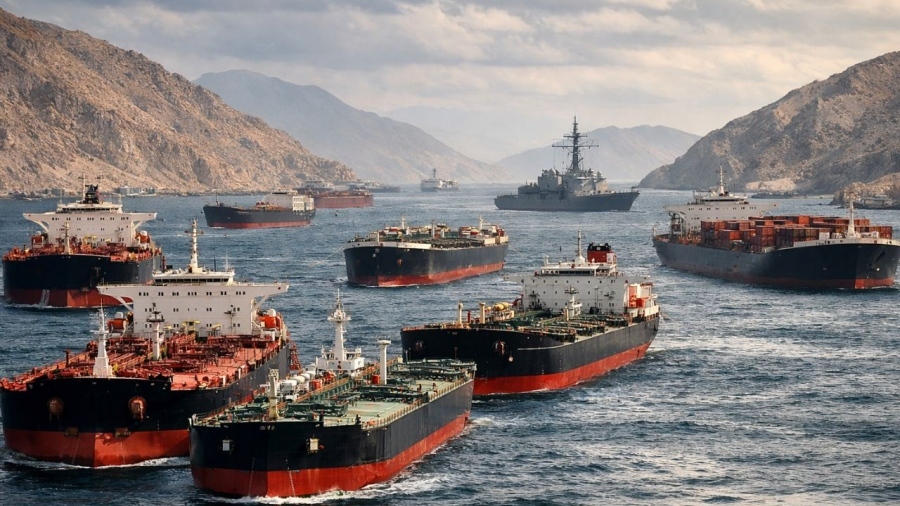
Financial Times: Three-phase EU plan for the Strait of Hormuz
European leaders will discuss a three-phase plan at the upcoming summit regarding the Strait of Hormuz, the Financial Times notes. Earlier, British Prime Minister Keir Starmer stated that the UK and France, amid the US blockade of the Strait of Hormuz, would hold an international summit on freedom of navigation this week. "European leaders will work on a three-phase plan," the report says. The first phase involves diplomatic and political coordination to determine the means required to ensure maritime security in the Strait. Next, a discussion will be held regarding logistical support for ships trapped in the strait. Finally, the third phase provides for the development of military measures to ensure freedom of navigation, though it is emphasized these can only be implemented after reaching long-term peace in the region. Simultaneously, a source told the newspaper that no specific results are expected from this summit.
Possible sanctions against Iran
Earlier, the Foreign Ministers of the Coalition for lifting the blockade of the Strait of Hormuz held online talks to discuss potential sanctions against Iran. Last week, a meeting of military representatives from the coalition, which includes dozens of nations, also took place. The US Navy began a blockade on April 13 of all maritime traffic entering and exiting Iranian ports and both sides of the Strait of Hormuz, through which approximately 20% of global oil, petroleum products, and LNG supplies pass. Washington assures that non-Iranian linked ships can pass freely, provided they have not paid transit fees to Tehran. Iranian authorities have not announced such fees but have mentioned related plans.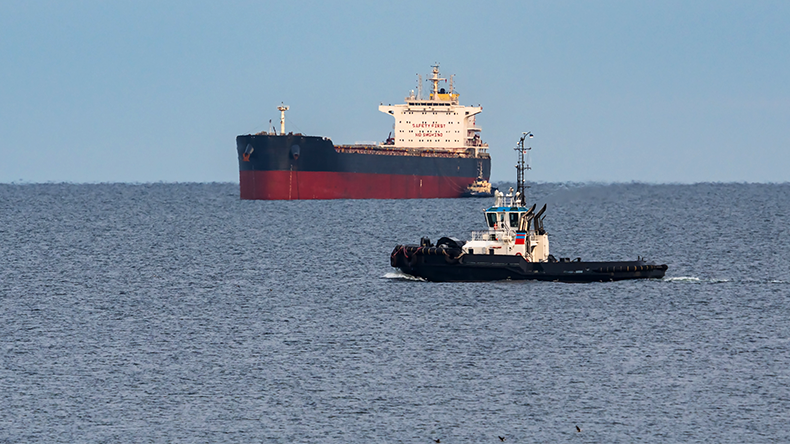
Two paths for oil prices
The price of oil, depending on negotiations between Iran and the United States, has the potential to either rise to higher levels or drop to pre-war levels. According to the Iranian news agency Tasnim, citing Oil Price, the price of oil has remained below $100 per barrel since Monday, April 13, when the United States initiated a naval blockade to prevent Iranian-linked ships from passing through the Strait of Hormuz. Given the volatile geopolitical situation in the world's most important oil waterway, the relatively calm last three days in the oil futures markets are not expected to last long. It is reported that oil prices, depending on US-Iran negotiations, could either hit new highs or retreat to pre-war levels—around $70—depending primarily on the state of navigation in the Strait of Hormuz and how quickly normal traffic can be restored.
Blockade failure
For now, despite the US blockade and Central Command's claims of success, the passage of non-Iranian ships has not been restored, while some Iranian-flagged vessels have been spotted by tracking services successfully bypassing the blockade. Globally, the physical supply of oil remains extremely tight, and for some non-Middle Eastern crude products, prices up to $150 per barrel have been paid. The price of physical oil for immediate delivery has surged due to supply tightness and is about $40 per barrel higher than futures contract prices. However, the futures market is driven primarily by news and expectations and is currently hoping for a potential resumption of US-Iran negotiations, possibly within the week.
Speculation
For analysts, predicting the price of oil has become more than ever a matter of speculation, as uncertainty and contradictory messages from the Donald Trump administration have reduced forecast accuracy to nearly zero. For instance, Goldman Sachs maintained its average 2026 forecasts for Brent and US light crude at $83 and $78 per barrel respectively this week. However, the bank noted both upside and downside risks. According to a Goldman note cited by Reuters, low oil flow through the Strait of Hormuz represents the greatest upside risk. Wall Street analysts estimate that oil flow is at only 10% of pre-war levels, roughly 2.1 million barrels per day, while no LNG has passed through the strait since the war began on February 28. Dan Struyven, a head of commodities research at Goldman Sachs, stated that "the ceasefire reduced the risk and probability of a very long and large supply cut." He added that "restoring oil flow through the Strait of Hormuz will take time." According to him, Goldman Sachs estimates today's supply loss at about 10–11 million barrels per day, while demand destruction may offset about 3 million barrels. The drop in demand in Asia—particularly in aviation and petrochemical sectors—is already significant.
Nightmare scenarios
Struyven noted that the longer the demand reduction lasts in Asia, the more it will extend to other continents and markets. Goldman Sachs kept its forecasts unchanged, estimating that oil flow will begin to restore and return nearly to normal by mid-May, while production in Gulf countries will need until mid-June to recover. Last week, Goldman Sachs warned that if the Strait of Hormuz remains largely closed for another month, the average Brent price this year will exceed $100 per barrel. If restricted traffic continues for more than a month, it will cause further production losses in the Middle East. In this scenario, the Brent price could average $120 in the third quarter and $115 in the fourth. Regarding price drops, the bank estimates that the production cut in the Persian Gulf is smaller than initially expected. Furthermore, there is a significant reduction in demand due to high prices and shortages, which could lead the market to restabilize at "slightly elevated" levels relative to normal.
Double risk
Other analysts also point to intense double risk (upside and downside). Warren Patterson and Ewa Manthey, analysts at ING, noted that the futures market remains stable or lower due to hopes for an extension of the US-Iran ceasefire and potential resumption of negotiations. However, they stressed that "the physical market is getting tighter every day that passes without restoration of oil flow through the Strait of Hormuz." They estimate that about 13 million barrels per day of exports have been disrupted and that this number could rise sharply due to the blockade. The Scandinavian bank SEB estimates that the Strait of Hormuz will operate at only 20% of its normal capacity until mid-May before returning fully, while no other major energy infrastructure in the Gulf has been hit. However, it emphasized that "the Strait of Hormuz is not the only 'strait' Trump must open," as Iran may maintain control even in the event of a deal. Ole Hvalbye, a commodities analyst at the bank, stated: "The risk to our forecasts is absolutely two-way: faster diplomacy can lead to a significant price drop, while negotiation failure or infrastructure damage could skyrocket prices above $150 per barrel."
www.bankingnews.gr













Readers’ Comments