

Iranians mock Hegseth: The Pentagon looks more like a film critic than a center of military strategy
The messages sent by US President Donald Trump regarding Iran continue to emit confusion and contradictions, proof of the vague and dangerous strategy he is pursuing. Although he claims that the war is near its end, that the Iranians agreed to hand over their uranium, and that a deal is very likely to be announced within the next 48 hours, at the same time he mentions that the conflict with Iran may never be settled…
And while Trump is depicted… even in the form of Christ and intensifies his conflict with Pope Leo, Secretary of Defense Pete Hegseth, in one of his public prayers at the Pentagon for the American military, read a prayer… from the Quentin Tarantino film Pulp Fiction… The ridicule of the US is unprecedented, and the Iranians rightly mock them… as they say, "the Pentagon looks more like a film critic than a center of military strategy"…
In any case, analysts argue that the effort by Trump and his administration to frame the war they are waging in Iran as divinely justified is pushing the US into even deeper and more dangerous waters, as all previous presidents avoided such a move for obvious reasons... It is characteristic that even after the September 11 attacks, then-President George Bush did not wish to give a religious dimension to the war on terror… At the same time, however, there is one more reading: since the start of Trump's second term, 974 American billionaires increased their wealth by $2 trillion, of which $1 trillion belongs to just 15 businessmen who, by coincidence, have close relations with the American president... while in March 2026 alone, American oil and energy companies recorded additional profits of over $5 billion...
Divine approval
American presidents have long sought God's blessing in times of war and for soldiers heading to the battlefield. However, the willingness of the Donald Trump administration to imply divine approval of its authority and to surround the war with Iran with religious justification threatens to erode yet another long-standing political tradition, CNN points out. Secretary of Defense Pete Hegseth frames his briefings with quotes from the Bible – even if he confuses Bible passages with lines from the movie Pulp Fiction – and presents American troops almost as spiritual warriors.
Trump as… Christ
Trump posted an AI-generated image on social media where he is depicted as a figure similar to Christ. He later deleted it... And Vice President JD Vance criticized Pope Leo XIV's understanding of theology after the pontiff warned that God does not bless those who drop bombs. This rhetoric brings the United States closer to images of "holy war", which many previous presidents avoided, and which make so many conflicts in the Middle East intractable. The Islamic Republic of Iran has long claimed to implement the will of Allah and extols martyrdom in war as a divine reward. Israeli Prime Minister Benjamin Netanyahu partly explained the current war by invoking Purim, the Jewish holiday commemorating the salvation of the Jews from a plot to exterminate them by the Persian Empire, as narrated in the Book of Esther.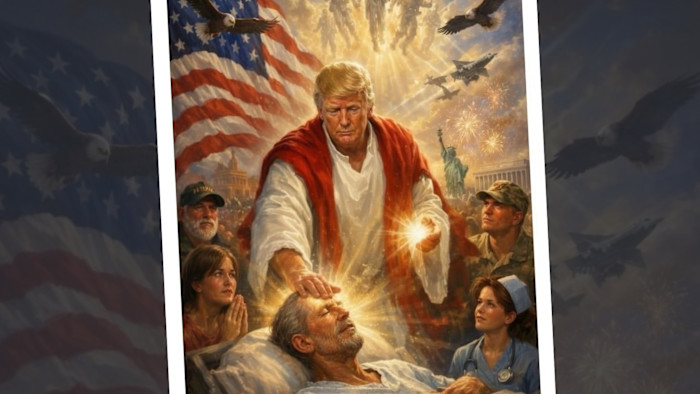
Radical evangelical current
The growing religiosity of the Trump administration reflects the hardening of Republican ideology and the influence of a more radical evangelical current associated with the rise of the MAGA movement. It also highlights the growing willingness of top party officials to project their religious views, even at the risk of offending people of other faiths or atheists. This may partly relate to personal beliefs. But it is also a political power move, as various officials seek to attract evangelical Christians – a major pillar of Trump's base that seems to be weakening. As Jim Guth, a professor of politics and international relations at Furman University, stated, "this is not so strange, but the very explicit and strongly doctrinal way in which it was done is unprecedented."
Questions
For many religious Americans, the reference to spirituality in politics is not necessarily controversial. However, faith is not necessarily partisan. Some believers worry that their religion is being used to justify war. At the same time, questions are raised about whether the constitutional separation of church and state is being maintained. Although it offers comfort to many, intense religious rhetoric can marginalize others – particularly in the military, where many religions coexist, while Americans also have the right to follow none.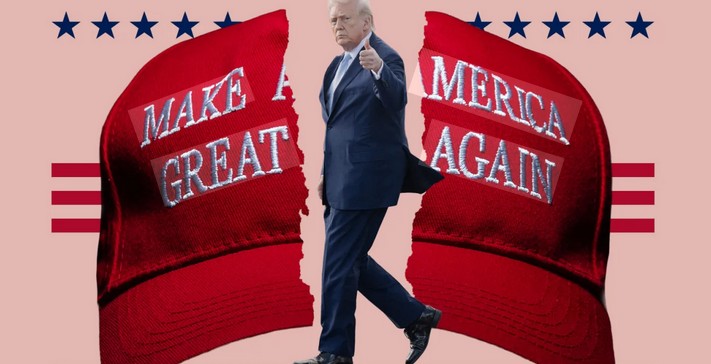
Not even Bush after 9/11
Modern predecessors of Trump avoided presenting Middle East wars as religious missions. They wanted to avoid granting legitimacy to opponents who preach jihad or holy war and knew that Christian references could create political problems for allied Muslim countries. They can also serve as a recruitment tool for terrorist organizations and make Americans targets abroad. After all, one of the reasons cited by Osama bin Laden for declaring war on the US was the presence of American troops – the "crusaders" – in Saudi Arabia during the First Gulf War (1990–1991). After the September 11 attacks, President George W. Bush once used the term "crusade" for the "war on terror," but later clarified: "Our war is not against a religion, nor against the Muslim faith."
The role of Hegseth
On the contrary, Hegseth believes that "politically correct" language limits American "fighters." He even has a tattoo of the Jerusalem Cross, a symbol associated with the Crusades. Hegseth is the most characteristic embodiment of the new religious tone in the way the US presents war. The Pentagon argues that his rhetoric is no different from prayers by George Washington or the distribution of Bibles to soldiers by Franklin D. Roosevelt in World War II. Criticism toward Hegseth does not question the sincerity of his faith but focuses on whether he should project it so strongly as a public official. He often implies divine approval of the US war – for example, he compared the rescue of an American pilot in Iran to the Resurrection. Faith and religion are absolute by nature. But the diplomacy required to end wars must be more flexible. Many wars in the Middle East have proven difficult to resolve precisely because of their religious dimensions. Hegseth also uses religion in a way that, according to critics, weakens fundamental guarantees of a democracy, such as freedom of the press. For instance, he likened journalists to Pharisees, characterizing them as "self-appointed elites" who question the "good."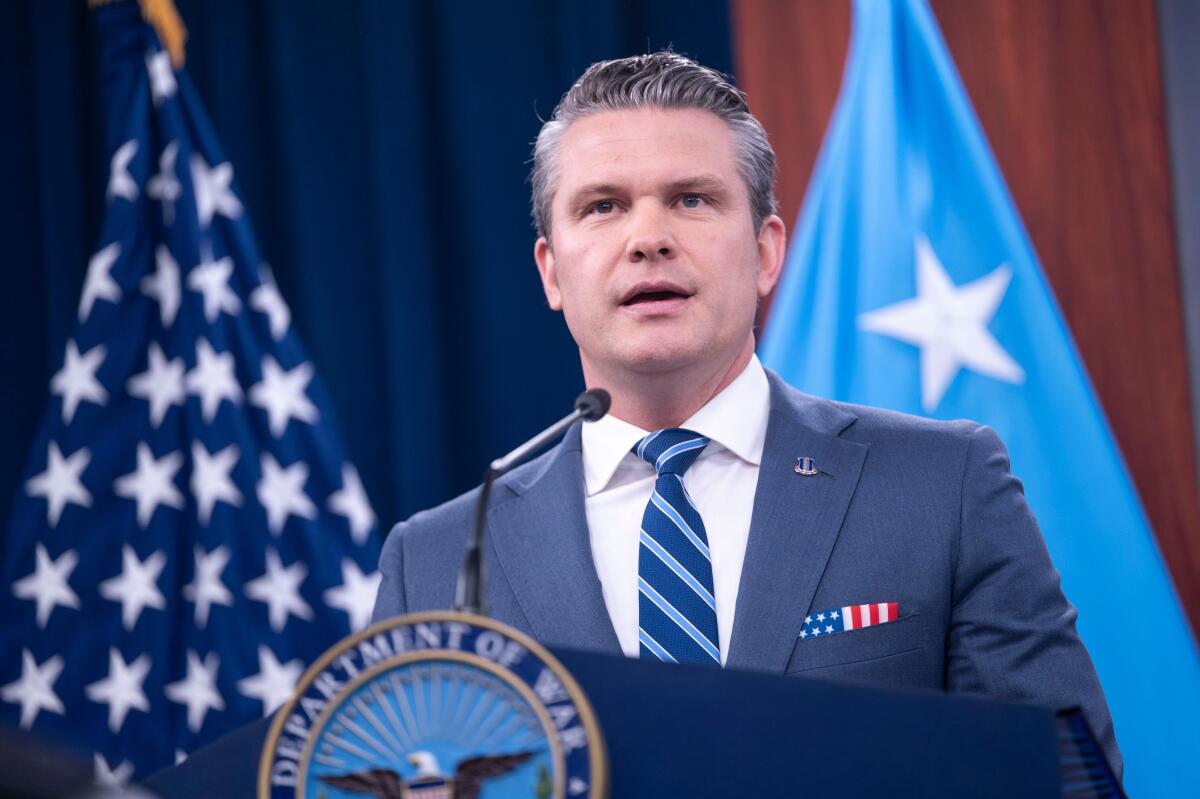
Not the first
He is not the first military leader to use biblical language. General Dwight D. Eisenhower had called the D-Day landing a "Great Crusade." However, today the US is much more multi-religious and more secular. Some religious leaders are concerned about the image of politicians attributing divine motives to themselves. Bishop Mariann Budde stated that this is "disturbing," as it directly links the president and his administration with the supposed will of God. The sense of religious justification can provide comfort, but many in war believe they have God on their side. President Abraham Lincoln had noted that soldiers of both sides "read the same Bible and pray to the same God."
Ridicule and Hollywood
However, the ridicule was not long in coming. Last Wednesday, Hegseth, in one of his public prayers at the Pentagon, chose to inspire American troops in the "holy war" in Iran with a passage – supposedly – from the Bible, which however referred to the movie "Pulp Fiction" by the well-known director, Quentin Tarantino. Hegseth recited a prayer for search and rescue crews, saying it was based on a biblical passage from the Old Testament book of Ezekiel. The prayer Hegseth used looked more like a variation of actor Samuel L. Jackson's speech in the movie Pulp Fiction. According to some descriptions of the event, Hegseth acknowledged only the biblical verse on which it was loosely based – Ezekiel 25:17 – and not Jackson's rhetoric from the movie, which it resembled much more closely. Confusion was intensified by how a cinematic passage that speaks of "great vengeance" and "furious anger" from the heavens was turned into a prayer for the safety of military rescue crews, invoked by Hegseth.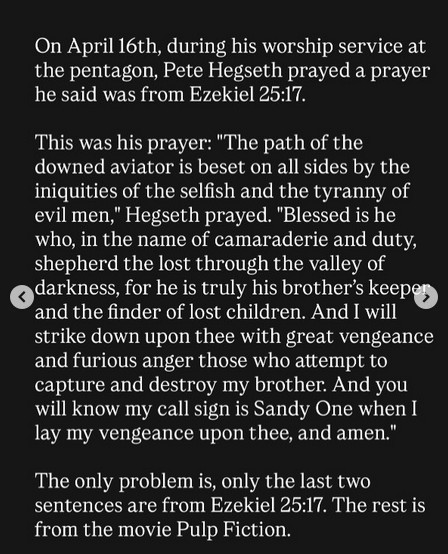
The Newsweek comparison
Newsweek magazine presented all three texts: Ezekiel 25:17, Jackson's dialogue from the 1994 film, and Hegseth's words, which – as he said – came from a military prayer CSAR 2517 (combat search and rescue), widely used in the military and read to crews who rescued an American pilot from Iran whose fighter had been shot down. The shortest excerpt is the biblical one: "And I will execute great vengeance upon them with furious rebukes; and they shall know that I am the Lord, when I shall lay my vengeance upon them." The other two are longer and significantly expand the original text. In Pulp Fiction, just before the character Jules Winnfield executes a mob associate, he declares: "The path of the righteous man is beset on all sides by the inequities of the selfish and the tyranny of evil men…" In a post on X, Pentagon spokesperson Sean Parnell admitted that the prayer was "obviously inspired by dialogue from Pulp Fiction," although Hegseth did not mention it publicly. Nevertheless, he emphasized that those saying the Secretary "misquoted" Ezekiel are spreading fake news.
Iranians mock
The Iranian embassy in Turkey mocked United States Secretary of Defense Pete Hegseth for a mistake during a prayer at the Pentagon, according to a post on the diplomatic mission's X page. The previous day, media reported that Hegseth, speaking about a rescue operation for American pilots in Iran, quoted a monologue from the movie Pulp Fiction, presenting it as a biblical prayer. "We should be grateful that Pete Hegseth didn't fully transform into Samuel L. Jackson. At this moment, the Pentagon looks more like a film critic than a center of military strategy," the post states.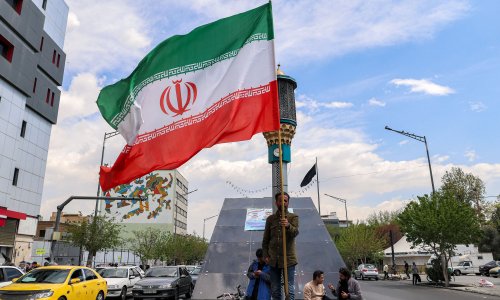
The conflict with the Pope
At the same time, the Trump administration is so convinced of its stance that it is willing to challenge even the Pope. Leo XIV does not back down. "Jesus told us: blessed are the peacemakers. But woe to those who use religion for military or political gain," he stated. The confrontation between Trump and the Pope is not just about theology. Trump maintains he has the "right to disagree." This conflict involves two powerful personalities with huge influence. The Pope, formerly Robert Prevost, born in Chicago, lived a life of austerity and religion. In contrast, Trump, a billionaire from Ne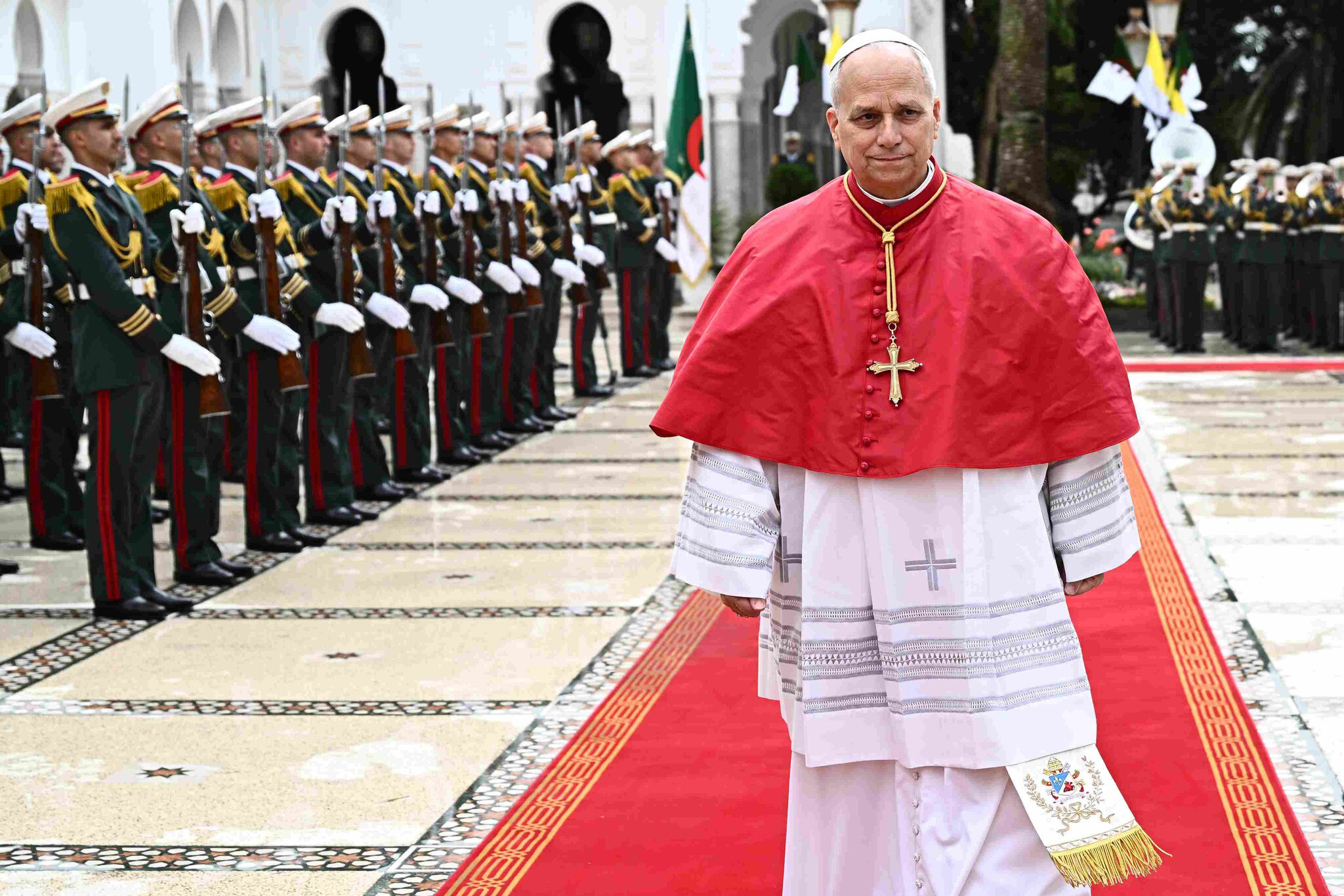 w York, has linked his name with wealth and display.
The administration's criticism toward the Pope does not find resonance in Europe. Former Italian Prime Minister Matteo Renzi stated that "the real hero of the American dream is the Pope, not Trump." Vance defended the president, emphasizing that the Pope must be careful when speaking about theology. However, his critics consider that he displays arrogance. James Massa noted that when the Pope speaks, he is not just expressing an opinion but exercising his role as a spiritual leader. The administration is entering dangerous "deep waters" by presenting the war in Iran as divinely justified. Wars based on moral certainty can lose their strategic direction. The sense of divine mission can blur decision-making – which is why many previous administrations avoided "recruiting" religion into war.
The Pope "took up his gun"
Although Pope Leo XIV could have ignored President Trump's aggressive posts against him, he finally chose to face them head-on... "I do not believe that the message of the Gospel should be abused, as some do," he said, adding: "too many innocent lives have been lost… I believe someone must stand tall and say there is a better way." The Pope's comments defined him as the most visible international counterweight to Trump and set the stage for an unprecedented clash between the first American Pope and the US president who has launched repeated attacks against him. Pope Leo has also emphasized the importance of multilateral institutions like the United Nations and respect for international law, at a time when the US president has hinted he is not bound by these principles.
Although a more reserved character than his predecessor, Pope Francis, the American military operation in Iran highlighted the tough side of Leo and his willingness to speak bluntly. He decided to personally name Trump – something Popes rarely do. Although he did not name other members of the Trump administration, his words that "God does not hear the prayers of those who wage war" seemed to imply US Secretary of Defense Pete Hegseth and his tendency to present the conflict in the Middle East in religious terms. During his stay in Africa, Pope Leo continued to speak, saying that his presence on the continent conveys a message of peace the world needs to hear. In a peace meeting in Bamenda, Cameroon, he delivered a speech with global implications. "The world is being destroyed by a handful of tyrants, but is held together by a multitude of supportive brothers and sisters. Woe to those who manipulate religion and the very name of God for military, economic, or political gain, dragging the sacred into darkness and filth," argued the Pope, hinting... that the... Holy War with Trump will have more episodes...
www.bankingnews.gr



Readers’ Comments