

US strategy for Iran: From the 1953 coup to the uncertain siege of 2026
As the naval blockade imposed by the United States on Iran takes full effect, security experts appear divided regarding its effectiveness. The central question is whether the strangulation of maritime routes will ultimately manage to force Tehran to return to the negotiating table. However, if one looks back at history, a naval blockade is not merely a means of economic pressure, but a tool with the potential to even bring about regime change in the country.
The root of evil: Discovery and exploitation (1908-1950)
Nearly seven decades ago, in 1952, the US and the United Kingdom imposed a similar naval blockade, which removed Iranian oil from the global market. The root of the conflict then was the nationalization of the Iranian oil industry by Mosaddegh in 1951, a move that directly struck British interests in the Anglo-Iranian Oil Company (AIOC). It all began in 1908, when geologist George Bernard Reynolds discovered the first large oil field in the Middle East in southwestern Iran. In 1909, the Anglo-Persian Oil Company (APOC) was founded in London. The British built the Abadan refinery (the largest in the world at the time), and in 1915, the British government purchased the majority stake in the company, which was renamed the Anglo-Iranian Oil Company (AIOC) in 1935. For decades, the British extracted Iranian wealth, giving pittance to Tehran.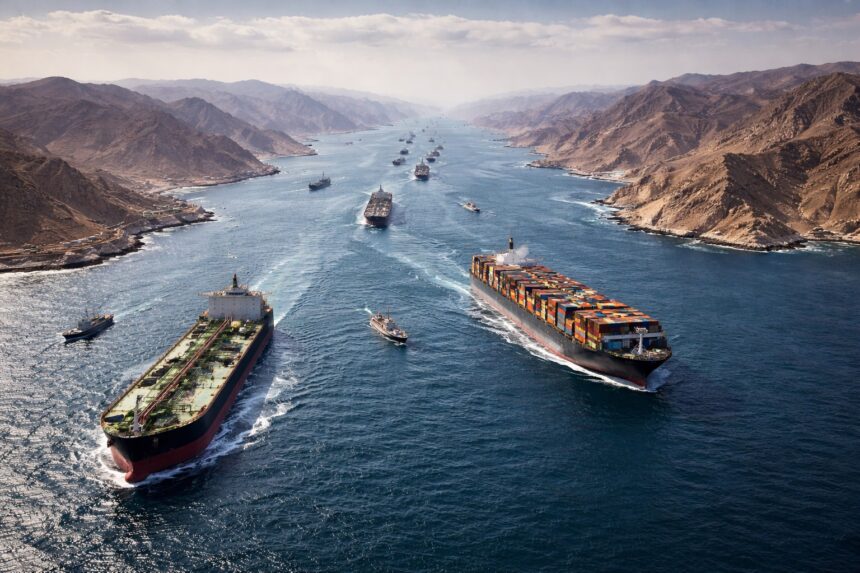
The historical precedent
In April 1951, Mohammad Mosaddegh, a charismatic and nationalist politician, became Prime Minister. The country was drowning in an economic crisis. Three days after his election, he did the unthinkable for the West: He nationalized the oil industry and founded the National Iranian Oil Company (NIOC). Britain, which held 51% of the AIOC, was outraged. It did not accept nationalization without compensation that Iran could not afford to pay. When it became clear that Tehran did not intend to compensate London, the British, with the support of the US—who feared the spread of communism—implemented a total economic and naval blockade.
Operation Ajax: The coup (1953)
The British realized they could not topple Mosaddegh alone. They convinced American President Dwight Eisenhower that the Prime Minister was "open" to the influence of the Soviet Union. The CIA and MI-6 set up Operation Ajax. They funded agents, religious leaders, and military officers to provoke chaos in the streets.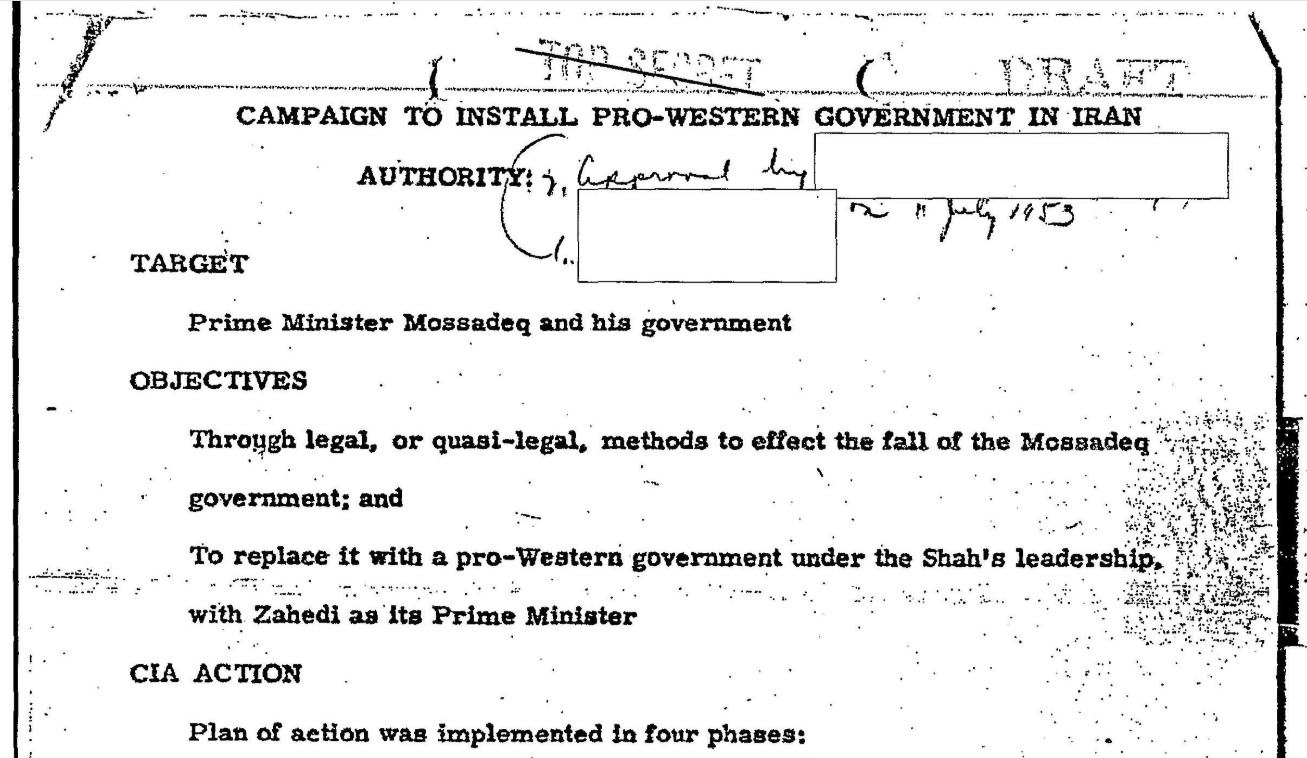
This operation was so successful that it culminated in a coup
The collapse of revenues led to mass layoffs and economic recession, creating the appropriate fertile ground for the overthrow of Mohammad Mosaddegh’s regime. On August 19, 1953, after bloody clashes, the army arrested Mosaddegh. The Shah, Mohammad Reza Pahlavi, who had fled to Italy, returned triumphantly to power, and Iran’s oil wells reopened for Western companies.
The "looting"
After the coup, AIOC was renamed British Petroleum (BP). The United Kingdom kept 40%, but the Americans also took their own 40% (split among companies like Exxon and Mobil) as "payment" for the CIA’s help.
The blockade data in 2026
Today, the U.S. Central Command (CENTCOM) announced that the current blockade is being applied to all Iranian ports in the Arabian Gulf and the Gulf of Oman. According to the CENTCOM statement, the blockade will be enforced impartially on all vessels entering or exiting the Iranian coast, while warning mariners that any vessel moving without authorization in the area is subject to interception, diversion, and seizure. Currently, more than 15 American warships are participating in the operation. Although data from Lloyd’s List Intelligence shows that traffic through the straits has essentially stopped following Trump’s announcement, the New York Times reports that ship tracking data shows certain vessels, including at least two Chinese ships, continuing to move despite American prohibitions.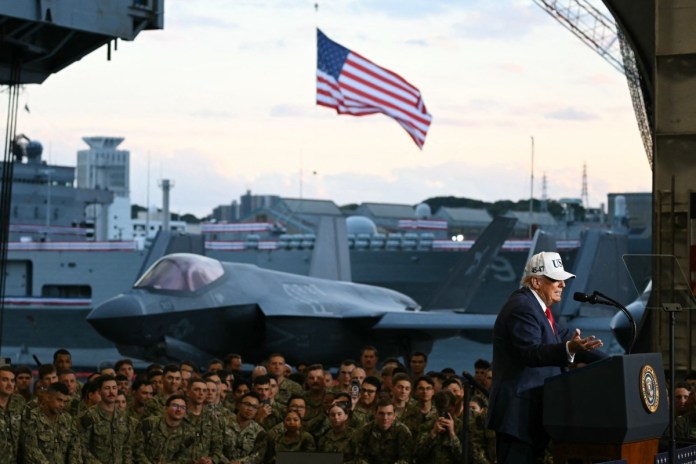
Today (2026): Why the Trump "scenario" is leaking – Chaotic differences
Trump is today applying exactly the same recipe (naval blockade through CENTCOM), hoping for a quick fix. However, the differences are chaotic:
-
In 1953, the US had the British Army by its side. Today, the British have refused to participate.
-
The Iran of 1953 had only protesters in the streets. The Iran of 2026 has missiles, drones, and the active support of Russia and China.
-
While in 1952 the blockade was airtight, today the New York Times reports Chinese ships breaking the block at will.
The challenges of unilateral US action
Despite the historical success of 1953, many analysts warn that in 2026 the landscape is radically different. Dana Stroul, a former senior Pentagon official now at the Washington Institute for Near East Policy, points out that Trump is seeking a "quick fix." The reality, however, is that such a mission is extremely difficult to execute unilaterally and is likely unsustainable in the medium term. Similarly, Sidharth Kaushal, a naval power expert at the Royal United Services Institute (RUSI), argues that the blockade will prove difficult to enforce in practice. Today's Iran possesses strong military capabilities and enjoys the active diplomatic and economic support of Russia and China. While the 1952 blockade led to regime change and the creation of British Petroleum (BP), that intervention also served as the catalyst for the 1979 Islamic Revolution. The hope of the US to repeat past success seems extremely uncertain and, so far, resembles a nightmare.
www.bankingnews.gr




Readers’ Comments