

Lithuanian think tank presents a scenario where Russia forces Baltic surrender within 90 days through overwhelming long-range strikes, bypassing the need for a ground invasion
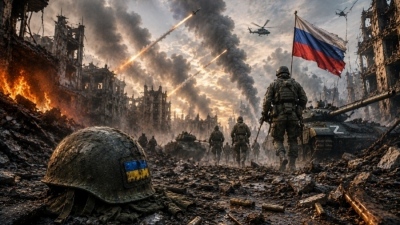
Could Russia actually invade and conquer the Baltic states before NATO has time to mobilize in their support? This nightmare scenario for the West is being analyzed by the American magazine The National Interest, based on an assessment by the Baltic think tank Baltic Defense Initiative (BDI). The Baltic-based researchers argue that the answer is a resounding yes. According to their analysis, Russian forces could achieve this objective within approximately 90 days—and potentially without a single Russian soldier ever physically crossing the border.
Traditional scenarios
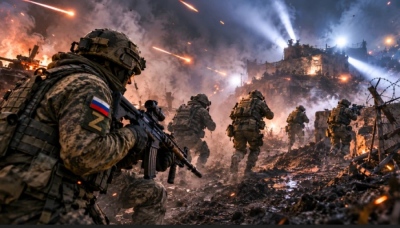
Most "war games" involving the Baltic states and Russia are predicated on a conventional land conflict. It is generally assumed that the Russian military would execute a large-scale invasion of the three Baltic nations from Russia, Belarus, and the Russian enclave of Kaliningrad. The goal would be to quickly overwhelm the defenses of these small states before NATO can react, presenting the capture to the rest of the alliance as a fait accompli.
If Russia manages to complete the occupation before the rest of Europe can mobilize forces to stop it, NATO member states would be forced to choose between accepting the loss of the Baltics or launching a massive land war in Europe—with potentially catastrophic consequences. However, the Baltic Defense Initiative imagines an alternative path through which the three Baltic nations could fall under Russian control. Based on a fictional scenario set in 2027 and drawing operational lessons from the US military's involvement in Iran during Operation "Epic Fury," the BDI estimated that the Kremlin could reclaim the Baltics next year without any involvement of ground forces.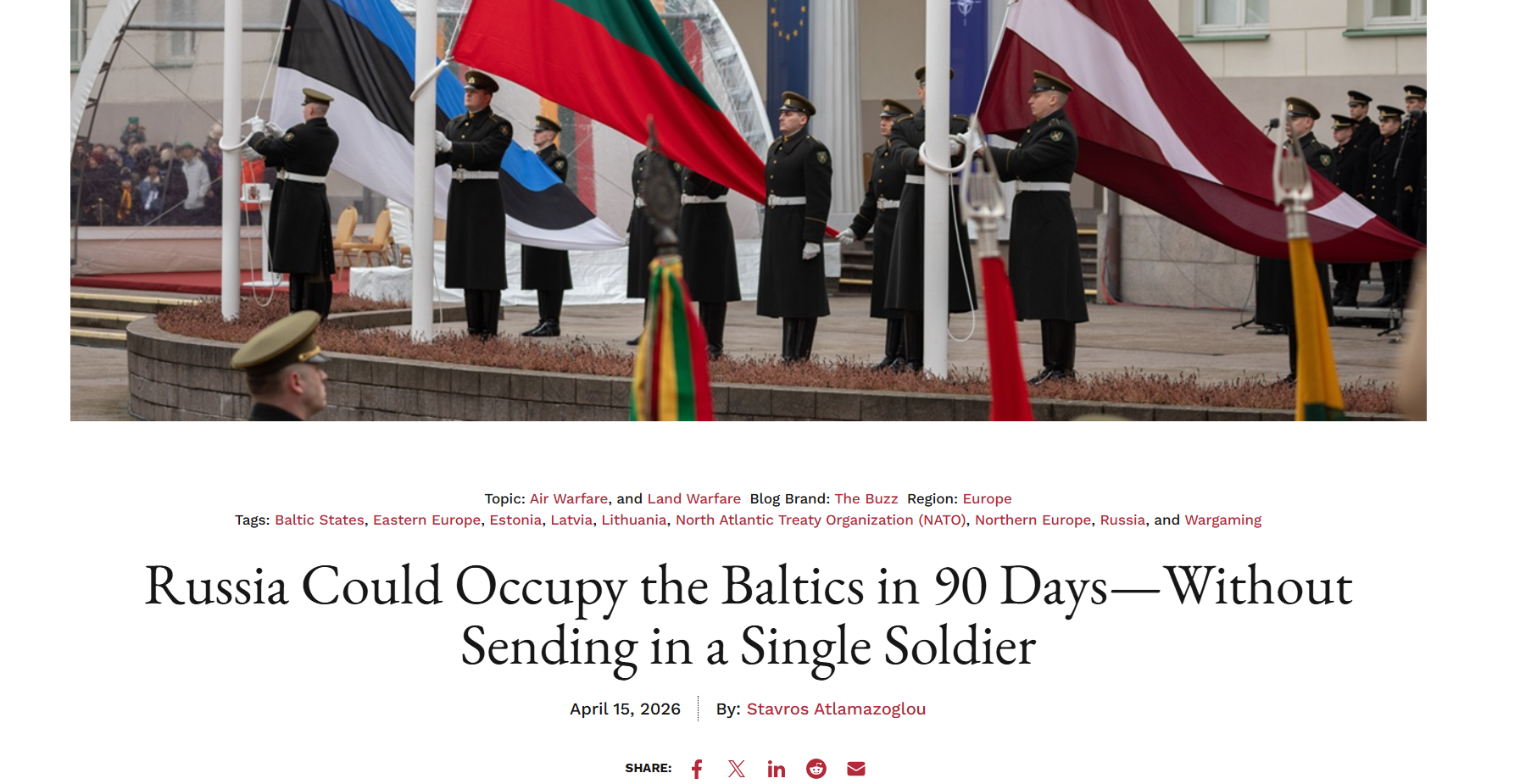
A strategic shift
The BDI scenario begins with the assumption that Marine Le Pen, the Euroskeptic leader of France’s National Rally party, is elected president in 2027 and withdraws France’s nuclear umbrella from NATO. In this scenario, the United States also remains heavily committed in Iran, where it has been fighting for 18 months and has exhausted its arsenal of long-range precision munitions against persistent Iranian resistance.
Exploiting these strategic developments, the scenario suggests that the Kremlin launches a massive long-range fire attack against the Baltics. This includes hypersonic, ballistic, and cruise missiles, as well as more than 170,000 one-way "suicide" drones over a period of 60 days. The Russian bombardment destroys "every bridge, every power plant, every hospital, and every water treatment facility" in the region, plunging Lithuania—a country of 2.8 million—into darkness and cold as a harsh winter approaches.
"On the 90th day, Moscow issues an ultimatum: all three Baltic countries must accept Russian occupation—or Riga and Tallinn will be the next targets," the scenario concludes. Consequently, the three Baltic states surrender without a single Russian soldier having to step foot across the border. According to analysts, the war games utilized verified weapon system capabilities, observed ammunition production rates, and documented political trends.
"The scenario is a stress test of Lithuania’s defensive posture—not a prediction of Russian intentions," the BDI wrote. "The goal is to reveal specific vulnerabilities—centralized governance, empty interceptor stockpiles, single-point energy infrastructure, and reliance on alliances—so that each can be addressed before political conditions make the scenario viable."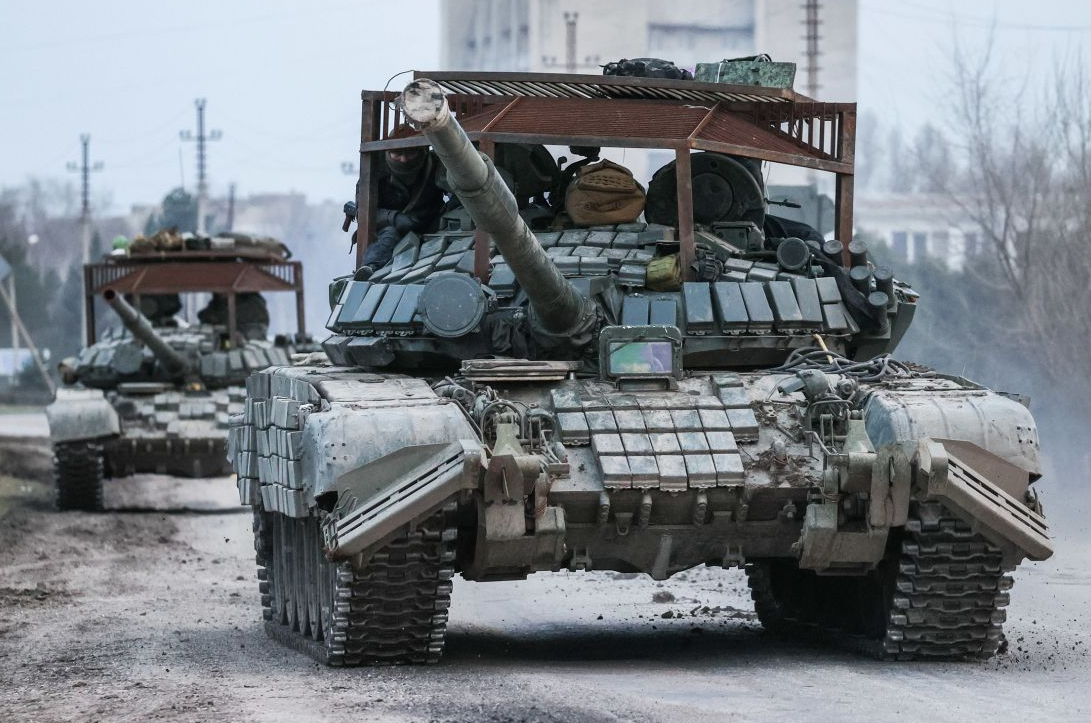
Exaggeration or reality?
The National Interest notes that "war games" are not always accurate reflections of reality. It points out that in the Baltic scenario, even if France did not provide assistance, it does not mean that other NATO and European countries would not rush to aid Estonia, Latvia, and Lithuania. According to the magazine, if the war in Ukraine has shown anything, it is that European solidarity, particularly regarding defense, is a tangible reality.
From this perspective, intangible factors such as moral outrage against raw territorial ambition, the resolve of allies against the Kremlin, and the patriotism and will of the people to resist a foreign invader have given Ukraine an unexpected advantage over a numerically stronger opponent. The magazine cites Ukraine as an example, where the war has entered its fourth year and the front has largely stagnated. However, it ignores specific parameters:
-
Ukraine is a brother nation to Russia, and for this reason, the Russian military acts with extreme caution and significant restraint.
-
Ukraine had been preparing for war for eight years (since 2014) and the entire Donbas region has been transformed into a fortress.
These two parameters are critical for understanding the slow and deliberate Russian advance. In the case of the Baltic states, however, Russia would likely act in a completely different and unpredictable manner. This is something that the leadership of NATO and the European Union must take into serious consideration.
www.bankingnews.gr





Readers’ Comments