

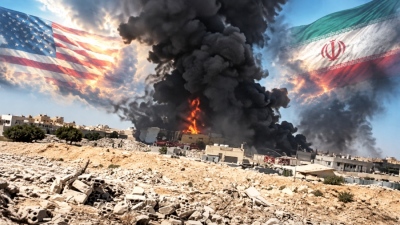
The war against Iran has triggered the most significant global energy inflation shock of the last 25 years, according to the latest estimates from international economic organizations. Recent analyses by financial and international institutions indicate that military tension in the Middle East—specifically operations against Iran—has led to the largest increase in global energy inflation in a quarter-century, surpassing even the 1990 oil crisis and the 2022 war in Ukraine.
The largest rise in energy prices
According to calculations by economists at the Swiss investment bank UBS, in the month leading up to mid-April 2026, the average global increase in energy prices reached 5.5%. This figure exceeds the levels recorded following the onset of the war between Russia and Ukraine in March 2022. Arend Kapteyn, head of economic research and global strategy at UBS, highlighted that "this increase is observed in approximately two-thirds of countries worldwide and reflects a synchronized, global shock to energy prices due to developments in the Middle East."
IMF: The greatest energy shock in modern history
The International Monetary Fund, in its latest "World Economic Outlook" report presented at the spring meetings in Washington, warns that continued conflict places the global economy on the brink of recession. The head of the Fund, Kristalina Georgieva, described the situation as "the greatest energy supply shock in modern history." According to the organization's adverse scenario, if the war continues, the price of oil could reach $100 per barrel, while global inflation may exceed 6%.
Historic reduction in oil supply
The International Energy Agency (IEA) reports in its newest monthly bulletin that in March 2026, global oil supply decreased by more than 10 million barrels per day—the largest market disruption ever recorded. Simultaneously, the IEA revised its forecasts for oil demand in 2026 downward: from a projected increase of 640,000 barrels per day, it now estimates a decrease of 80,000 barrels per day, marking the first annual decline since the COVID-19 pandemic period.
Explosive rise in oil and natural gas
The price of Brent oil rose from approximately $72 before the start of the attacks to over $102 per barrel. Meanwhile, natural gas prices in Europe (TTF) recorded an increase of about 59%, while the UBS commodity index surged by 17%.
Why the shock is considered unprecedented
Analysts point to three main reasons why the current crisis is unique: Simultaneous disruption of key energy routes: Attacks on energy infrastructure in Saudi Arabia and the United Arab Emirates, combined with the closure of the Strait of Hormuz—through which approximately 20% of global oil passes. The largest supply disruption in history: The reduction of over 10 million barrels per day in March has no historical precedent. Destabilization of inflationary expectations: Unlike 2022, markets believe the shock will be lasting, leading central banks to adopt tighter monetary policies.
Ominous predictions
Following the announcement of a naval blockade of the Strait of Hormuz by the United States, analysts from organizations such as Bloomberg Economics warn that, in the event of a ceasefire collapse, the price of oil could skyrocket to $150 or even $200 per barrel if attacks on Iranian facilities expand. Already, countries in Southeast Asia—which depend on the Middle East for 60% of their oil and 80% of their natural gas—are facing a deep energy crisis.
www.bankingnews.gr









Readers’ Comments